Olympia
Thurston County, WA
46.972961, -123.133736
2800 Feet
Call: N7UJK
444.950 +5MHz 118.8Hz
Olympia UHF Repeater
Olympia Packet Station
Note: as of 03/16/18, the
repeater has been restored
to service. The controller
was replaced, as was one of
the two packet radios, and
the repeater receiver.
|
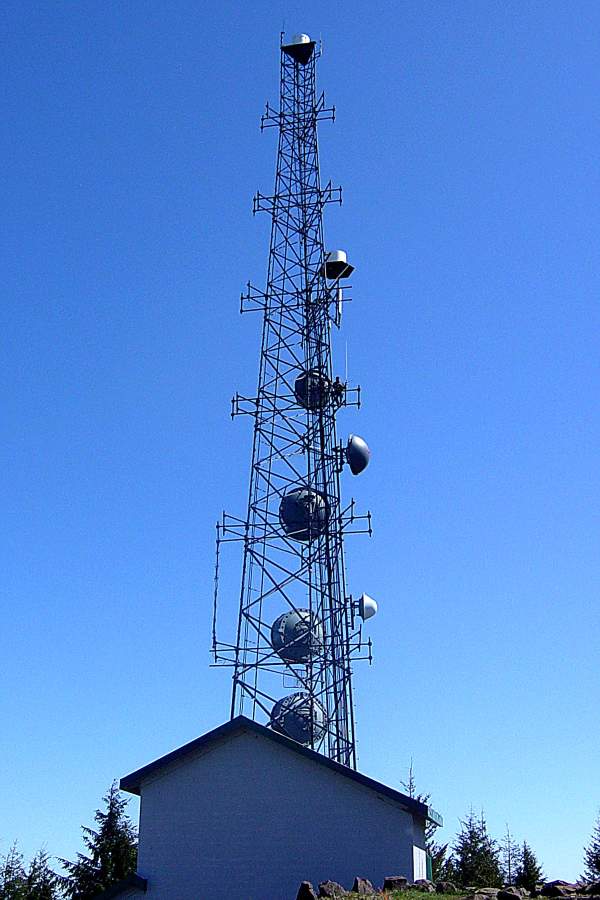
Location: This station is housed in a Washington State
Dept. of Natural Resources (DNR) radio facility building on Capitol
Peak, in the Capitol State Forest,
southwest of Olympia. To avoid
confusion with the 145.470 repeater, which has been known for a long
time as "the Capitol Peak Repeater", we refer to our
machine as the "Olympia" repeater.
You may also hear ours referred to as "CPU", for
'Capitol Peak UHF'. The associated packet station is sometimes called
"CPP" for 'Capitol Peak Packet'.
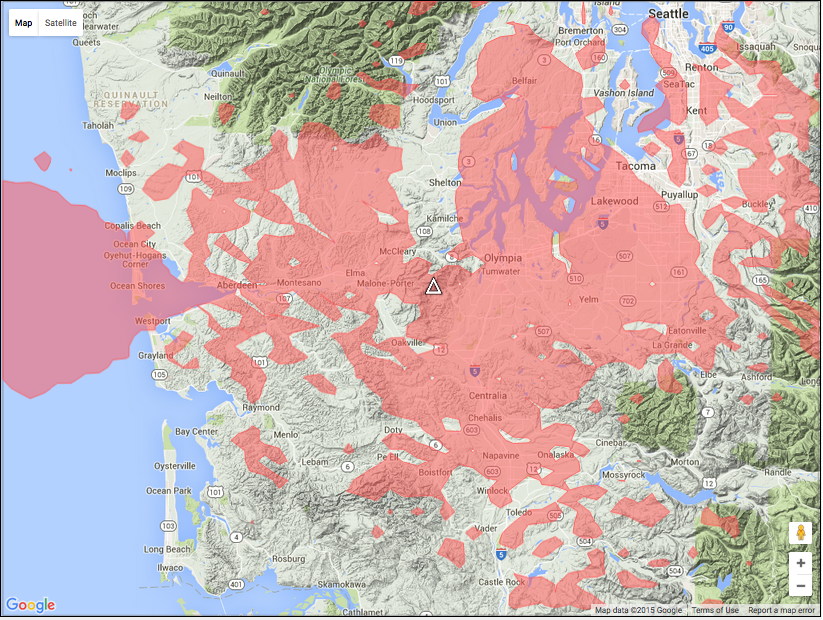
Coverage: The Olympia repeater has very good coverage in
eastern Grays Harbor County, being quite usable as far west as Aberdeen.
The real strength of this repeater is bridging the gap into Puget Sound.
Coverage extends well north of Tacoma, in fact the station has been worked from
Seattle, as well as the Hood Canal area. The State ECC at Camp
Murray, near Fort Lewis, has solid access for emergency communications.
It serves those
traveling between the coastal
counties and Puget Sound,
providing solid mobile
communications nearly the
whole way. For those traveling
south on Interstate-5 from the Sound,
this repeater has solid coverage
to a point just north of Chehalis, where
the 441.675, KO Peak repeater
coverage overlaps.
To the west of Olympia, on Hwy-101, the areas
near Shelton on the north,
and McCleary on the south are shadowed
somewhat due to the mass of Capitol Peak
itself, blocking signals to the site.
Affiliated with the
BeachNet
system, this repeater is owned by N7UJK, the EC/RO for ARES/RACES
in Grays Harbor County. It's primary purpose is to support
Auxiliary Emergency Communications
in and around Grays Harbor County, and the
rest of District Three in times of need.
During an emergency, this repeater will probably be disconnected
from the network, to allow
communications within Grays Harbor County, ARES District Three,
and to provide a link to
the State Emergency Coordination Center at
Camp Murray. This repeater is directly
accessible from the Grays Harbor EOC in Montesano.
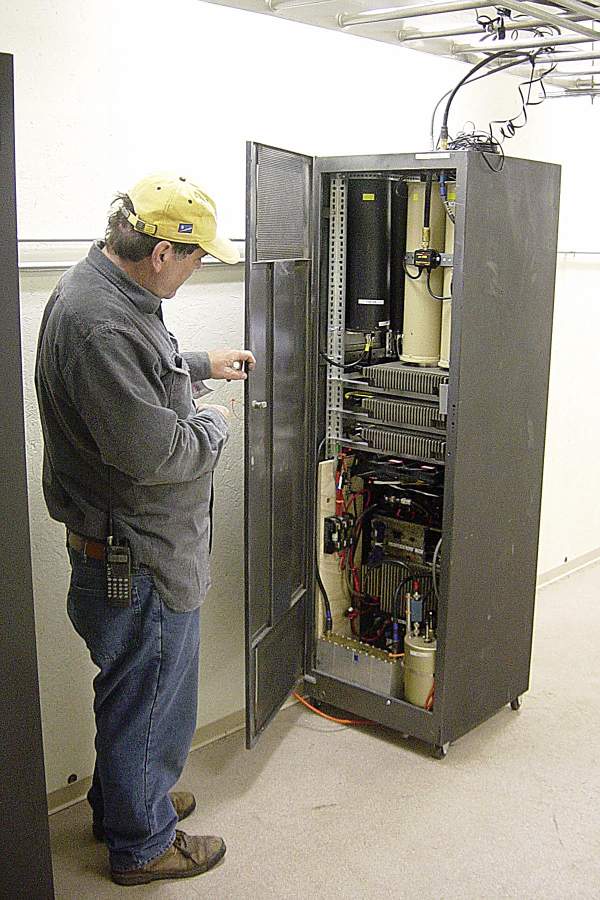
Hardware: The
repeater itself
consists of a GE
Mastr-II
110-watt continuous duty
base station (running 60-watts)
with an Arcom RC-210 controller. The duplexer
is a Phelps-Dodge bandpass-notch 6-cavity
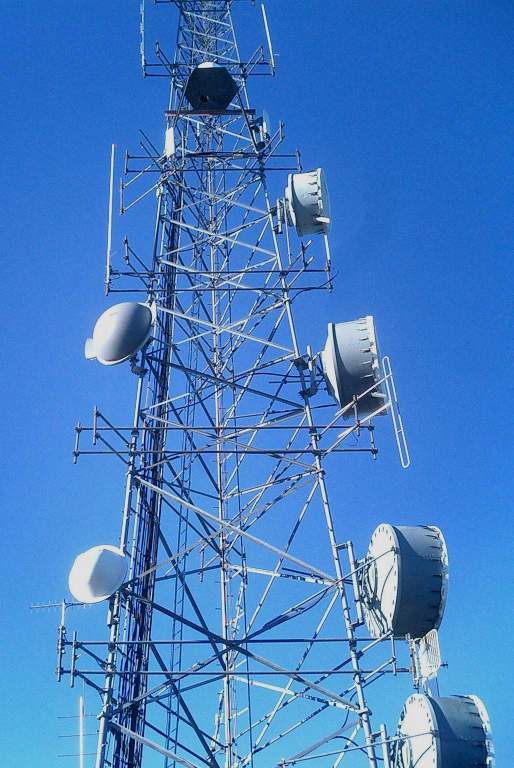
type feeding a Comet x510 high-gain
dual band antenna (in a commercial
radome shell)
through 120 feet of LDF5-50 Andrew
7/8-inch hardline.
A 40-watt VHF GE Mastr-II mobile and a
40-watt VHF GE Rangr mobile
support a dual-frequency packet station. The
two packet radios use a four-cavity combiner
and a VHF/UHF diplexer to share the main
station dual-band antenna with the UHF repeater.
There is a UHF GE Rangr
mobile, used as a
link transceiver, feeding a 10.2 dBi,
6-element Cushcraft Yagi through 100-feet
of LDF4-50, half-inch hardline,
All four transmitters are fitted with
dual-section isolators and bandpass filter cavities.
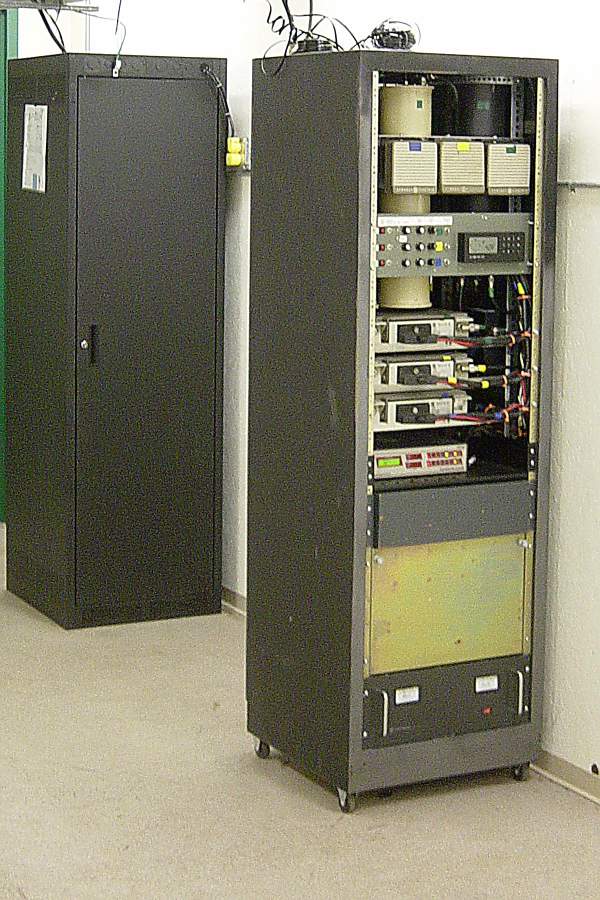
The entire station, including the Astron 60-Amp
power supply, six 2-meter cavities,
packet controller
and a master control panel
with separate speakers
and audio test taps for the
receivers, fits in a single
6-foot rack cabinet.
History: 03/10/07
The initial site survey
for our Capitol Peak UHF repeater was conducted.
04/07/07 The 6-foot rack cabinet containing
the repeater delivered. Antennas, feedlines, installed.
Station was commissioned and worked well.
01/20/08 Replaced antenna destroyed by
major winter storm.
02/18/08 Got a ride with Bruce in his sno-cat
to replace antenna.
01/20/09 Again replaced failed antenna.
This time we used a more robust antenna type.
09/21/09 Added a standoff support to the
top of the antenna to stabilize it.
For more detailed information regarding
maintenance, please see our
Maintenance Log.
Packet Radio: The
"N7UJK-8 packet
radio digipeater/node
is located at
this site.
This is
part of the 145.630 MHz
1200-Baud Washington District Three
EOC Packet Network,
allowing traffic to pass between the EOC stations
within District Three (Grays Harbor, Mason, Lewis,
Thurston and Pacific Counties) and to the Washington
State EOC at Camp Murray. To connect with the node,
use "GHDEM", and to digipeat through
the station, use "CAPTL".
Web Cams: for a look
at road conditions in the Olympia
area,
Click Here for the WSDOT traffic
cams near Olympia.
|