Megler Mountain
Pacific County, WA
46.2863, -123.89699
1320 Feet
Call: NM7R
147.180 +600kHz 82.5Hz
Megler VHF Repeater
Note the 82.5 Hz CTCSS (PL)
Tone on the 147.180 repeater
|
Location: The Pacific
County Megler radio
site is located
just northwest
of the town of
Chinook, WA, on
the north side of
the Columbia River, overlooking Astoria,
OR to the south and Long Beach, WA to the west,
from an altitude of about 1300 feet. There are
several different sites,
within
about
3
miles that are collectively
known as "Megler", and
this is the nortwestern-most
and highest of these. The other
sites are prominently visible
above the Astoria-Megler
bridge while
crossing north-bound.
Access to these other
sites is via the logging
road across from the
"Dismal
Nitch" rest area
on Highway 401 just
east of the Astoria-Megler
bridge. The Pacific
County site is reached
by way of the Chinook
quarry road. Although
not visible from the
bridge, the Pacific
County site can be
spotted from Highway
101, southbound, just west
of Chinook, look up
and to the left, to
the north of the highway.
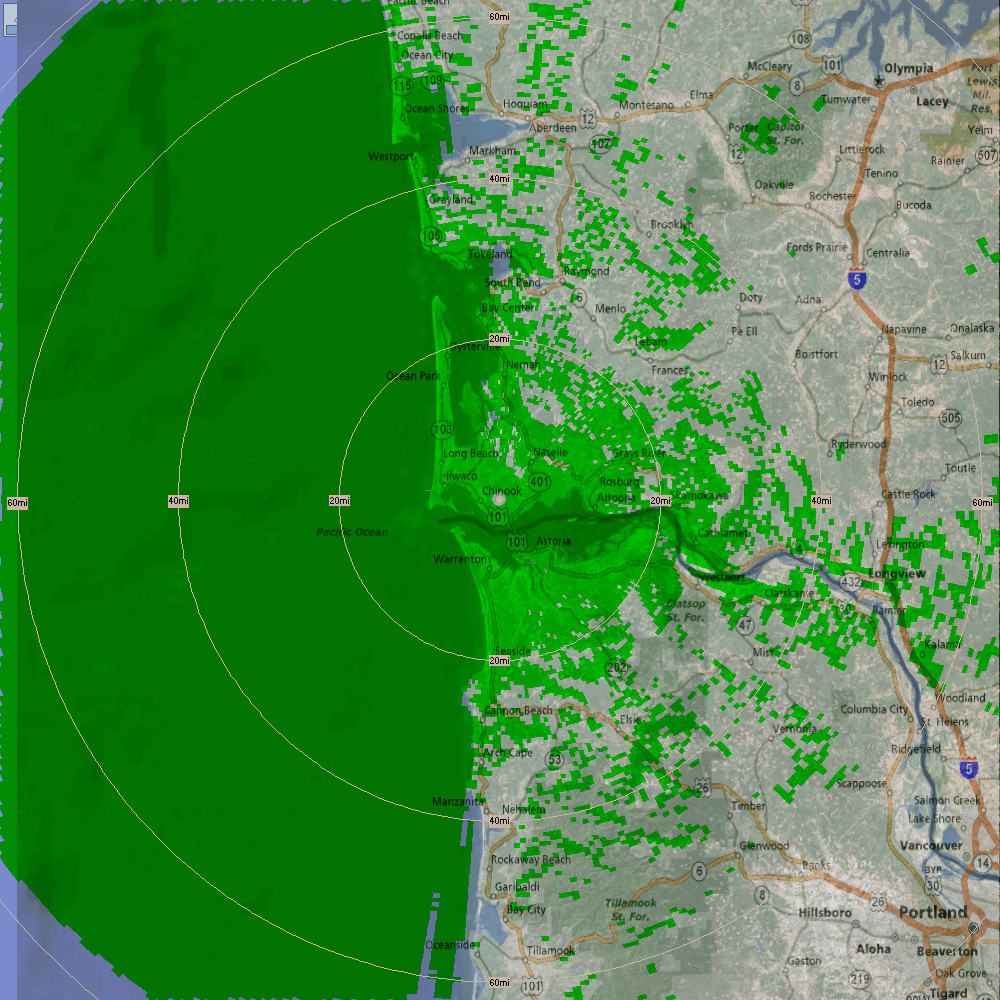
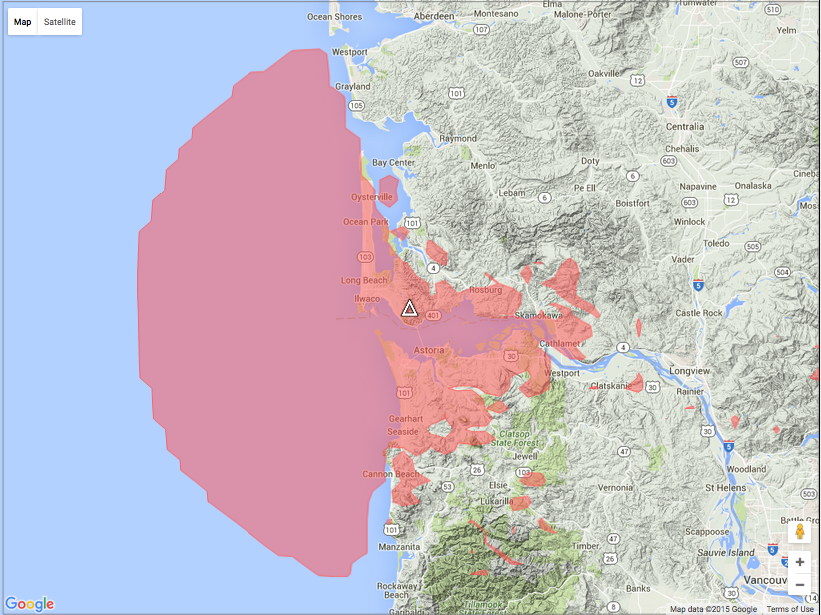
Coverage: The
"Megler" repeaters cover
nearly the entire
Long Beach Peninsula, and north
along the coast including parts of
Tokeland, Grayland and
Westport, WA. They can be utilized
east solidly to the county line,
and then nearly to Longview, WA.
These repeaters can be used
south to Seaside, OR. To the west, they have both
been worked from
60-miles or more at sea.
Click here for a
more detailed UHF Megler site plot.
The VHF coverage is a bit better than
the UHF coverage, as one would
expect.
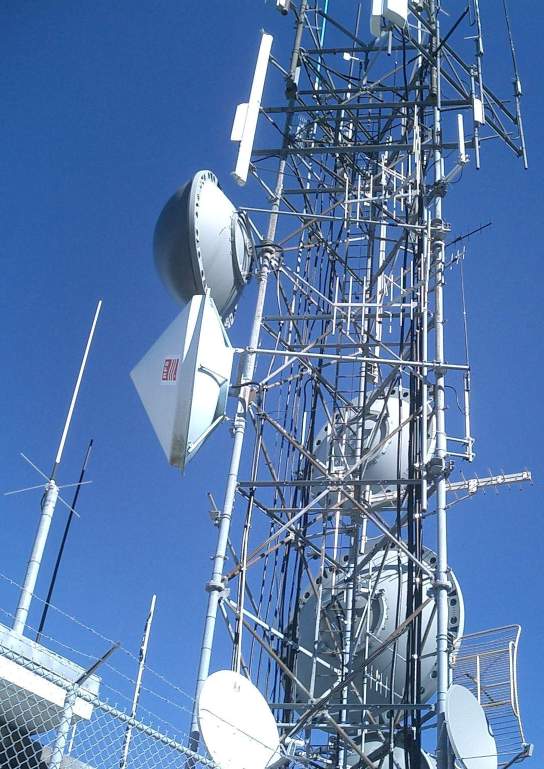
The building and tower
are crowded with a number
of commercial, public safety and
broadcast stations, including six,
one-kilowatt television transmitters
that serve the greater
Astoria-Long Beach area, giving the site a high noise floor,
making operations there challenging.
Even though they
are stacked one atop the
other in the rack, and share an antenna,
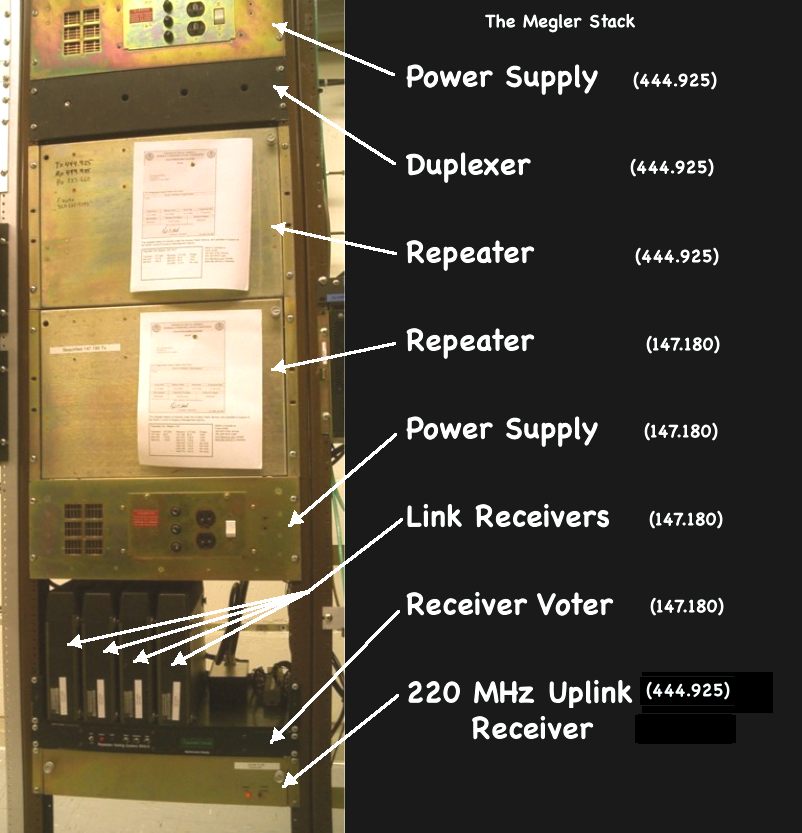
the 147.180 and 444.925 repeaters have different missions and operate
independently.
The 2-meter repeater
is normally linked to the
BeachNet
system of repeaters. The UHF repeater is not linked to
BeachNet
and operates "stand-alone".
Follow this link for more
information on the Megler 444.925 IRLP repeater.
Linking: The 147.180 Megler Repeater
operates full-time as a part of the
BeachNet
system of linked repeaters. It can be disconnected to
operate as a stand-alone resource, or in other configurations
to address particular needs. The only "regular"
instance of this is two days at the end of August each year,
when the Megler 147.180 and 444.925 repeaters
are split off in support of the Hood-To-Coast
relay race.
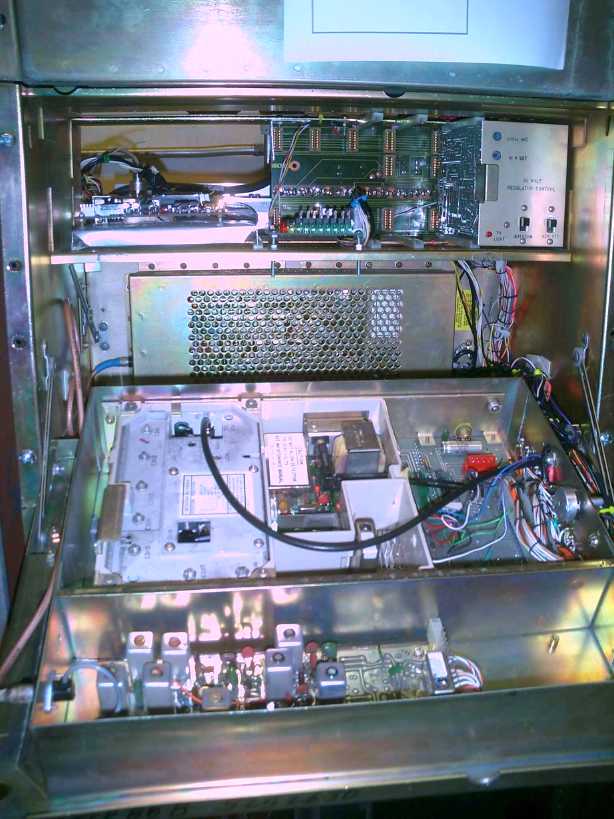
Hardware: The
147.180
repeater consists of a
GE Mastr-II
110-watt continuous duty base station
and matching power supply, running 75-watts out,
through a circulator, a bandpass cavity, a four-cavity
Band-Pass/Band-Reject (BpBr) duplexer,
a VHF/UHF diplexer,
and 50-feet of half-inch hardline to a Comet x510
dual-band antenna on the roof of the building.
The VHF repeater shares this antenna with the
UHF repeater.
The main VHF repeater receiver is duplexed to share
this same antenna.
The receive signal passes
through two BpBr cavities and a DCI 2-meter 4-section filter.
The resultant audio is
routed to the LDG RVS-8 receiver voter.
There are four additional remote receivers, in
addition to the local repeater receiver at the site itself, supporting
the "Megler" 147.180 repeater.
These fill coverage in
areas from which it would otherwise be difficult for users to
access the repeater.
The audio from each of these
is
routed to a "receiver voter", which continuously
evaluates each of the five
channels for signal-to-noise-ratio.
The best of the lot is
"voted" and sent to the transmitter.
Follow this link for more
information on the remote receivers that support the
Megler VHF repeater, and the
network.
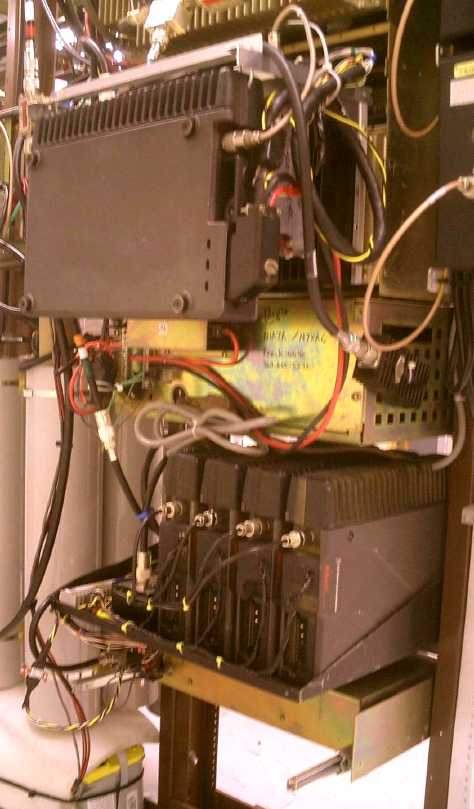
Each of the four
remote
receiver packages consists of
a VHF GE Rangr mobile radio (modified
to work in the Amateur 2-meter band), a UHF
GE Rangr mobile radio
(modified to work in the 430-MHz band),
a DTMF decoder, a Communications
Specialists ID-8
Morse code identifier, and in two cases, a
high-gain ARR VHF preamp
and VHF/UHF diplexer. These two
stations (Warrenton
and Cape D)
are in "cosmetically
sensitive" areas where a single antenna
is called for. They
use Hustler G6-270 dual-band antennas.
The third
receiver package
(Naselle) shares the Comet x510 main repeater antenna
for VHF receive and uses a Cushcraft 6-element
yagi for the UHF link.
The fourth package (Seaside) uses a Hustler G6-144B
6 dBd gain 2-meter vertical for VHF receive
and a Diamond 10-element,
13 dBi yagi for the UHF link to Megler.
The four
remote receiver channels are picked up
at the Megler repeater
site on a Hustler UHF vertical,
split four ways
with a home-brew constant-impedance
divider,
and routed to four
GE Rangr UHF mobile radios
(also modified to work at 430-MHz)
used
as link receivers.
The recovered audio signals are
routed to the LDG receiver voter
along with the main repeater receiver
and the best of the five signals is fed to the
transmitter through a GE Audio
Card.
The
BeachNet
system
link is supported
by a GE Rangr UHF transceiver
hung off the back of the repeater transmitter
to conserve space,
running 5-watts through
a DCI Filter and 60-feet
of LMR-400 coax to a 6-element,
10dB Cushcraft
Yagi mounted
low on
the tower
between two
microwave dishes.
The controller is a CAT-200B from
Computer Automated Technology.
|