
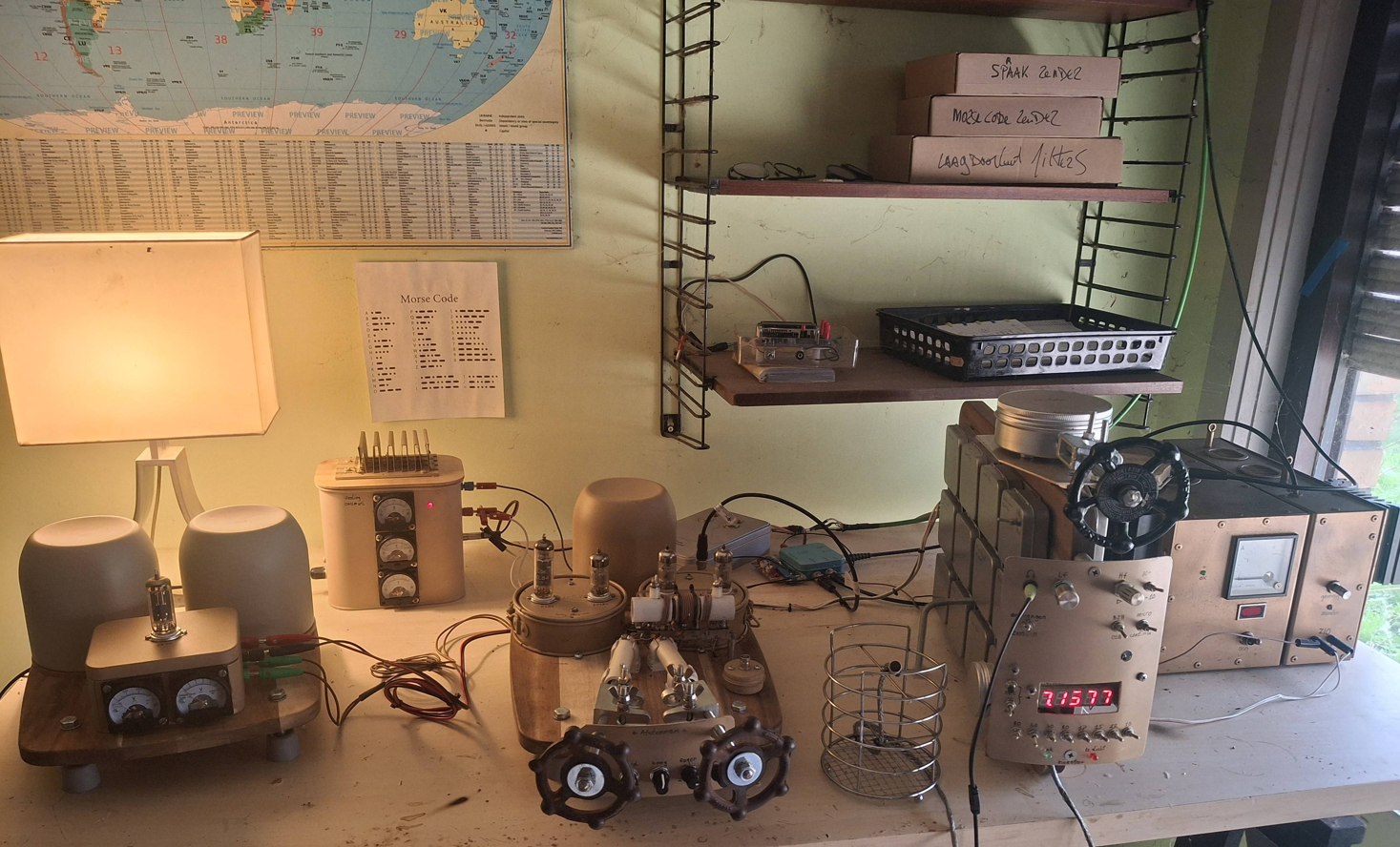


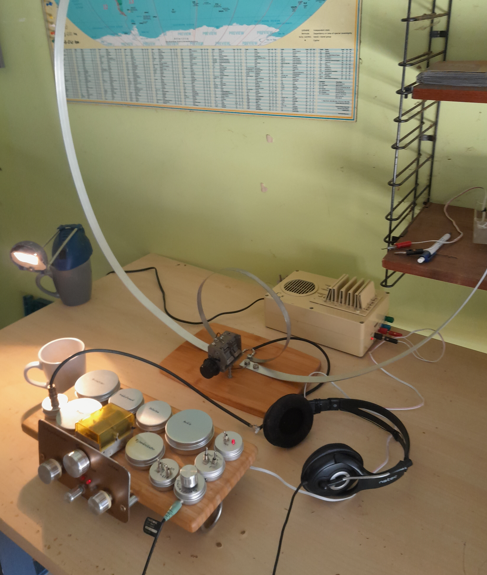
The new homebrew hobby started in January 2008 with short wave reception experiments.The picture above is the test receiver setup in my garden shed in the very beginning. Soon I was receiving world broadcasters. The first radio amateurs were received in August 2008. With a long wire, as I had no idea what a 50 Ohm antenna was. I wasn’t even sure what Ham band I was receiving, due to a lack of a frequency counter. My first homebrew oscillator had no frequency stabilisation. Anno 2008 I did not realise that a oscillator needs to be stable. So that day I was very busy retuning. Needless to say that the day after, I could hardly repeat the listening experiment. Numerous searches on the internet for additional information tempted me to improve my short-wave radio, over and over again. Until I ended up with an all-mode scratch-build general coverage receiver. The pictures below are the endresult. It had turned 2022 until I was satisfied.

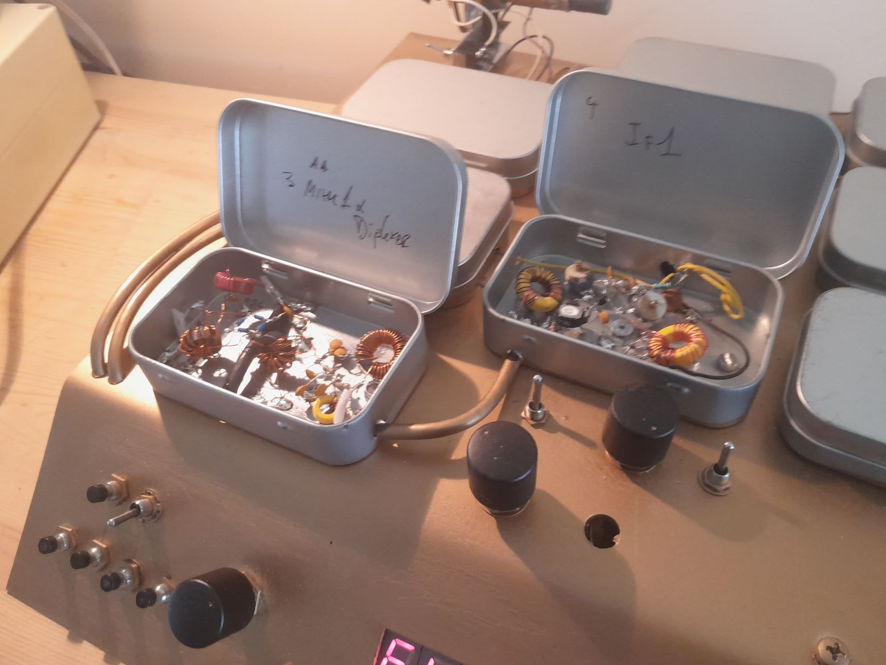

For many years it was a DC receiver/transmitter with
sideband cancelation. However, later on the transceiver was changed in a
superhet design based on the magnificent BITX. The superhet has a much better
S/N ratio in my opinion.
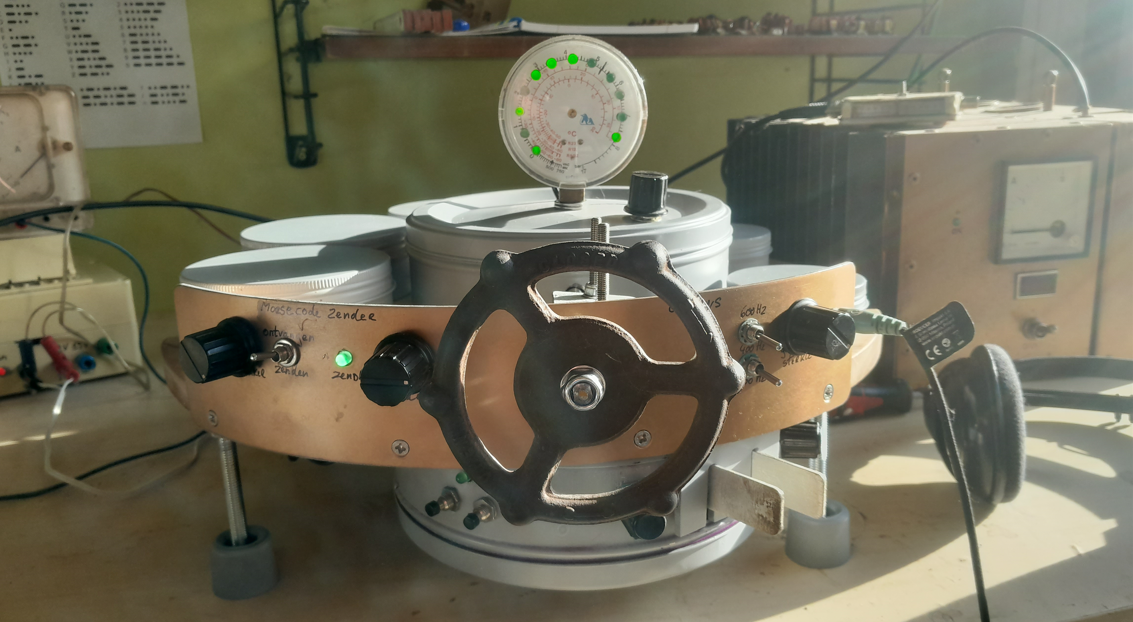
SUSI Frequency Stabilizer.
Being very interested in stabilizing analog oscillators without modern digital tricks like DDS modules, I eventually tried using the readout of a simple frequency counter as the basis for a frequency stabilizer. In 2021 I experimented with PA2OHH’s SUSI binary LED counter and discovered it could be turned into an analog frequency stabilizer.
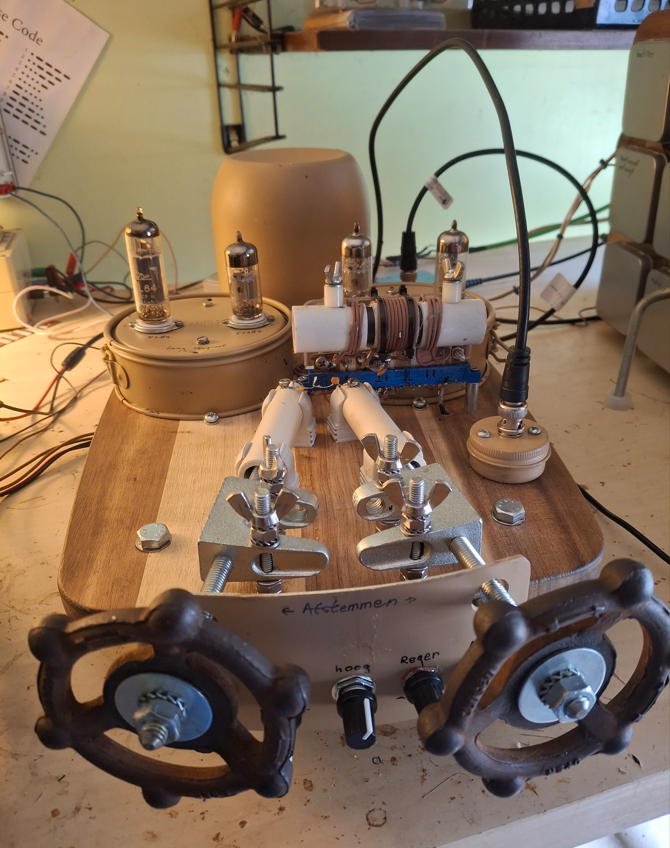
The result worked so well, and was so much fun, that I named it the SUSI stabilizer. My station was more or less finished by 2021, but it felt like a waste not to use this stabilizer everywhere. Over time, every oscillator in both rigs was replaced by a SUSI‑based frequency‑stabilized version. Both rigs now also use a homebrew tuning capacitor, something I always wanted to try.

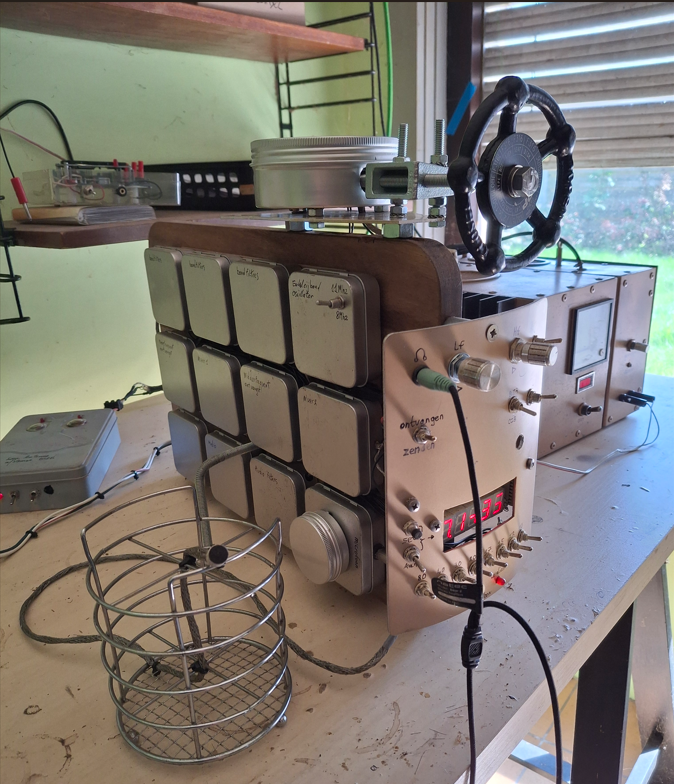

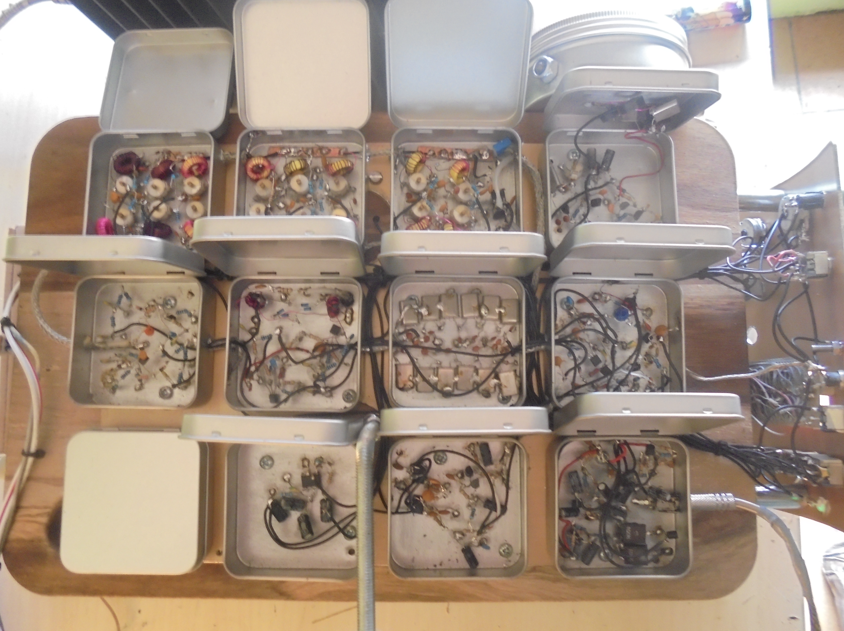
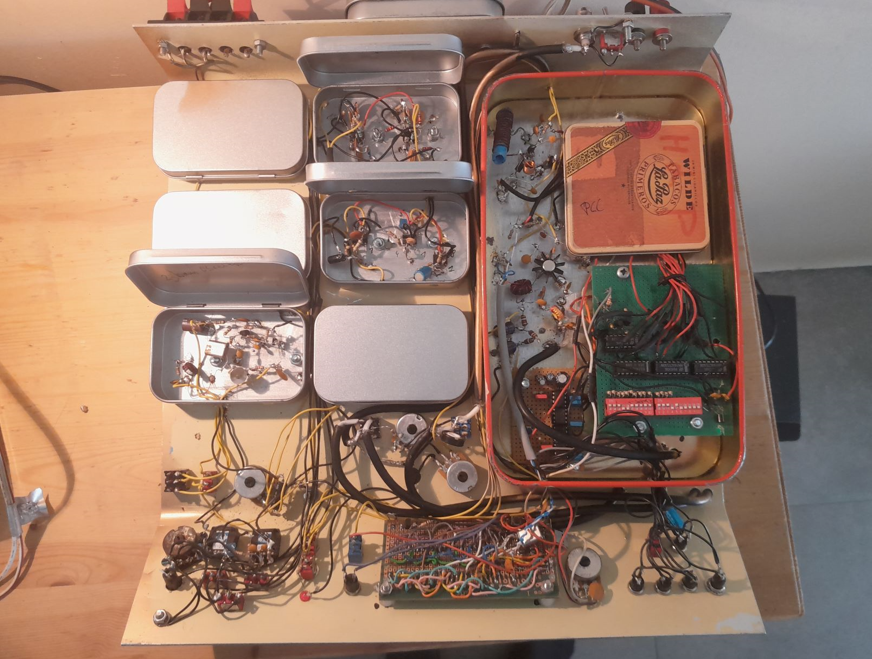
The SSB rig is a good example of my usual construction method. All circuit blocks soldered in seperate tin boxes that I buy from Amazon. They are all bolted to a aliminium ground plate. So lead inductance is minimised. All circuits are therfore schielded from one other. Also, I do love wood. Many of these boxes are not pure aluminium and can be directely soldered. My prefered soldering style is 'ugly'. Another advantage is that every circuit can be accesed very fast for mods or troubleshooting. There is a history and RF reasons why i build the way I do. More explanation in the PDF below.
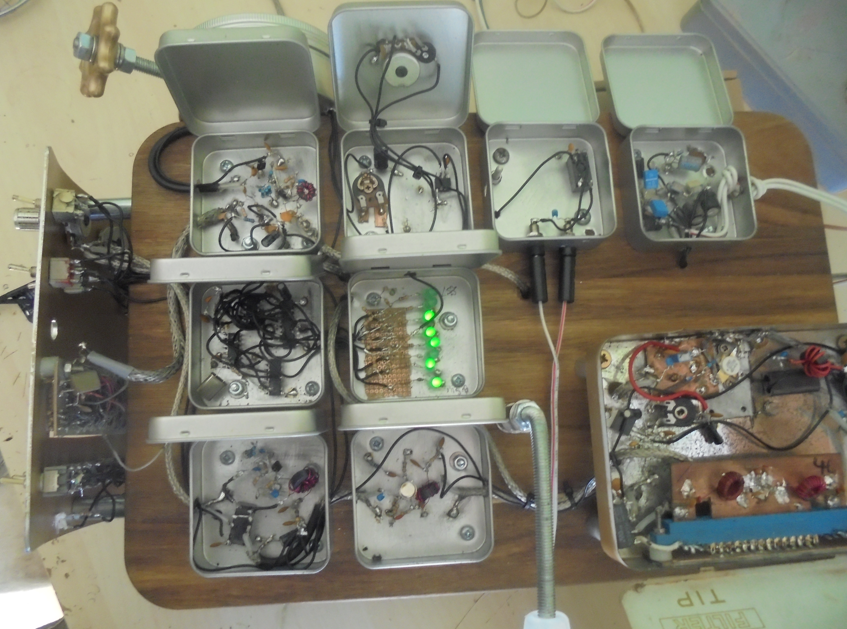
Simultaneous
a linear was build. At first I tried to build a 50W linear with multiple
IRF510s, pfff. Probably it can be done for one band (but when you try it multi
band a lot of explosions occur) Eventually a very expensive RF MOSFET (MRF510) was
bought to do the job.


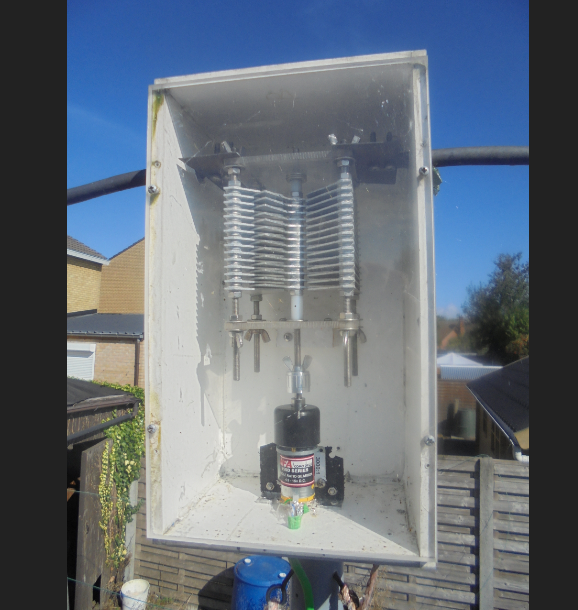
The antenna I use is a homebrew loop. The diameter is 1,6M and tuning is done remotely with a DC motor. The butterfly high voltage capacitor is made with the plans of ON4CEQ as a guideline. The loop was chosen to stay on good terms with the neighbor's which is more important to me than my hobby. In case you ever dought that such a small antenna can be any good. Below the results on RBN after calling CQ on 40/30 and 20M, for 10 minutes, with 5 watt.


There is also a RX 5 to 29 MHZ indoor magnetic loop. The upper band have opend somewhat since 2024 but I am not sure if it is worthwhile to build an TX magnetic loop for 17, 15, 12 and 10M...
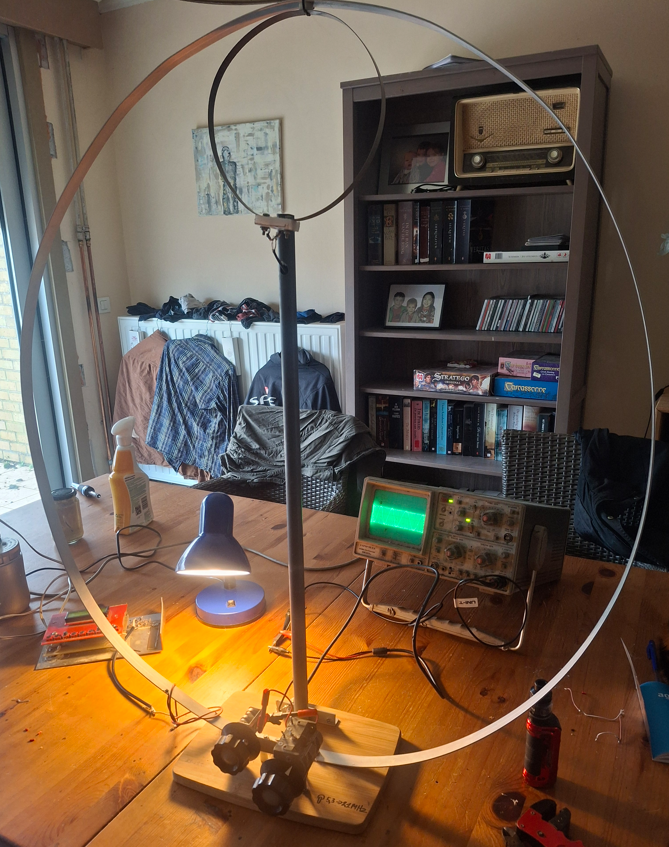
The RX magnetic loop antenna above.
Another homebrew project was a FM/Airband receiver. In 2010 I saw a “Make” article on how to adjust a simple FM radio to receive the Airband. I was more ambitious and salvaged ICs from cheap FM radios from our local scrap yard and tried to build completely from scratch. That did not go well and could not make it work. Only by 2014, after I used tin cans for the RF circuitry the radio worked. Tin cans rule!

In hindsight, I made a lot of detours with all sorts of circuits and components. My conclusion is that the BITX schematic is relatively easy to build for the average homebrewer. You can base nearly every type of rig on it, and it is simply unbeatable.
Since 2008, when I started listening to the short wave bands a lot has changed. Only one MW station left… No more BBC world service…No more world broadcasters… only the lower Ham band remain active. When I listen in most of these guys are well into retirement. Soon the Ham bands will be quiet to , I guess…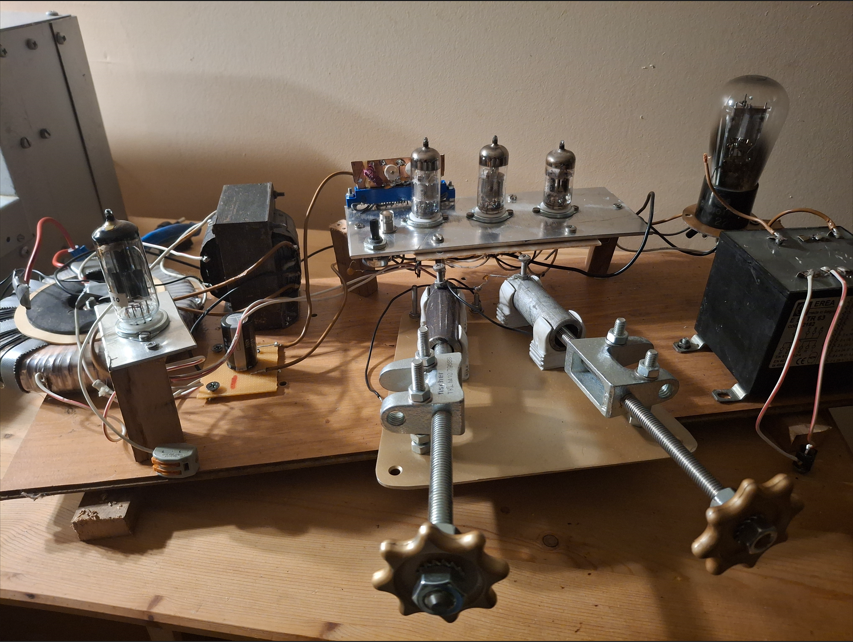

2-The original SSB oscillator was an all-band H & P oscillator. Below
a link to a PDF file describing my quest to build a oscillator
stabilized over a wide range of frequencies stabilized with a H&P.
First part is how (I think) an H&P actually does the job, second
part is an account of the experiments. Along the way I discovered what works and what does not work and a method to lock a H&P on any frequency. At the end, the actual multi band H&P oscillator, for the transceiver, is presented. Its is a pretty long PDF...
On1mws. [email protected]