1
If you have already seen my main page, and/or my G0ISW station page, you will know that for over 40 years I have been most active chasing and studying VHF DX primarily on the 50 MHz, 70 MHz and 144 MHz amateur radio bands. The most exciting and least understood propagation mode on VHF being via Sporadic-E or Es as it is known.
Sporadic-E (Es) propagation on the VHF amateur radio bands is a form of sky wave propagation caused by dense, patchy clouds of highly ionised metallic meteoritic particles that sporadically form in the E-layer of the ionosphere generally between 90 km and 130 km above the Earth. While localized atmospheric conditions can occasionally push this range down to 80 km or up to 150 km, the highest concentration of these ionization patches occurs right around 100 km to 102 km
These ionised clouds act like temporary metallic mirrors that can reflect or refract VHF radio waves, especially on the 50 MHz band, and less commonly on 70 MHz, 144 MHz (and extremely rarely 220 MHz), allowing signals to travel far beyond normal line-of-sight distances, often 800km to 2,400km (500–1,500 miles) in a single hop. It is called “sporadic” because it occurs unpredictably, though it usually occurs in the Northern hemisphere during the Summer months between May to August, with a pronounced peak in June. Es openings can suddenly enable strong DX contacts with very good signal strengths, sometimes for minutes or hours, making VHF radio particularly exciting during these events.

--. ----- .. ... .--
If you cannot see the full index shown on the left edge of your screen, please go to my main page at
From a combination of my own 40+ years of VHF Sporadic-E observations, published Es theories, live and historical studies of DX spots, weather patterns, meteor showers, physics, science etc. I believe I may now have recognised the primary trigger and four (4) alternative triggers for Sporadic-E to be generated, as well as the single essential ingredient required for it to form at all. My theorised Sporadic-E ingredients are shown in the table below with the essential prerequisite being High Meteoric metal deposition into the E layer of the atmosphere, without which Es cannot form.
|
|
||
|
Sporadic-E ingredients |
50/70/90 MHz |
144 MHz |
|
Summer Es main Season from May to August Peaks in June |
Usual main season Most days for several hours |
Usual main season Primarily seen in June |
|
High Meteoric metal deposition rate June and July consistently show the highest influx of metallic meteoritic material into the E layer of the atmosphere |
Essential ingredient From meteor ablation |
Essential ingredient From meteor ablation |
|
Intense E-Layer Solar UV ionisation The most intense Solar UV Radiation occurs in summer June/July/August in Europe. Top of Atmosphere (TOA) insolation 400-480 W/m2 |
Primary trigger Comes from summer Solar UV radiation and can lead to very long lasting openings of several hours |
Primary trigger Comes from summer Solar UV radiation most notable in June on 144 MHz, but 10% of openings compared with 50 MHz |
|
Jet Stream Wind Shear Jet Stream high wind speed shear action, particularly enhanced by interaction with high mountains, such as the Pyrenees and Alps, creates the 'Lorentz Force' effect of condensing free metallic ions into thin Sporadic-E high density cloud layers at 90-130km altitude |
Alternative trigger Jet stream midway location between stations on path important |
Alternative trigger Jet stream midway location between stations on path important |
|
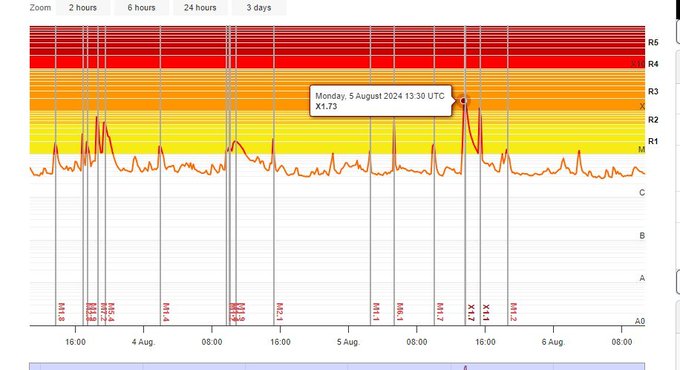
Solar Flares (C, M or X-Class/CME) Can cause intense Solar UV Radiation & E-layer ionisation, particularly X-class, arriving at Earth after 8 minutes with ionisation lasting for hours or days. CME delayed arrival hitting Earth's atmosphere directly or glancing blow |
Alternative trigger (CME 0.5-5 days delayed arrival after flare) |
Alternative trigger (CME 0.5-5 days delayed arrival after flare) |
|
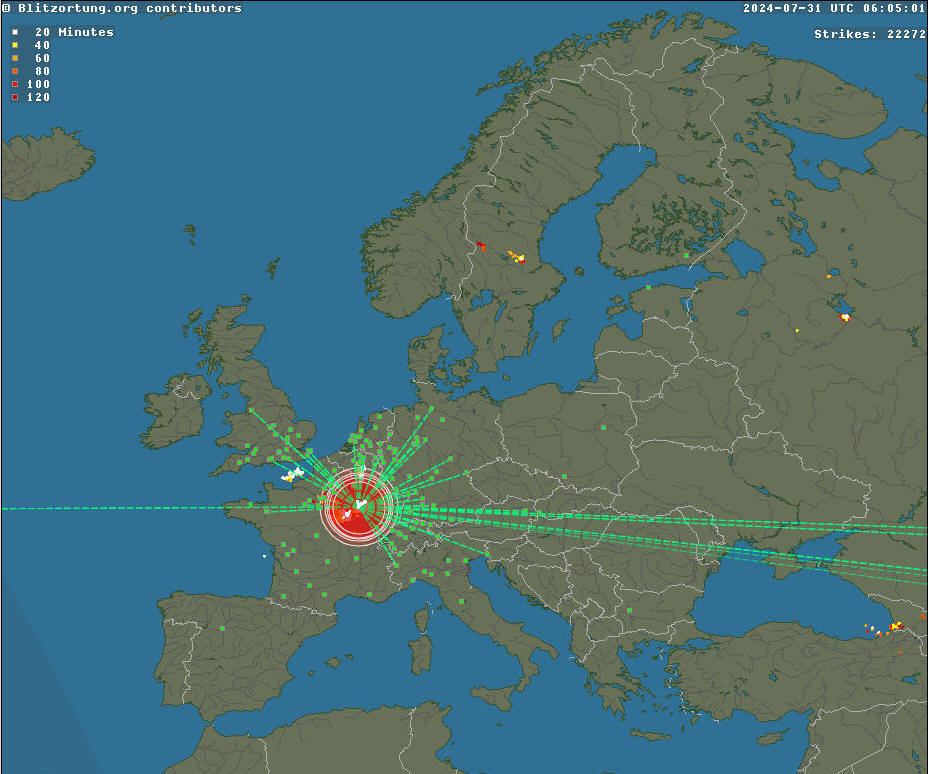
Thunder storms/Lightning/Sprites/Jets/Elves Thunder storms can sometimes cause E-layer ionisation via wind shear. There may also be direct electrical interaction with the atmospheric Global Electric Circuit |
Alternative trigger |
Alternative trigger |
|
Meteor Shower peaks Meteor shower peaks generate significant metallic deposition, sporadic-E enhancement can be approx +/- 5 days either side Every 33 years you will have the Leonid Meteor STORM, with 1000+ meteors per hour, giving the very highest levels possible of metallic meteoritic material deposited into Earth's atmosphere, last observed November 2002 |
Alternative trigger Meteor shower peaks can also lead to ES openings outside of normal Summer season.
|
Alternative trigger Leonid meteor STORM in 2002, with 2300+ meteors per hour recorded, lead to three hours of continuous 144 MHz Es widespread European propagation seen the morning of the storm peak, 59+ signal strengths
|
|
Capable of x1 hop |
Minimum 400km-2400km maximum |
Minimum 1400km-2400km maximum |
|
Capable of x2 hop |
4800km maximum |
3200km maximum observed (Es only) |
|
Capable of x3 hop <7200km |
Yes, Europe to USA (seen up to 90.7 MHz) |
Never observed |
|
Capable of x4 hop <9600km |
Yes, Europe to Japan in mostly daylight paths seen on 50 MHz |
Never observed |

After noting much consistency of the above triggers for Sporadic-E propagation, I started to record them daily in 2026 to record evidence of the triggers involved and to support my theory. For other previous years examples please visit my G0ISW station page
|
2026 SPORADIC-E DAILY OBSERVATIONS |
|||||||||
|
DATE |
TIME UTC |
BANDS |
DXCC FROM ENGLAND IO84 |
INTENSE SUMMER SOLAR UV RADIATION |
METEOR SHOWER PEAK +/- 5 days |
SOLAR FLARE/CME | THUNDERSTORMS | JET STREAM | COMMENTS |
| Wednesday 22nd April 2026 | 1600-1630 | 50 MHz |
Spain, Portugal |
NO |
Lyrids Peak | NO | NO | NO | |
| Thursday 7th May 2026 |
1300-1430 |
50 MHz | Spain, Portugal | NO | eta-Aquarids Peak +1 | NO | NO | NO | |
|
1800-1915 |
50 MHz | Italy, Spain, Portugal | M2.6 solar flare at 1514 UTC | ||||||
| Friday 8th May 2026 | 1930-2000 | 50 MHz | France | NO | eta-Aquarids Peak +2 | C4.22 solar flare at 1550 UTC | NO | NO | |
| Saturday 9th May 2026 | 1700-1800 | 50 MHz | Spain, Ceuta | NO | eta-Aquarids Peak +3 | NO | Brittany in France and Spain | NO | |
| Sunday 10th May 2026 | 0930-1040 | 50 MHz | Italy, Austria, Croatia, Bosnia | NO | eta-Aquarids Peak +4 |
C3.77 solar flare
at 0930 UTC M5.79 solar flare at 1330 UTC |
NO | NO | |
| Tuesday 12th May 2026 | 1430-1545 | 50 MHz | France, Italy | NO | Alpha Scorpiids Peak -4 | C2.01 solar flare at 1240 UTC | NO | YES | Multi hop Es Italy to USA |
| Wednesday 13th May 2026 | 1500-1525 | 50 MHz |
Spain, Portugal |
NO | Alpha Scorpiids Peak -3 | Glancing CME 0720-2000 UTC from 10th May flare | NO | NO | |
| 11540-1900 | Italy, France, Spain | C2.1 solar flare at 1710 UTC and glancing CME 0720-2000 UTC from 10th May flare | 70 MHz Es seen Spain, Ceuta to Slovenia | ||||||
| Thursday 14th May 2026 | 0945-1145 | 50 MHz | Spain, Portugal | NO | Alpha Scorpiids Peak -2 |
C5.5 solar flare
at 0640 UTC C2.4 solar flare at 0910 UTC C2.59 solar flare at 1050 UTC C3.85 solar flare at 1130 UTC |
NO | YES | |
| Saturday 16th May 2026 | 1045-1145 | 50 MHz | Spain, Ceuta | NO |
Corona Austrinids Peak Alpha Scorpiids Peak |
NO | NO | NO | |
| Wednesday 20th May 2026 | 0730-1030 | 50 MHz | Spain, Portugal | NO | First May Camelopardalids Peak -4 | Glancing CME after effects that hit 19th May | NO | NO | |
| 1245-1400 | France, Spain | ||||||||
| Friday 22nd May 2026 | 0730-2025 | 50 MHz | Slovenia, Croatia, Italy, Ukraine, N.Macedonia, Bosnia, Switzerland, Germany, Turkey, Bulgaria, Cyprus, Poland, Belarus, Portugal, Spain | NO | First May Camelopardalids Peak -2 | M2.39 solar flare at 1020 UTC | NO | Over Italy for double hop Es towards Cyprus | 144 MHz Es seen South of England to Romania, Ukraine |
| Saturday 23rd May 2026 | 0700-2005 | 50 MHz | Romania, Germany, Hungary, Croatia, Bosnia, Italy, Spain, France, Serbia, Austria, Ukraine, Corsica, Portugal | NO | First May Camelopardalids Peak -1 |
C3.66 solar flare
at 0540-0740 UTC C2.98 solar flare at 1140-1830 UTC |
NO | NO | |
| 1450-1505 | 70 MHz | France, Germany | |||||||
| Sunday 24th May 2026 | 0735-2050+ shutdown | 50 MHz | Hungary, Israel, Austria, Cyprus, Croatia, Bosnia, Slovenia, Iceland, Italy, Bulgaria, Spain, Finland | NO | First May Camelopardalids Peak |
C3.74 solar flare
at 0236 UTC C1.36 solar flare at 1028 UTC C1.29 solar flare at 1150 UTC |
NO | NO | |
| 1230-1855 | 70 MHz | Switzerland, Croatia, Austria, Poland, Germany, Slovenia, Spain | |||||||
| Monday 25th May 2026 | Ended before 1600 | 50 MHz | Not monitored | NO | First May Camelopardalids Peak +1 |
C1.76 solar flare
at 0654 UTC C1.0 solar flare at 1030 UTC C1.44 solar flare at 1154 UTC |
NO | Across most of Scandinavia and Denmark | Not monitored |
| 1000-1300 | 70 MHz | Estonia, Sweden | Only 2 stations in total from KP20 & KO29 adjoining locator squares | ||||||
| Tuesday 26th May 2026 | 0955-1900 | 50 MHz | Belarus, Poland, Croatia, Austria, Italy, Spain, Portugal | NO | First May Camelopardalids Peak +2 |
C2.94 solar flare
at 0840 UTC C9.73 solar flare at 1230 UTC |
NO | NO | |
| Wednesday 27th May 2026 | 1020-1035 | 50 MHz | Sardinia | NO |
First May
Camelopardalids Peak +3 Second May Camelopardalids Peak -3 |
C3.5 solar flare
at 1216 UTC C2.87 solar flare at 1322 UTC |
NO | NO | Poor short lived Es today |
| 1150-1205 | France | ||||||||
| 1320-1335 | Croatia, Austria, Italy | ||||||||
| Friday 29th May 2026 | NO | NO | NO | NO |
First May
Camelopardalids Peak +4 Second May Camelopardalids Peak -2
|
M1.19 solar flare at 0700 UTC | NO | NO | Despite the M class flare zero Es today, probable lack of metallic meteoritic content |
| Saturday 30th May 2026 | 1500-1815 | 50 MHz | Spain, France, Italy, Portugal | NO | Second May Camelopardalids Peak -1 | C4.76 solar flare at 1150 UTC | NO | #NO # | Weak signals |
| Sunday 31st May 2026 | 0555-1430 | 50 MHz | Italy, Corsica, France, Sardinia, Spain | NO | Second May Camelopardalids Peak | C1.85 solar flare at 0440 UTC | Belgium | Belgium | Strong signals. Intersection of DX spots over Belgium |
| 1625-2035 | Balearics, France, Spain, Portugal, Brasil, Morocco |
C1.77 solar flare
at 1830 UTC C1.55 solar flare at 1940 UTC |
NO | France | Brasil PY2XB +17db 9637km TEPES (TEP+ES)propagation 500w to 1kw power 2x7 element beams! | ||||
| Monday 1st June 2026 | Before 1500-1605 | 50 MHz | Slovenia, Spain, Portugal, Croatia, Canary Islands | YES |
Second May
Camelopardalids Peak +1 Omega Scorpiids Peak -1 |
CME 0500-0800 UTC | NO | Bay of Biscay & France, Germany | Not monitored until 1500 |
| 1500-1505 | 70 MHz | Croatia | |||||||
| Tuesday 2nd June 2026 | 0715-1750 | 50 MHz | Slovakia, Turkey, Italy, Austria, Slovenia, Croatia, Cyprus, Germany, Bosnia, Spain, Portugal, Morocco | YES |
Second May
Camelopardalids Peak +2 Omega Scorpiids Peak |
M1.21 solar flare
at 0440 UTC C2.98 solar flare at 0700 UTC M1.16 solar flare at 1010 UTC C2.34 solar flare at 1350 UTC |
Belgium, Italy & Bulgaria | NO | |
| Wednesday 3rd June 2026 | 0900-1620 | 50 MHz | Hungary, Bosnia, Croatia, Slovenia, Germany, Lebanon, Belgium, Luxembourg, Italy | YES | Omega Scorpiids Peak +1 |
M9.33 solar flare
at 0130 UTC M7.76 solar flare at 0700 UTC X1.07 solar flare at 1120 UTC |
NO | France, Belgium | Belgium ON5CD JO20GX 643km MUF 94MHz |
| 0940-1050 | 70 MHz | Czechia, Slovenia, Austria, Poland | |||||||
| 1525-1530 | Slovenia | ||||||||
| Thursday 4th June 2026 | 0930-1230 | 50 MHz | Croatia, Serbia, Slovenia, Austria, Spain, Belarus, Portugal | YES | Omega Scorpiids Peak +2 | C2.18 solar flare at 0740 UTC | NO | France, Germany, Italy | Weak signals |
| Saturday 6th June 2026 | 1620-1710 | 50 MHz | Slovenia, Italy, Germany | YES |
Arietids
Peak -1 |
M1.86 solar flare
at 1400 UTC C1.00-1.79 solar flaring all day 0950-2320 UTC |
NO | NO | Weak signals |
| 2005-2030 | Iceland, France, Spain, Sardinia, Italy | Stronger | |||||||
| Sunday 7th June 2026 | 0720-1355 | 50 MHz | Italy, Sardinia, Portugal, Spain, Balearics, Poland, Lithuania, Germany, Algeria | YES | Arietids Peak |
C2.59 solar flare
at 0540 UTC C2.42 solar flare at 0820 UTC |
NO | Bay of Biscay, Pyrenees | |
| 1535-2040 | France, Spain, Italy, Germany, Switzerland, Luxembourg, Croatia, Bulgaria, Iceland | C1.72 solar flare at 1600 UTC | |||||||
| Monday 8th June 2026 | 0610-1110+ shutdown | 50 MHz | Bosnia, Croatia, Slovenia, Italy, Balearics, Portugal, Spain, Denmark, Sardinia | YES |
Arietids
Peak +1 |
C4.53 solar flare at 0510 UTC | NO | France, Belgium | Patchy, intermittent |
| Tuesday 9th - Thursday 11th June 2026 | Not monitored away on holiday | ||||||||
| Friday 12th June 2026 | 1550-1655 | 50 MHz | France, Italy, Belarus, Ukraine | YES | June Lyrids Peak -3 | C1.87 solar flare at 1920 UTC | NO | United Kingdom, Germany, North Sea | |
| 1725-2110+ shutdown | Iceland, Norway, Finland, Sweden, Hungary, Serbia, Austria, Western Sahara, Morocco, Croatia, Bosnia | ||||||||
| Saturday 13th June 2026 | Before 0620-1000 | 50 MHz | Poland, Bosnia, Italy, Sweden, Portugal, Germany | YES | June Lyrids Peak -2 | Glancing CME 0400-1500 UTC from 11th June flare | NO | United Kingdom, Germany, North Sea | |
| 1635-2040+ shutdown | Portugal, Spain, Balearics, Latvia, Estonia, Sweden, Finland, Germany, France, Ceuta, Greece, Italy, Czechia, Austria, Slovenia | Weak signals | |||||||
| Sunday 14th June 2026 | 0740-0940 | 50 MHz | Spain, Portugal | YES | June Lyrids Peak -1 | C1.58 solar flare at 0850 UTC | NO | United Kingdom, Germany, North Sea | Weak, Patchy, intermittent, big gaps |
| 1020-1925 | France, Hungary, Bosnia, Croatia, Turkey, Italy, Spain, Portugal, Sardinia | ||||||||
| Monday 15th June 2026 | Before 0445 to before 1500 | 50 MHz | Italy | YES | June Lyrids Peak | C1.00 solar flare at 0410 UTC | NO | Iraq to Pakistan |
Italy working
China Left for work 0530 not monitored until 1500 |
| 0935-0940 | 70 MHz | Slovenia | C1.32 solar flare at 0900 UTC | Belgium | |||||
| Wednesday 16th June 2026 | 1810-2045 | 50 MHz | Portugal, Spain, France, Romania | YES | June Lyrids Peak +2 | C2.53 solar flare at 1500 UTC | NO | English Channel, Brittany |
France 682-817 km MUF up to 90 MHz, but nil on 70 MHz |
| Thursday 17th June 2026 | 0850-1335 | 50 MHz | Italy, France, Spain, Portugal, Algeria, Canary islands, Morocco | YES |
Sagittarids Peak -2 June Lyrids Peak +3 |
C1.78 solar flare
at 0740 UTC C2.00 solar flare at 1150 UTC |
NO | United Kingdom, English Channel, Brittany | |
| 1610-2030+ shutdown | Italy, Spain, Sardinia, France, Balearics, Western Sahara |
N.France 10k
strikes S.France 3.8k strikes Spain 900 strikes |
Extensive 144 MHz Es over S.France | ||||||
| 1740-1845 | 70 MHz | Spain | |||||||
| Saturday 20th June 2026 | 1140-2000 | 50 MHz | Croatia, Romania, Sardinia, Bosnia, Italy, Spain, Balearics, France, Morocco, Sardinia, Iceland | YES | Sagittarids Peak +1 |
C2.00 solar flare
at 1120 UTC C1.99 solar flare at 1220 UTC M1.05 solar flare at 1500 UTC |
NO | NO | Weak, Patchy |
| Sunday 21st June 2026 |
1350-2050+
shutdown
|
50 MHz | Italy, France, Sardinia, Germany, Switzerland, Bosnia, Greece, Slovenia, Poland, Spain, Hungary, Austria, Czechia, Portugal | YES | Sagittarids Peak +2 |
C2.67 solar flare
at 1810 UTC M6.9 solar flare at 1920 UTC |
Germany 6.4k
strikes Bosnia 1.3k strikes |
NO | Stronger |
| 1450-2030 | 70 MHz | Austria, Slovenia, Slovakia, Balearics, Bosnia, Croatia, Switzerland, Poland, Hungary, Spain, Bulgaria, Czechia | |||||||
| Monday 22nd June 2026 | 0845-1250 | 70 MHz | Spain, Austria, Croatia, Slovenia, Switzerland | YES | Sagittarids Peak +3 | NO | NO | NO | |
| 1615-1710 | Spain | ||||||||
| Before 1530-2045 | 50 MHz | Not monitored | |||||||
| Tuesday 23rd June 2026 | 1120-1125 | 50 MHz | Newfoundland Canada | YES |
Sagittarids Peak
+4 Alpha Bootids Peak -4 Tau Cetids Peak -4 |
Glancing CME 1040 UTC from 19th June flare | NO | North Atlantic | 2xEs |
| 1530-2120 | Sardinia, Balearics, Spain, Portugal, Morocco, Canaries, Azores | C2.53 solar flare at 1910 UTC | |||||||
| Wednesday 24th June 2026 | 0620-1955 | 50 MHz | Spain, Portugal, Israel, Croatia, Norway, Sweden, Poland, Ukraine, Belarus, Greece, Slovakia, Lebanon, Cyprus, Germany, Switzerland | YES |
Alpha Bootids Peak
-3 Tau Cetids Peak -3 |
C3.54 solar flare
at 0710 UTC C3.81 solar flare at 1440 UTC C2.52 solar flare at 1840 UTC |
NO | North Sea | |
| 0820-0825 | 70 MHz | Spain | |||||||
| 1145-1325 | Spain, Balearics | Band 2 DX Spain, Morocco 87-88 MHz from 1157-1219 UTC | |||||||
| Thursday 25th June 2026 | 0600-2035+ shutdown | 50 MHz | Balearics, Spain, Portugal, Turkey, Morocco, Bosnia, Sardinia, Italy, San Marino, Saudi Arabia, Bulgaria, Croatia, Ukraine, France, Switzerland | YES |
Alpha Bootids Peak
-2 Tau Cetids Peak -2 |
C1.68 solar flare
at 0700-0800 UTC C2.24 solar flare at 0900 UTC |
Brittany 860
strikes Bay of Biscay 200 strikes |
NO | 3xEs Saudi Arabia 5583km |
| 1015-1130 | 70 MHz | Spain | Bay of Biscay 908 strikes | ||||||
| 1625-2025 | Austria, Slovenia, Bulgaria, Bosnia, Cyprus, Romania, Spain, Greece, Czechia, Poland, Germany, Italy, France | C6.65 solar flare at 1500 UTC | Alps 1.9K strikes | France new DXCC | |||||
| 1720-1955 | 144 MHz | Serbia, Croatia, Italy, Slovenia, Hungary | |||||||
| Friday 26th June 2026 | Before 1500-2100+ station shutdown | 50 MHz | Iceland, France, Bulgaria, Morocco, Spain, Italy, Portugal, Poland, Russia, Ukraine, Kazakhstan, Belarus, Norway, Sweden, Switzerland, Lichtenstein, Romania | YES |
Alpha Bootids Peak
-1 Tau Cetids Peak -1 |
C5.72 solar flare at 1250 UTC | France 1.1K strikes | North Atlantic, North Sea | Band 2 DX and 144 MHz earlier in day apparently |
| Saturday 27th June 2026 | 0505-0610 | 50 MHz | Slovenia, Italy | YES |
Alpha Bootids Peak Tau Cetids Peak |
C2.17 solar flare at 0500 UTC | English Channel 12K strikes |
Bay of Biscay North Atlantic |
|
| 0850-2135 | Finland, Lithuania, Ukraine, Iceland, Latvia, Sweden, Estonia, Poland, Belarus, Russia, Germany, Spain, Poland, France, Italy | C7.46 solar flare at 2110 UTC | France 7.8K strikes | ||||||
| 1630-1730 | 70 MHz | Spain | |||||||
| Sunday 28th June 2026 | 0600-1200+ | 50 MHz | Croatia, Italy, Spain, Morocco, Algeria | YES |
Alpha Bootids Peak
+1 Tau Cetids Peak +1 Theta Ophiuchids Peak -1 |
C2.7 solar flare at 0950 UTC | Alps 9.7K strikes at 1515 UTC | France, Denmark, Greece, North Sea | |
| 1200-2005+ station shutdown | 70 MHz | Spain, Balearics, Portugal, Greece, Austria, Slovakia, Croatia, Lebanon, Czechia, Bosnia, Slovenia, Poland, Hungary, Germany, Switzerland, Denmark, Sweden |
Band 2 DX from
Spain North Africa and Germany 87-92 MHz from 1229-1701 UTC
|
||||||
| Monday 29th June 2026 | Not monitored | 50 MHz had been open today | |||||||
| Tuesday 30th June 2026 | 0730-1650 | 50 MHz | Serbia, Portugal, Croatia, Morocco, Sardinia, Estonia, Portugal, Germany, Cyprus, Bosnia, Slovakia, Hungary, Austria, Italy, Finland, Slovenia | YES |
Alpha Bootids Peak
+3 Tau Cetids Peak +3 Theta Ophiuchids Peak +1 |
C3.84 solar flare
at 0630 UTC M5.88 solar flare at 1250 UTC X1.08 solar flare at 2010 UTC |
NO | Bay of Biscay North Sea | Band 2 DX from Spain 88 MHz from 0820-0825 UTC |
| Wednesday 1st July 2026 | 0530-1440 | 50 MHz | Italy, Croatia, Spain, Hungary, Poland, Germany, Portugal, Austria, Ukraine, Morocco, Croatia, Slovenia, USA, San Marino | YES | Theta Ophiuchids Peak +2 |
C7.24 solar flare
at 0500 UTC M1.19 solar flare at 0620 UTC M2.55 solar flare at 0810 UTC M2.63 solar flare at 1450 UTC M2.5 solar flare at 1500 UTC |
NO | France, North Atlantic, Siberia to China |
Italy on 50 MHz
working Japan and China One US station heard |
| 1625-1815 | Spain, Portugal, Canaries | ||||||||
| Thursday 2nd July 2026 | 0720-1230 | 50 MHz | Portugal, Canaries, Iceland, Spain, Canada | YES | Theta Ophiuchids Peak +3 |
C6.79 solar flare
at 0720 UTC M2.87 solar flare at 1020 UTC |
NO | North Atlantic | Weak, Patchy, intermittent |
| Friday 3rd July 2026 | Before 1515-2120+ station shutdown | 50 MHz | Spain, Italy, Sardinia, Poland, Portugal | YES | Theta Ophiuchids Peak +4 | M1.47 solar flare at 1310 UTC | NO | NO | Weak, Patchy, intermittent |
| Saturday 4th July 2026 | 0810-1145 | 50 MHz | Spain, Portugal, Morocco, Sardinia | YES | Theta Ophiuchids Peak +5 | M1.81 solar flare at 0800 UTC | NO | NO | Weak, Patchy, intermittent |
| 1845-2130+ station shutdown | Croatia, Bulgaria, Slovenia, Italy, Bosnia, Germany, Austria, Hungary, Turkey, Czechia, Switzerland, Serbia, Luxembourg, N.Macedonia, Netherland, Belgium, Spain |
M1.95 solar flare
at 1840 UTC X1.31 solar flare at 2040 UTC |
NO | Germany, Switzerland | Strong | ||||
| Sunday 5th July 2026 | 0730-2010 | 50 MHz | Romania, Hungary, Bulgaria, Slovakia, Croatia, Bosnia, Austria, Slovenia, N.Macedonia, Greece, Italy, Sardinia | YES | July Pegasids Peak -5 |
M1.00 solar flare
at 0720 UTC M1.69 solar flare at 1110 UTC M5.39 solar flare at 1750 UTC |
NO | Germany, France | Europe working Japan first thing |
| Monday 6th July 2026 | Before 1515-2045+ station shutdown | 50 MHz | Austria, Italy, Sardinia, Greece, Croatia, Germany, Ukraine, Switzerland, Norway, Montenegro, Belarus, Poland, Czechia, USA, France, Romania, Hungary | YES | July Pegasids Peak -4 | C3.76 solar flare at 1350 UTC | Italy 6.7K strikes | NO | |
| Tuesday 7th July 2026 | 0545-0725 | 50 MHz | Italy, Austria, Bosnia, Croatia, Sardinia, Spain, Iceland | YES | July Pegasids Peak -3 | NO | NO | North Atlantic, North Sea, Turkey to China |
Italy working
Japan 0625-0720 UTC Spain working Japan 0705-0725 UTC |
| Wednesday 8th July 2026 | 0620-1755 | 50 MHz | Spain, Hungary, Slovenia, Greece, Sardinia, Croatia, Portugal, Balearics, Slovakia, France, Norway, Sweden, Austria, Poland, Iceland, Bosnia | YES |
July Pegasids Peak -2 July Phoenicids Peak -5 |
M1.56 solar flare at 1750 UTC | NO | North Atlantic, North Sea, Germany to Romania | Weak, Patchy, intermittent |
| Thursday 9th July 2026 | 0920-1300 | 50 MHz | Latvia, Lithuania, Estonia, Poland, Germany, France | YES |
July Pegasids Peak -1 July Phoenicids Peak -4 |
C2.7 solar flare at 0710 UTC | NO | Sweden to Greece | |
| 1605-2055 | Spain, Italy, Portugal, Norway | ||||||||
| Friday 10th July 2026 | Before 1220-2055+ station shutdown | 50 MHz | Spain, France, Portugal, Italy, Iceland, Finland, Sardinia, Poland, Austria, N.Macedonia, Bosnia | YES |
July Pegasids Peak July Phoenicids Peak -3 |
C6.01 solar flare at 1450 UTC | French Alps, Pyrenees | NO | Strong signals from Spain and France |
| Saturday 11th July 2026 | 0750-2205 | 50 MHz | Italy, Croatia, Slovenia, Poland, France, Czechia, Ukraine, Germany, Spain, Greece, Switzerland, Canary Islands, Sardinia, Morocco, Norway, Bulgaria | YES |
July Pegasids Peak +1 July Phoenicids Peak -2 |
C1.1 solar flare at 0336 UTC | NO | NO | |
| 1045-1155 | 70 MHz | Spain, France, Canary Islands, Slovakia, Austria | NO | North Atlantic off the coast of Morocco | |||||
| Sunday 12th July 2026 | 0900-1055 | 50 MHz | Italy | YES |
July Pegasids Peak +2 July Phoenicids Peak -1 |
M1.19 solar flare at 0810 UTC | Bay of Biscay 1.5k strikes | NO | |
| 1645-1950 | Sweden, Finland, Italy, Iceland, Estonia | CME 1644 UTC from 9th July solar flare | |||||||
| Monday 13th July 2026 | Before 1505-1635 | 50 MHz | Croatia, Ukraine, Sardinia | YES |
July Pegasids Peak +3 July Phoenicids Peak Alpha Cygnids Peak -5 |
NO |
Alps 1.5k strikes Germany 5.8k strikes |
Spain, France, Italy | |
| Tuesday 14th July 2026 | 0700-1810 | 50 MHz | Slovenia, France, Italy, Balearics, Spain, Sardinia, Portugal, Canary Islands, Morocco | YES |
July Pegasids Peak +4 July Phoenicids Peak +1 Alpha Cygnids Peak -4 |
C1.53 solar flare
at 0950 UTC C3.96 solar flare at 1230 UTC |
Alps 4.5k strikes | Spain, France | |
| Wednesday 15th July 2026 | 0715-1615 | 50 MHz | Portugal, Spain, Italy, Slovenia, France, Ceuta, Balearics, Switzerland, USA, Sardinia, USA, Kuwait, Germany, Canada | YES |
July Pegasids Peak +5 July Phoenicids Peak +2 Sigma Capricornids Peak -5 Alpha Cygnids Peak -3 |
C3.39 solar flare at 0840 UTC | France 9.7k strikes | Spain, France, Italy, Denmark, North Atlantic | |
| Thursday 16th July 2026 | 0815-1315 | 50 MHz | Portugal, Spain, Morocco, Sardinia, France | YES | July Phoenicids Peak +3 Sigma Capricornids Peak -4 Alpha Cygnids Peak -2 |
C5.26 solar flare at 2130 UTC |
Bay of Biscay 2.5k
strikes English Channel 1.4k strikes |
Spain, France, Italy | |
| 1600-1610 | Spain, Portugal |
Bay of Biscay 1.5k
strikes France 2.2k strikes |
|||||||
| 1825-2025+ station shutdown | France, Italy, N.Macedonia, Sardinia, Algeria | France 10k strikes Germany 15k strikes |
France super cell 10cm hailstones | ||||||
| Friday 17th July 2026 | Before 1525-2035+ station shutdown | 50 MHz | Spain, Balearics, France, Italy, Poland, Corsica, Morocco, Croatia, Slovenia, Ukraine, Lithuania, Serbia, Montenegro, Russia, Germany, Crete | YES | July Phoenicids Peak +4 Sigma Capricornids Peak -3 Alpha Cygnids Peak -1 |
C1.47 solar flare at 0010 UTC | France 8.4k strikes | Spain, France, Italy | |
| Saturday 18th July 2026 | 0910-2250 | 50 MHz | Italy, France, Lebanon, Greece, Montenegro, Slovenia, Hungary, Cyprus, Israel, Bosnia, Slovakia, Slovenia, Spain, Algeria, Sardinia, Kuwait Serbia, Poland, Romania, Bulgaria, Switzerland | YES | July Phoenicids Peak +5 Sigma Capricornids Peak -2 Alpha Cygnids Peak |
C2.36 solar flare
at 0400 UTC C1.18 solar flare at 0940 UTC C1.24 solar flare at 1020 UTC C1.54 solar flare at 2150 UTC |
France, Italy, Balkans | North Atlantic, France, Italy | |
| Sunday 19th July 2026 | 0520-2120+ station shutdown | 50 MHz | Italy, Croatia, Slovenia, Germany, Sardinia, Spain, Bosnia, Ukraine, Austria, Iceland, Slovakia, Romania, USA, France, Greece, Algeria, Ceuta, Portugal | YES | Sigma Capricornids Peak -1 Alpha Cygnids Peak +1 |
C1.03 solar flare
at 0020 UTC C1.86 solar flare at 1910 UTC |
NO | North Atlantic, Georgia to China | Italy working China/Japan first thing. England working Japan 0810 UTC |
| Monday 20th July 2026 | 1305-2100+ station shutdown | 50 MHz | Spain, Portugal, USA, France, Lithuania, Balearics, Finland, Azores, Corsica, Malta, Sardinia, Switzerland, Denmark, Sweden, Norway, Aland Island, Finland, Italy, Algeria, Iceland, Croatia | YES | Sigma Capricornids Peak Alpha Cygnids Peak +2 |
C2.88 solar flare
at 1230 UTC
M2.5 solar flare at 1430 UTC M1.1 solar flare at 1920 UTC |
Balkans 13k strikes | North Sea, Spain, France, Italy, Romania | |
| Tuesday 21st July 2026 | 0615- | 50 MHz | Spain, Italy, Sardinia | YES | Sigma Capricornids Peak +1 Alpha Cygnids Peak +3 |
C4.39 solar flare at 0400 UTC |
Alps 3k strikes Adriatic Sea 13k strikes |
Italy | |
In the above table times are shown to the nearest 5 minute mark, Countries are shown in the order in which they are first seen. Sporadic-E propagation is only deemed to have taken place if it lasts at least 5 minutes, in order to avoid false Meteor Scatter reporting. Es openings are deemed to have ended if no DX is heard for 30 minutes. New Countries worked by me are shown as DXCC and got away are shown as DXCC
| SPORADIC-E TRIGGER CHECKS | |||||
|
INTENSE SUMMER SOLAR UV RADIATION |
METEOR SHOWER PEAK | SOLAR FLARES | CME | THUNDERSTORMS | JET STREAM |
| MAY to AUGUST |
 |
 |
 |
 |
 |
|
By far the most exciting VHF propagation mode in my opinion is Sporadic-E which can magically appear for a limited time and allow long distance (DX) VHF radio contacts to be made, often at high signal strengths by even the most modest radio stations.
Sporadic-E
propagation, also known as
ES
propagation, is a type of atmospheric
phenomenon that occurs in the Sporadic-E propagation is characterised by the reflection and limited refraction of radio waves in the E region of the ionosphere, hence its name. The E region is located at an altitude of approximately 90 to 130 kilometres (56 to 81 miles) above the Earth's surface. Normally, radio waves in this VHF frequency range pass through the E region and continue into space or propagate through other means, such as ground-wave or Tropospheric ducting. However, under certain atmospheric conditions, Sporadic-E clouds or patches form within the E region. These clouds/layers consist of ionized metallic particles from meteors, which can reflect and refract radio waves. When this happens, radio signals can be reflected back to Earth over long distances, allowing for communication beyond the normal VHF line-of-sight range which is only around 50-100km.The Sporadic-E clouds are not uniform in shape, size, surface texture or orientation and are constantly twisting and turning, so that radio signals being reflected or refracted from them may be of any polarisation or continuously changing polarisation. The image below is of noctilucent clouds (NLC), whilst not Sporadic-E, it does demonstrate well how such high clouds at around 85km altitude, are non uniform and even have distinct waves or ripples apparent.
Photo by GoforOrbit https://commons.wikimedia.org/wiki/File:Noctilucent_clouds_over_Uppsala,_Sweden.jpg
Noctilucent clouds at around 85km altitude - Photo by Jan Koeman, Kloetinge, the Netherlands, July 2009
The formation of sporadic-E clouds is influenced by a variety of factors, including solar activity, weather patterns, and the composition of the ionosphere. These clouds can appear and disappear relatively quickly, often within minutes or hours. They tend to be irregularly shaped and can support a wide range of frequencies, leading to varying propagation conditions for different VHF bands. Sporadic-E propagation is often associated with enhanced signal strength, long-distance communication, and the possibility of receiving distant television and radio stations. It can result in unexpected radio contacts, opening up opportunities for amateur radio operators to communicate with stations that are usually outside their normal VHF short distance range. During periods of intense sporadic-E activity, multiple signals can be heard simultaneously, leading to a crowded and dynamic radio environment. It is worth noting that Sporadic-E propagation is sporadic by nature, meaning it is unpredictable and can occur at any time of the year. However, it is more commonly observed during the summer months (May to August) in the northern hemisphere, peaking in June. This is because during May to July is the period for the most metallic meteoritic deposition in the Earth's atmosphere. Monitoring the VHF bands and staying alert to signs of Sporadic-E activity, such as sudden signal strength increases or the reception of distant stations, can help radio enthusiasts take advantage of these unique propagation conditions. The exact conditions necessary for the appearance of Sporadic-E layers have remained mostly a mystery, until recent years, where a gradual consensus is being formed, if likened to a recipe, the key ingredient always required is the High Meteoric metal deposition in the E-Layer and intense E-layer ionisation, with the most intense solar UV radiation being at local midday during the Summer months (May to August) in the Northern hemisphere.
T he alternative triggers shown above don't necessarily initiate Sporadic-E every time, for example vertical wind shear from the Jet Stream can sometimes take as long as several days to build up the required conditions for the formation of Sporadic-E clouds, depending on wind speed, continuity, direction and interaction. Thunderstorms and their associated lightning/sprites sometimes trigger Sporadic-E but often don't.Random Meteors burn up in the atmosphere daily, the highest daily meteor rates being at dawn and during the Summer months when 3 times as much deposition occurs as it does in the winter months. Meteor showers can additionally generate significant further deposition enhancing the normal daily rates, this can sometimes lead to much rarer Sporadic-E openings being generated during the winter months too.
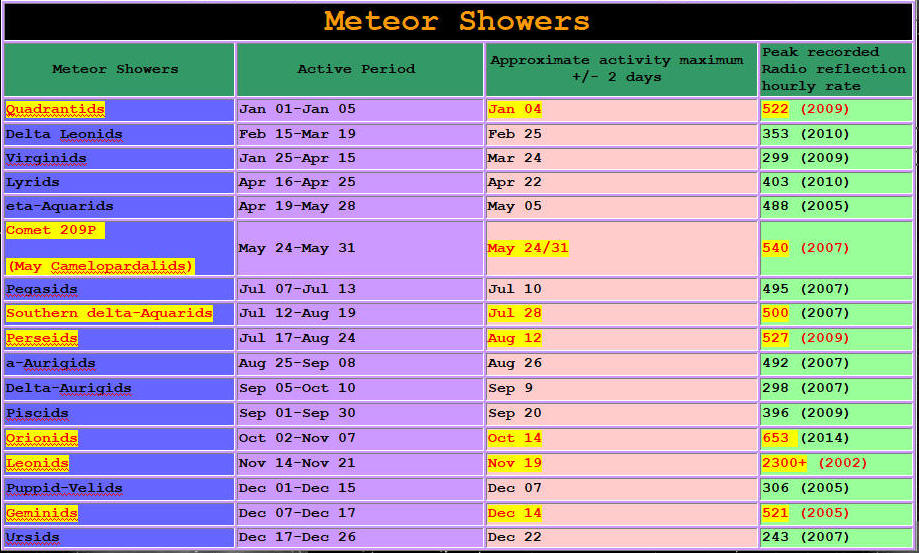
In addition to random meteors there are regular Meteor showers where greater numbers of meteors occur during specific dates, see below.
Extremely rarely these Meteor Showers can be so intense (ZHR 1000+ Meteors per hour) they are then classified as Meteor Storms. I have only ever witnessed this once on 19th November 2002 during the Leonids Meteor Storm when over 2300 meteors per hour were being recorded in Europe from 0430 UTC.Apparently this particular Leonids Meteor Storm occurs every 33 years, so will next be seen in 2035, but between times the Tempel-Tuttle comet debris trail responsible for the Leonids metoer showers will pass close to Jupiter and may be adversely affected by its enormous gravity, as has happened before. In Europe in 2002 the '1767 debris trail' was observed and later the same day in the USA the '1833 debris trail' was also observed, there being two distinct and separate debris trails from this Comet. The effect of this 19th November 2002 Meteor Storm was that an absolutely huge amount of metallic meteor deposition occurred in the E layer, leading to a widespread European Sporadic-E opening on 144 MHz that lasted non stop for around three hours, with very high 59+ signal strengths being observed. I have pondered over whether or not these radio signals on that day should be classified as being via Meteor Scatter or Sporadic-E and have come down on the side of Sporadic-E. My rationale is that Meteor Scatter propagation outside of this event has a clear time duration time measured in seconds or at most a few minutes. For there to be an opening so intense and lasting non-stop for 3 hours, with no audible indication of individual bursts or pings, associated with MS, it has to be categorised as being more closely similar to Sporadic-E, which also has the essential requirement of there being significant metallic meteor deposition and ionisation. Other scientific research papers on Sporadic-E have also made the same classification as me.
Below the famous engraving by Adolf Vollmy of the November 1833 Leonids Meteor Storm
Below a depiction of the November 1833 Leonids Meteor Storm over Niagara Falls, printed in 1888
Atmospheric Gravity Waves (AGW) can be produced by both Thunder Storms, rapid air flow over Mountains or Jet Stream instability. Thunderstorms do not always initiate Sporadic-E nor do mountains have to be present as can be observed with Transatlantic openings. There is significantly more VHF ES observed in Europe than in the USA every year, why is this? Well it appears it may be due to the predominantly Summer season Eastward bound Jet Stream, which flows across the Atlantic from the USA towards Europe. It causes Wind Shear and Atmospheric Gravity Waves (particularly when it hits mountain ranges), which in turn travel vertically up into the E layer of the atmosphere and cause the metallic particles from meteoric deposition to be condensed, charged and moved vertically upwards in tandem with the Earth's magnetic field, due to the Lorentz Force effect. This forms the up to 4km thick Sporadic-E layers in random locations, which permit reflection or refraction of VHF radio signals. See the pdf linked below from Flavio Egano IK3XTV
Observations over many years show consistent repeating areas of European VHF ES clouds in the following locations: Bay of Biscay, Pyrenees mountains, Balkan mountains, Swiss Alps and to a lesser extent the North Sea. Looking at the raised relief map of Europe below, the mountain ranges thought to assist with Wind Shear in these areas are clearly visible. The Polar Front Jet Stream is what influences Europe and whilst it is moving in a prevailing West to East direction pattern it buckles when warm air moves further North than usual or cold air moves further South than usual.
The jet stream regularly flows
over the
Spanish Pyranees
mountains thereby causing
ES to form
over the
Bay of Biscay.
However the precise direction of movement of the Jet Stream
depends on the weather, ES
in 2024 was noticeably poorer than normal and this appears due
to the Jet Stream being stuck much further South than normal
leading to poor Summer weather in the UK too. If the Jet Stream
moves and misses the mountains altogether then Wind Shear is
much less likely to occur and ES
becomes rarer.
In the image below we can clearly see 144 MHz ES signals converging over the Balkan mountains
When there is no wind shear available from the Jet Stream, or with no mountains in the correct location, then catching Sporadic-E on VHF can be problematic. We can see on the relief map of North America below that the significant mountain ranges sit primarily on the US West coast, over which you would expect the Jet Stream to cause vertical Wind Shear and VHF Sporadic-E in the Summer months, the problem is that radio stations are usually all located on land and anything further West would be in the Pacific, so this explains why the USA 'sees' far less Sporadic-E than Europe each year. However thunderstorms/-lightning and X-class solar flares can also trigger Sporadic-E.
However thunderstorms can generate Atmospheric Gravity Waves (AGW), which can also initiate Sporadic-E. Here is a good example from the USA on Tuesday 30th July 2024 where the middle of the Broadcast FM (87-108 MHz) Sporadic-E paths shown coincide with the areas for thunderstorms that were forecast.
VHF radio signals may be reflected from a steeper angle, where the Sporadic-E cloud MUF is high enough, or be reflected usually at a shallower angle. If the Maximum Useable Frequency (MUF) isn't high enough to support the transmitted VHF frequency in use, then the radio signal will pass straight through the ES cloud layer.These ES clouds are sometimes static in position or may move in a particular direction, they appear to often descend from their maximum peak altitude over time, particularly at sunset.Propquest by Jim Bacon G3YLA uses Jet Stream and other data to forecast the likelihood of Sporadic-E formation in a visual format, right click on image below to view current data.
Signals can be bounced from one Sporadic-E cloud to another, with many recorded VHF signals at 50 MHz bouncing between two clouds. Due to the specific signal reflection angles, at the time, the ground areas able to receive them can be quite specific, so a Radio Amateur in one location may be working DX, but his neighbour a mere 10km away may hear nothing. When viewed from above the area in which two-way communication should be possible via a Sporadic-E cloud can be described as looking like a 'doughnut'. The centre missing part of the doughnut is the Sporadic-E cloud location and the main part of the doughnut is the area in which stations either side of the centre may be able to reflect their VHF radio signals, if the MUF supports the frequency in use. If a station is outside the doughnut, or directly beneath the Sporadic-E cloud in the centre, they will be unable to bounce their signals off it. An example is shown below, courtesy of FMlist, where we can see two Sporadic-E cloud areas observed on the morning of 17th June 2023 in the FM Band II 87-108 MHz frequency range.
Sporadic-E clouds support the reflection of VHF radio signals at fairly shallow angles of up to around 25 degrees, the higher the radio frequency the shallower the angle of incidence needed, too high an angle or too high a radio frequency for the MUF, will result in no VHF signal reflection and the signal will travel straight through the Es cloud into space. All angles of antenna elevation for Sporadic-E propagation should be less than <28 degrees above the horizon. For the very longest Sporadic-E distances, antenna elevation needs to be as close as possible to horizontal 0 degrees.
This means that the centre of the 'doughnut' referred to earlier is a distance around a transmitting station where Sporadic-E cannot be utilised. The usual minimum distances observed for Sporadic-E propagation for 50 MHz normally is around 800km, but with an exceptionally high MUF of 138 MHz or higher, which support steeper angles for 50 MHz signal reflection, the minimum distance can exceptionally be as little as 400km.
This is for VHF signals within the 50/70 MHz bands, but for higher frequencies such as 144 MHz, the minimum distance is usually in the order of 1400km.
To put that minimum Sporadic-E skip distance for VHF signals into a visual context, let us superimpose the exceptional 138 MHz MUF minimum distance of 400km radius for 50 MHz signals around my station located in Penrith, Cumbria, locator IO84 almost at the centre of the United Kingdom.
We can now see clearly that with the exception of the England South Coast, Channel Islands, North coast of Scotland and the Shetland Islands it should be impossible for me, even with an unusually high MUF of over 138 MHz, to send or receive any radio signals via Sporadic-E propagation with stations located elsewhere within the United Kingdom on 50 MHz or higher frequencies. This is the hole in the Sporadic-E doughnut.
Let us not forget that the higher the VHF frequency the larger the doughnut hole is, at 144 MHz the minimum Sporadic-E hop distance increases to around 1400km, the angle of incidence for successful signal reflection needs to be shallower. The map below shows this, together with the maximum single hop (1xEs) distance of 2400km.
We can see that unlike on the previous 50 MHz map the size of the doughnut hole has significantly increased, so we can now no longer work on 144 MHz, via Sporadic-E, Countries such as Belgium, Netherlands, Denmark or Germany as they are too close.
For the 400km minimum Sporadic-E communication distance the following minimum MUF is required by band (calculations made with rauMUF software by G7RAU)
50 MHz requires a MUF exceeding 134 MHz 70 MHz requires a MUF exceeding 188 MHz 90 MHz requires a MUF exceeding 241 MHz 144 MHz requires a MUF exceeding 387 MHz!! i.e. impossible for this short a distance, which is why the minimum Sporadic-E skip distance for this frequency is 1400km.
Typical Sporadic-E propagation MUF observed by me online using the G7RAU Live MUF page, during the May to July 2023 season, has most often been in the range 50-60 MHz, sometimes on a very few days reaching 95 MHz. However on 14th May 2021 I worked several 70 MHz stations at distances as low as 406km with a MUF of around 186 MHz! There was a widespread opening on 144 MHz the same day, there were no solar flares or CME that day, but there was very significant jet stream activity mentioned below.
Shortest observed VHF ES distances by band 50 MHz >401km 6th June 2018 G0ISW IO84OQ to G3TXF IO71VE MUF 134.9 MHz Elevation 27.6 degrees 70 MHz >406km 14th May 2021 G0ISW IO84OQ to G8HGN JO01FO MUF 186.4 MHz Elevation 27.3 degrees 90 MHz >603km 14th May 2021 Paul Logan IO64GG to BBC R2 Talconeston JO02NM MUF 177.5 MHz Elevation 18.5 degrees 144 MHz >1481km 12th July 2006 G0ISW IO84OQ to EA3ESE JN01WR MUF 159.5 MHz Elevation 5 degrees
The highest frequency I can find online records for, showing the propagation mechanism to be reported as via Sporadic-E, is for the 220 MHz band in the USA back in June 1987
Any shorter than 400km distances observed on 50 MHz, or higher frequencies, and considered at first to be possibly via Sporadic-E are most likely to be due to Aircraft Scatter (AS), where VHF signals can be reflected at much steeper angles and shorter distances, due to the large metallic bodies of the aircraft being significantly better VHF radio signal reflectors.
The MUF on 14th May 2021 was exceptionally high being at least 186.4 MHz, the highest I have personally ever seen. Below is the Jet Stream for that day showing significant wind shear in the area of the English channel, where the purple and red zones meet. This Wind Shear appears to have generated this incredible MUF.
If we know the minimum single hop Sporadic-E skip distance is in theory, and from observations, around 400km at 50 MHz and the maximum single hop distance is 2400km, we can use mapping tools (https://www.mapdevelopers.com/draw-circle-tool.php) to create our own Sporadic-E visual doughnut, below is mine. The dark grey circle centred over the UK is the 400km minimum hop distance area within which no two stations can communicate with each other via Sporadic-E propagation, as they are too close together.Due to the map using Mercator projection of the Earth, the doughnut shape is not perfectly circular at the outside edge. We can see that all of Continental Western Europe is within single hop (1xEs) range, as is a lot of Eastern Europe, Iceland, North Africa and Scandinavia.
Let us now look at the maximum double hop (2xEs) Sporadic-E distance of 4800km superimposed over the same map, shown below. This brings Newfoundland, Canada and some of the NE US States into range. It also brings into range all of the Mediterranean Countries such as Israel, Turkey, Lebanon and Cyprus. Double hop (2xEs) Sporadic-E is a quite common occurrence on 50 MHz.
Finally let us look at the maximum Triple hop (3xEs) Sporadic-E distance of 7200km again shown over the same map, see below. This brings into range much more of the USA, some of the Caribbean islands, such as Cuba and just touches a small part of South America. Triple hop (3xEs) is much rarer, but does seem to show up each year, particularly towards the USA.
Sporadic-E (abbreviation Es) enhanced VHF radio propagation is just that, sporadic yet present most days for several hours at a time during daylight hours on 50 MHz usually most years between May to August in the Northern hemisphere, peaking in June sometimes with rare short duration openings supporting radio signal reflections on frequencies as high as 144 MHz, and with daily timings over several years showing the greatest chance of Es being present between 11:00-12:00 UTC and 16:00-18:00 UTC. Sporadic-E is observed on 144 MHz less than 10% as often as on 50 MHz. For many years there have also recorded a much weaker and shorter Sporadic-E season around the Winter solstice (21st December) when the intensity of the sun's solar radiation is at its maximum over the winter months. I have only ever worked it a few times. However in 2020/2021 things changed quite noticeably from previously recorded years, the usual Es season didn't end in August, but carried on throughout September, October, November, December and into January 2021 with at least 3 large European wide Sporadic-E openings each month on 50 MHz workable even from here in the far North of England. I don't know if this is because many more Radio Amateurs are using the weak signal data mode FT8 and are able now to detect and work Es openings in a way that wasn't previously possible with CW and SSB and/or is it because so many people are at home monitoring the VHF bands due to Covid-19 lockdowns. Or is some unexplained physical change in the atmosphere. Excellent Sporadic-E 144 MHz events occurred in 1989, 2006, 2009, 2010, 2011, 2017, 2020, 2021 and 2022 which have been at both maximum and minimum points in the 11 year sun solar cycle, which demonstrates that the peak of the solar cycle is not a factor required for Sporadic-E to occur, however solar flares and CME can both be triggers. For an excellent evaluation summary of 144 MHz Sporadic-E from 2001 to the present day I highly recommend viewing the MMMonVHF website which shows you all the data collated and broken down into time, day, month, year, quantity and Es cloud positions.
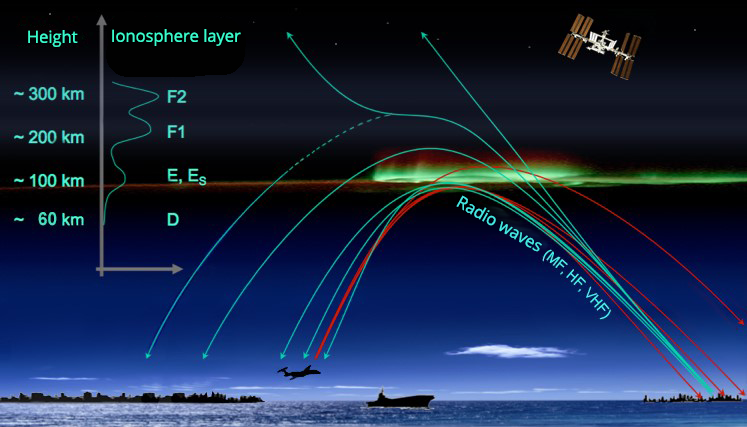
Another characteristic supported by my own live monitoring over 40 years and extensive collected data from DXcluster spots since 2001, in the Northern hemisphere for European propagation, is that the vast majority of Sporadic-E reflection areas or clouds seem to occur mostly over the Bay of Biscay, Switzerland and the Balkans. Here in the UK it is probable on most days in Summer to work Italy and Spain easily on 50 MHz, it is much rarer perhaps 5-10% of Es days for the reflecting Es cloud to be situated over the North Sea allowing communication from the UK to Scandinavia, however when this does occur it is in this very marked direction. Even rarer openings occur in the direction of Iceland from the UK, but several triple hop Sporadic-Es clouds do reasonably often open paths from the UK to the USA on 50 MHz. Sporadic-E (Es) occurs in the Ionosphere at heights of between 90-130 km (110 km average) altitude and appears to concern strong areas of non-uniform and patchy plasma metallic ion and electron density irregularities that cause VHF radio waves to be reflected back to Earth by forward scatter. The metallic ions necessary are deposited in the Ionosphere by daily meteor activity (heating and ablation) even in the absence of major shower or meteor storm activity, the primary metal types being iron (Fe) and Magnesium (Mg). The total metal ion density determining whether or not the Es layer can support VHF signal forward scatter or not. The winds and electric fields at these altitudes act to compress the ions into thin layers of around 4 km in depth. There are minimum distances for each band for propagation via Sporadic-E, lesser distances seen would be impossible by this propagation mode as the required MUF would be simply too high and must therefore be by another mechanism such as Aircraft Scatter or Tropo scatter etc. The minimum distances by VHF band are shown below. 50 MHz minimum Es distance 800 km (exceptionally down to 400 km, but usually around 800 km) 70 MHz minimum Es distance 1000 km (exceptionally down to 400 km, but usually around 1000 km) 144 MHz minimum Es distance 1400 km The minimum distances are important because if the angle of incidence is too high and acute the MUF will not support the reflection and the VHF radio waves will simply pass through the Sporadic-E cloud layer and not be reflected. The higher the frequency the shallower the angle of incidence needs to be. The height of the Sporadic-E cloud relative to the Earth's curvature is also important. It has been established that Sporadic-E clouds gradually descend as time goes by during the day, before eventually disappearing some time after sunset, exceptionally lasting until midnight. The generally accepted Sporadic-E heights are between 90-130 km (110km average)
Research and published papers indicate that it is the daily ablation of thousands of metallic meteors from all directions that are required, rather than just intense meteor showers from single radiants. During the Summer months there is approximately three times more metallic meteorite deposition than in the winter months. Sporadic-E occurs most notably on the VHF 28 MHz, 50 MHz, 70 MHz and 144 MHz amateur radio bands where the ionized E layer of the atmosphere at around 110 km altitude reflects forward scatter VHF radio signals back to Earth, rather than them normally travelling straight through the atmosphere into space, with received radio signals being extremely strong. Monitor the VHF amateur radio bands and beacons and if Es signals are exceptionally strong on a lower band such as 50 MHz and at the lower end of the single hop distance range (<500 km) this can be a good indicator that Es will be supporting even higher frequencies, so consider listening up on the 70 MHz or 144 MHz bands too. If travelling in your car away from your shack try monitoring 87.6 MHz FM on your analogue vehicle radio to see if you can hear Es broadcast station signals from outside the UK (Tip from Dave Edwards G7RAU, thanks!)
Long distances on 50 MHz can be worked via Sporadic-E clouds at altitudes between 90-130km above the Earth's surface. Most of the rarer multi hop Sporadic-E events appear to occur between a maximum of up to three separate clouds. Some extensive 144 MHz very long distance Propagation Studies in Germany by Dr. Volker Grassmann DF5AI and Udo Langenohl DK5YA include their theorised possibility of VHF signal reflections from one Sporadic-E cloud hitting the ground and being reflected back up to a second Sporadic-E cloud, where there are either large bodies of water, such as lakes or rivers and even the theorised possibility of ground reflections from railway track metal lines. A separate paper discusses Thunderstorm effects on Sporadic-E propagation at 144 MHz. Click on images below and open in new tab to read their research papers.
Single hop Sporadic-E 800-2400 km where the path is Earth-Cloud-Earth (exceptionally down to 400 km when MUF is near maximum) Double-hop Sporadic-E up to 4800 km where the path is Earth-Cloud-Cloud-Earth Triple-hop Sporadic-E up to around 7200 km where the path is Earth-Cloud-Cloud-Cloud-Earth. (N.B. Triple hop Sporadic-E has been observed on 50 MHz, 90 MHz (extremely rare from Europe to USA only recorded once), but never seen on 144 MHz With the advent of special weak signal data modes many more observations of the triple hop Sporadic-E are being observed on 50 MHz, seemingly favours the path from Europe to North America. Very rare quadruple hop Sporadic-E (4xEs) on 50 MHz has been observed on a daylight path from Japan to Europe in July 2023 after a M5.8 magnitude solar flare with SFI 214
Distances for VHF radio signals in excess of 7200 km are extremely rare via Sporadic-E alone, as the chances of more than three sporadic and random Es clouds all being in the perfect positions at the same time. Look for Sporadic-E propagation joining up with another Propagation mechanism such as Trans Equatorial Propagation (TEP), Meteor Scatter or via F2 propagation. F2 propagation supporting 50 MHz occurs only near or during, the 11 year average, Solar Cycle maximum when the F-layer supports refraction (bending) of signals at 50 MHz from that much higher altitude layer, ranging in height from 200-500km, back to Earth where they may bounce from the ground/sea back to the F-Layer again. This is how it is possible to work Australia from the UK on 50 MHz.
With any long distance 50 MHz propagation the polarisation of the transmitted VHF signal may be changed from horizontal to vertical, or vice versa, after it is reflected or refracted by a single or multiple Sporadic-E clouds, indeed the signal should not be thought of a like a narrow laser beam striking a mirror, but should be likened to a much wider car headlight striking a corrugated shiny tin roof, with the reflected light or radio signal scattered in multiple different forward directions. This can lead to the VHF radio signal having differently polarised mixed components, or the same polarisation, which can become out of phase and create an unusual twisted 'barbers pole' effect visible on the spectrum screen of SDR receivers. Some really good image examples of this twisted 'barbers pole' out of phase signal effect, which is particularly, or only evident, on double hop Sporadic-E, have been kindly provided to me by Paul Logan from Fermanagh, Northern Ireland, who is a very active and well known Broadcast FM DXer on Twitter @FMDXIreland as observed by him in the frequency band of 87-108 MHz. The twisted 'barbers pole' out of phase signals at 2800-3000 km distances, shown in the images below, stand out as clearly different from the single hop Sporadic-E distance stations signals, that do not have the twisted barbers pole effect visible.
Whilst on the subject of FM DX in Band II between 87-108 MHz the fantastic website of FMList has a visual mapping system showing in real-time DX spot paths via Sporadic-E, which reveal readily Es skip 'doughnuts', with the missing centres being the approximate location of the Es clouds. As can be seen in the image below, dated 17th June 2023 at 1000 UTC, where two separate simultaneous Sporadic-E clouds can be visually observed.
Single hop Sporadic-E is routine, double hop considerably rarer and triple hop rarer still, as all the clouds must perfectly align and be at the right heights and with sufficiently high MUF to support such high VHF frequencies. Triple hop Sporadic-E signals in Band II VHF frequencies 87-108 MHz are extremely rare On 26th June 2009 Paul Logan from Lisnaskea, Northern Ireland IO64GG had triple hop Sporadic-E reception on the Broadcast FM band from eight US States and one Canadian province. The most distant signal received was that of WVAS radio in Montgomery, Alabama, USA on 90.7 MHz at a distance of 6456 km (4012 miles). The reception was recorded and later confirmed by WVAS newsreader Marcus Hyles. On 5th July 2022 Bryce Foster (K4NBF) Co-host of the VHF DX podcast received a triple hop Sporadic-E FM signal on 87.8 MHz from Portugal to Cape Cod, USA
I have found strong Sporadic-E stations within 87-108 MHz can be heard and received here in the UK from Spain, often accompanied by openings on the Amateur Radio 70 MHz band, but sometimes without any 70 MHz Amateur Radio stations being heard. I can only put this down to the transmitter powers of the FM Broadcast stations being often measured in many kW and therefore with many magnitudes higher ERP than from Amateur Radio stations. This also used to be the case when the old Band 1 TV transmitters 47-68 MHz were heard easily in the UK from Spain, before any openings were received on the Amateur Radio 50 MHz band due to the difference in ERP levels. This was via Meteor Scatter or Sporadic-E. Unfortunately the Band 1 TV transmitters in Spain have all since closed down.
On 144 MHz the distances for single hop Es contacts appear to all be in the range of between 1400-2400 km with rarer double hop Es extending this to a recorded maximum of 3600 km. Longer distances can be found online, however they all appear to be via Tropospheric Ducting + Sporadic-E (TRDES), analysis of the Callsigns/locators show them all to have an extensive over water path (Sea) and intense Tropospheric Ducting was reported at the time to be the main Propagation mechanism. No triple hop Sporadic-Es has ever been recorded for frequencies as high as 144 MHz, the highest frequency this has been observed has been 90.7 MHz. The angle the radio signal hits the Sporadic-E cloud needs to be shallow enough to permit reflection, depending on the MUF value, otherwise if too steep or not supported by the MUF it will not be reflected and instead pass straight through the Es cloud and off into space. The exact multi hop mechanism for each signal may not be readily identifiable and may be signals reflecting off a single Es cloud layer or multiple separate Sporadic-E clouds and/or various mixtures of Cloud and the Earth (TBC) with potential reflections from water offering significantly less attenuation than from land. It has also been suggested that metal train tracks might also permit ground reflections, as well as bodies of water such as lakes and rivers or the Sea. It is also theorised and pretty much correlated that the Es cloud layers are not uniform and flat, but may have parts or all tilted at times at up to 45 degrees where they often have an irregular wavy surface, like corrugated metal sheeting (see image below). This can slightly complicate understanding the precise Sporadic-E hop mechanism being observed on 50 MHz with the theory being of many instances where two cloud Es formations exist, the Es layers being tilted towards each other. This two cloud Es formation appears to account for 50 MHz signals in the distance range of 2400-3200 km i.e. more than a single hop maximum (2400 km), but much less than for double-hop (4800 km). The signal path being Earth-Cloud-Cloud-Earth.
Noctilucent clouds at around 85km altitude - Photo by Jan Koeman, Kloetinge, the Netherlands, July 2009 In the two Es cloud formation path live example shown below, captured at 18:12 UTC on 17th July 2018, I was hearing the station of SV1NZX in KM17 square via Sporadic-E on 50 MHz at a very strong signal level, my station G0ISW in IO84 square being 2741 km in distance away and therefore well beyond the maximum single hop distance of 2400 km. Looking at the live MUF mapping software display there were two significant Es cloud areas in place (circled in red) on the path, both at a similar distance from our stations, therefore it appears that the signal was being reflected from these separate Es clouds at the same time, with both Es clouds layers probably being slightly tilted towards each other with wavy irregular cloud surfaces, the path being Earth-Cloud-Cloud-Earth.
Be aware though that in multi hop Sporadic-E propagation of two (2xEs) or three (3xEs) clouds, they are unlikely to be evenly spread apart between the transmitting and receiving stations, one cloud may be very close, the other/s very far away or any combination, as well as differing altitudes. Planetary Solar K-Index For monitoring the Planetary Solar K index, observing the suggested level 3 or less to allow Sporadic-E, the NOAA Space Weather Prediction Service is recommended, Right click on the image below and select 'open link in new tab' to see current levels.
Total Electron Content (TEC) Maps
A TEC map, also known as a Total Electron Content map, can be useful for
visualizing and studying
Sporadic-E
(Es)
propagation in the ionosphere.
Sporadic-E
is a phenomenon in which irregular patches of ionisation occur in the
E-region of the ionosphere, typically at mid-latitudes. Right click on the image below and select 'open link in new tab' to see current levels.
Sporadic Es and
Ionospheric chart for Rome
Showing daily height of
Sporadic-E
clouds (h'Es)
and HF MUF.
S
Also the
Sporadic-E
layer
heights vary by time of day, with Rome descending from
108 km
at 08:00 to 99 km
by 11:00 UTC, it was thought all
Sporadic-E
clouds descend over time after reaching their peak altitude.
(Right click on image below
and select 'open link in new tab' for current chart)
Image above courtesy of the Rome Observatory of the
Instituto Nazionale di Geofisica e Vulcanologia (INGV)
Observing the Sporadic-E cloud heights over several days in June 2023 using the Rome site h'Es altitude data showed the following height patterns, from first detected Es presence onwards, typically early morning to late evening: 13th June 2023 104km->108km->122km->No Es->126km->117km 14th June 2023 108km->99km->104km->117km 15th June 2023 113km->104km->113km->131km->117km->108km->104km->99km 17th June 2023 117km->113km->108km->104km->113km->108km 18th June 2023 131km->122km->113km->108km->104km->108km->104km->108km->No Es->104km->108km->113km->108km->113km->117km->113km->104km->108km
From these observations we can say that after peak Sporadic-E cloud height is reached, the clouds do generally trend downwards over time as daylight closes, however in the mornings some clouds rise to a peak, others drop height before rising again to a peak later in the day and some clouds disappear altogether, only to reappear later. On the Sunday 18th June 2023 the Sporadic-E heights shown above were all over the place like a yo-yo.
Sporadic-E cloud height and related signal distances The height of the Sporadic-E cloud directly influences the distances over which reflected VHF signals can be received. If a single Es cloud is located at a lower altitude within the E Region, the radio signals will be reflected back at a lower angle, allowing them to reach receivers that are relatively closer to the transmitter. Conversely, if the Es cloud is situated at a higher altitude, the signals will be reflected at a steeper angle allowing them to reach receivers that are farther away. However, for double hop (2xEs) or rarer triple hop (3xEs) Sporadic-E propagation, lower cloud heights increase the chance of the VHF signal being reflected off the first cloud, by the shallower angle of incidence supporting a higher MUF, onto the underside of subsequent Es clouds thereby increasing the workable distance beyond that of a single higher Es cloud. This often leads to double hop (2xEs) Sporadic-E propagation being observed to be more prevalent in the early morning or late evening, when the Sporadic-E clouds are at their lower altitudes, typically they are at their highest altitude at midday or in the afternoon.
Sporadic-E correlation with atmospheric effects Sporadic-E on 144 MHz defies any specific direct correlation with AGW, wind shear and thunder storms. In the example below at 17:53 UTC on 23rd July 2018 there is a pronounced Es reflecting layer shown over the Balkans and their mountain ranges, but checks on live wind charts show no jet stream or other significant wind activity anywhere near and also no lightning whatsoever.
After sunset the ionised Es layer usually fades until it can no longer support VHF signals being reflected from it, probably due to no longer receiving solar radiation, however on rare occasions Sporadic-E VHF propagation has been known to occur even up to local midnight.
From observations in Europe, over the past 30 years, Sporadic-E clouds are randomly generated signal reflecting areas, which vary in size depending on the frequency band they can support i.e. 50 MHz Sporadic-E clouds are usually significantly larger and can often be around 500 x 500 km (5 x 5 grid squares) in size, whereas on 144 MHz they may often only be 50-100 km in size i.e. a single grid square, unless a very significant and much rarer large opening event. The usual small reflecting area on 144 MHz means fewer stations will be ideally located to benefit from using it. Some stations will enjoy the enhanced long distances being worked and others will miss it entirely if not in the right place at the right time. In the image below we can see that there was one locator square where the 50 MHz Sporadic-E signal paths were crossing in JO22, no mountains nearby.
In the images below white lines show the paths on 50 MHz, grey lines are 70 MHz and red lines are 144 MHz.
On 144 MHz the Sporadic-E layers in Summer have been observed to move slowly from East to West and sometimes correlate with intense thunder storms, but not always. Note the correlation between this very significant 144 MHz Sporadic-E opening reflection zone, shown below on 12th July 2018, and the live map of lightning strikes at the same time in the same area. The 144 MHz opening on the border of Poland with Ukraine shown below lasted just over 1 hour and despite much similar lightning visible in Norway no such Sporadic-E opening occurred there. However later in the week further extensive thunder storms were present and no Sporadic-E was observed anywhere in Europe, all the necessary combination of ingredients not being present.
In addition whilst 50 MHz Sporadic-E band openings can last most of the day, 144 MHz openings can be very short lived and occur much less frequently, only being available for a few days each year and for much less time, sometimes only as little as a few minutes or an hour and almost always in June. From my own observations 144 MHz Sporadic-E reflecting areas do sometimes, but not always, coincide with intense thunder storms and due to the height of the Es reflecting layer being between 90-130 km I theorised a link with the then little known electrical Sprite phenomenon perhaps, possibly generating Atmospheric Gravity Waves (AGW) and causing wind shear at 90 km altitude and higher.
Image credit https://en.wikipedia.org/w/index.php?curid=4262250 Abestrobi Own work CC BY-SA 3.0
The higher the frequency the more intense the Sporadic-E ionised layer has to be to support forward scatter propagation via it, at 144 MHz in particular it can be frustrating to see the small reflecting area favour radio amateurs in a particular geographic area reasonably close, but in your own location nothing is heard and vice versa. Sometimes the reflecting areas at the centre of the lines connecting the QSOs converge over a particular area each year, the Bay of Biscay near France is one such area. Often the reflecting layer/cloud moves over hours in a East to West direction. Using the Live-MUF mapping software it is very easy in real time to observe these events. Sometimes on 144 MHz there may be correlation with Es reflecting areas and thunder storms generating extensive lightning activity (another theory), but by no means do they coincide every time. On the morning of 3rd May 2016 there was a clear 50 MHz Es reflecting layer centred over the Baltic states, but no wind shear or AGW from mountains, nor any thunder storm lightning activity found using live data, so the required ingredients were much simpler. In June 1989, during a particularly intense radio Es event on 144 MHz, I observed the distant DX stations heard to slowly all shift SW over the course of two hours, in a direction not associated with the jet stream, but consistent with the Earth's rotation in relation to the Sun.
If we consider the 'wind shear' theory formulated in the 1960's by Whitehead (1961) and Axford (1963) in which vertical shears in the horizontal wind form thin layers (several kilometres thick) from metallic ionisation through ion-neutral collisional coupling and acting in the presence of the Earths magnetic field and through the Lorentz force. The original metallic ions thought to be present from meteoric origin. Wind shear from the Jet Stream at altitudes of between 9-16 km above ground level over mountains has been suggested to have an association with Sporadic Es, part of the so called 'wind shear' theory. Using the live wind chart below and setting the wind height altitude to 500 hPA (11 km) should allow observations and comparisons to be conducted in real-time with Sporadic Es cluster maps to support or discount any such correlation, with wind effects. (Right click on image below and select o'pen link in new tab' for current live jet stream map)
Noctilucent clouds do prove that there are wind effects present at very high 90 km altitudes caused by Atmospheric Gravity Waves (AGW), their non uniform composition can be likened to the theorised irregularity of Sporadic-E clouds.
Noctilucent clouds at around 85km altitude - Photo by Jan Koeman, Kloetinge, the Netherlands, July 2009
How are there wind effects and potential 'wind shear' at 90 km altitude required for Sporadic-E? Well, Atmospheric Gravity Waves (AGW) required to form Noctilucent clouds and other wind effects at these high altitudes can be generated by either violent intense thunderstorms or wind flow over high mountain ranges, which cause vertical displacement of the air flow with the AGWs forming when buoyancy pushes air up and gravity later pulls it back down. The AGW can be likened to a corrugated tin roof effect being placed on the original horizontal air flow and these uneven waves of air then travel to high altitudes and new waves form underneath so a sequence of waves will be formed. AGW are medium scale waves with the horizontal wavelength ranging from several tens to several thousands of kilometres and a vertical wavelength of several kilometres. Using radar measurement AGW have been observed to reach heights of around 85-88 km, the same height as Noctilucent clouds. The AGW can even penetrate up to the Ionosphere where they trigger ionospheric irregularities and add to the recipe for Sporadic-E likelihood. The generally accepted height of the Sporadic Es reflecting layer is around 90-130 km, which is very significantly higher than the jet stream altitude of 11 km. Although annual the intensity of Es events varies by year and had been very poor compared with the 1980's and 1990's, despite peaks and troughs of the solar cycle. In 2017 and since it has mostly been much better. There is a definite connection with the radiation intensity of the Sun due to the primary seasonal Summer nature of the event in the Northern hemisphere. Also the Es events tend to mostly occur during daylight hours at VHF. A 3-6 day cycle pattern of building up to a Es peak also seems quite prevalent where generated by jet stream wind shear, possibly an electric ion charge/discharge cycle period perhaps, it does seem strange to see very active Sporadic-E one day and absolutely nothing the next day despite Solar conditions appearing unchanged. Fair weather return currents can dissipate Sporadic-E clouds Significant solar flares and thunderstorms can help generate Sporadic-E clouds in a much shorter time frame than by Jet Stream winds alone. The Earth has a Global Electric Circuit (right click on image below for video explanation) with lots of variables daily impacting upon it at Ionospheric altitudes, many of these factors will contribute to whether or not VHF radio signals can be propagated over vastly longer distances than normal on any given day.
A very lively start to the day at 0845 UTC on Sunday 28th May 2023 with a significant Sporadic-E opening on 144 MHz, MUF is already shortly afterwards 150 MHz. Looking at live Lightning strike map of Europe, there is no correlation observed this time. However there is very intense Meteor activity today believed originating from Comet 209P, which occurs every year between 24-31st May, see images below.
This Sporadic-E opening is staying frustratingly over central Poland at 1124 UTC and is now only up to 70 MHz, it has moved a little further West than earlier this morning. At 1305 UTC it still hasn't moved away from Poland and is getting weaker with just a few 50 MHz spots being shown. By 1650 UTC the Sporadic-E opening on 50 MHz largely gone and very little heard today here for the UK, surprising the Es didn't move or appear further West at all. Brief weak 50 MHz opening from UK to Scandinavia this evening
Sporadic-E + Tropospheric Ducting (TRDES) Also in June 2019 Sporadic-E + marine Tropo Ducting allowed signals on the 144 MHz band to be received from D41CV in the Cape Verde Islands off the West Coast of Africa to be received by OE3NFC in Austria at a distance of 5107 km, the marine Tropo ducting path being from Cape Verde to Southern Spain where it joined the Sporadic-E path between Southern Spain and Austria. The Sporadic-E cloud height is between 90-130km above the Earth, so this combined Propagation mechanism favours a shallow angle of reflection from the cloud down to the Sea surface, where it is then reflected from the water into the very much lower Tropo Ducting 'pipe' and then can travel considerably further. The height of the Tropo Ducting layer can vary from just above the Earth's surface to several km high. Surface based ducting typically forms over bodies of water and can be very close to that surface.
Sporadic-E + Trans Equatorial Propagation (TEPES) An absolutely exceptional partial Sporadic-E contact occurred on the morning of 24th July 2018 between 0700-0800 UTC when the station of VK8AW (PH57) Darwin, Australia worked and was heard by stations in Europe on 50 MHz with the furthest station being G3TXF (IO71) in England at a distance of 14,118 km! Previous theory and long established observations prior to 2018 stated there should be no F2 or Trans Equatorial Propagation (TEP) propagation except at solar maximum, but having communicated via e-mail with Gary Ashdown VK8AW it appears that his signals were reaching Southern Europe and the Middle East via Trans Equatorial Propagation (TEP) and were being further extended by widespread European Sporadic-E linking to it. Apparently 48-50 MHz signals are observed by VK8AW regularly from the Middle East and China and the new weak signal data mode FT8 is allowing two way radio communications, where they were previously almost unworkable or undetectable except at solar maximum in other modes such as SSB. This mechanism of TEP + Sporadic-E propagation has been seen again on 50 MHz in Summer 2019 with many stations in Japan working Southern Europe and even UK stations on the South coast of England. On 7th May 2023 there was another good example of Trans Equatorial Propagation (TEP) joining up with Sporadic-E on the 50 MHz band in the evening, allowing stations in Southern Europe and North America to work stations in South America, which would have been too far for Es alone.
Another good example of Trans Equatorial Propagation (TEP) joining up with Sporadic-E on the 50 MHz band on Saturday 13th May 2023, stations in Brazil workable here in Cumbria, NW England at around 1600 UTC
On Sunday 11th August 2024 a 144 MHz TEP contact using the Q65B data mode took place between S50C in JN76JG and V51WW in JH81OC at a distance of 7211 km. A fantastic result.
Highest recorded Sporadic-E MUF The highest recorded Sporadic-E MUF that I can find so far online is 220MHz, where Bill Duval K5UGM (SK) and John Moore W5HUQ/4 broke through a 1500km path from Texas to Florida, USA on 14th June 1987
Intense Meteor Storm generated Sporadic-E propagation When I participated in the fantastic Leonids November 2002 meteor storm event, with over 2300+ meteors per minute, the intensity was such that the whole 144 MHz band was wide open for many hours in the morning with the high signal strengths associated with Sporadic-E signals. The extreme rarity of this type of event makes it very special to witness, for me only once in my 40+ years of being a Radio Amateur. I have also observed other meteor showers coinciding with Sporadic-E like openings, as happened in April 2017, April 2021, and April 2024 during the peak of the Lyrids meteor shower, no other mention of Sporadic-E by stations until May, but the signal strengths I observed were very high and prolonged again, for an hour or more.
The long standing mystery of what exactly can generate Sporadic Es propagation continues, since it was first observed in the 1930's.
Anomalies investigated using multiple data sources for later analysis On Sunday 2nd July 2023 at 1637 UTC I heard SV5DKL on 50.313 MHz FT8 via Sporadic-E at a distance of 3113km, so at double hop Es distance, but look at the map below where the Es clouds (centre of doughnuts) do not appear to line up for this and are showing the MUF ES for frequencies in the FM Broadcast band of at least 87.5 MHz. That must mean then that the MUF Es clouds supporting my 50 MHz reception must be in a different position or significantly larger in size i.e. more to the North of the doughnut holes Es reflecting areas seen below. We know that the higher the MUF frequency supported by any ES cloud, the smaller that cloud (doughnut hole) reflecting area will be and conversely the lower the frequency supported the larger the Es cloud area will be.
If we look instead at the map below from DXMAPS.com showing 50 MHz spots seen in the DX Cluster, for the same time period, we can potentially see two locations for the required double hop 50 MHz Es clouds, the first is possibly over Austria at the intersection of a few spot lines, the second over Bosnia & Herzegovina. That would make more sense, but is this correct? We need to see more data to confirm or not.
If we now look at the data image below, from PSKreporter.info, showing stations worked/heard by me G0ISW for the same time period, we can definitely see the Sporadic-E path between me and SV5DKL, plus the similar double hop 2xEs path for me hearing another station shown in Israel. Interesting to see at least 3 stations I heard in Austria JN77/JN76, who all appear to be directly beneath where I had initially suspected the first Es cloud to be. Therefore the first Es cloud cannot be directly over these stations in Austria, but must be earlier in the path, over Germany instead about locator squares JO30/JO40, at the midpoint between G0ISW and the three stations in Austria for what is clearly an Es single hop distance. The second ES cloud initial speculation location remains the same, somewhere over Bosnia, or further to the South East.
Unidentified Propagation analysis (UK to Japan 50 MHz) - since Solved Here we see below at around 0819 UTC on Wednesday 12th July 2023 an opening on 50 MHz between the UK/Europe and Japan at distances of over 8600km. All areas are within daylight. The maximum triple hop Sporadic-E distance is 7200km, so could this have been Quadruple hop Es (4xES)? We can discount Trans Equatorial Propagation (TEP) involvement, as all stations are well above the magnetic Equator. The only other option for VHF at these distances would be F2 layer propagation, but still two years away from the expected 11 year peak of the solar cycle, in July 2025. F2 propagation for 50 MHz would then be expected, as previously seen, only over the Winter months, not Summer 2023. Looking at the DX Cluster spots for 50 MHz there are very few single hop Sporadic-E spots showing within Europe so far. The SFI is at 214, unusually high indicating recent solar activity above the normal, the day before there was an M-Class 5.8 solar flare which generated a CME that hit Earth on 12th July 2023.
Conclusion is that this can only therefore be Quadruple hop Sporadic-E (4xES)triggered by the CME
Interestingly a short time later by 0900 UTC a significant Sporadic-E opening on 144 MHz had developed, centred over Ukraine, this supports Es clouds with clearly high enough MUF for 50 MHz being present earlier over the Europe to Japan path. Quadruple hop Sporadic-E (4xES) now looking more and more certain.
We can see from the MUF map below for Sporadic-E that there are Es clouds that would support 50 MHz signals over Europe, Ukraine, Russia, China and Japan. The lack of further reported MUF ES clouds in between may be accounted for by the scarcity of amateur radio stations within Siberia and Mongolia.
Quadruple hop 50 MHz Sporadic-E (x4 ES) UK to Japan path We have seen this very rare event recently in 2023, after solar flares that generated CME, on entirely daylight paths between Europe and Japan on 50 MHz, however this morning Saturday 22nd July 2023 at 11.41 UTC we can see it is still possible after the sun has completely set in Japan. The solar flares with their extensive ionising radiation appear to be generating broad areas of Sporadic-E enhancement over huge distances, the latest flare was M 3.81 class on 19th July 2023 that generated CME's that hit on 21/22nd July 2023
|

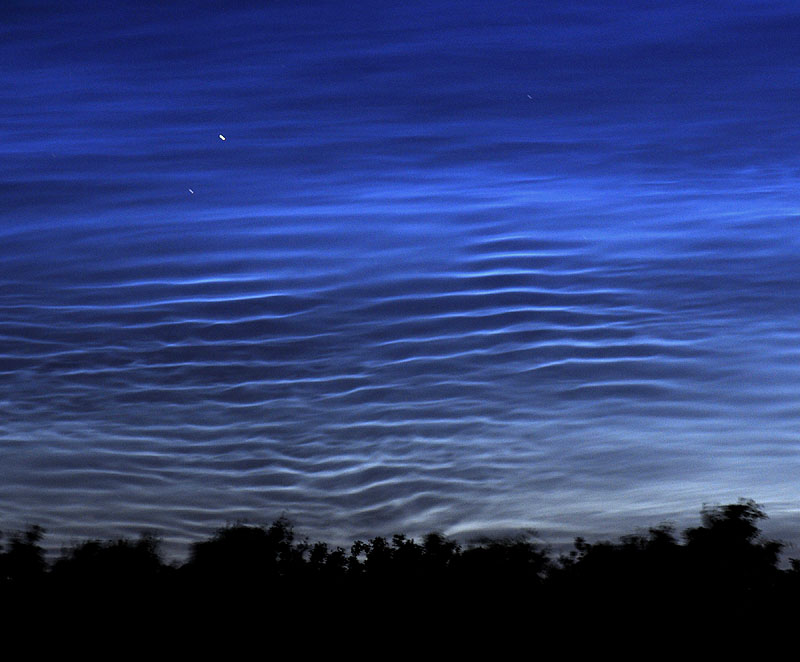
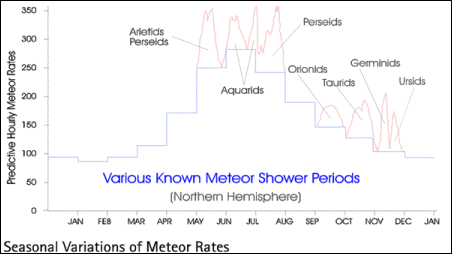
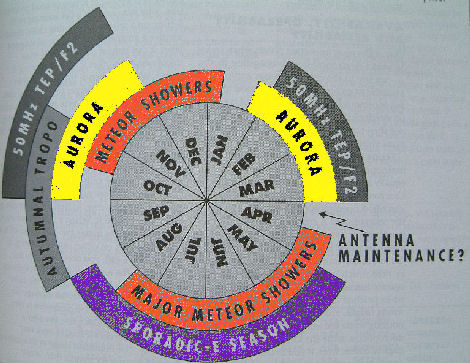
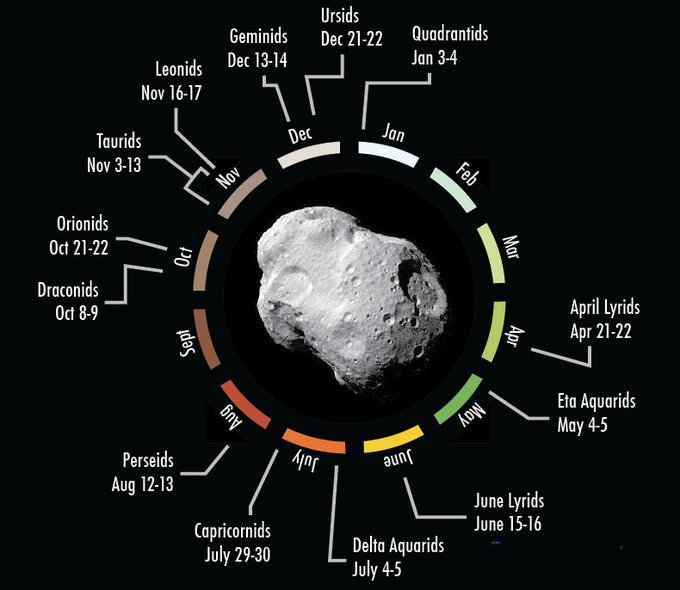
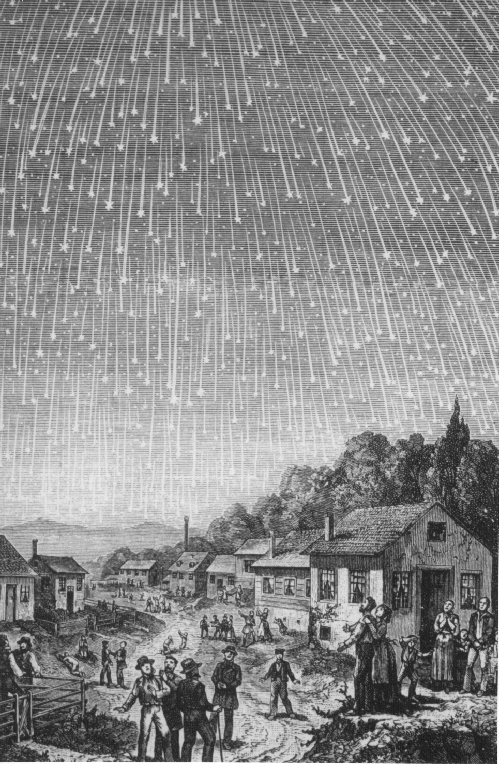


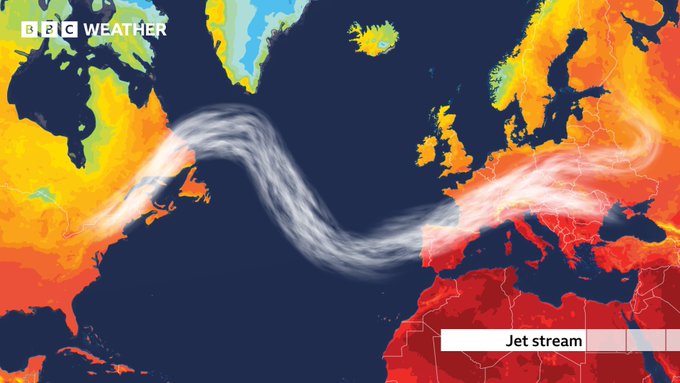
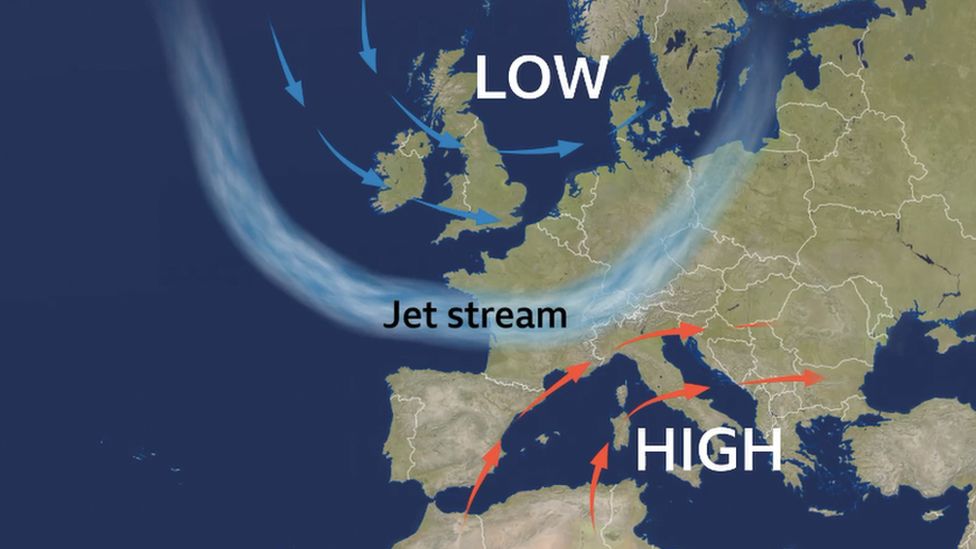
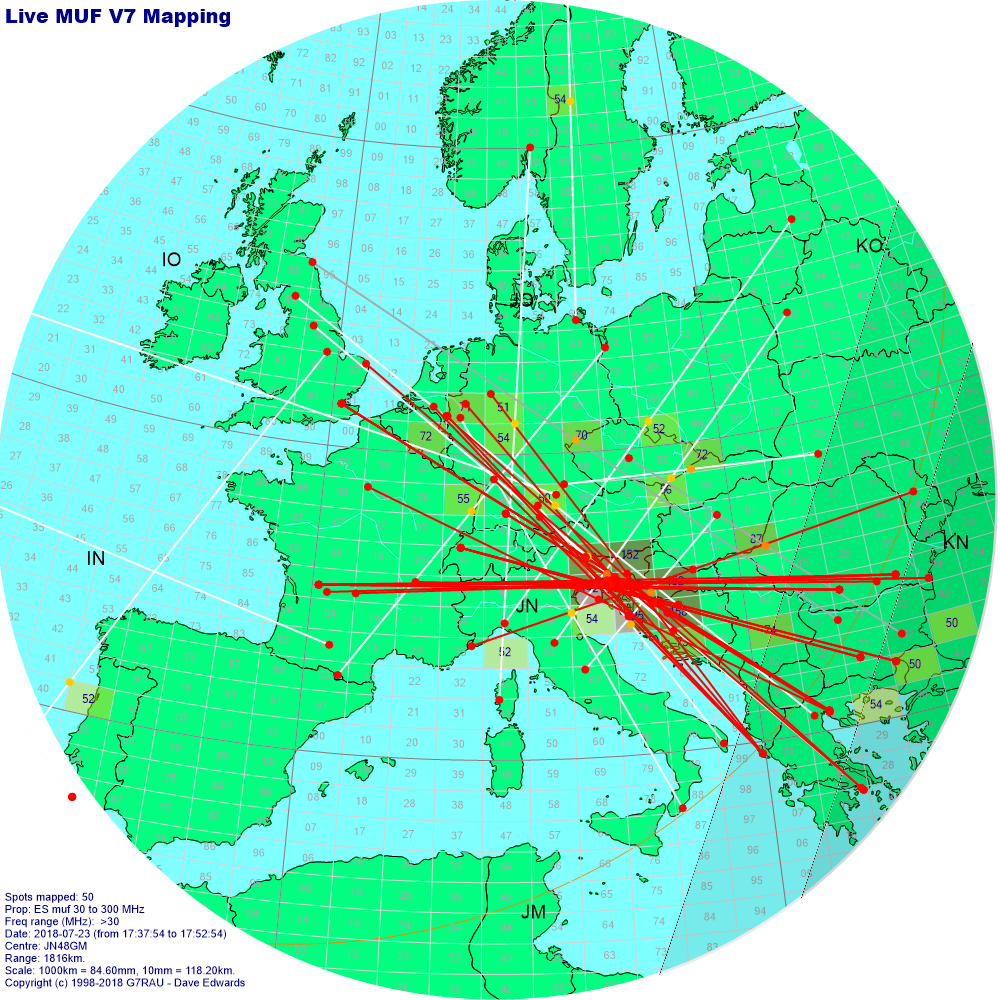

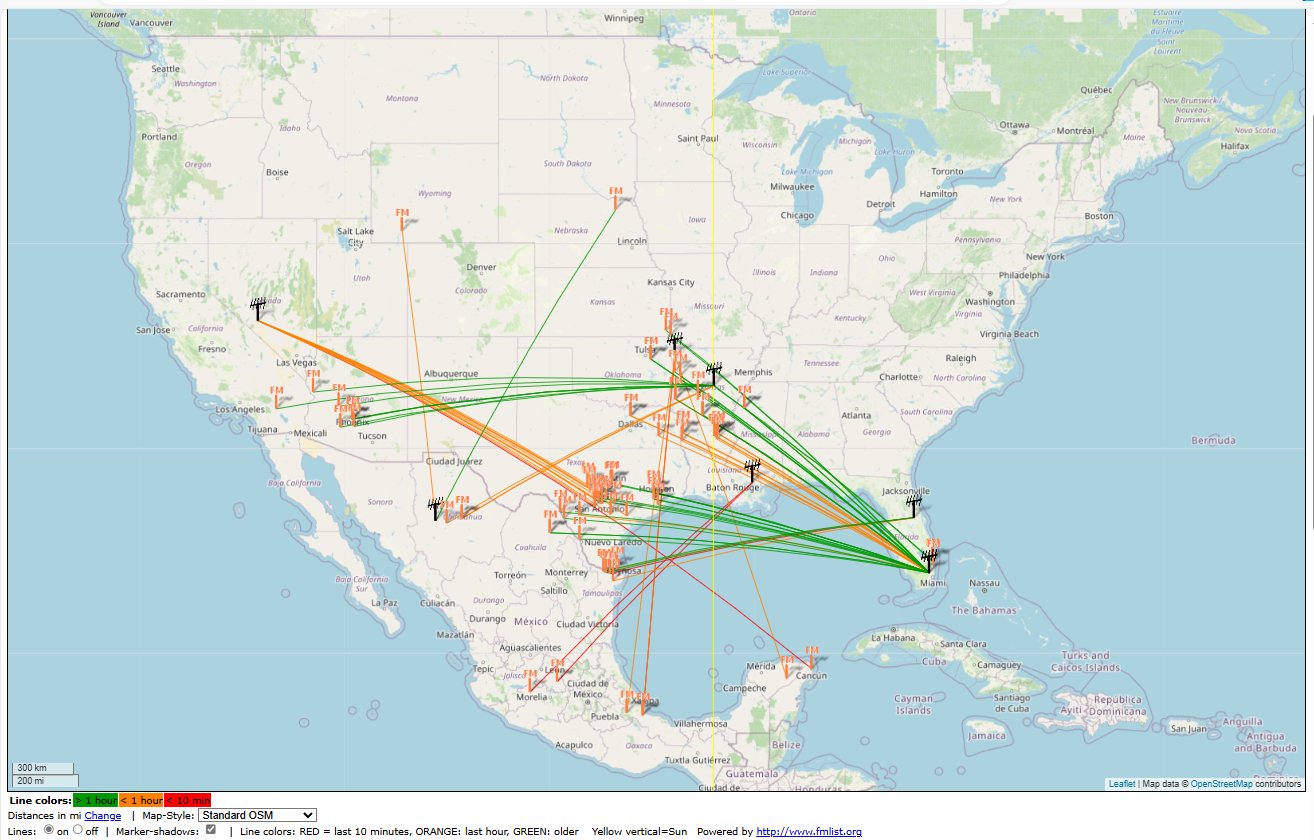
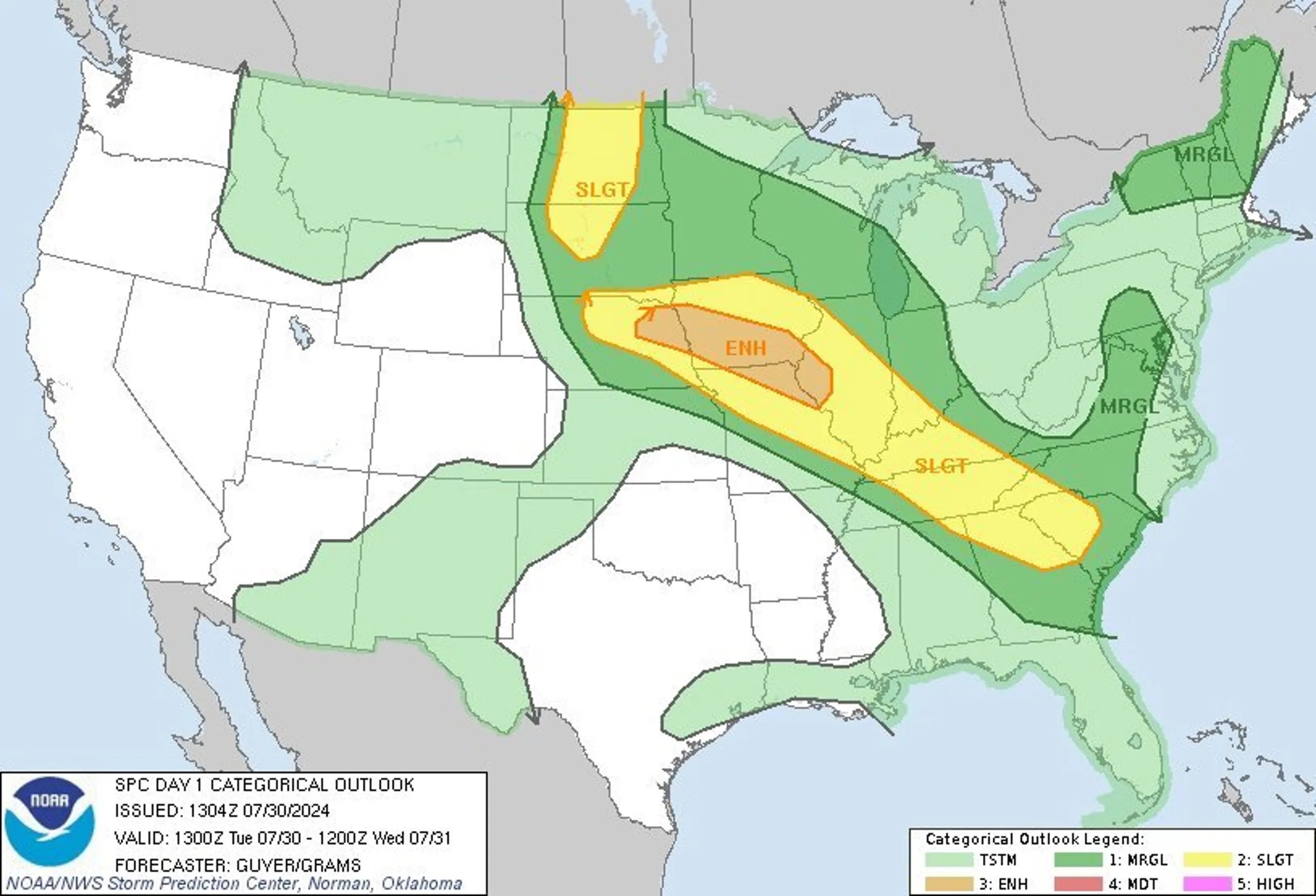
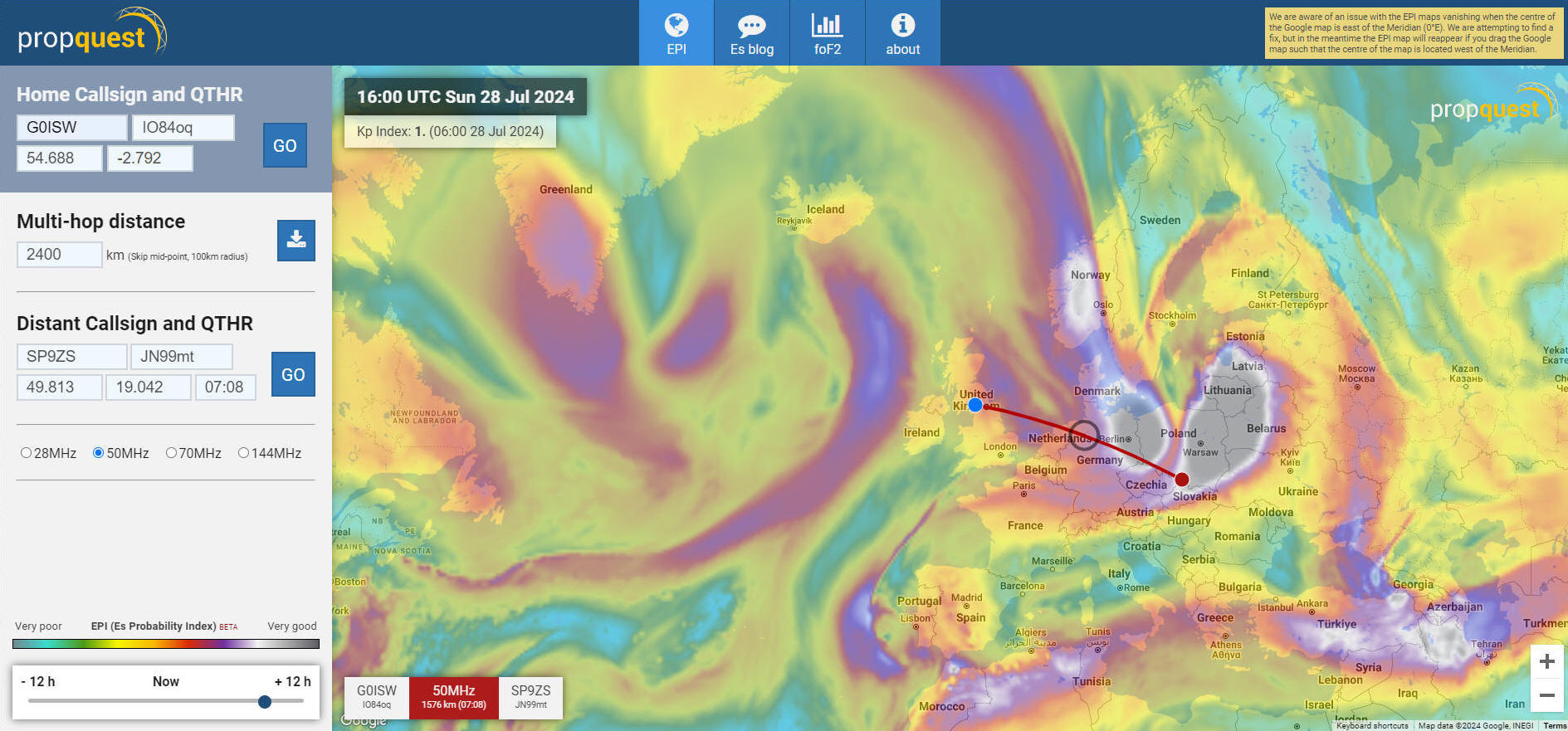
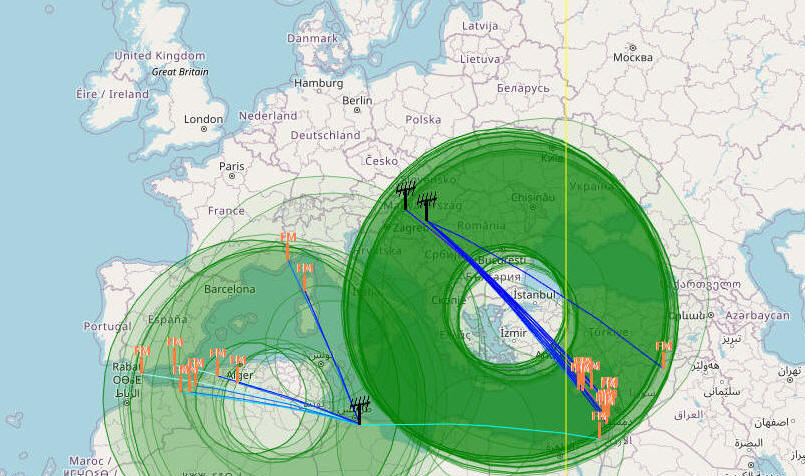
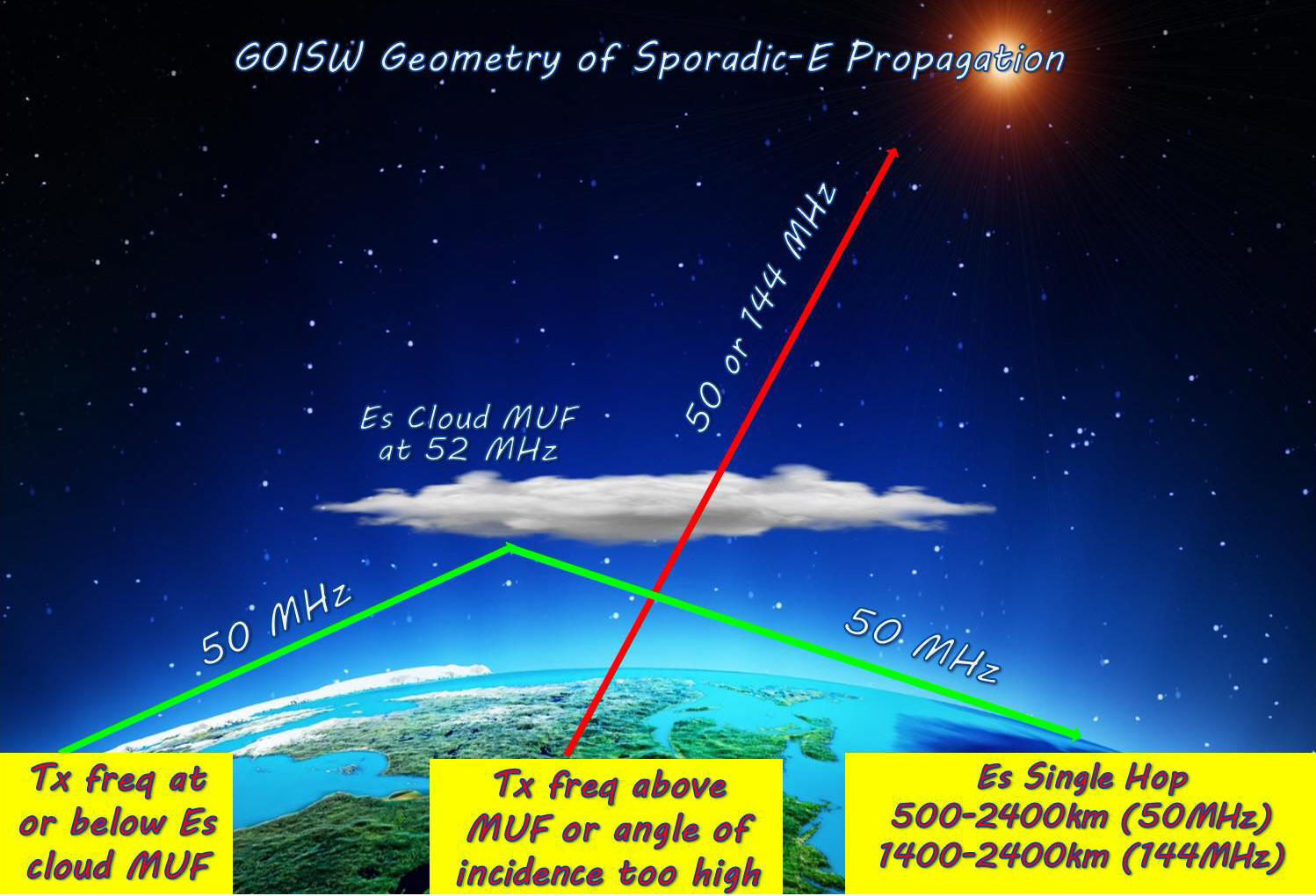

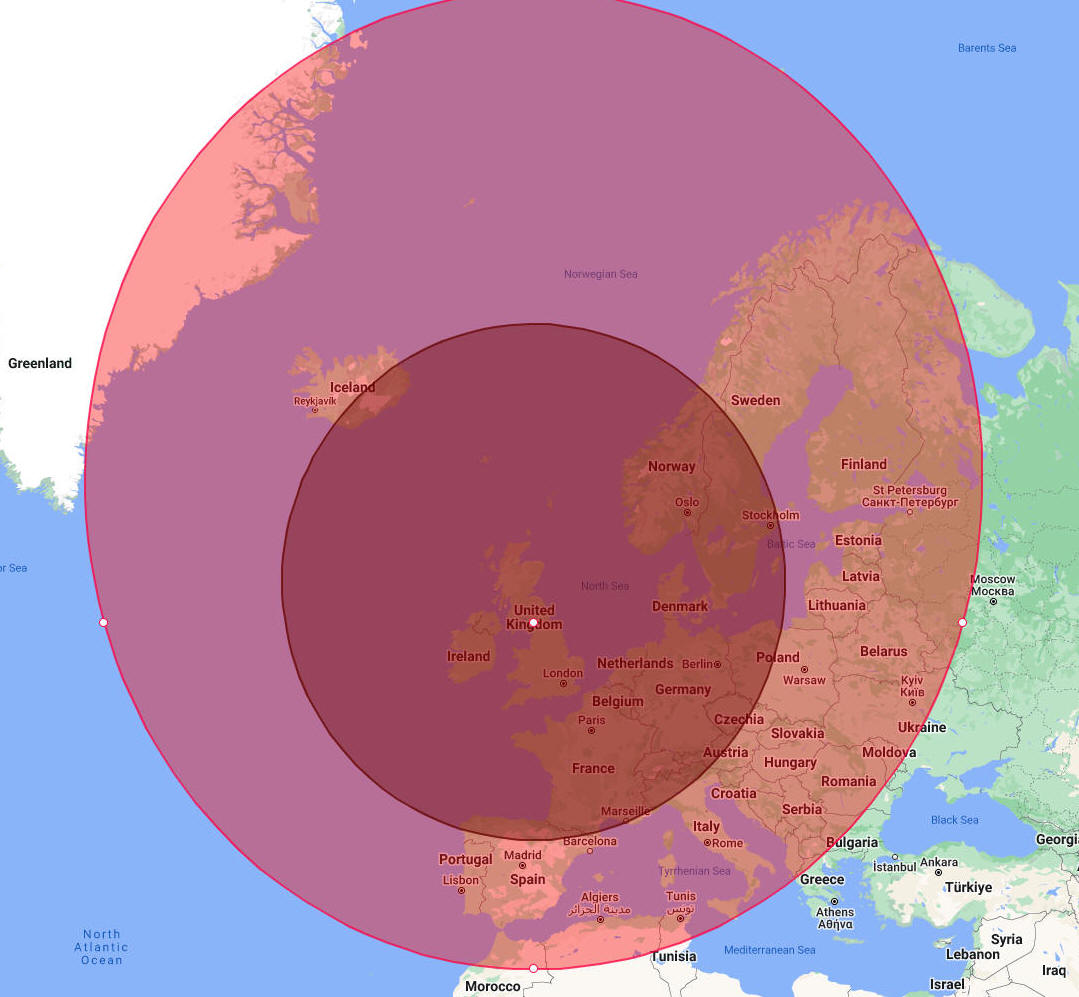
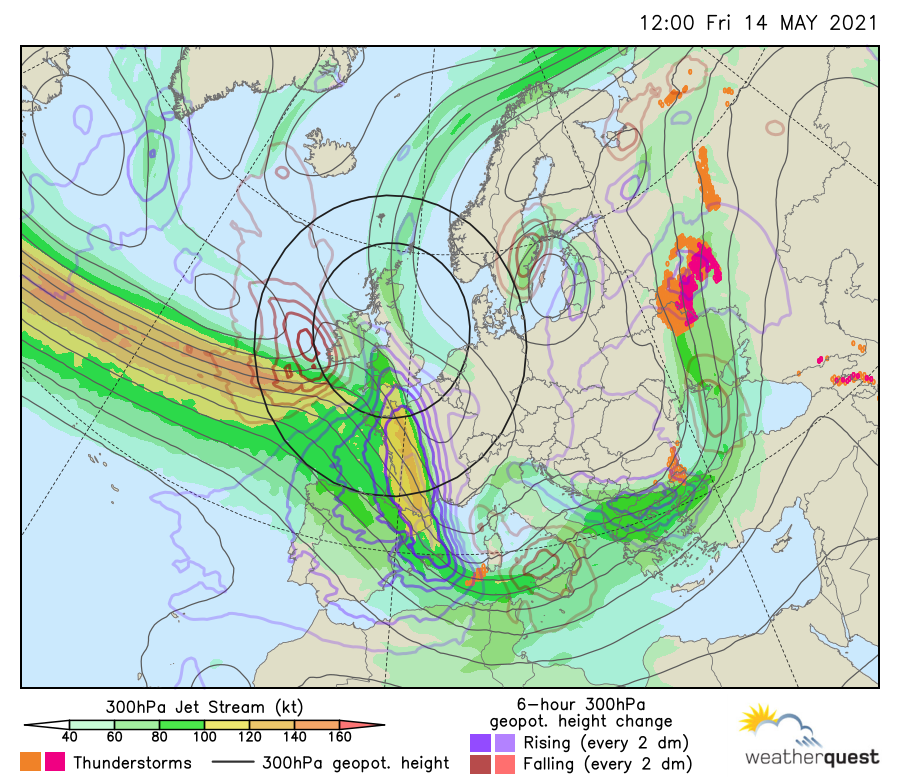
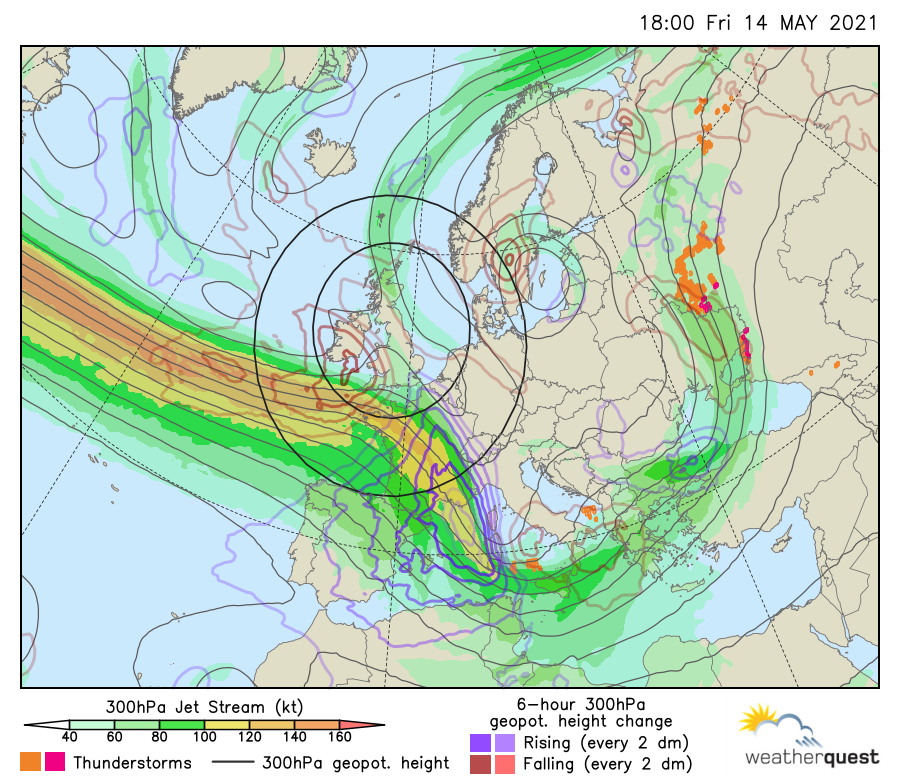

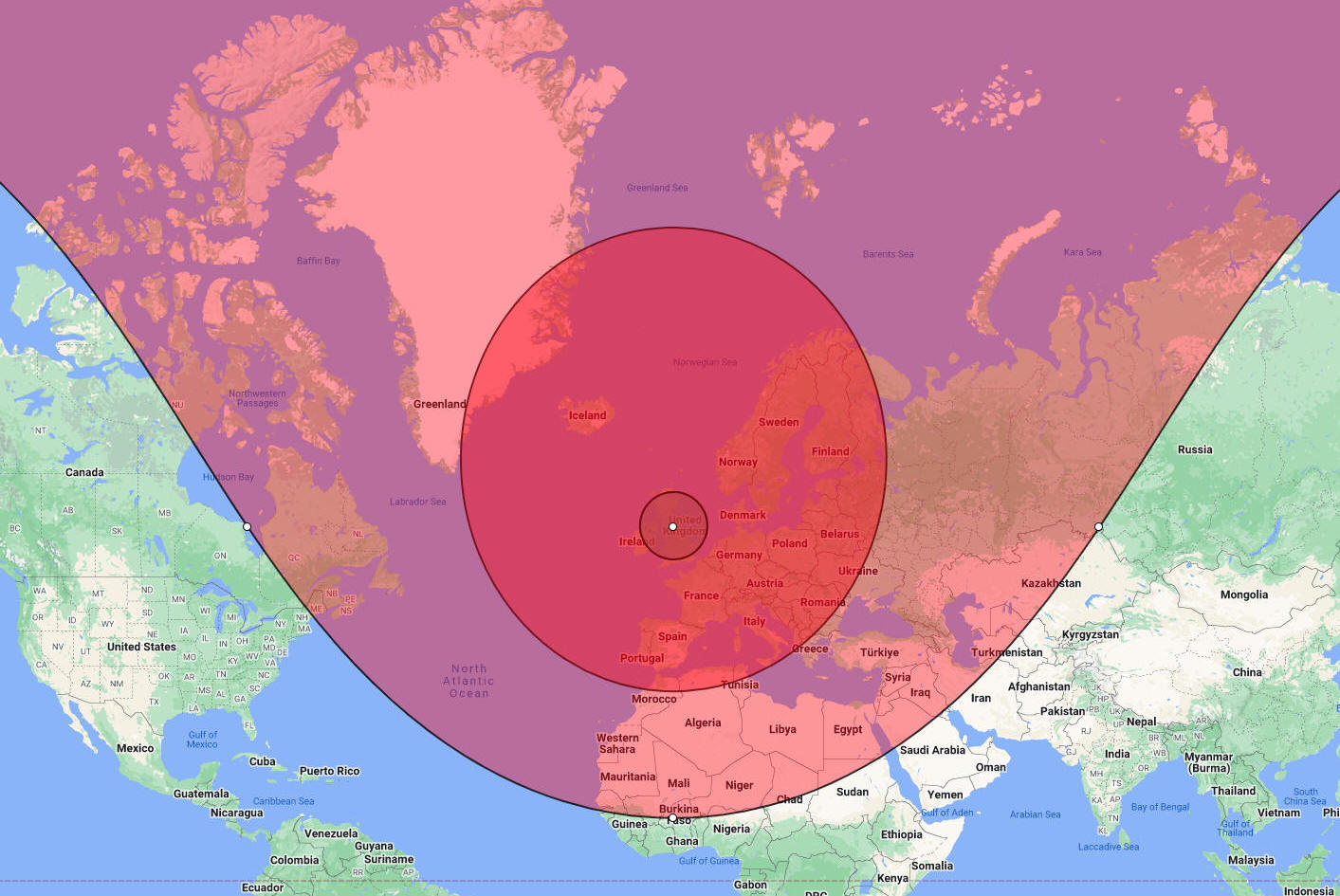
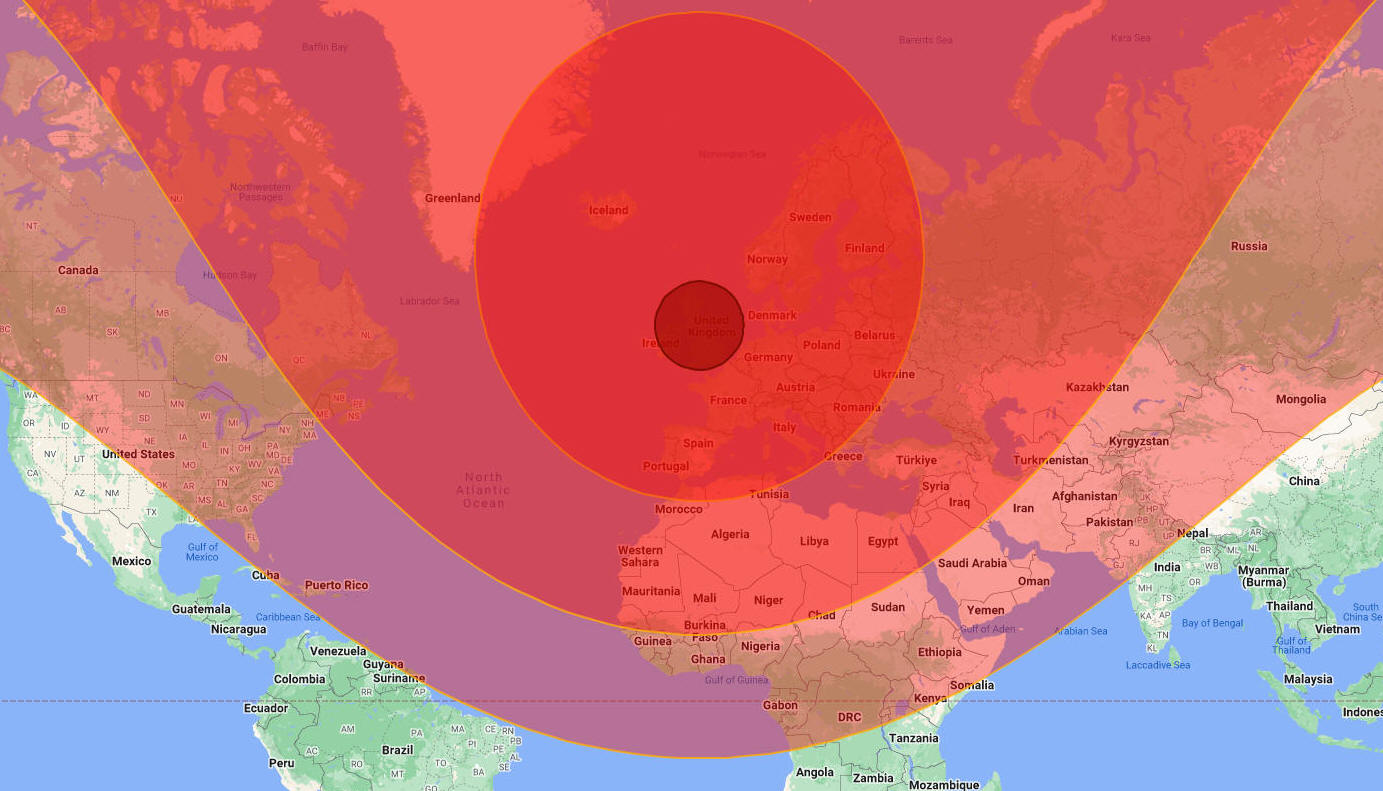

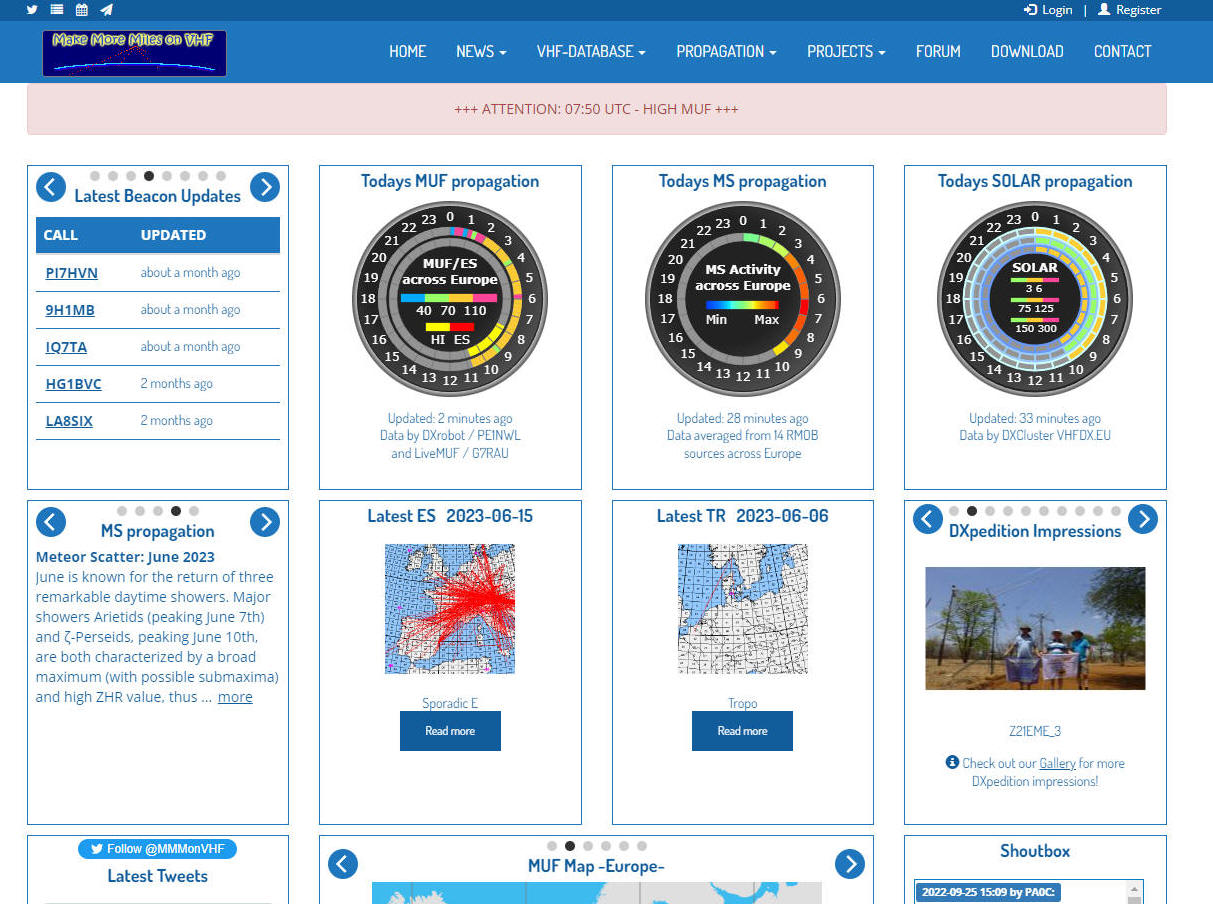

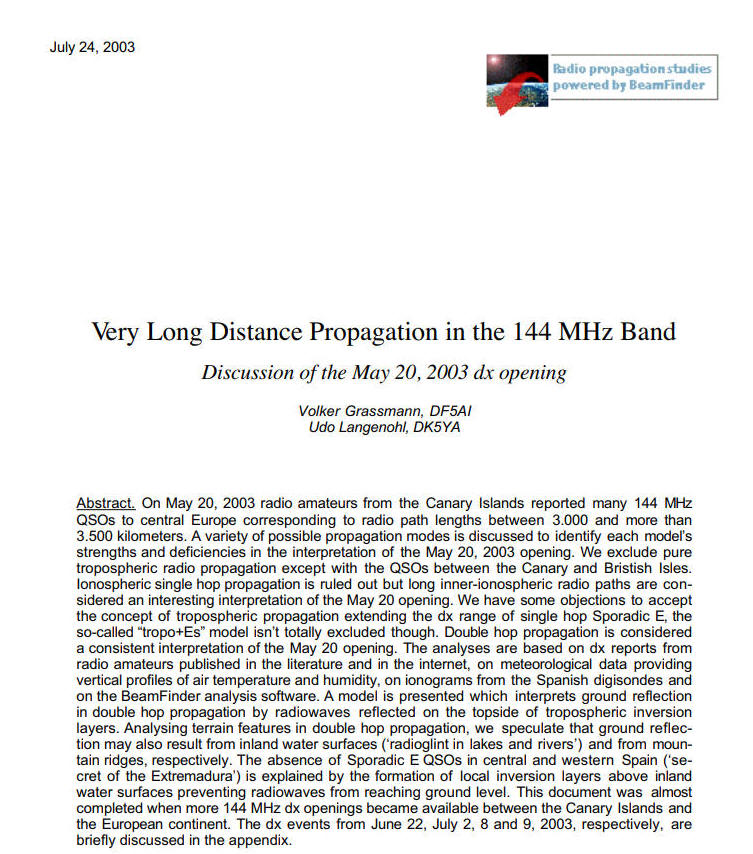
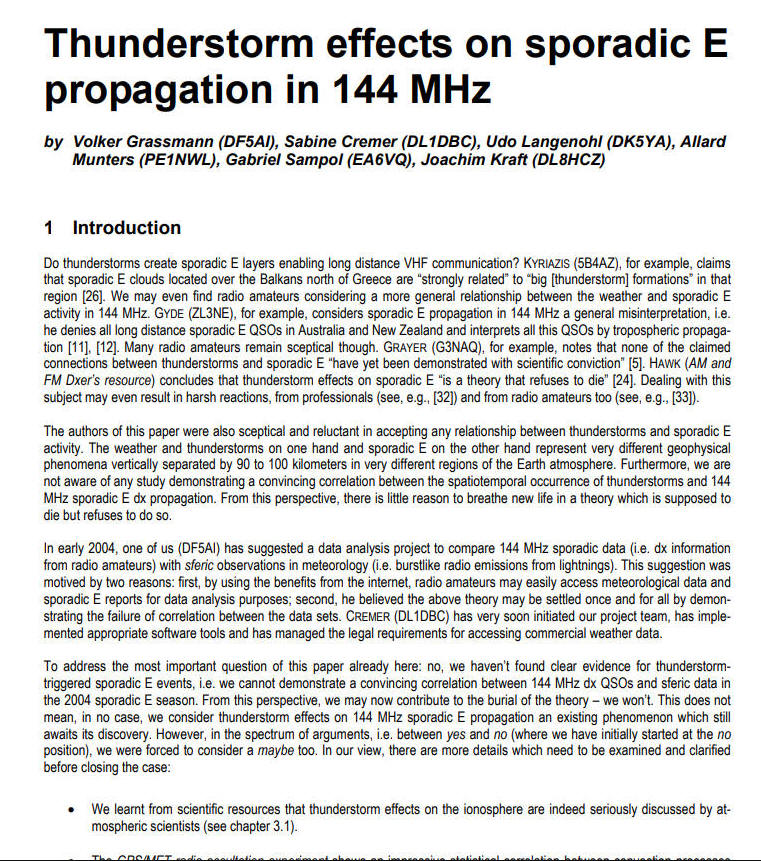
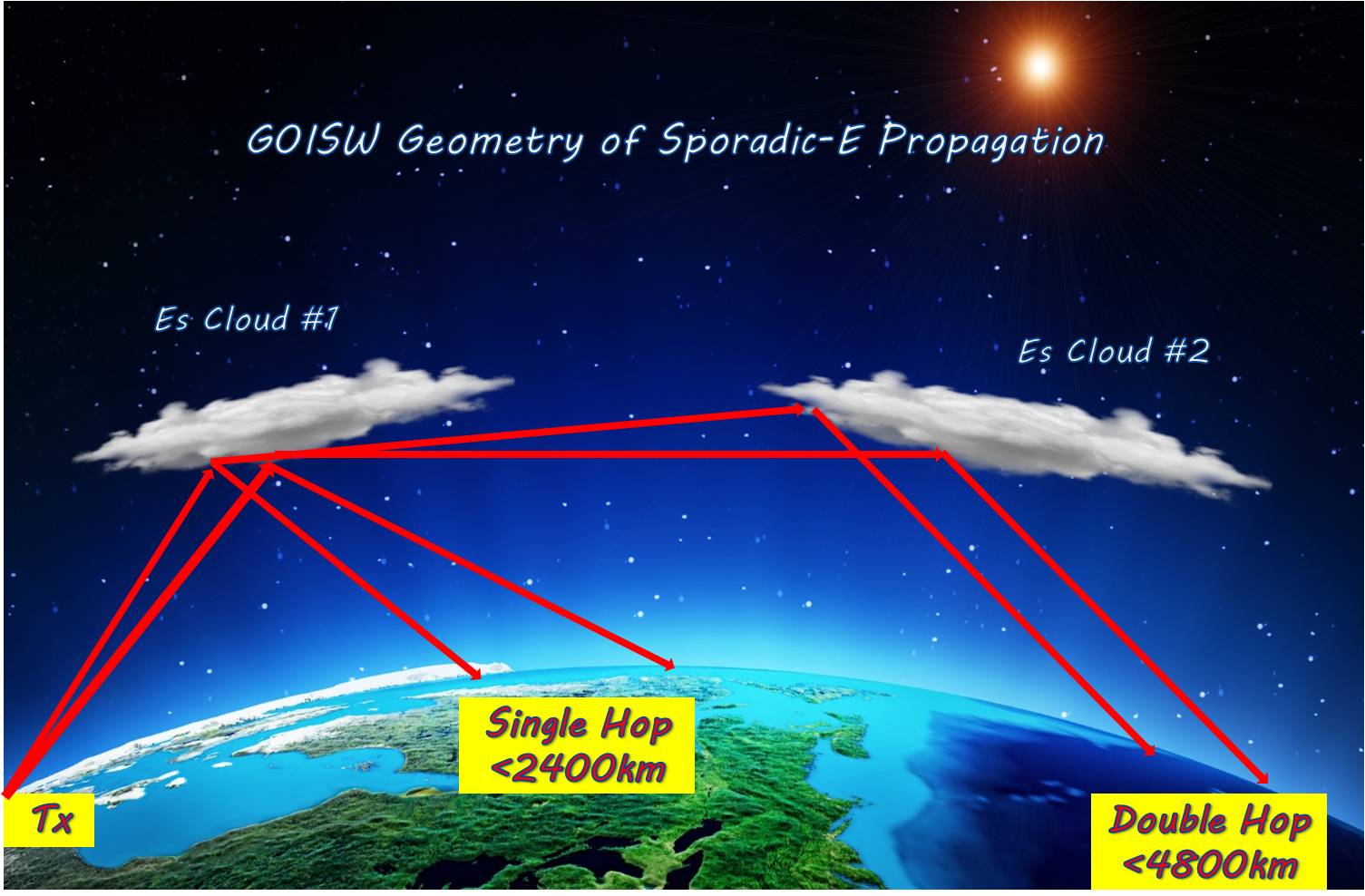
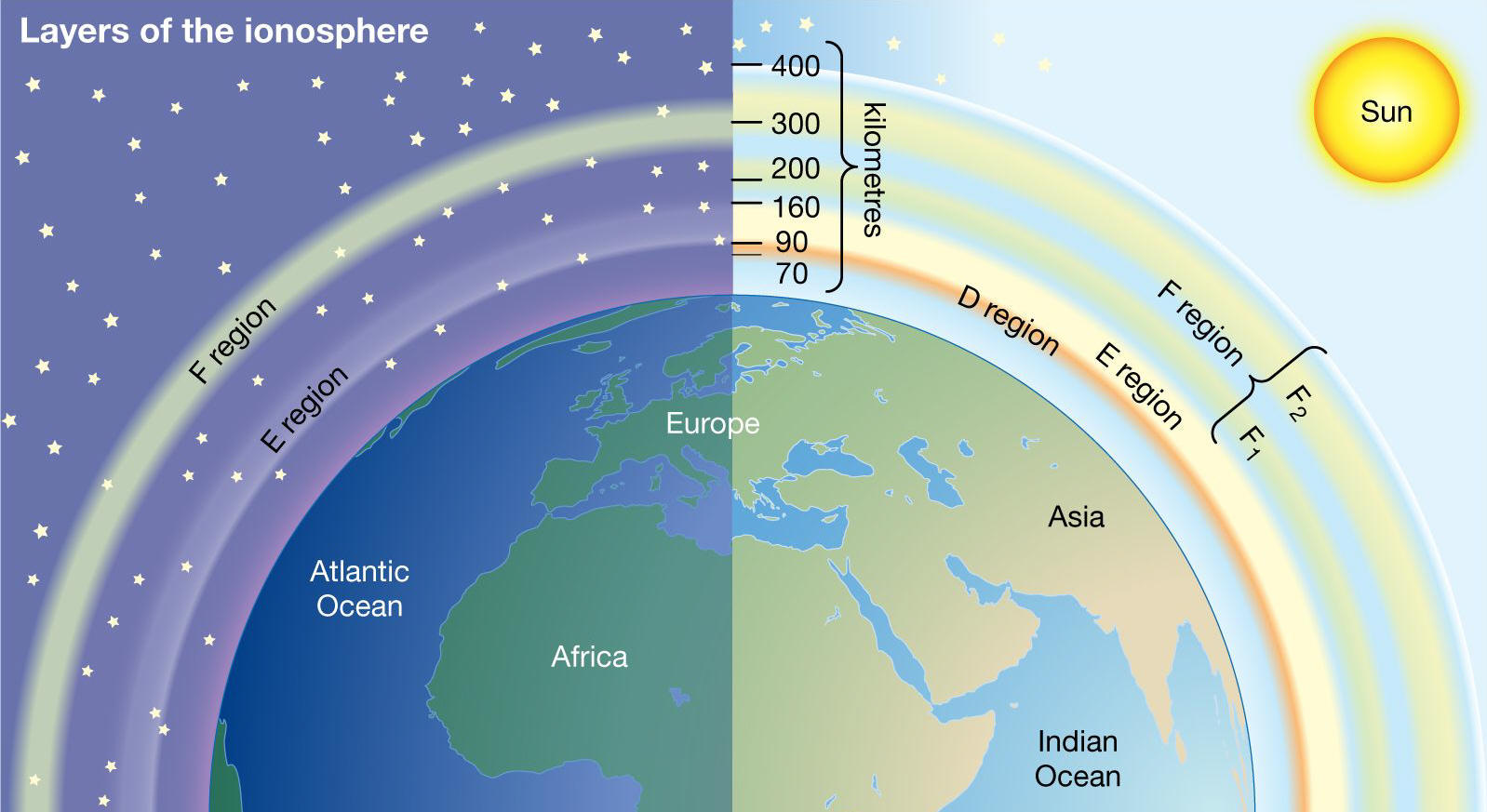
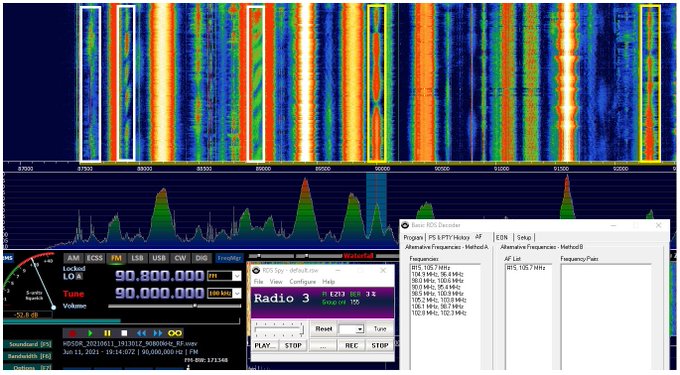
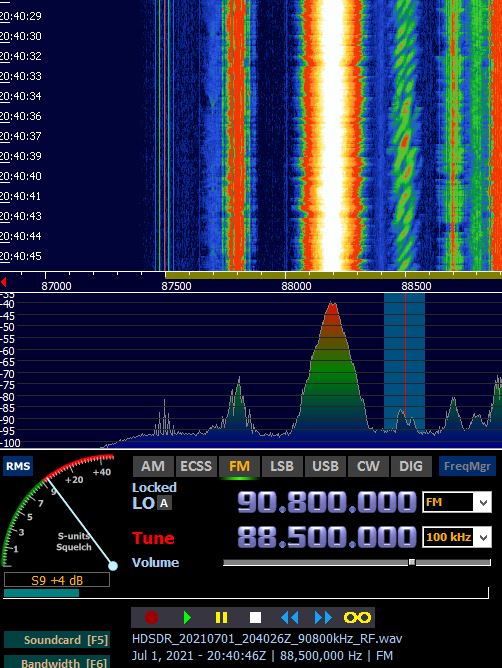
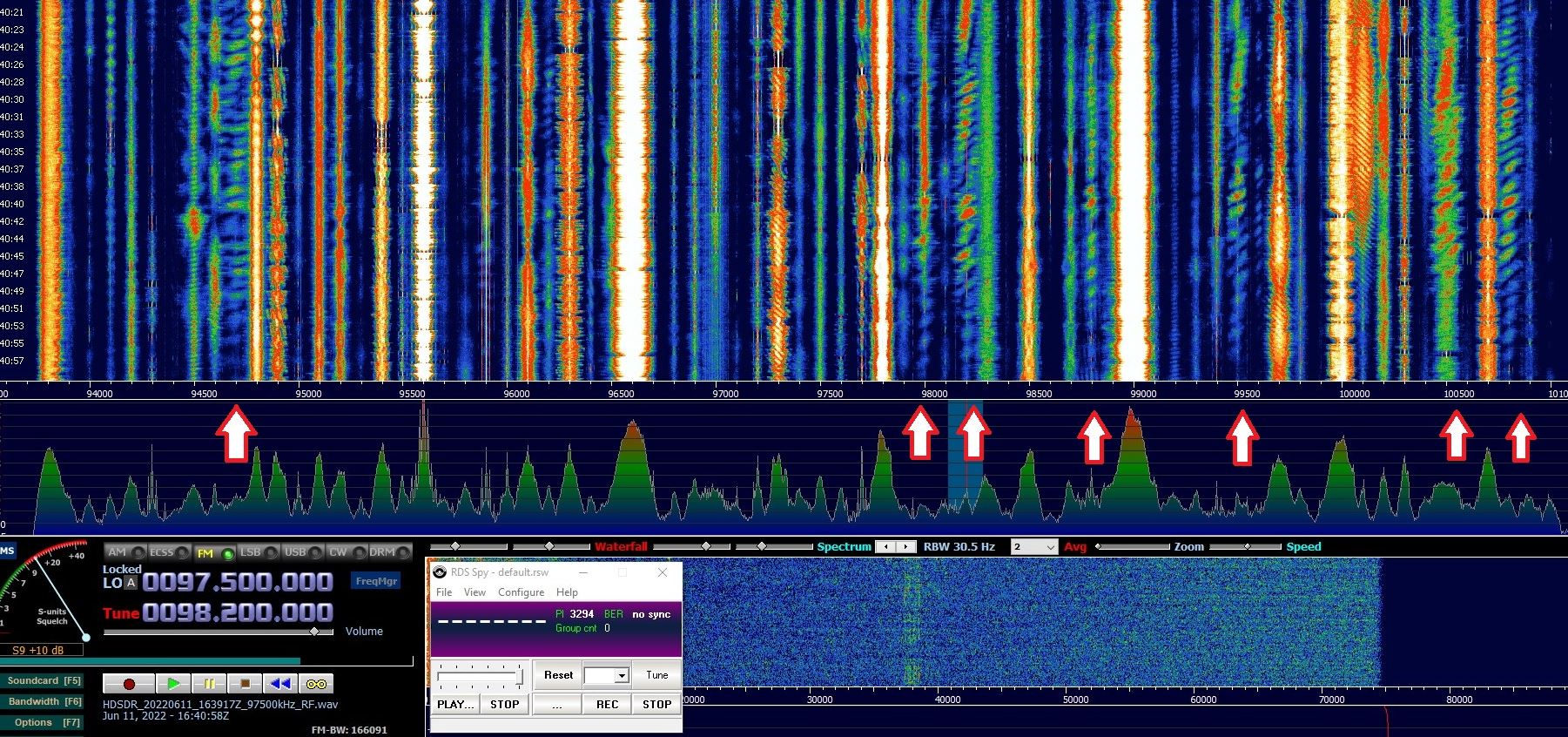
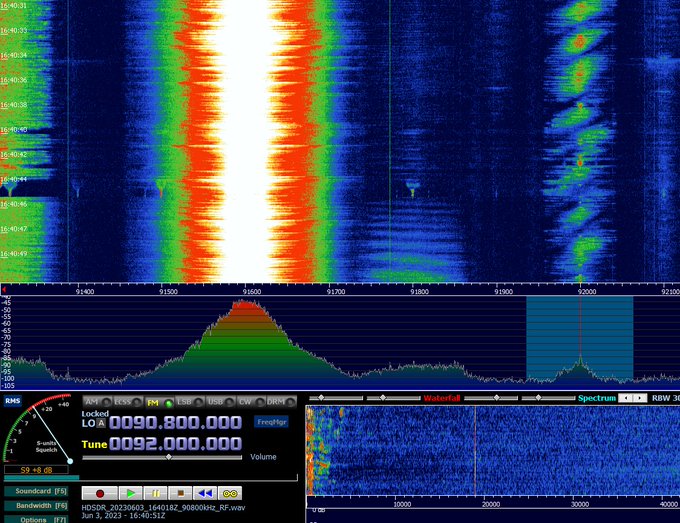

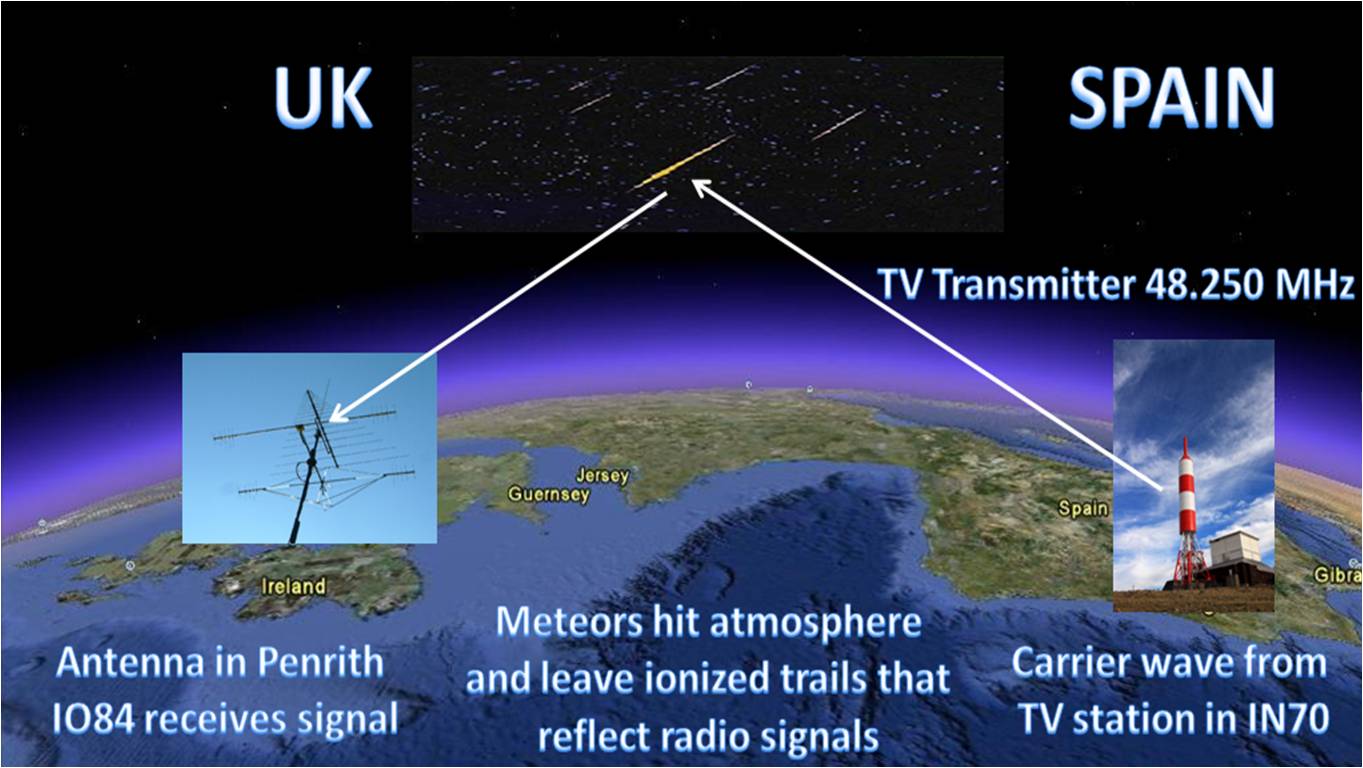
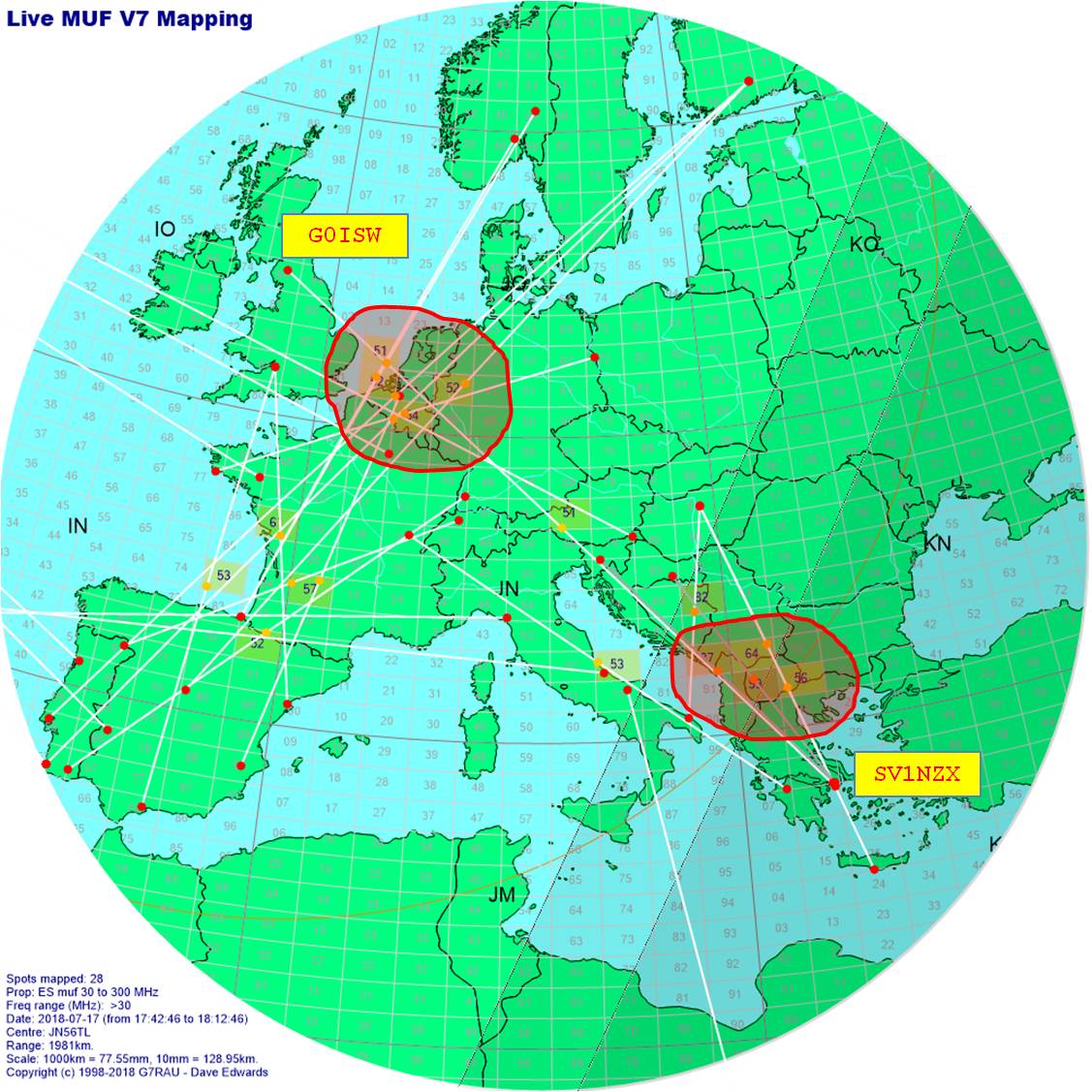
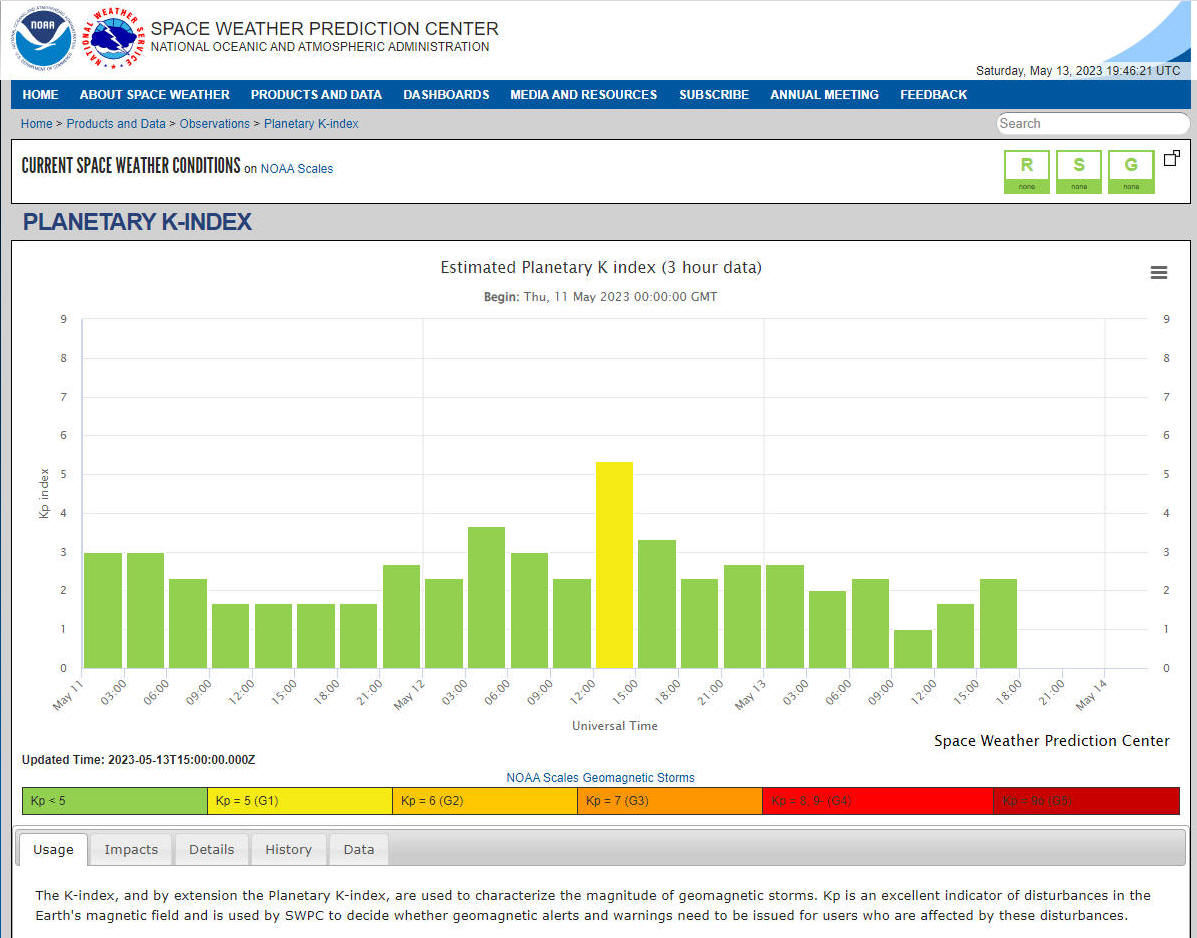
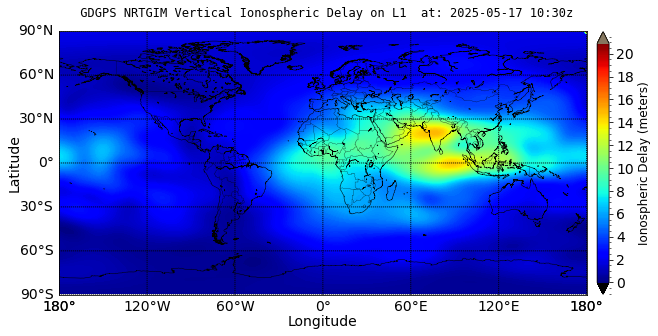
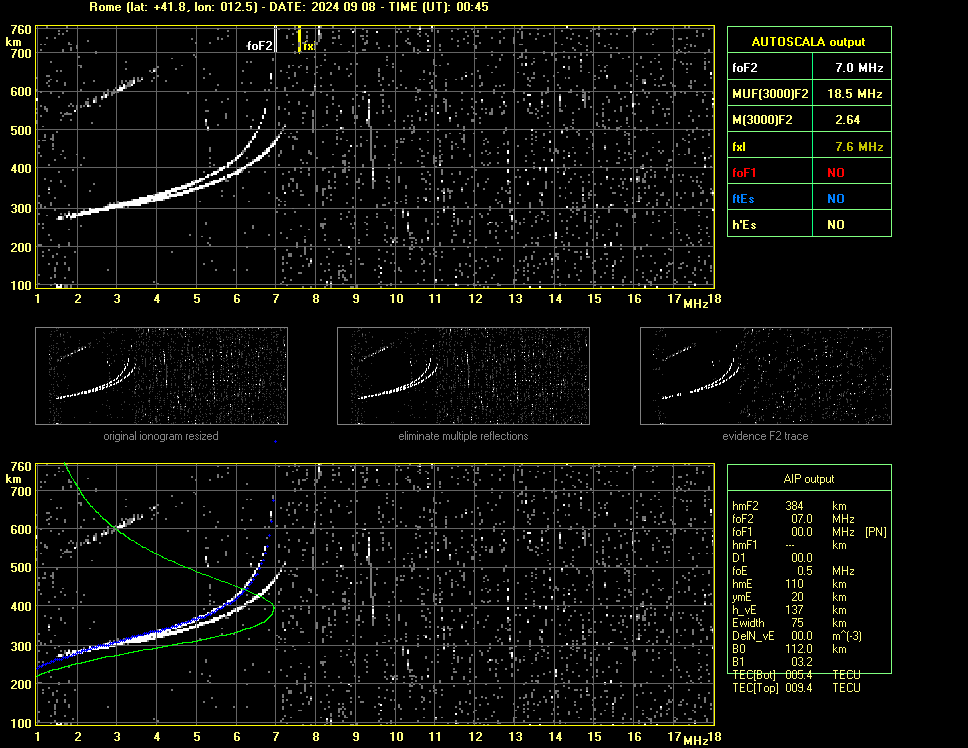
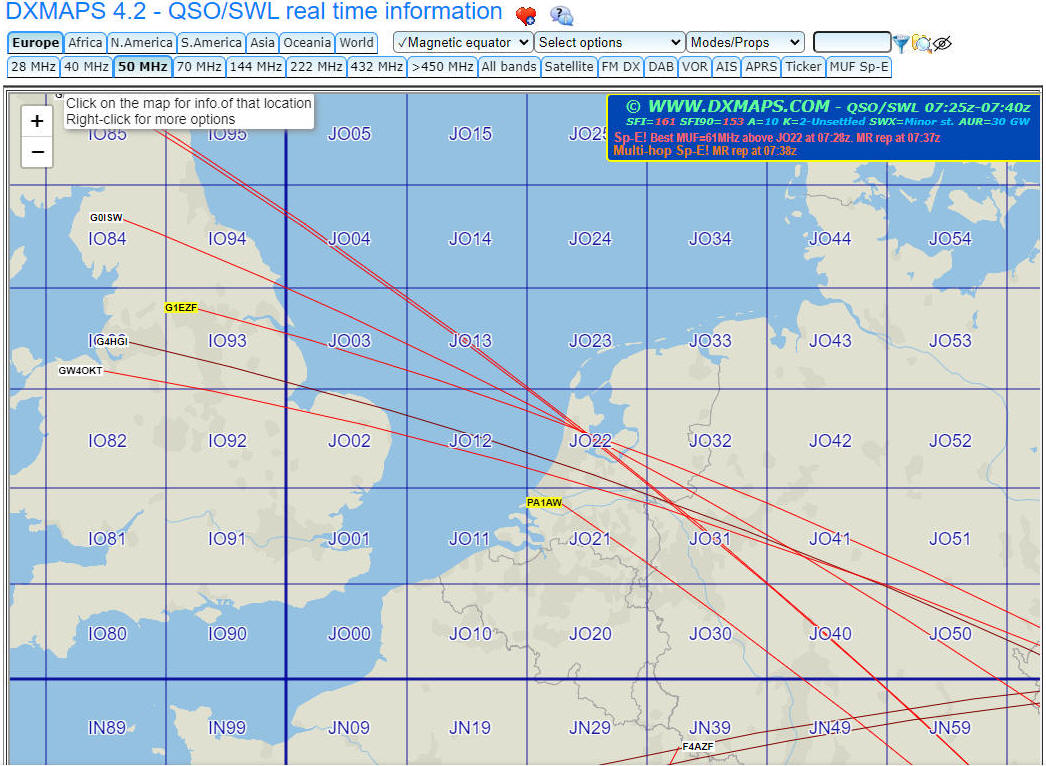
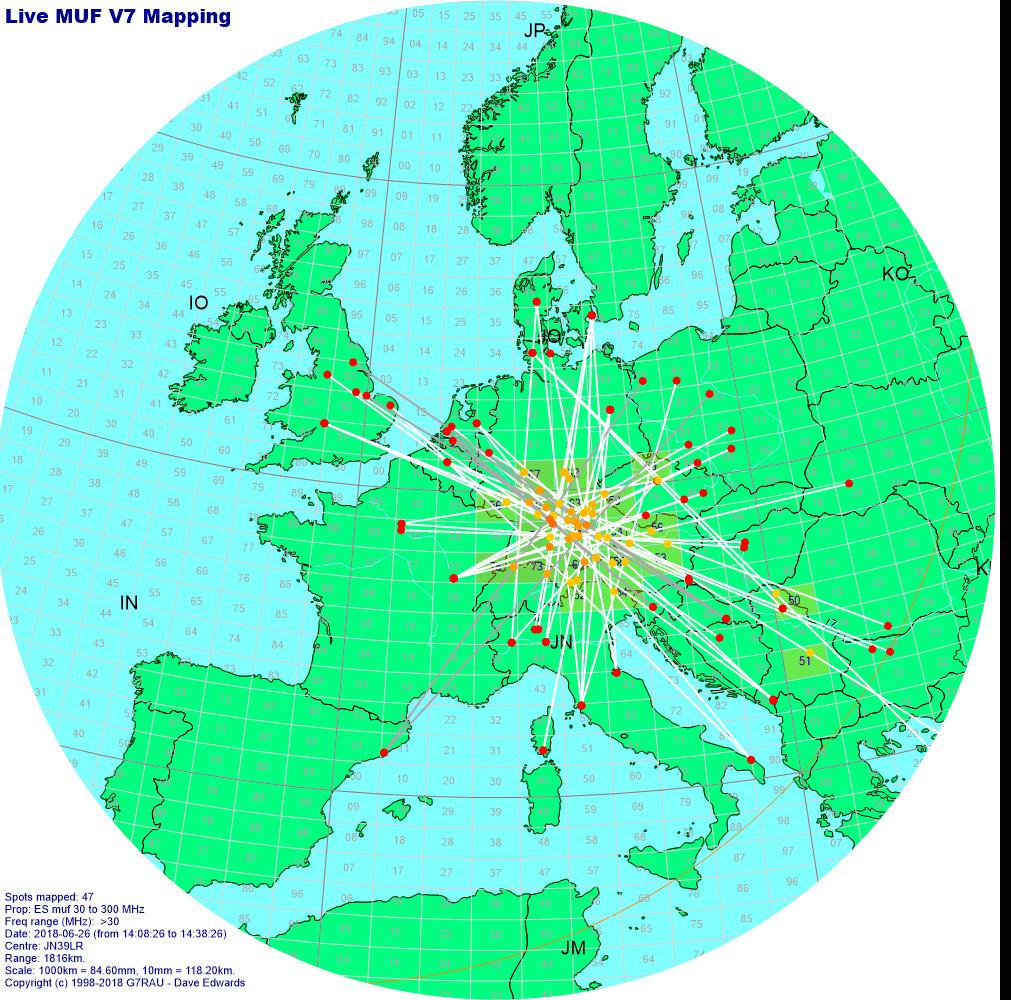
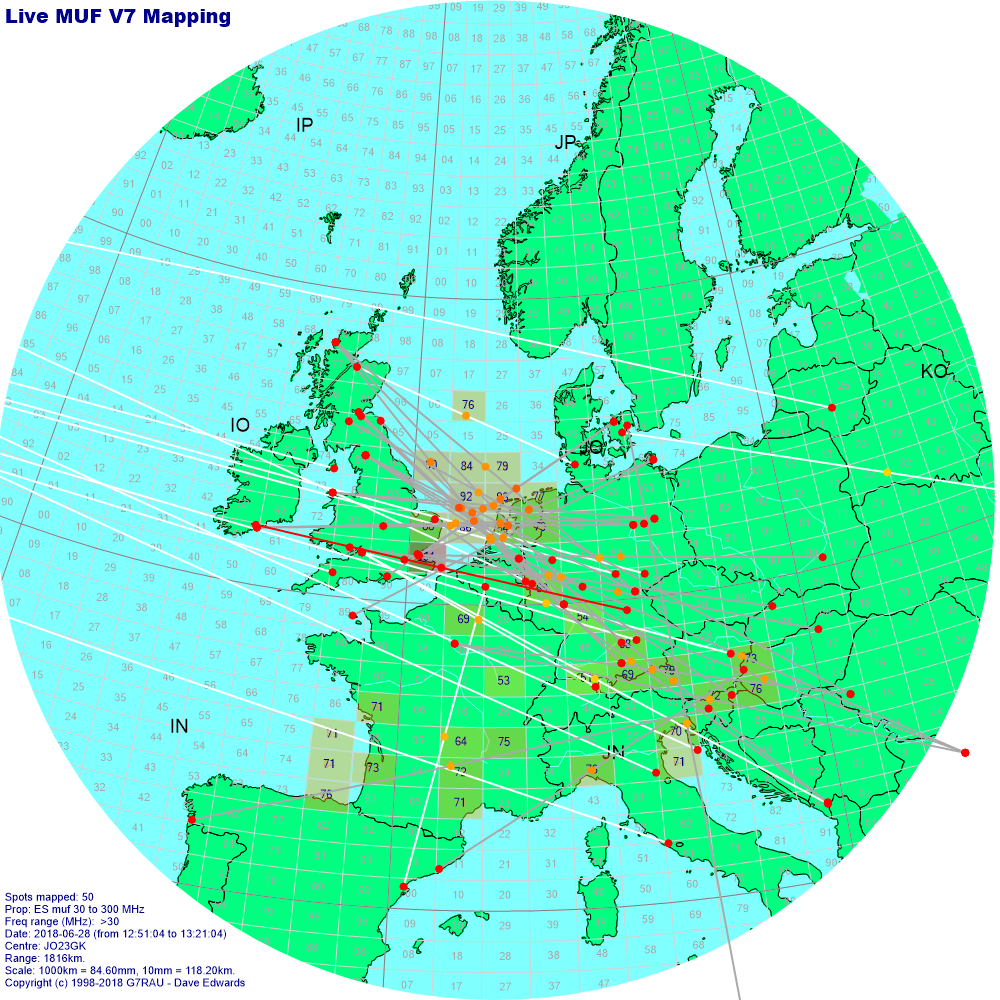
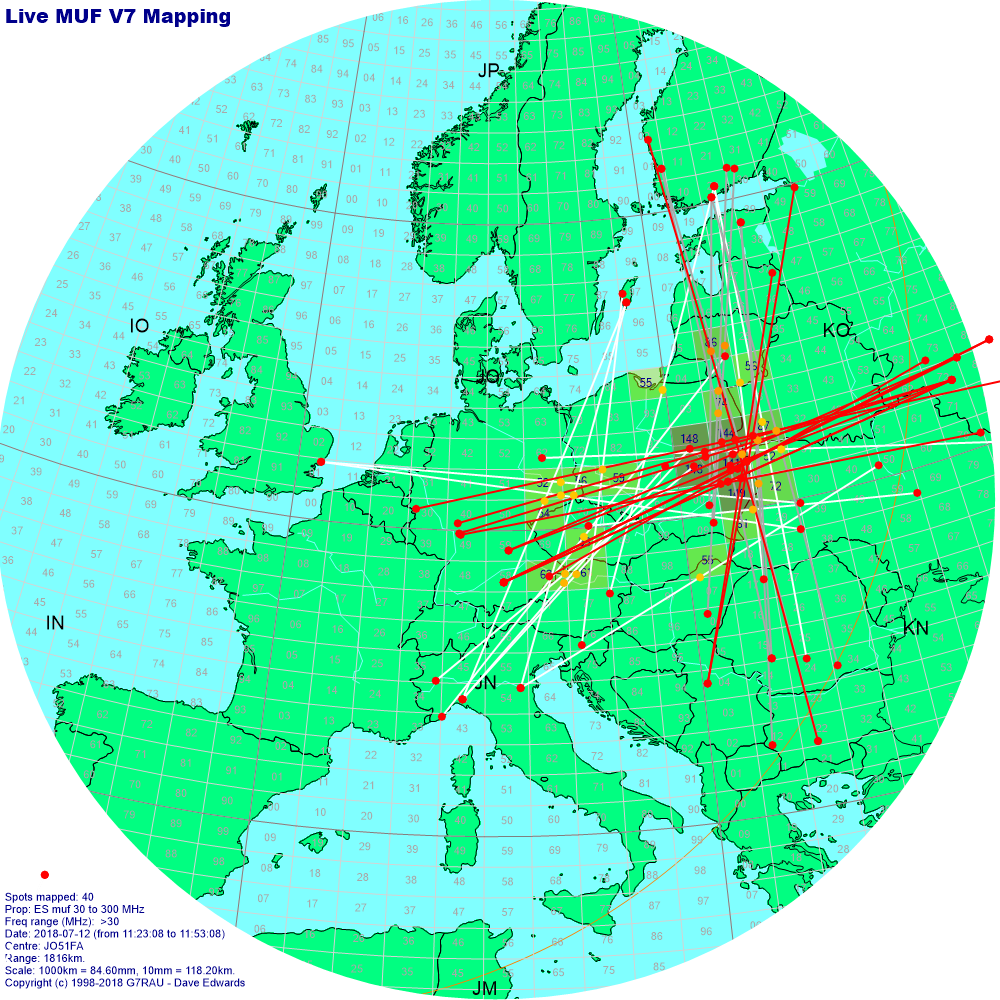
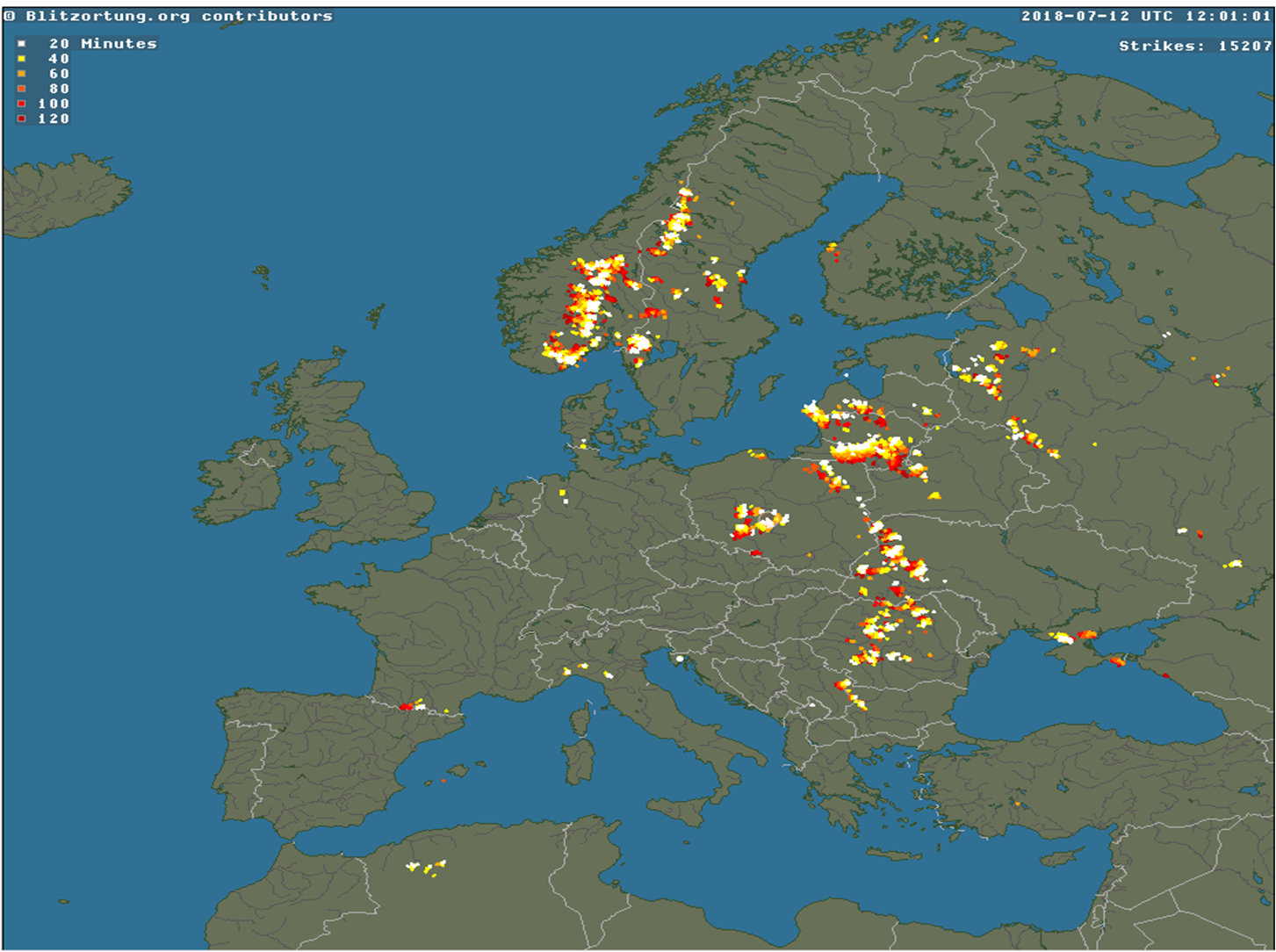
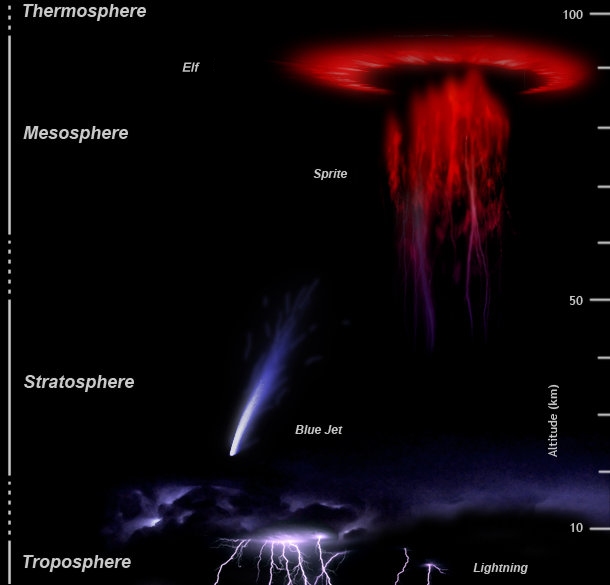
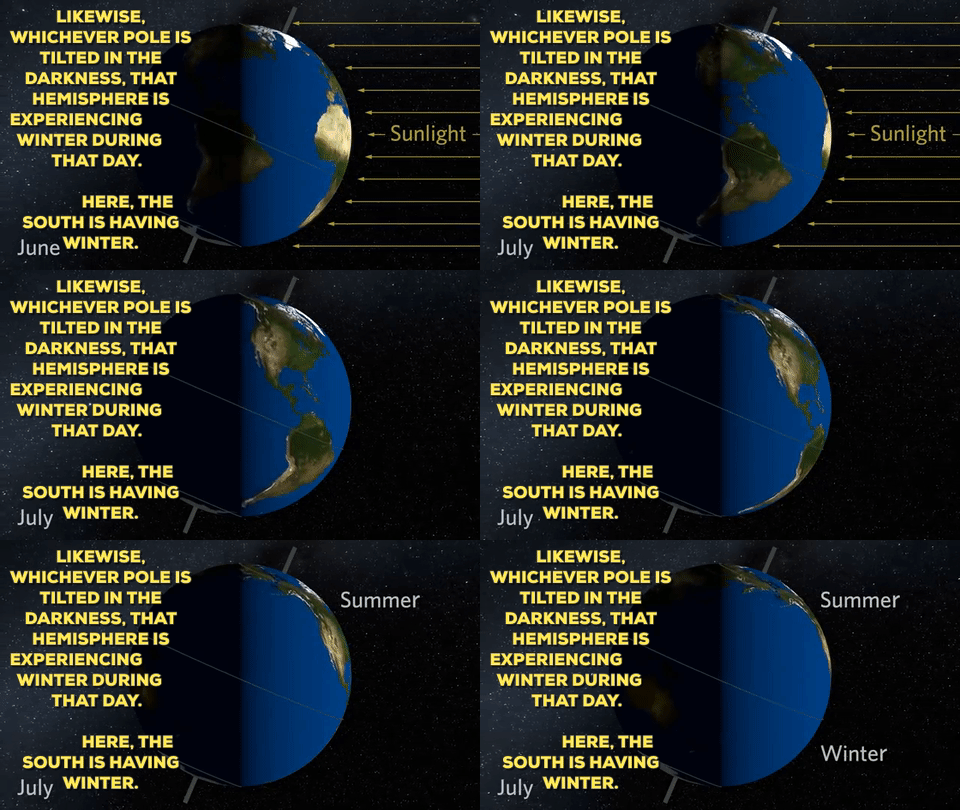
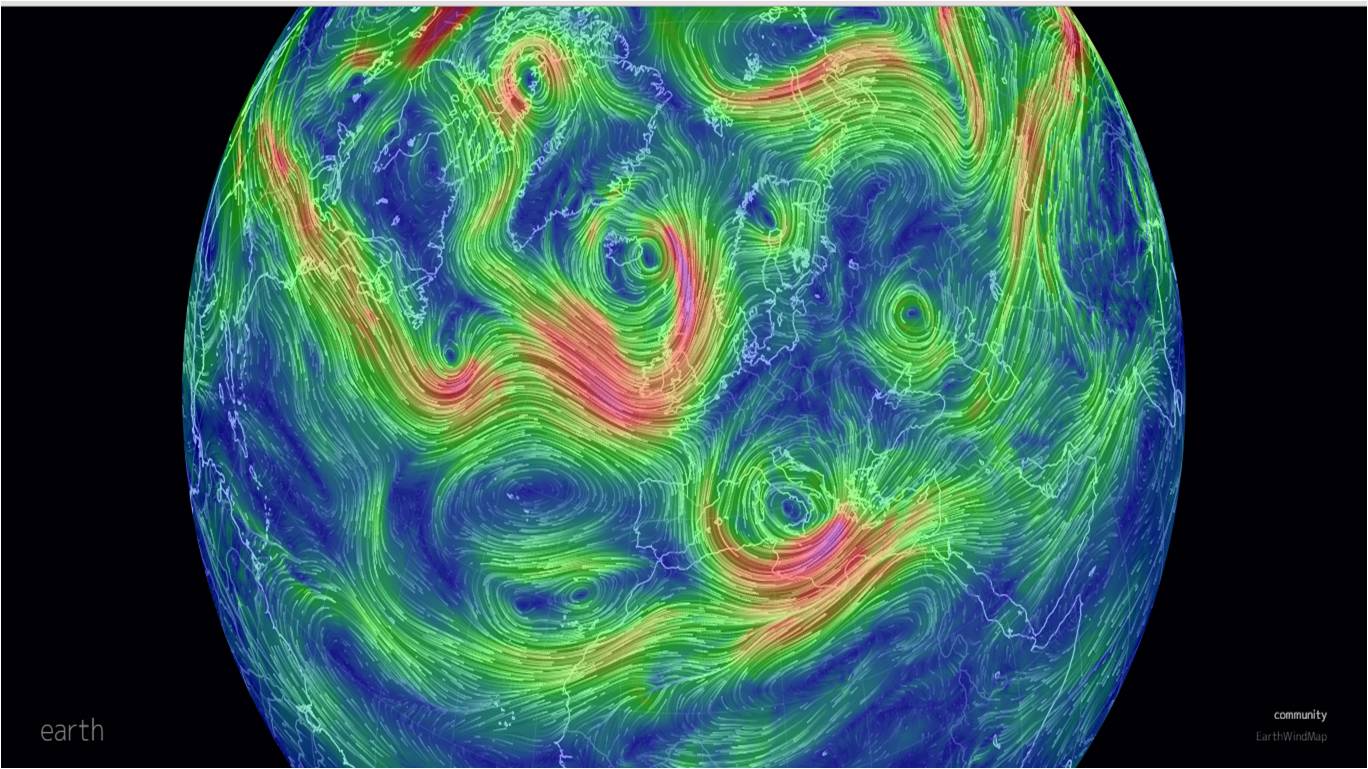

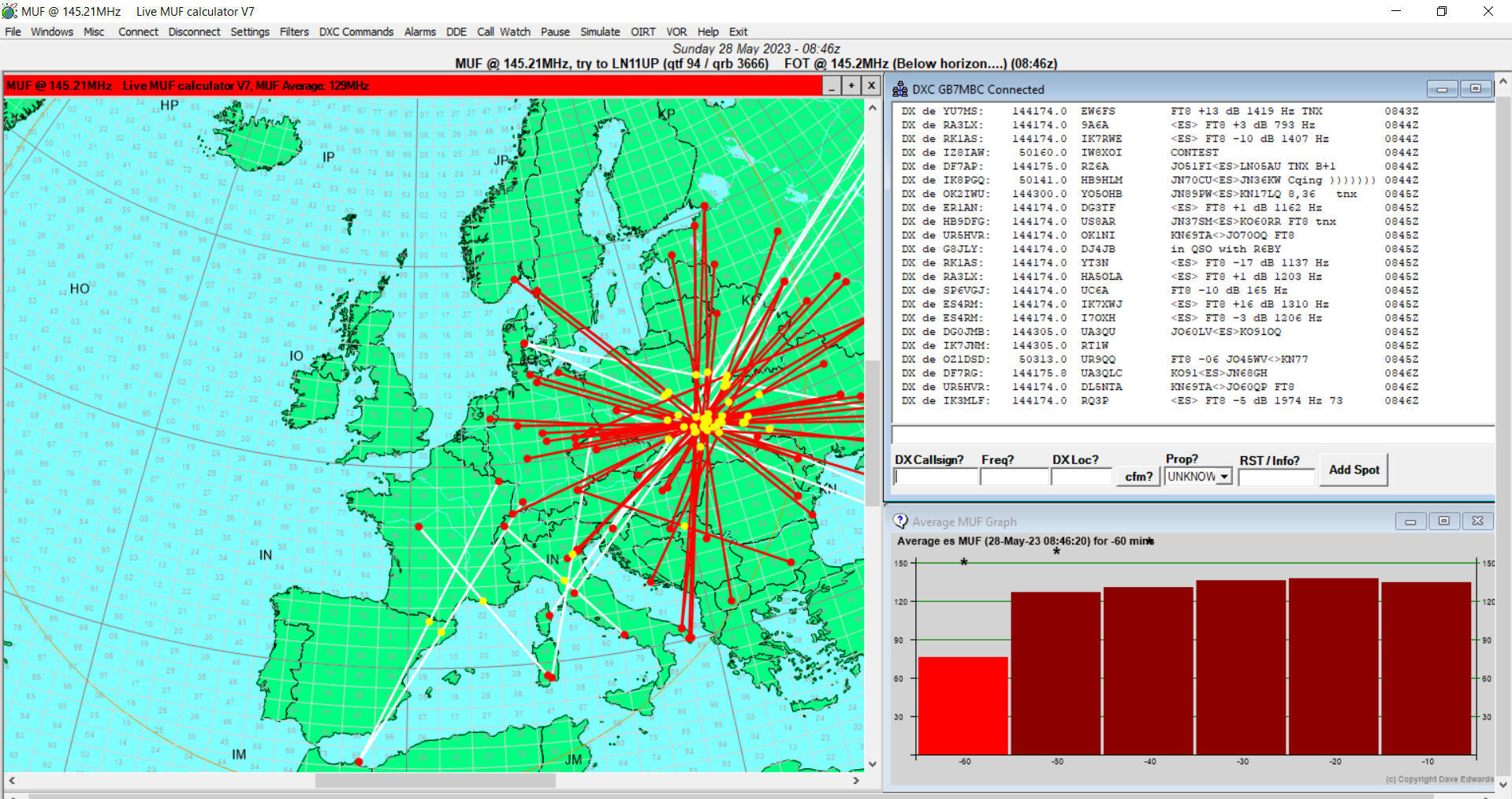
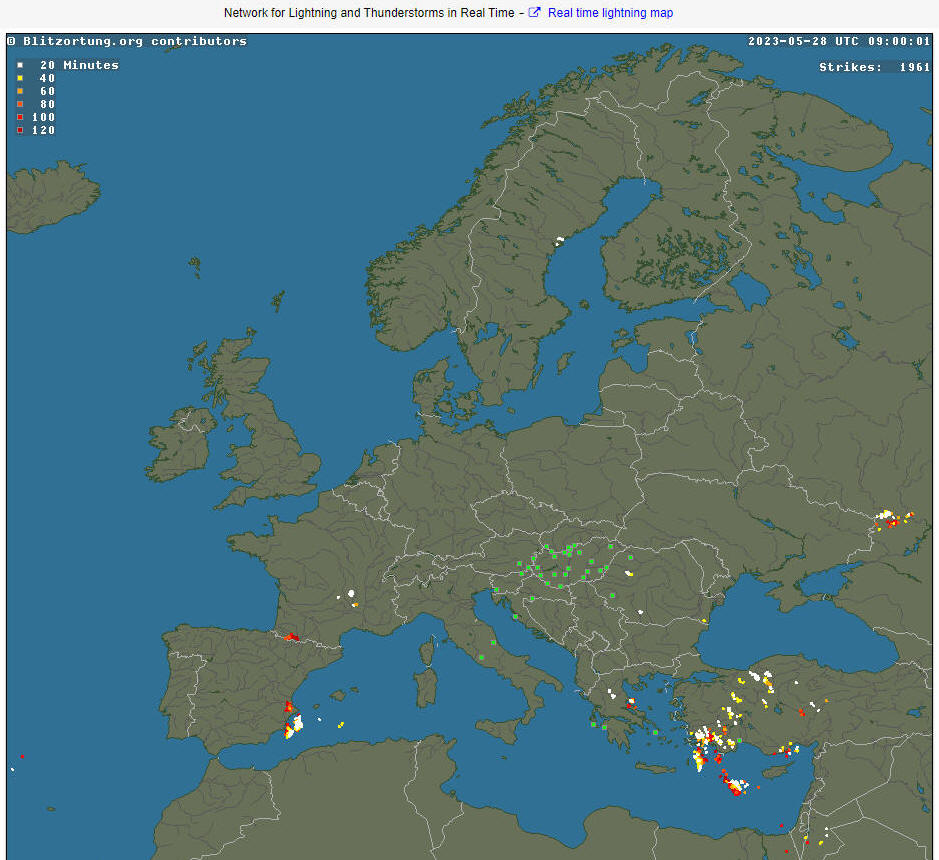
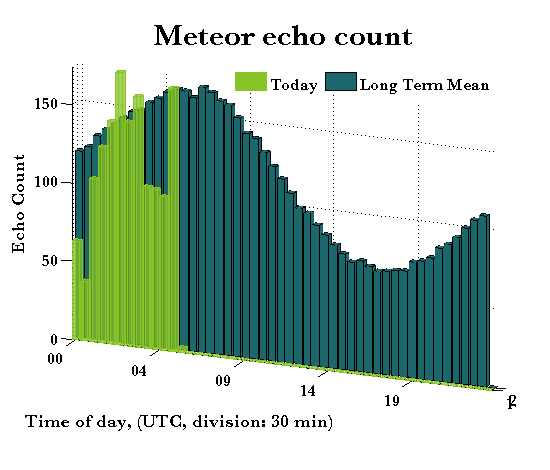
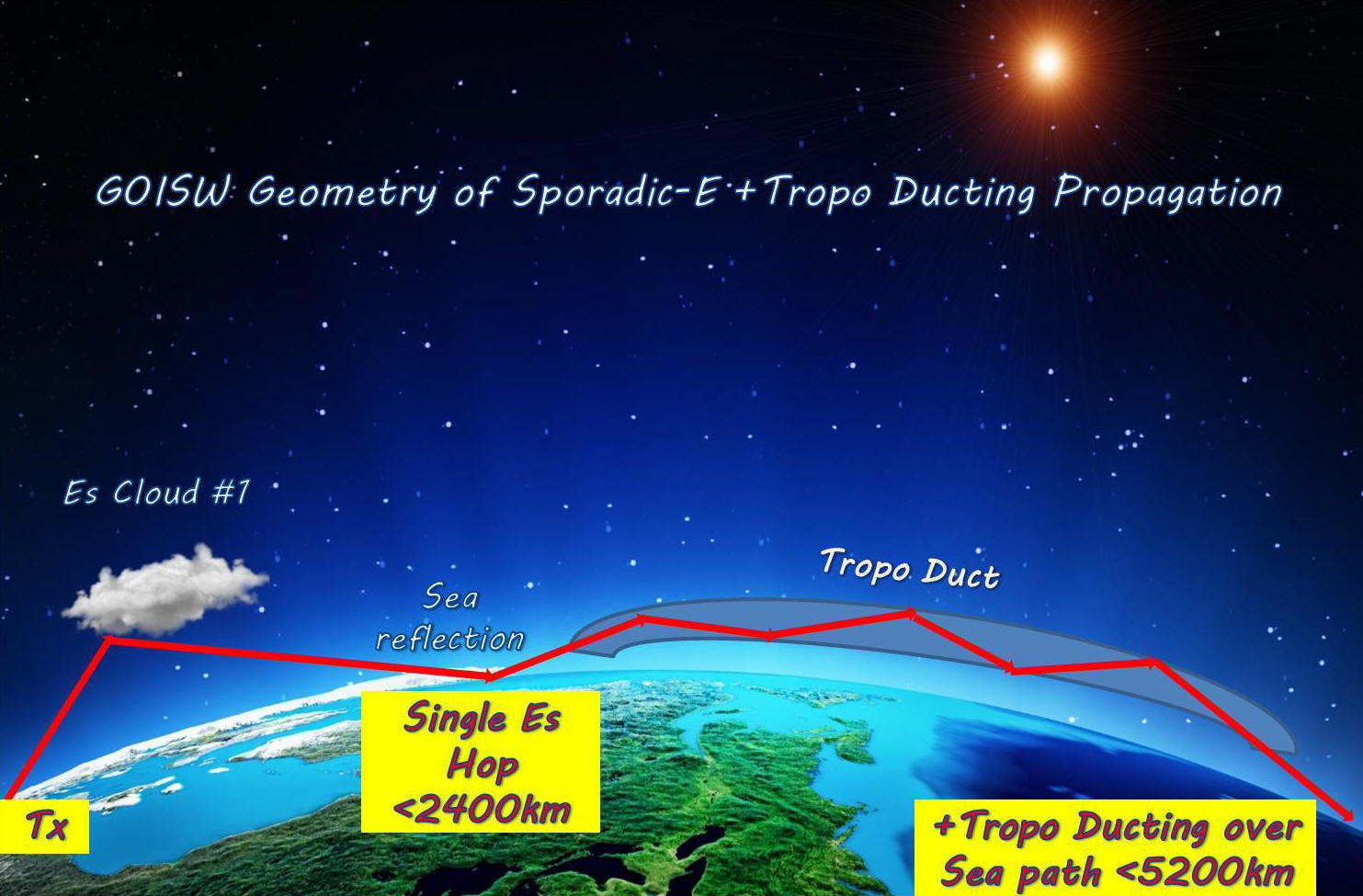
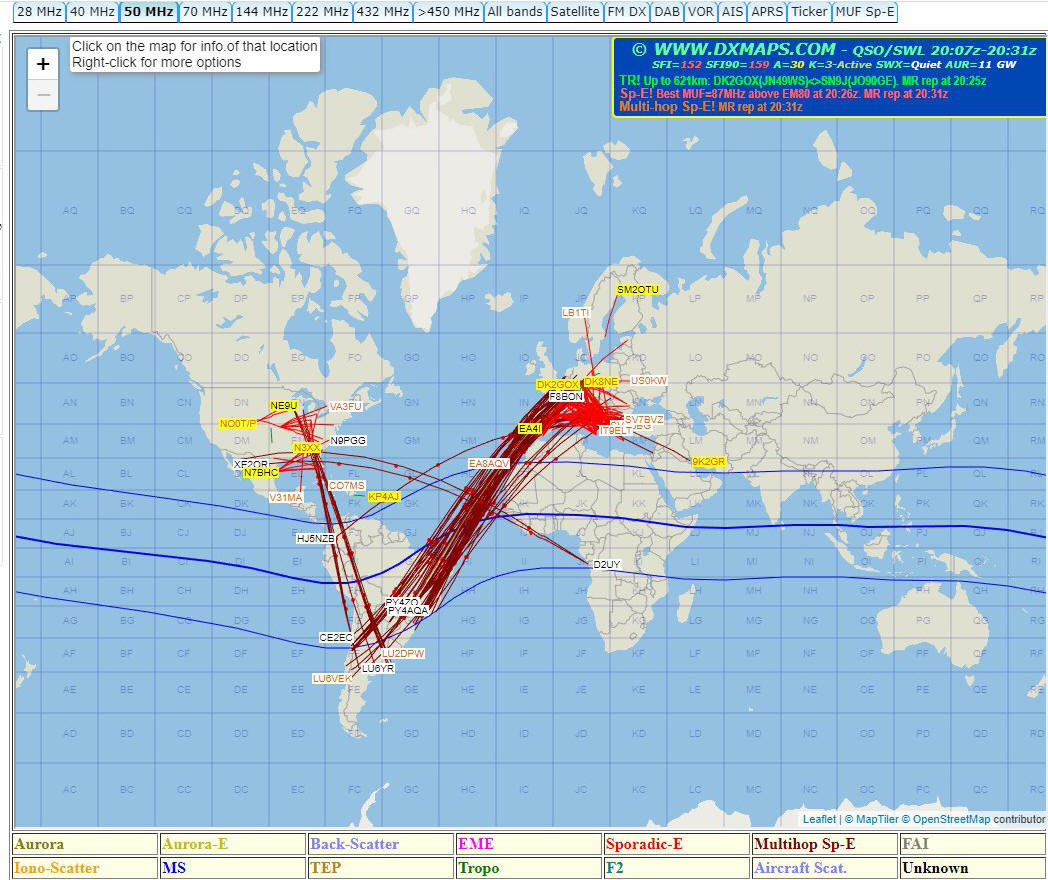
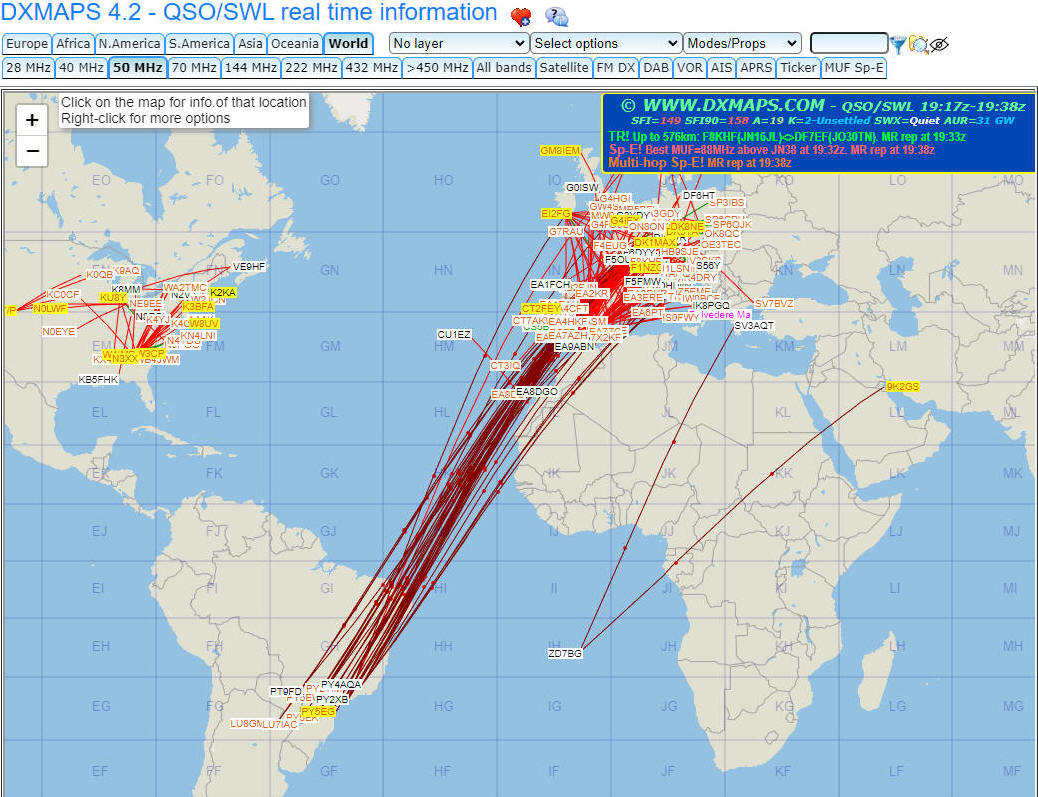
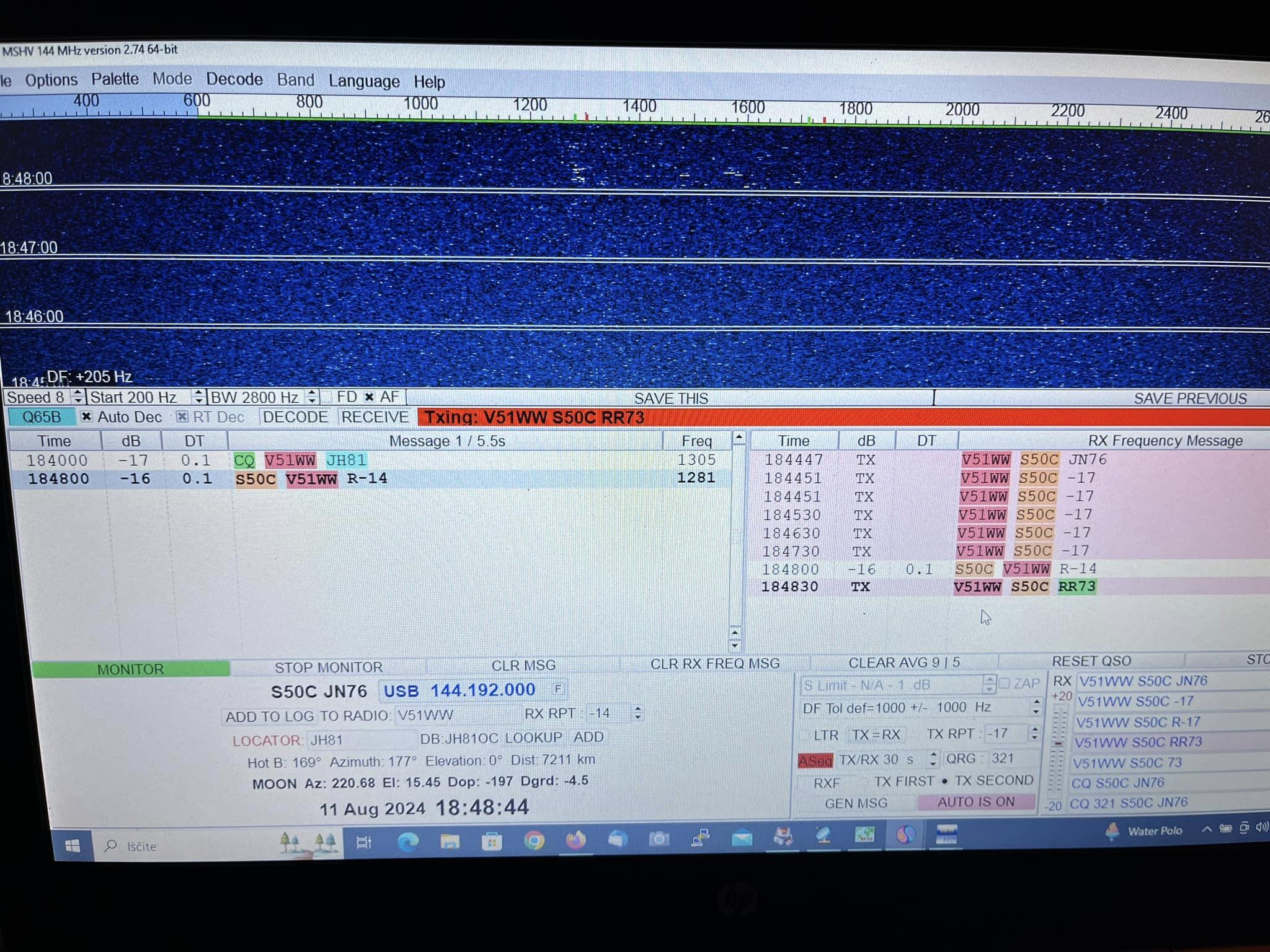
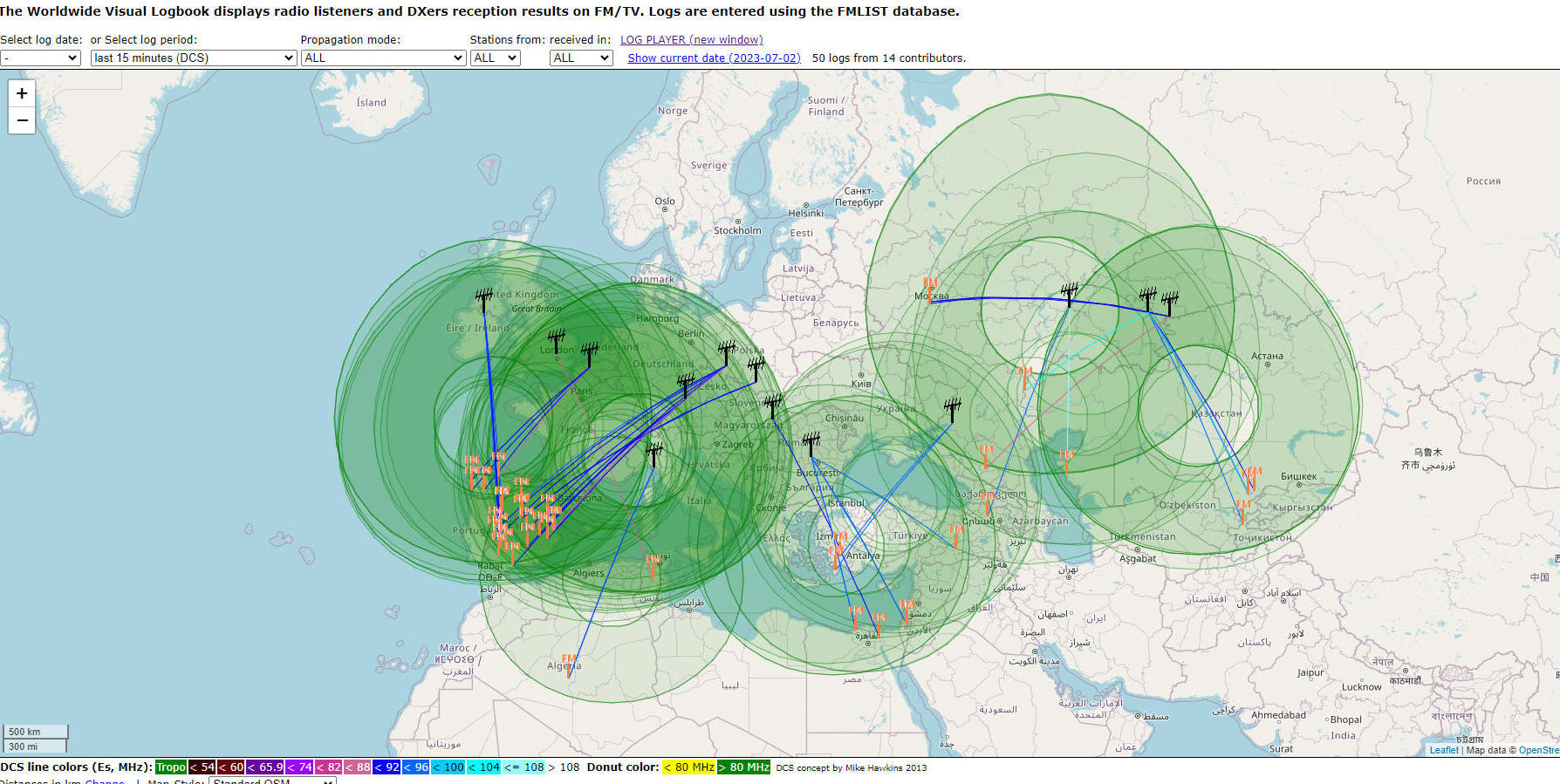
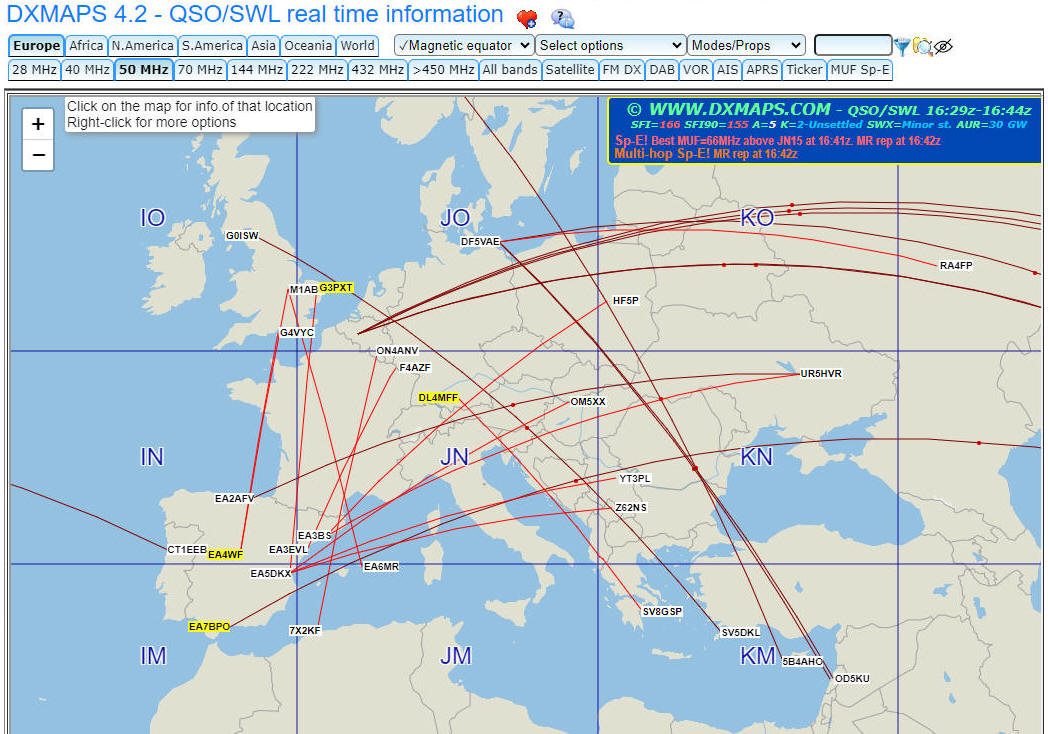
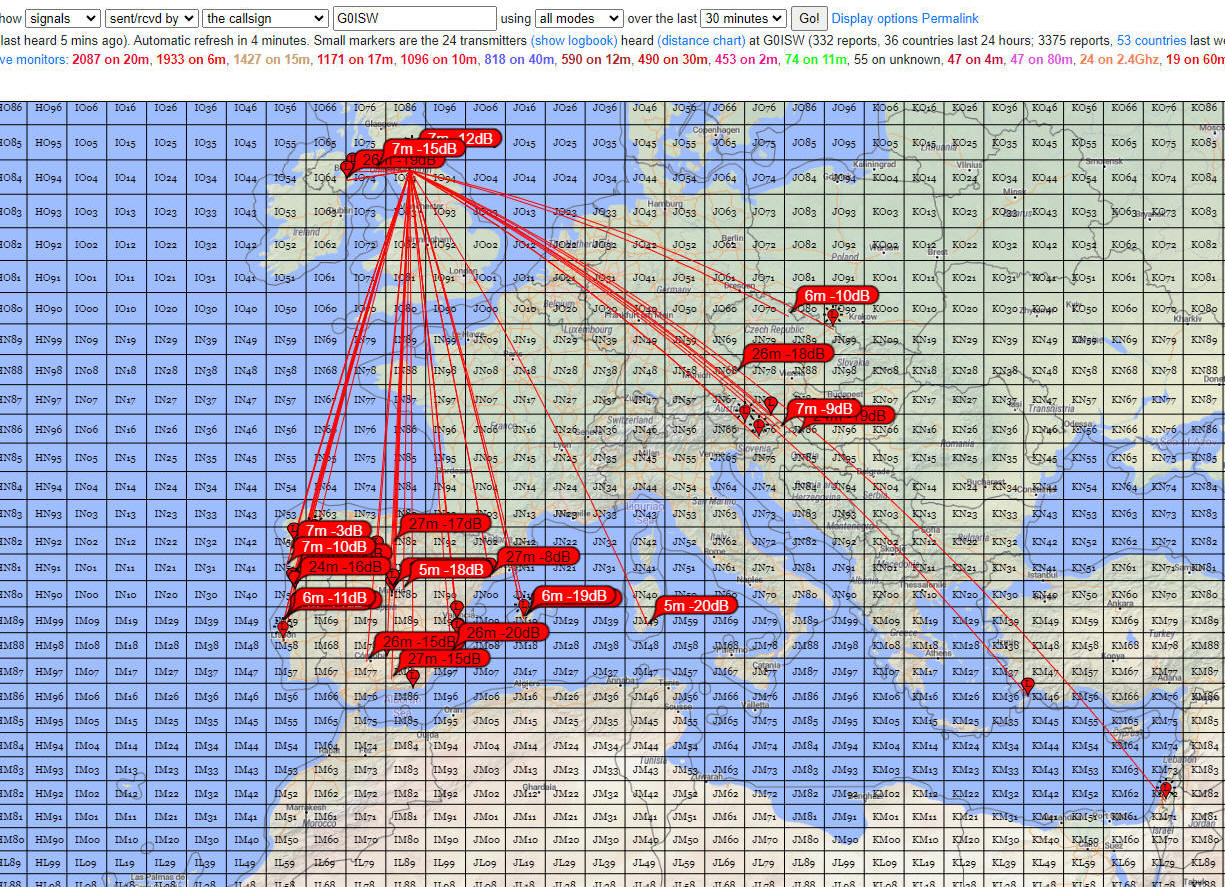
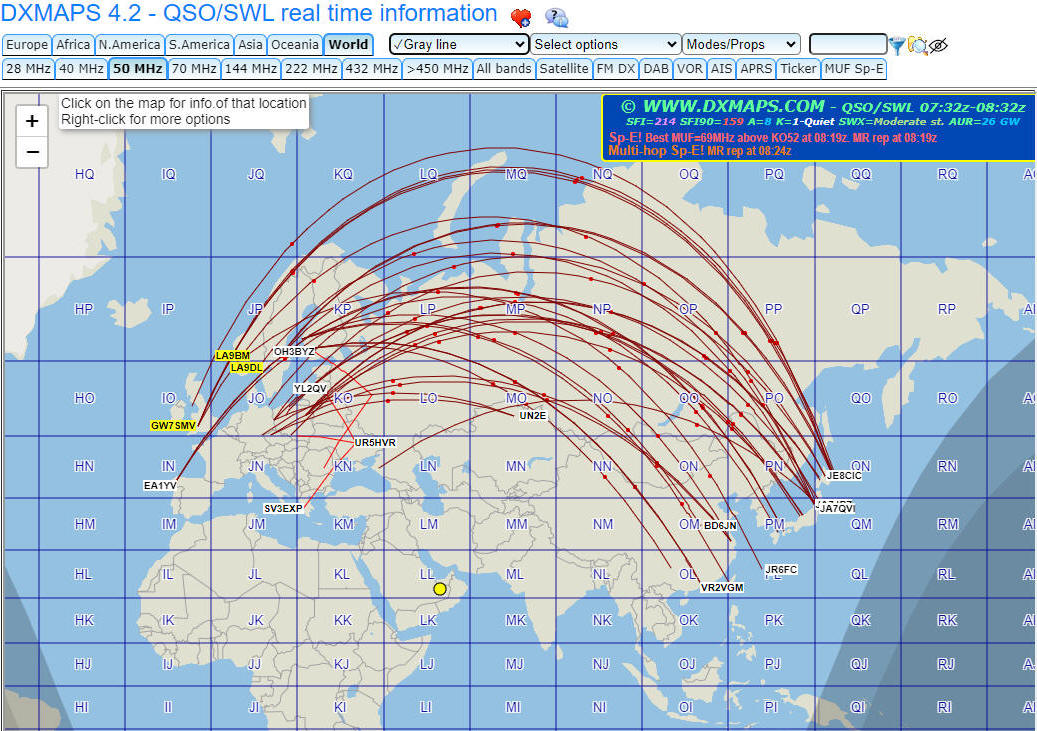
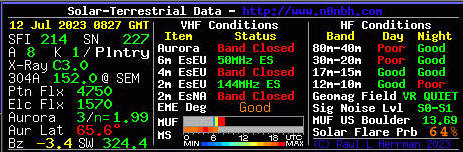
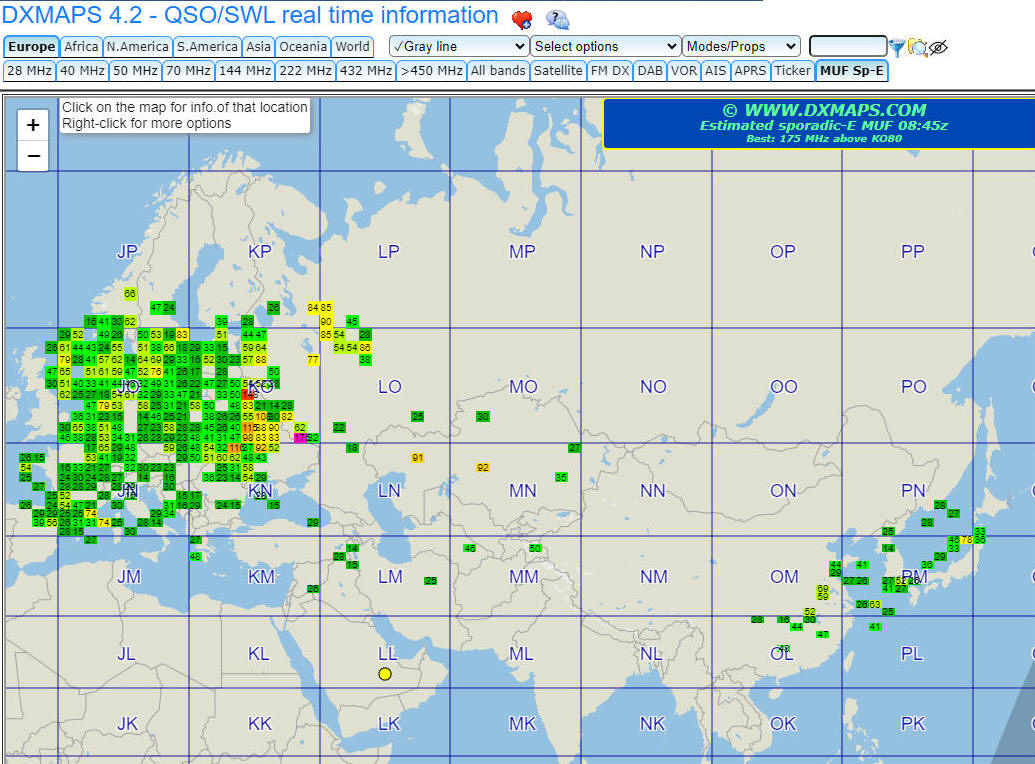
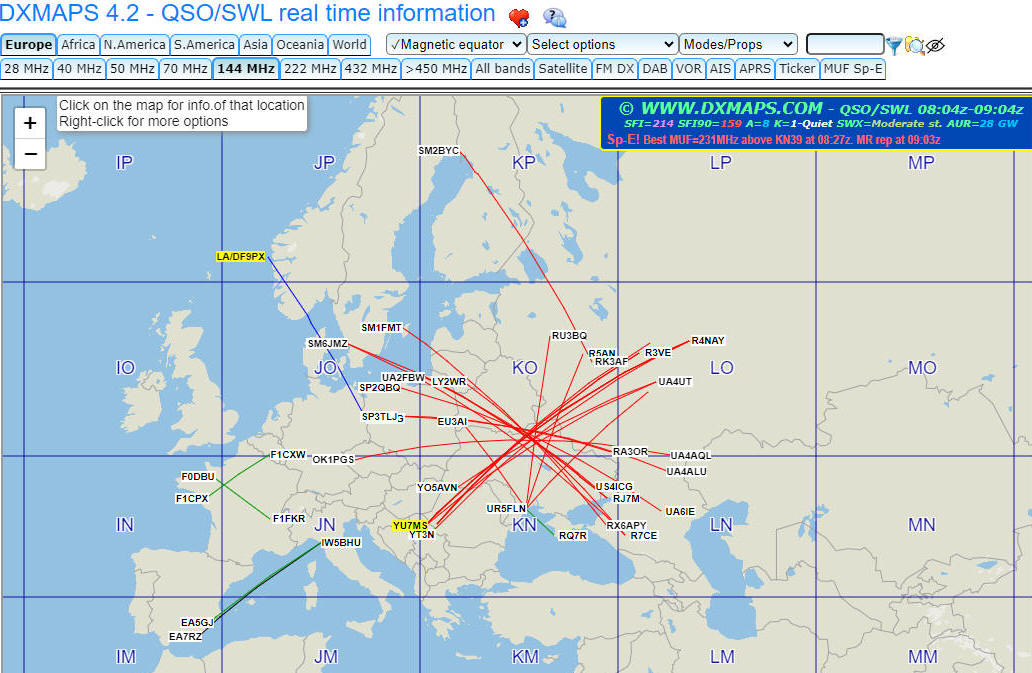
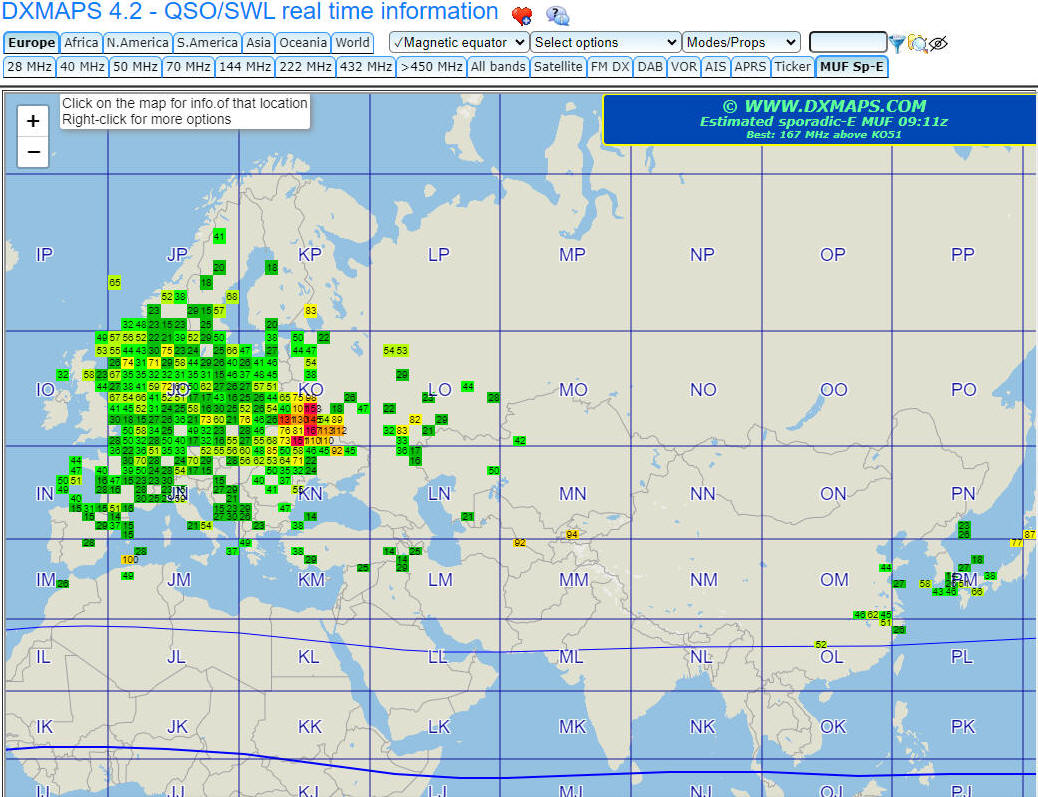
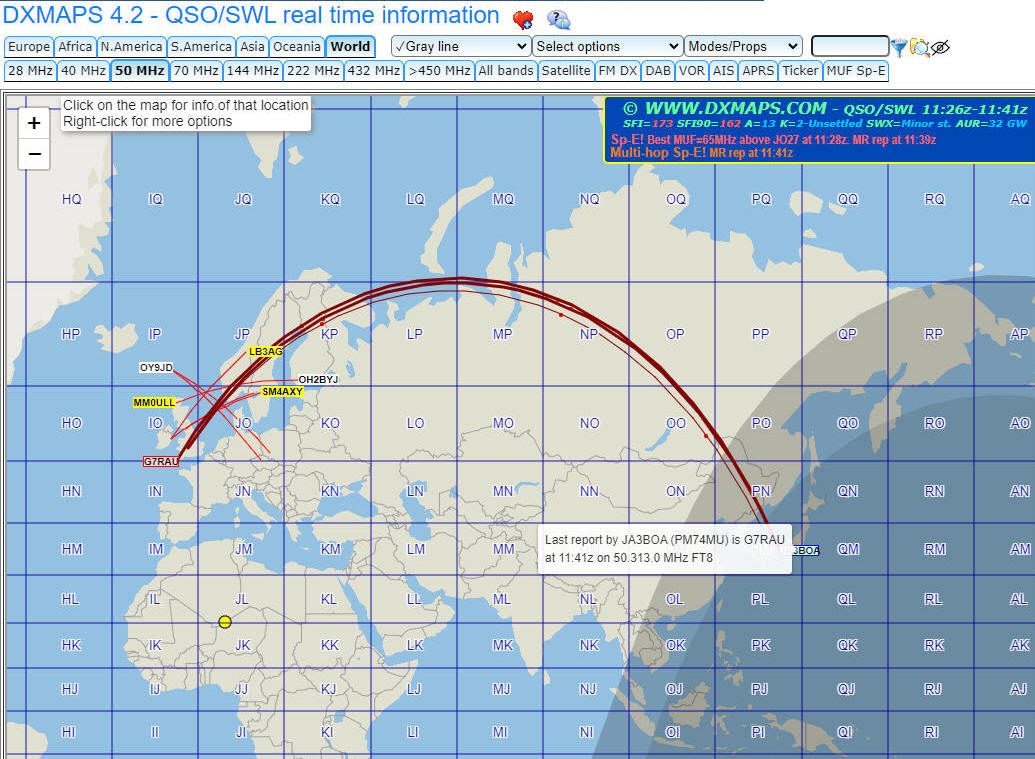
 |
|
 |
|
|
|
|
|
|
|
|
 |
Send formatted VHF DX Cluster spot |
 |
|
If you cannot see the full index shown on the left edge of your screen, please go to my main page at © Copyright G0ISW. Page last modified July 2026. All Rights Reserved. |
|||

%20logo.jpg)
%20logo.jpg)
%20logo.jpg)
%20logo.jpg)