X2 Layers
Number of layers
N = 40
Radiative Parameters
Atmosphere:
aT = 0.15
aS = 0.0
α = 0.003
Surface:
&alpha = 0.05
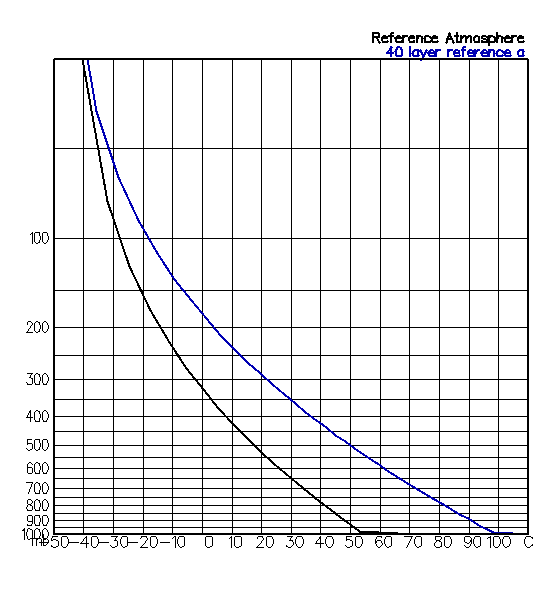
The instructions were to generate a profile by doubling the number of atmospheric layers in the reference atmosphere without modifying the reference values of the radiative parameters. We were further advised that this illustrates the results of ignoring the effect that layer thickness might have on absorptivities and albedos of the layers, and demonstrates why the the absorptivities and albedos should account for the layer thickness.
I increased N to 40
As expected (and shown on the blue plot of the figure below), temperatures increased, with the greatest increases at the lowest layers. The surface temperature was a scorching 110.88oC.
As mentioned in the first of these experiments, the total amount of radiation absorbed is proportional to (1 - a)N and the total scattering loss is proportional to the N-times product of (1 - α) Thus if N is increased, the absorptivities and albedos of the atmospheric layers must be decreased if the total loss/gain is to be maintained.
X2 LayersNumber of layersN = 40 Radiative ParametersAtmosphere:
aT = 0.15 Surface:&alpha = 0.05 |
|
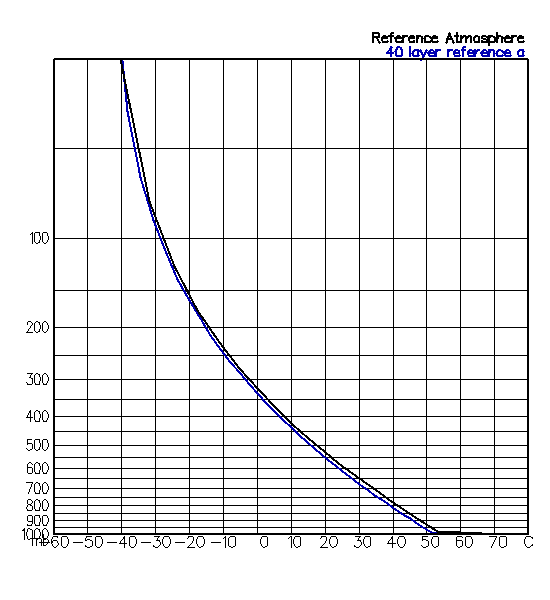
We did a quick-and-dirty experiment to determine the effect of halving the atmospheric absorptivities and albedos while doubling (to N = 40) the number of layers.
The results are shown in blue in the next figure. The temperatures are within 2oC of the reference atmosphere (shown in black).
The results may have been closer if we solved the equations for the exact atmospheric absorptivities and albedos and used them. Or not! (The terrestrial absorptivity should have been 0.078 instead of 0.075, the atmospheric albedo (0.0015) was OK.)
X2 LayersNumber of layersN = 40 Radiative ParametersAtmosphere:
aT = 0.075 Surface:&alpha = 0.05 |
|
x2model.html 5/22/08 Victor Frank