The LAWNERNATOR
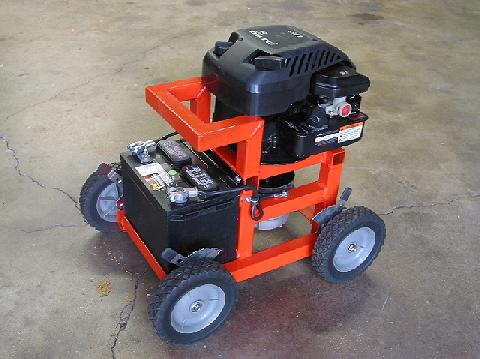
Building a lawnmower engine-powered, automotive
alternator generator set.
Building a lawnmower engine-powered, automotive
alternator generator set.
Exectutive
Summary:
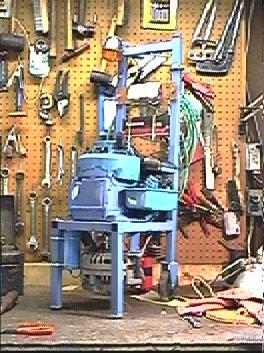
Inspired by an article in QST, and my interest in power generation
in general, I built the above pictured lawnmower engine-powered
alternator genset. I determined somewhere around halfway
through construction that it's not worth it, at least in terms of
effort, cost and amount of potential energy possible from this
unit. But once having gone that far, I wanted to complete
the unit since I had no portable source of emergency power
generation, I had a bunch of money tied up in parts, and following
through to completion would also serve to prove unequivocally that
it wasn't worth it. :-)
 |
 |
|
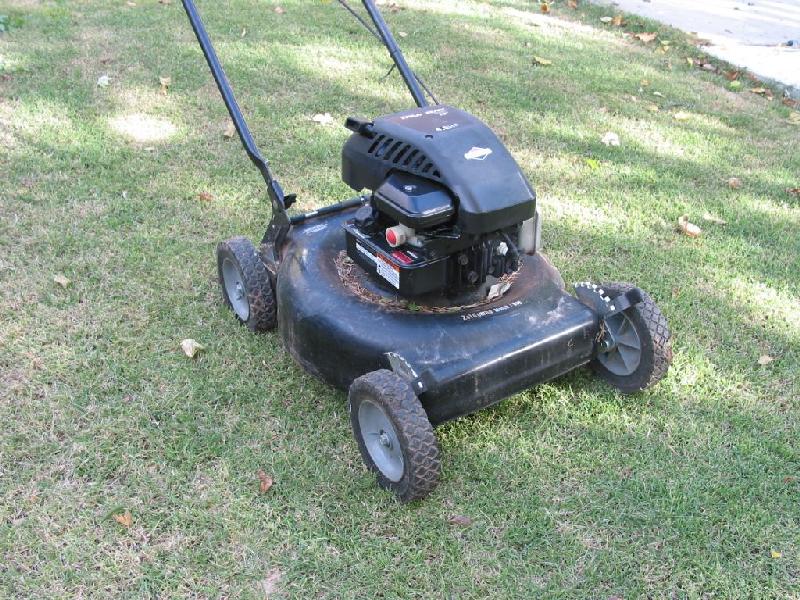
ultimate sacrifice. |
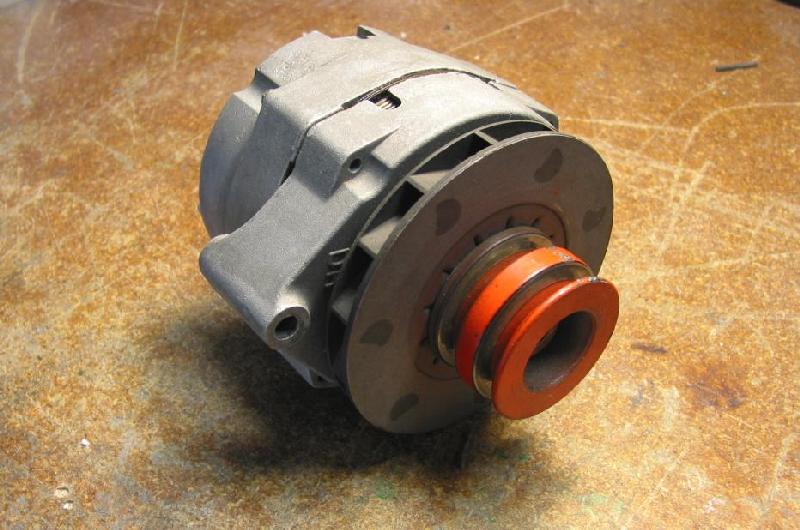
idle for nearly 10 years. |
It all started with the acquisition of a defunct lawnmower.
I already had a GM alternator languishing in the garage, an orphan
of having turned my S-10 pickup into an electric vehicle. So I had
most of what I needed already, or so I thought. After it was
all said and done I ended up with about $150 tied up in steel,
welding supplies, wiring, hardware and a marine battery. Not
to mention the number of hours it took to cut and weld the steel,
fit the pieces and complete it to it's finished state. If
that hasn't dissuaded you by now, read on...
 |
 |
|
June 1999 issue of QST. |
served as my inspiration to build my own genset as an 'over-under' rather than 'side-by-side'. |
 |
 |
|
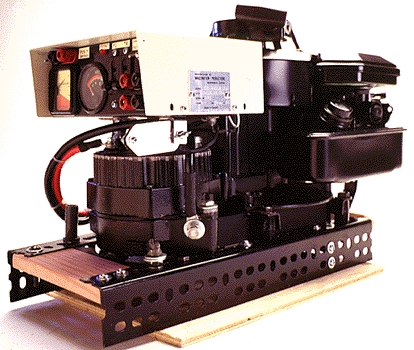
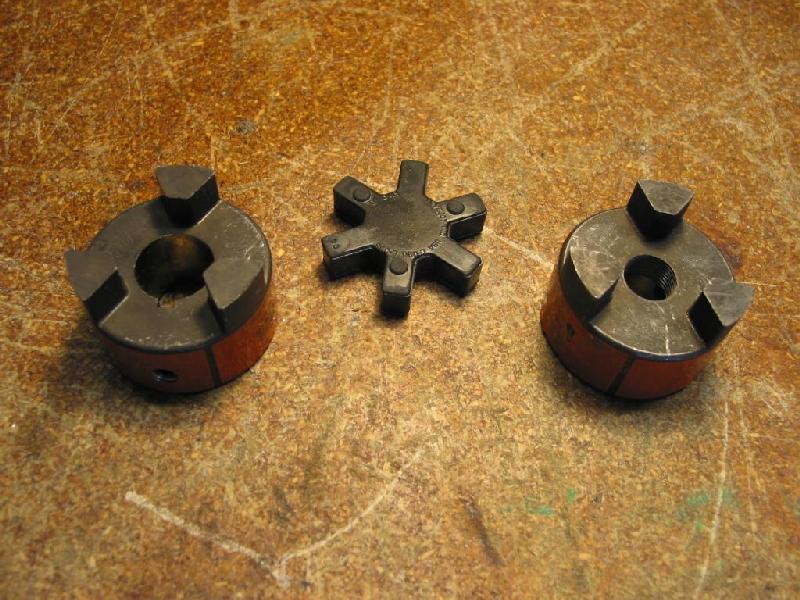
The EpiCenter. The engine side is standard 7/8" with 3/16" key. The alternator side is custom drilled and tapped to fit the shaft and threads of GM 10 and 12 series alternators. |
the frame. |
I thought it'd be easier to transport and use a genset that was a
bit taller than the QST version which is long and flat. Once
the physical configuration was decided upon, I set about
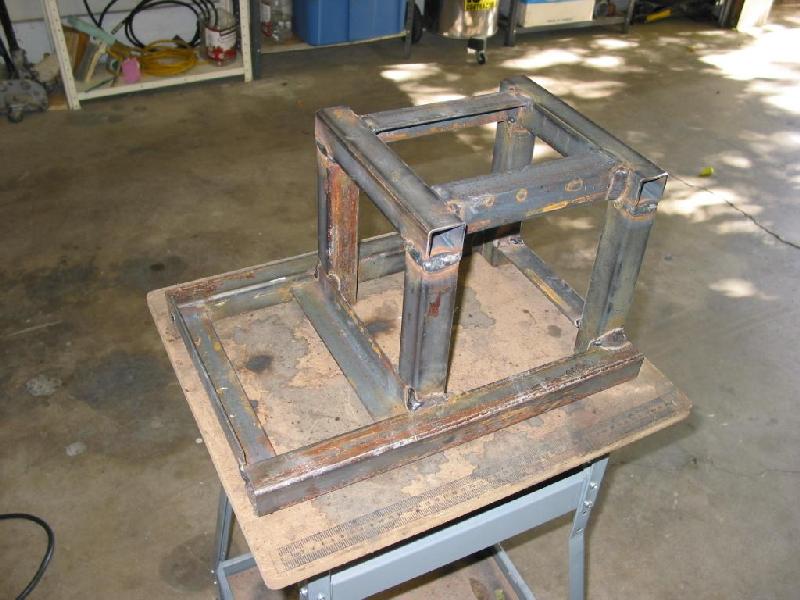
fabricating the frame. I'm not fond of the nut and bolt
method used in the QST article so welding was my method of
choice. I had some steel on hand, and decided I would focus
on sturdiness before weight. Well, I got my wish. I
used 1-1/2" square, 1/8" thick stock. With the dimensions I
ended up with this frame could easily support a two-ton
automobile, much less a 20lb engine and 8lb alternator. But
it's no more work to use this material, so that's what I ended up
with. Once the engine, alternator and battery placement were
determined, it was a relatively basic exercise to cut and weld the
pieces together. The only critical parameter was keeping the
motor shaft true to the alternator shaft, but even that is
mitigated somewhat by use of the flexible spider coupler.
The coupler itself was already drilled and tapped for a GM
alternator shaft. This made mating the engine and alternator
quick and foolproof, compared to having to use pulleys with
sheaves, taper-lock couplers and belts, which require some
method of tensioning adjustment.
 |
 |
|
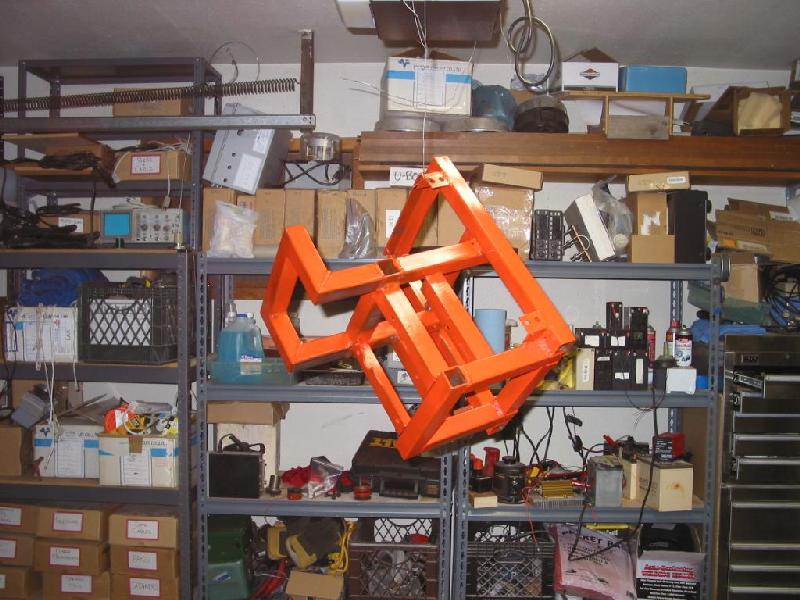
Color: Chevrolet Orange (since the alternator came out of a Chevy). |
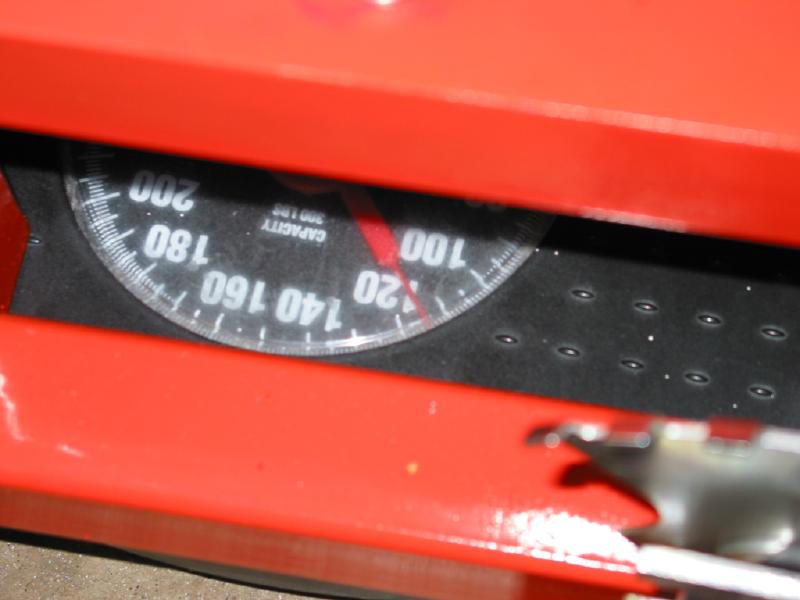
Lawnernator tipped the scale at 115lbs! |
How
it works
After reviewing GM alternator specifications at various RPM's, as
well as lawnmower engine specifications, I estimate the
Lawnernator's output to be somewhere around 300-400W @14VDC.
Not enough to do much more than run a few lights and radios by
itself, but with the deep cycle battery attached as a load
leveler, it is capable of several times that amount during
peaks. Another nice feature of the deep cycle battery is you
don't need to run the engine all the time, just enough to keep the
battery charged. Operating the unit in this manner is
actually very efficient, since the alternator will be at full load
while the engine is running, instead of just partial load were the
unit running at less than peak load. By connecting a 14VDC
to 120VAC inverter, your peak power and AC current quality is
limited to the what the inverter is capable of, which can be
considered additional flexibility over an AC-only genset.
 |
 |
|
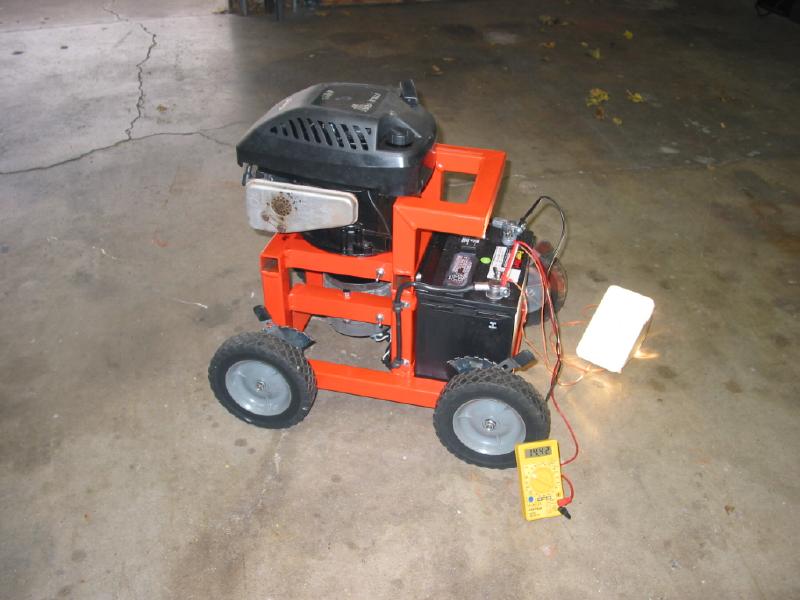
photo could be a video. The evidence that it's running is the DVM is showing 14.4VDC. |
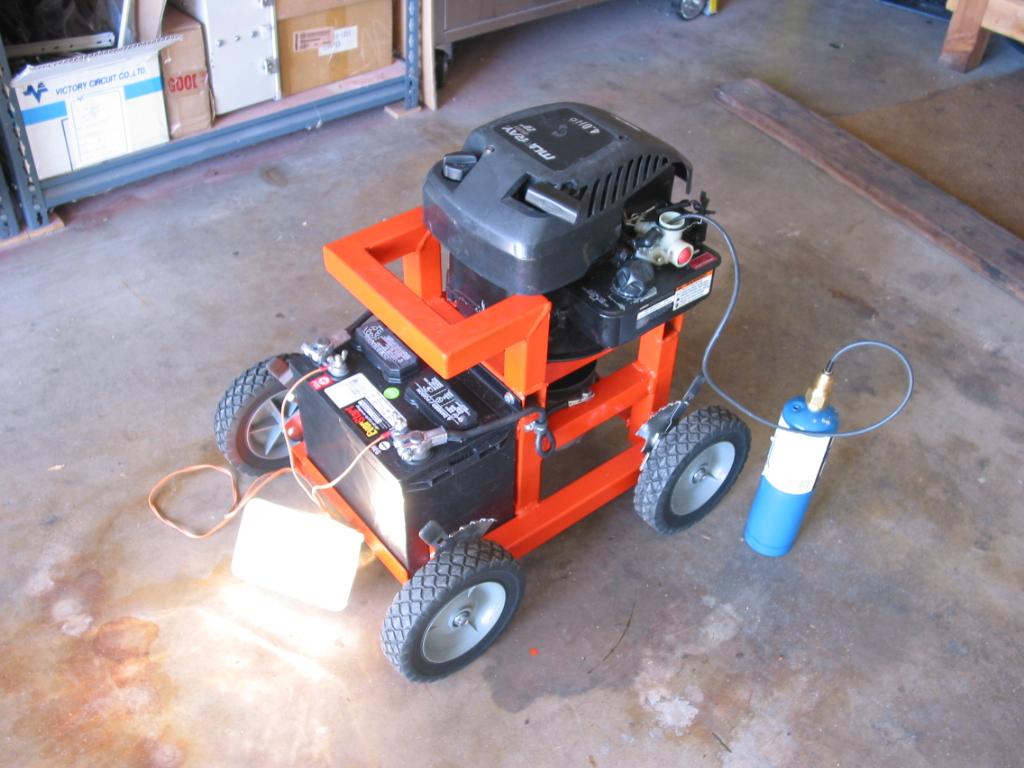
In a pinch, the
Lawnernator can be run off of propane. No special fittings, just stick the hose in the carb and fiddle with the gas flow until it starts and runs under load. |
 Back to the Main Project Page |
 Back to the K5LXP Home Page |

� 2026 Pane Relief Computer Services |
|