|
|
|
|
|
|
Micros, Minis, and Mainframes |
|
|
|
|
|
|
|
|
|
There are many different sizes and kinds of computers. Mainframes are very large (they can fill a room!) and very fast. A typical mainframe computer consists of several cabinets full of electronic components. Inside those cabinets are the memory unit, the central processing unit, and input/output units. It's easy to spot the various peripheral devices: Separate cabinets contain the disk drives and tape drives. Other units are obviously printers and terminals (monitors with keyboards). It is common to be able to connect dozens, even hundreds, of terminals to a single mainframe. |
|
|
|
|
|
|
|
|
|
At the other end of the spectrum are microcomputers or personal computers (PCs). These are so small that they fit comfortably on top of a desk. Because of their size, it can be difficult to spot the individual parts inside personal computers. Many PCs are just a single box with a screen, a keyboard, and sometimes a mouse. You have to open up the case to see the central processing unit, which is usually just an electronic component called an integrated circuit chip. |
|
|
|
|
|
|
|
|
|
Personal computers rarely have tape drives; most operate with disk drives and printers. The disk drives for personal computers typically hold much less data than those used with mainframes. Similarly, the printers that are attached to personal computers typically are much slower than those used with mainframes. |
|
|
|
|
|
|
|
|
|
Between mainframes and personal computers are minicomputers. These intermediate-sized computer systems are less expensive than mainframes and more powerful than personal computers. Minicomputers are sometimes set up for use primarily by one person at a time, in a form called a workstation. A typical workstation looks very much like a PC. In fact, as PCs have grown more powerful and workstations have become more compact, the distinction between them has begun to fade. |
|
|
|
|
|
|
|
|
|
One last type of computer that we should mention is the supercomputer, the most powerful class of computer in existence. Supercomputers typically are designed to perform scientific and engineering calculations on immense sets of data with great speed. They are very expensive and so are not in widespread use. |
|
|
|
|
|
|
|
|
|
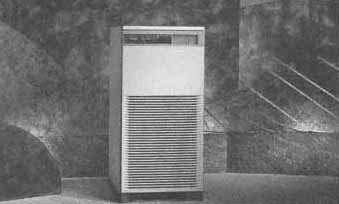
Mainframe Computer |
|
|
|
|