|
|
|
|
|
|
|
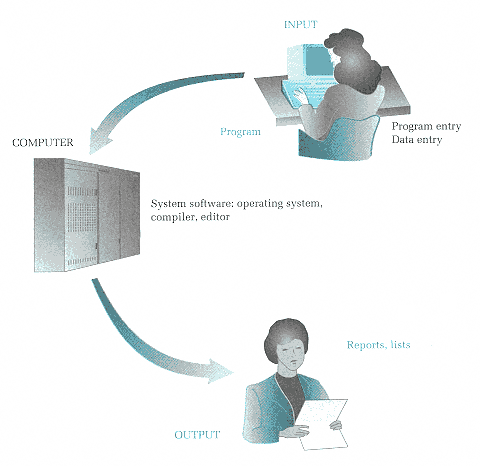
Figure 1-11
User/Computer Interface |
|
|
|
|
|
|
|
|
Problem-Solving Techniques |
|
|
|
|
|
|
|
|
You solve problems every day, often unaware of the process you are going through. In a learning environment, you usually are given most of the information you need: a clear statement of the problem, the necessary input, and the required output. In real life, the process is not always so simple. You often have to define the problem yourself and then decide what information you have to work with and what the results should be. |
|
|
|
|
|
|
|
|
After you understand and analyze a problem, you must come up with a solutionan algorithm. Earlier we defined an algorithm as a step-by-step procedure for solving a problem in a finite amount of time. Although you work with algorithms all the time, most of your experience with them is in the context of following them. You follow a recipe, play a game, assemble a toy, take medicine. In the problem-solving phase of computer programming, |
|
|
|
|
|