Building the Elecraft XV144 Transverter Kit
|
||
|---|---|---|
|
|
||
Construction |
||
|
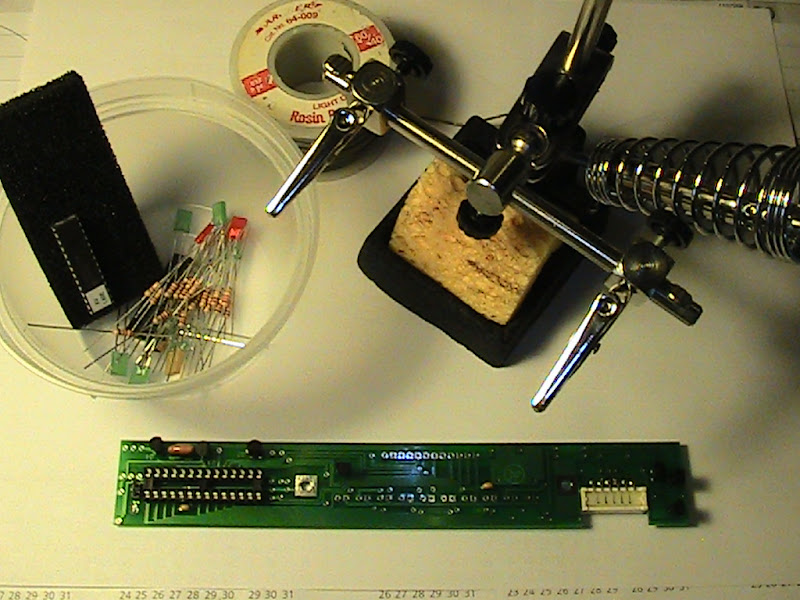
1. This is the unboxing of a new Elecraft XV144 Transverter kit. This unit allows a 28 MHz high frequency transceiver to transmit and receive on 144-146 MHz. |
2. 22 Apr 2012 - Rear view of Front Panel at 4:30 pm on Day 1 (page 23 of assembly manual). |
3. Front view of Front Panel completed by 6:00 pm on Day 1 (page 25 of assembly manual) |
|
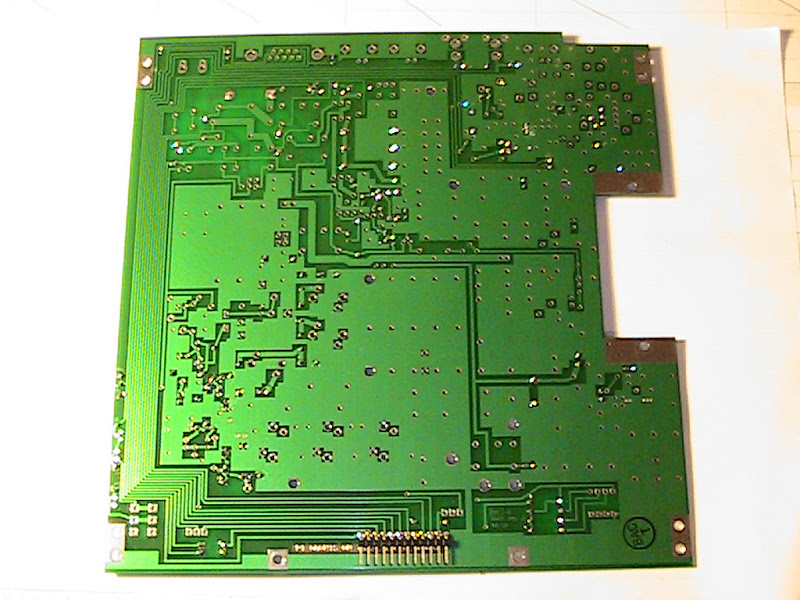
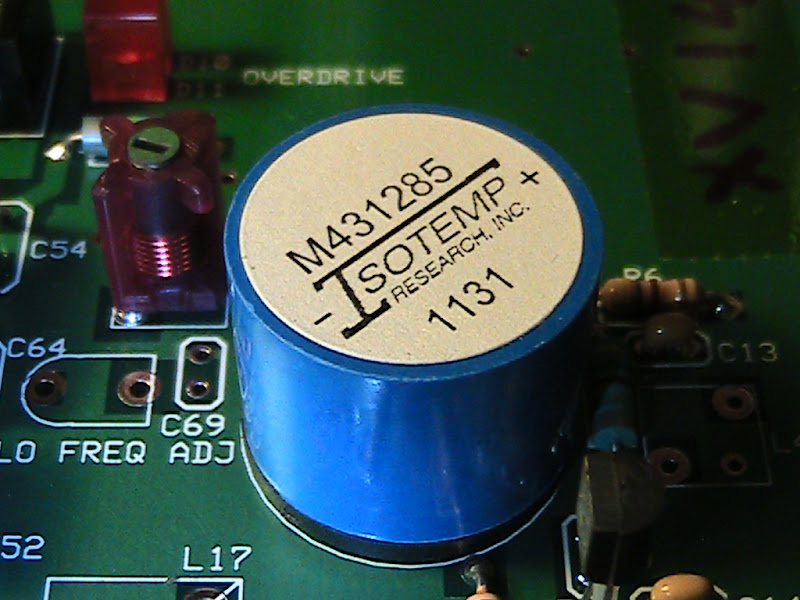
4. Rear of RF Board by
11:00 pm on Day 1.
|
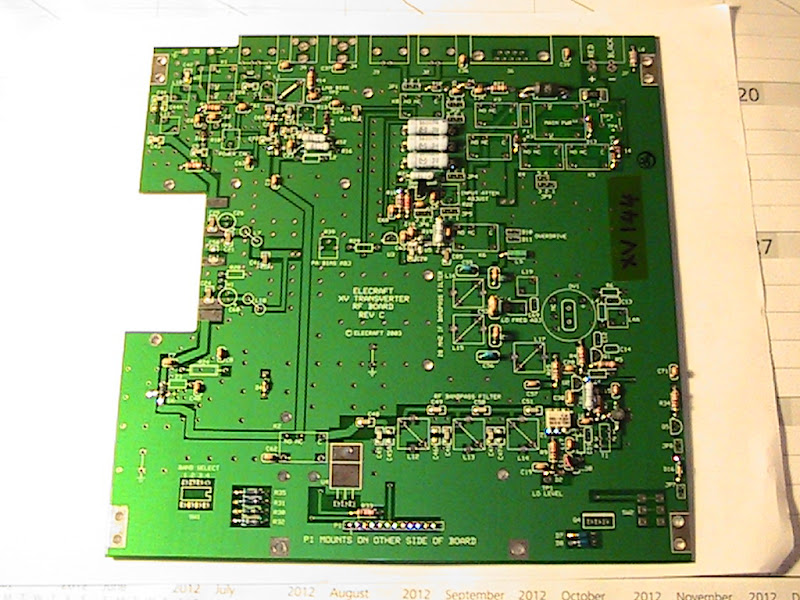
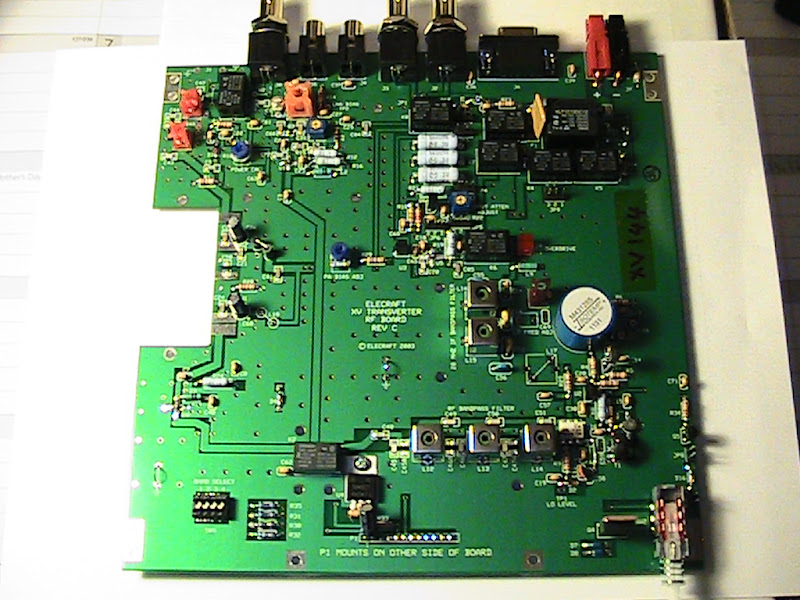
5. Front of RF Board by 11:00 pm on Day 1 (page 30 of assembly manual). About 7 hours total assembly time at this point. |
6. Close-up view of lower right quadrant of RF board. The dime is for size comparison. |
|
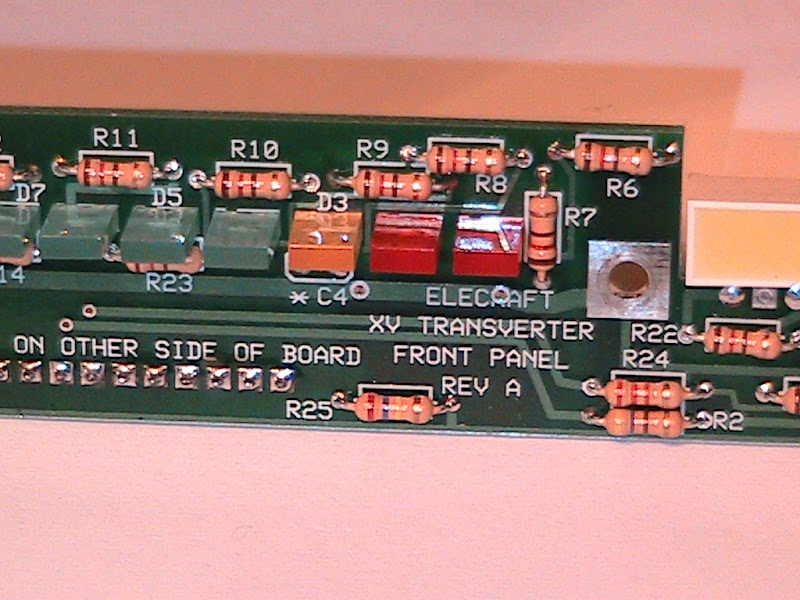
7. Close-up view of center of completed front panel. |
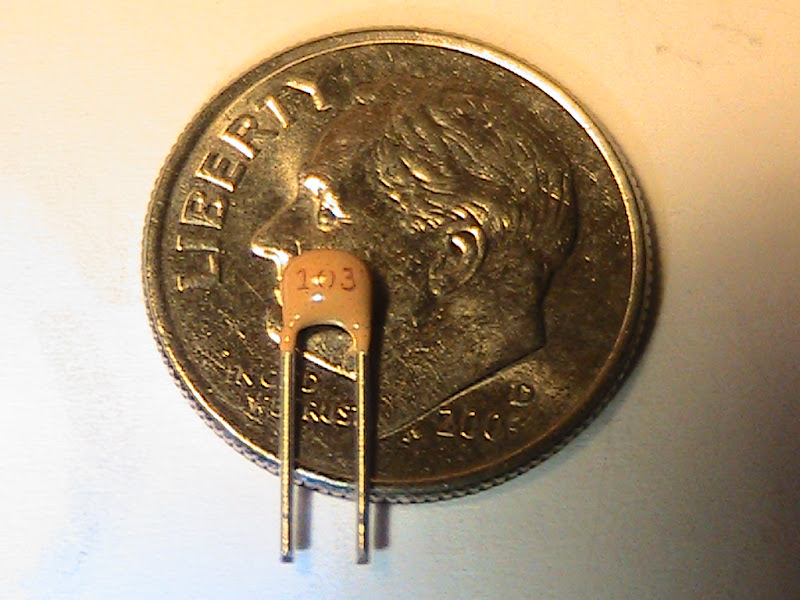
8. One of the kit's 0.01 μF monolithic capacitors. Having built a Heathkit HW-101 in the 1970's and most recently a Heathkit SB-1000 amplifier in the 1990's, this was my first kit that required using a magnifying lens to identify the component values. Confirming the value of each of these little components and finding its mounting holes on the printed circuit board reminded me of the times I've played the old "Where's Waldo?" game over and over! |
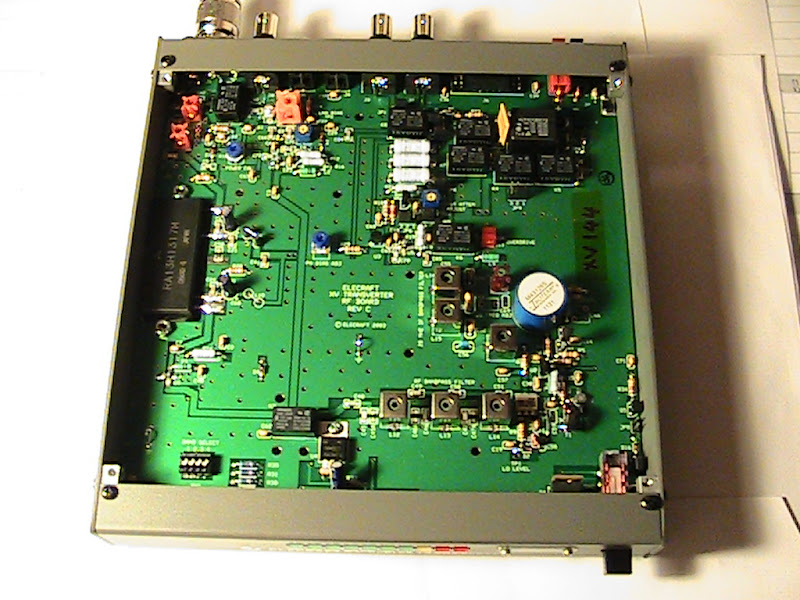
9. 3 May 2012 - I spent 2 more hours building the Elecraft XV144 tonight and reached the end of page 34 of the assembly manual. The IF bandpass inductor L17 was not installed as it was defective and awaiting replacement. This is my RF board after 9 hours total assembly time. |
|
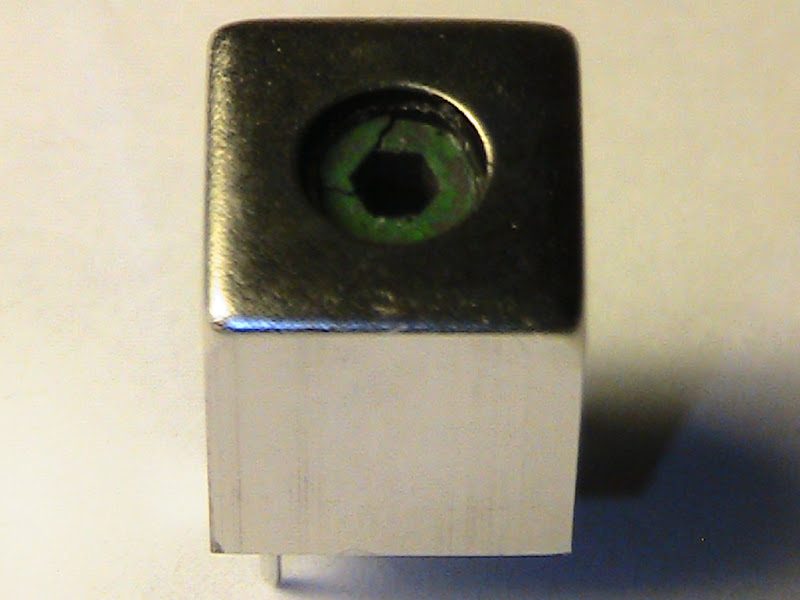
10. L17, one of the IF bandpass filter inductors, was defective. The ferrite tuning slug was bound so tightly that it cracked while attempting to loosen it. |
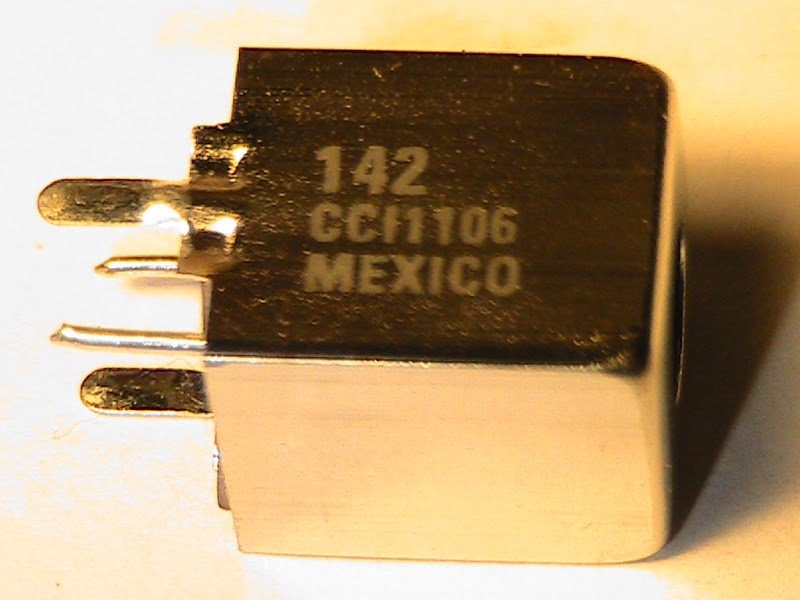
11. Another view of the IF bandpass filter inductor L17. |
12. 5 May 2012 - I worked 3 more hours today and finished to page 43 of the assembly manual. I am awaiting the replacement L17 so I can mount this board to the bottom cover and complete the assembly. 12 hours assembly time at this point. |
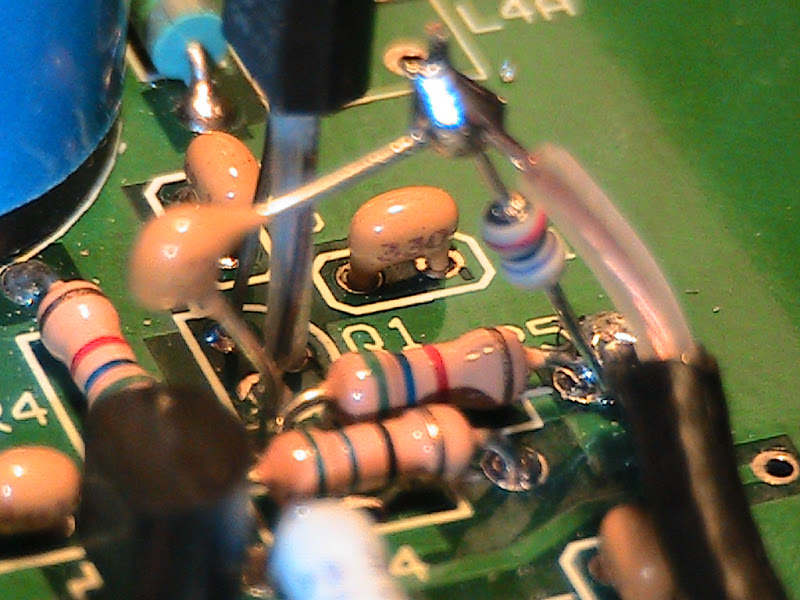
|
13. Here is a close up of T1. For those who suffer inductophobia, you can buy one of these pre-wound by AA3WF for $19.00. I can't imagine someone hesitating to wind this transformer after having accomplished all the detailed building to this point. |
14. Here is a close up of the $50 XVOVN crystal oven option. |
15. 7 May 2012 - The replacement L17 arrived today. I was impressed with Elecraft service's prompt response to my request! Here is the completed Elecraft XV144 transverter with the top cover removed after 13 hours total assembly time from start to finish. |
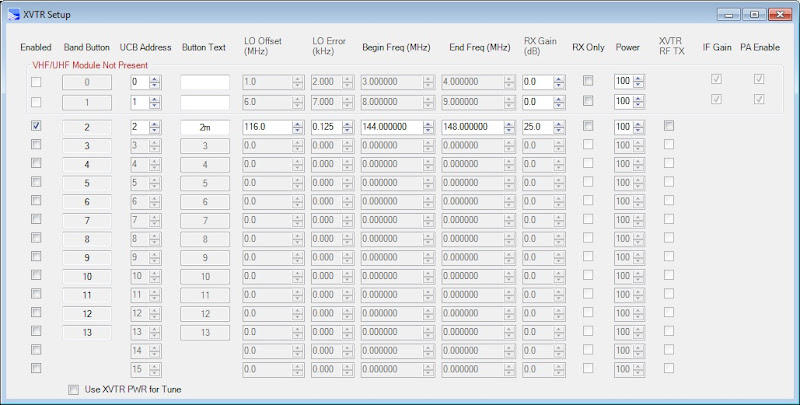
|
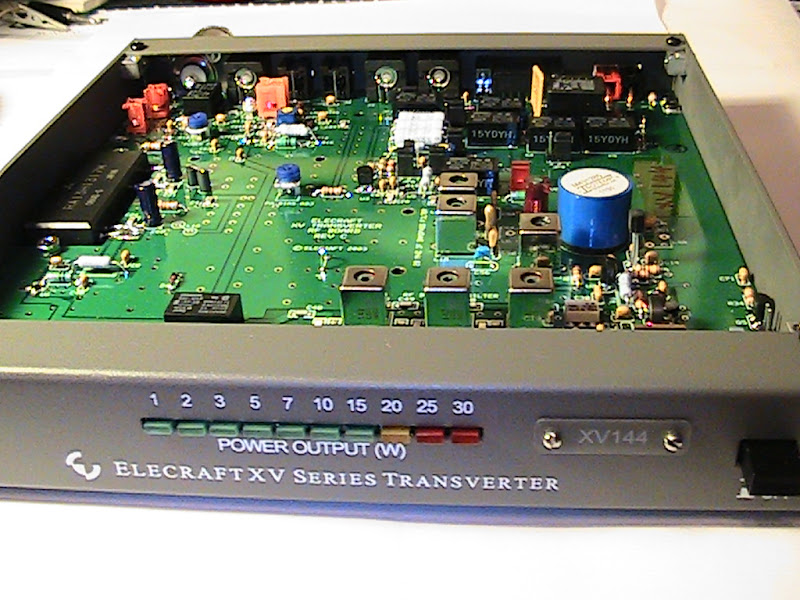
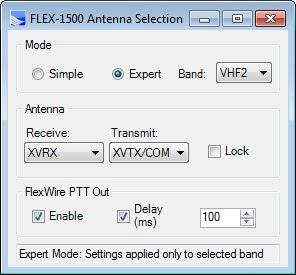
16. Here is the front panel of the completed XV144 transverter kit. |
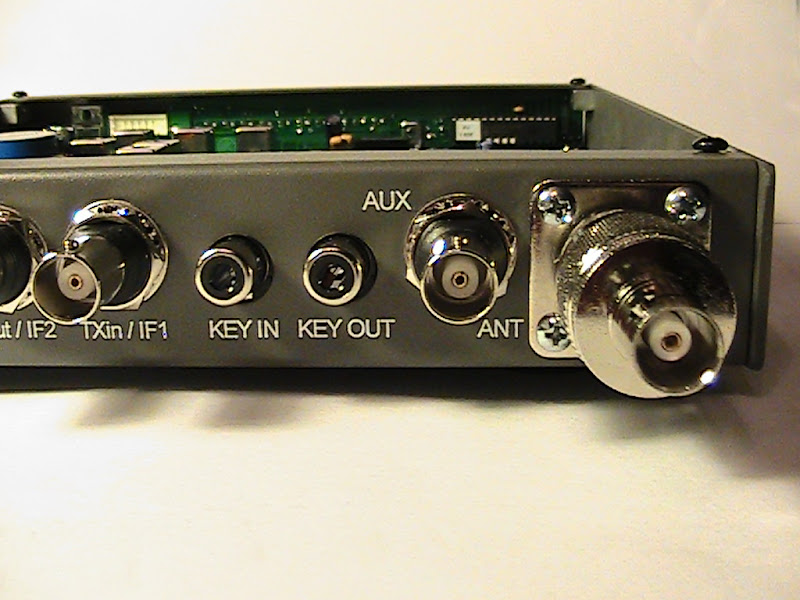
17. A view of the rear panel. |
18. I placed an N male to BNC female adapter on the antenna connector as I use BNC coaxial cable jumpers in my station. |
Frequency Stabilization |
||
|
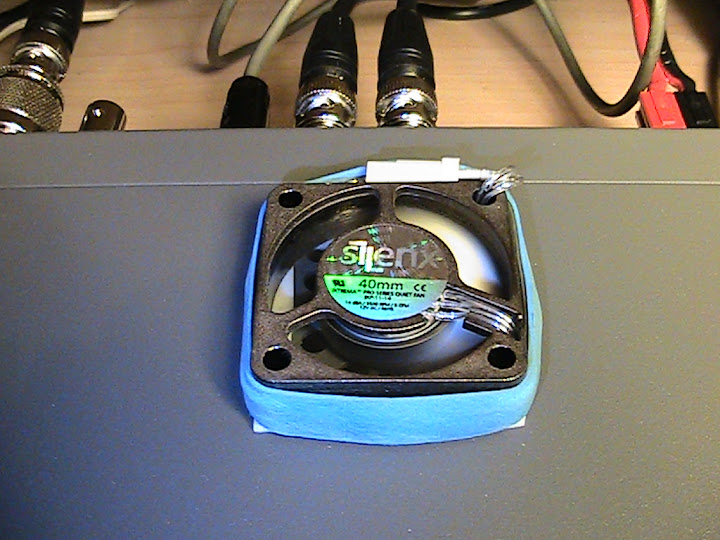
19. Together with the crystal oven option, adding a SilenX Ixtrema Pro 40mm x 10mm 14dBA 5 cfm fan secured with double-sided foam tape over the vent holes in the top cover improved the temperature and frequency stability of the Elecraft XV144 transverter for WSPR operation on 144.490500 MHz. |
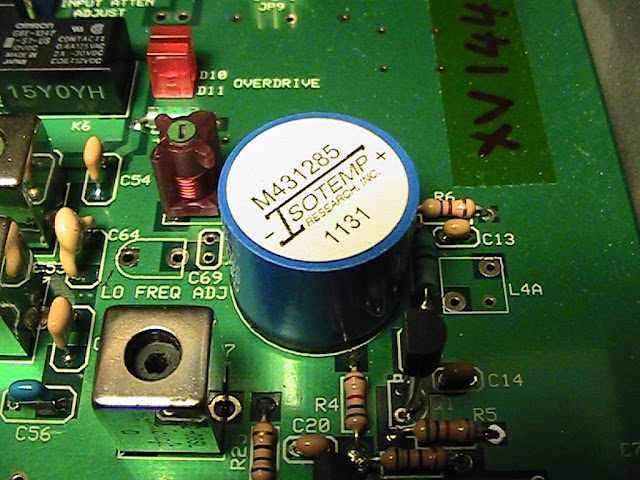
20. Exposed temperature sensitive components in the Elecraft XV144 transverter 116 MHz Local Oscillator: slug tuned L19 at 10 o'clock from Isotemp crystal oven; Q1, C12 (behind Q1), C14 and L4 (at 3 o'clock next to crystal oven) |
21. A wad of cotton is in place around all the exposed temperature sensitive components of the Elecraft XV144 transverter 116 MHz Local Oscillator. Sterling Coffey N�SSC demonstrated this frequency stabilization technique on http://www.youtube.com/watch?v=wXkhsfEDIok |
|
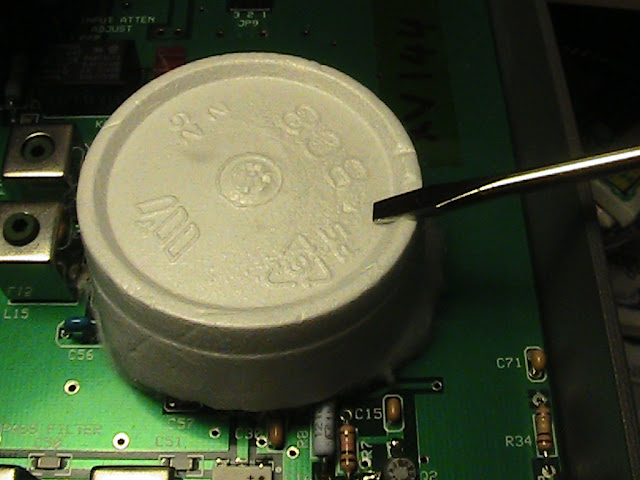
22. A 1.5 cm high by 5 cm dia. styrofoam cover for the Elecraft XV144 local oscillator circuit was cut from the bottom of a disposable cup. |
23. The styrofoam cover was placed over the cotton ball surrounding the Elecraft XV144 Local oscillator components. The purpose was to further thermally insulate the local oscillator circuit. |
24. Data from WSPR frequency stability test with
the styrofoam cup LO cover. At first, a loose wad of
cotton was around the local oscillator components. At
0400 UTC on 24 June, the styrofoam cover was placed
over the cotton and local oscillator components. The
diurnal frequency variation corresponds with room
temperature that varies between 73� F and 78� F. The
smaller oscillations represent short term thermal
cycling. The graph shows no apparent effect on the
day-night frequency variation, but the smaller
oscillations are denser and suggest improved short
term stability with the styrofoam cover. Further
stabilization would require using an external
synthesizer such as the VHF
apolLO controlled by a rubidium or GPS frequency
standard. |
GPS Disciplined Oscillator |
||
|
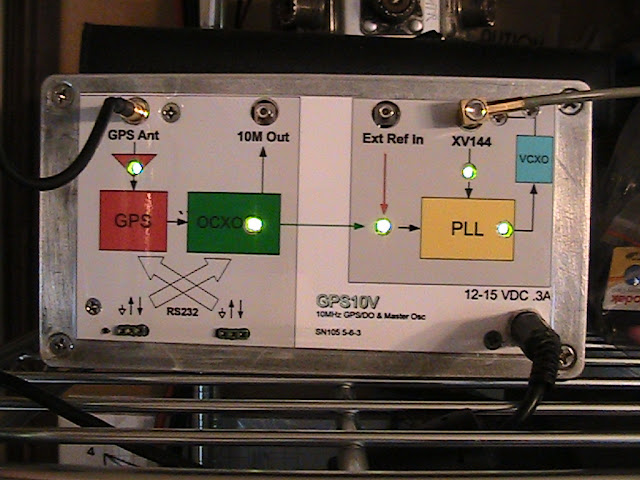
25. Glenn Elmore N6GN engineered this GPS
disciplined frequency reference for selected
stations in our West Coast
VHF/UHF WSPR Study Group. This version
provides a +5 dBm 10 MHz reference for the Flex-1500 as
well as a +10 dBm GPS disciplined 116 MHz substitute for
the local oscillator of the XV144 transverter. The
discussion thread can be read here. |
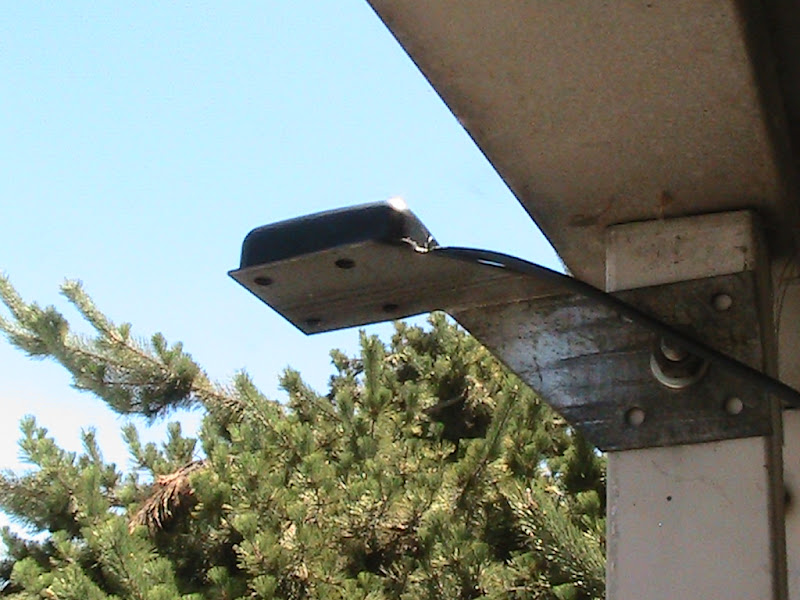
26. The GPS active antenna has a clear view of the sky, magnetically secured to a steel lumber H3 Hurricane Tie plate on an awning upright. |
27. A typical Elecraft XV144 transverter modification for the GPS10V frequency reference. The 47Ω resistor suppresses the 116 MHz crystal oscillations and the oscillator transistor Q1 now functions to amplify the external 116 MHz reference signal. |
|
28. Elecraft XV144 Auxiliary BNC connector J8 is only used if the transverter is optionally wired for separate transmit and receive 144 MHz antenna connections. I connected a length of RG-174/U 50 ohm miniature coaxial cable to the unused J8 for the GPS disciplined 116 MHz reference signal. |
29. The .01 μF capacitor and 47 Ω resistor are soldered across R5 and the other end of the RG-174/U cable connected across the 47 Ω resistor. |
30. The Elecraft XV144's internal local oscillator with crystal oven option had exhibited 3-4 Hz frequency drift during 2 minute WSPR transmissions and long term frequency instability with ambient temperature variation. This frequency instability and drift was eliminated with the GPS10 frequency reference. |
Exciter Setup |
||
|
31. My Transverter Setup in PowerSDR (Alt-X) for the Elecraft XV144. The LO Error should be 0.000 kHz when using the GPS disciplined frequency reference. Otherwise, the LO Error will vary for your setup and adjusts the Flex 1500 frequency readout to a known standard on 2 meters. Not having a precision signal generator, this is how I calibrated the XV144 Local Oscillator. First I calibrated the Flex 1500 precisely to WWV, then tuned my other 10 meter transmitter precisely to 29.000 MHz as measured on the Flex 1500 receiver. While transmitting a CW signal on 29 MHz (very low power is sufficient) I coarsely tuned the Flex receiver to its 5th harmonic on 145.000 MHz with L19, then fine tuned for zero beat with the LO Error adjustment. I set the RX Gain to the nominal 25 dB conversion gain as stated in the XV144 specifications. This gave a -130 dBm reading on receiver background noise level at 1 kHz bandwidth. (For accurate RxGain adjustment refer to "Signal Level Measurement with PowerSDR and External Transverters.") The XV144 receives and transmits according to specifications within 144-146 MHz range. It does work beyond that range (and on MARS frequencies) with some reduction in transmitter power and receiver sensitivity. |
32. The PowerSDR Antenna Selection Form is set in Expert Mode here for Separate Transmit and Receive RF Connections to the transverter. |
|
On the Air Test |
||
|
33. 8 May 2012 - I finally applied power and aligned the transverter. Here the FlexRadio 1500 is driving the Elecraft XV144 Transverter to 15 watts output on CW. |
34. Monitoring KJ6KO's 2 meter beacon (CM88ws) with my Flex 1500 and Elecraft XV144 transverter. The receiving antenna at grid square CM98iq was an Arrow OSJ 146/446 J-Pole at 20 feet. |
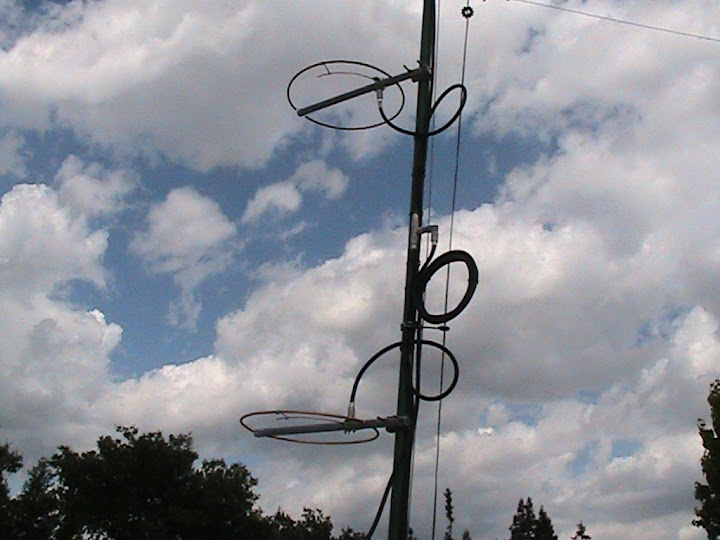
35. 25 May 2012 - I erected a pair of stacked halo antennas. Details at http://www.qsl.net/kp4md/144_mhz_halo.htm |
|
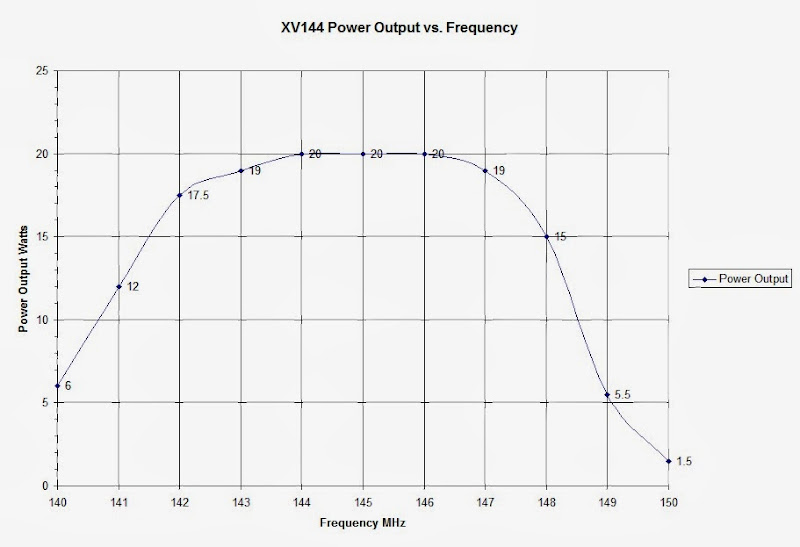
36. Transmitter Output Power as measured into a non-reactive 50 ohm dummy load after alignment per the instruction manual. The Input Attenuation Adjustment, R22, was set for 20 watts maximum output with the Flex 1500 set to 100% drive level from 144-146 MHz. R22 may be adjusted for 20 watts output on other frequencies, but this would permit operation beyond the safe power limit within the 144-146 MHz range. |
KP4MD 144 MHz STATION SUMMARY
|
REFERENCES |