

British Military Sets
Please note, not all sets in the coillection are yet illustrated in this web site, tempus fugit and all that.
Of course, to start, the most famous of the British WW2 sets, the R1155 receiver and the WS-19.
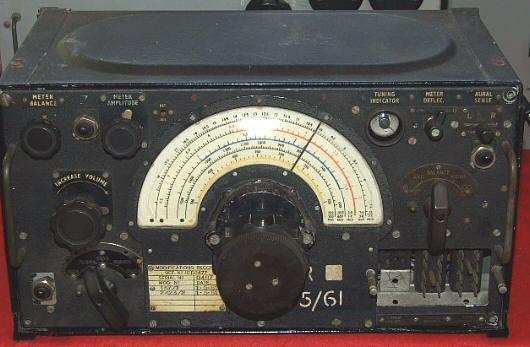
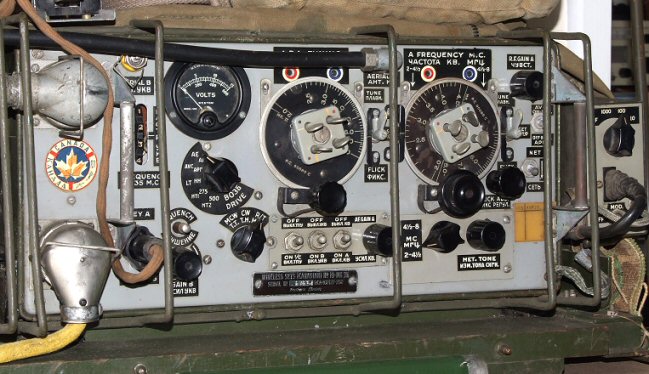
Many a SWL started life out on these, I did back in 67. Its getting harder to find good examples of this set, so many have been 'improved' by hams over the years. Check this recent example out....
THE A TEAM.....
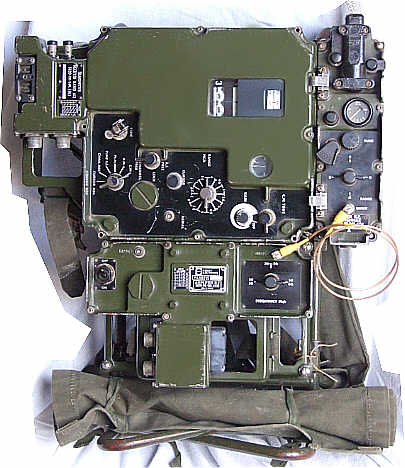
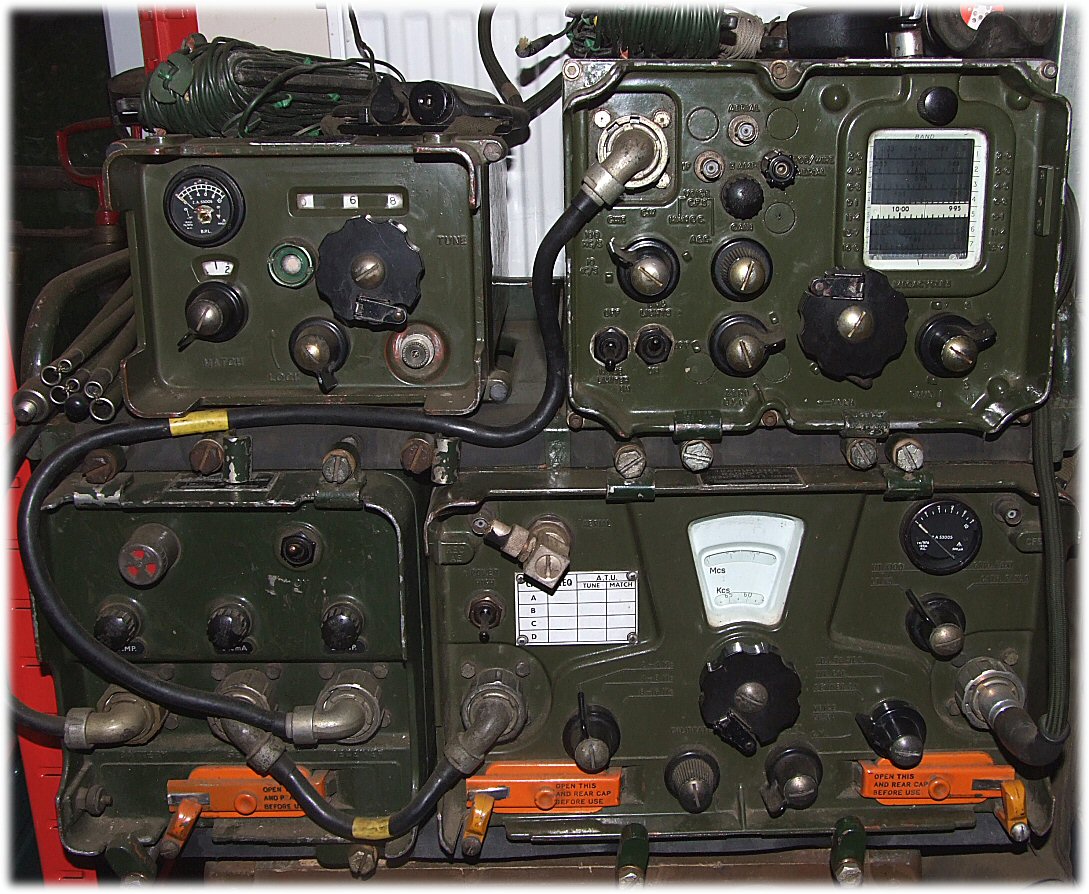
The A13 man pack transceiver. 2 to 8 MHz, 0.8w AM, 1.5W CW/Pm. Received as not working and several hours later,
and quite a few transistors, its back in operation. Picture shows the set, mounted on its side (?) on the carry frame, amplifer beneath raising output to 8W AM and 15w CW/Pm, and atu on the side, for matching to 8ft whip or wire antennas.
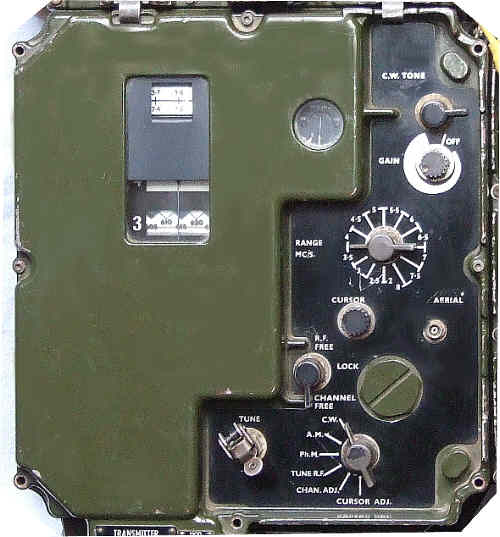
The A41/42 and A43 sets.
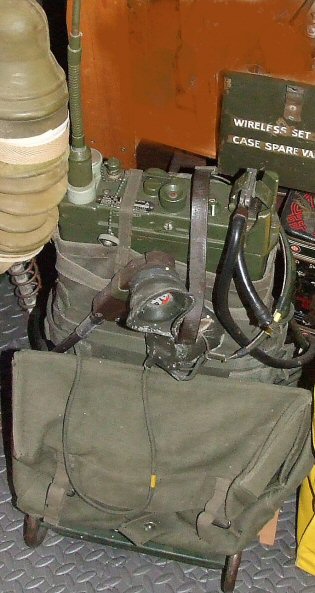
Left: Radio A41 and A42 being developed from the US AN/PRC-10 and PRC-9 respectivly. A41 replaced the WS31, FM, 38 to 55 MHz in 100kHz steps with an RF output power of 0.75 W. A42 is FM, 26.3 to 38 MHz
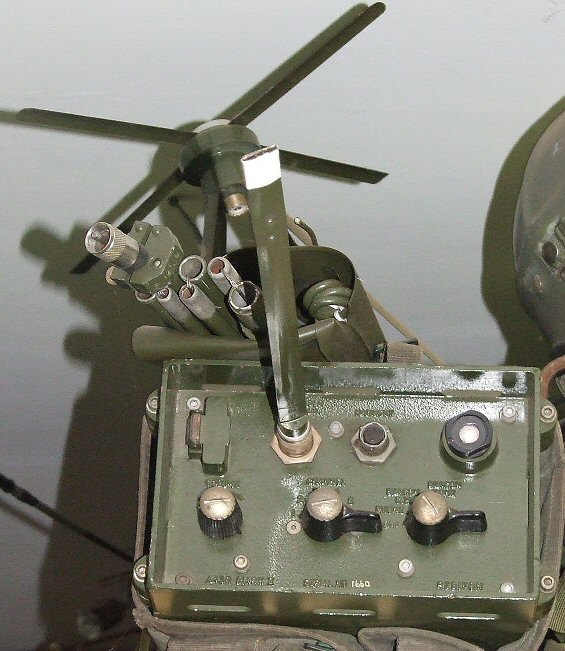
Right: The A43 radio with blade antenna for manpack use and mast and discone for ground use. Ground to air UHF transceiver. Frequency range 240-300MHz. 6-pre-set crystal controlled channels. RF output 2W. AM R/T and CW or MCW beacon service. Range depending on altitude aircraft varying from 4 to 100 miles
Pye or Reece Mace British Navy set Type 619 HF transmitter. Should prove quite good when I get around to sorting
a power unit for it.

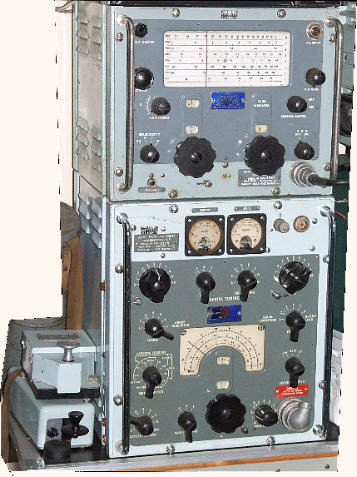
Left: A variation on the T1154, the Admiralty 8D transmitter. Little is know at the moment, more later as its discovered.
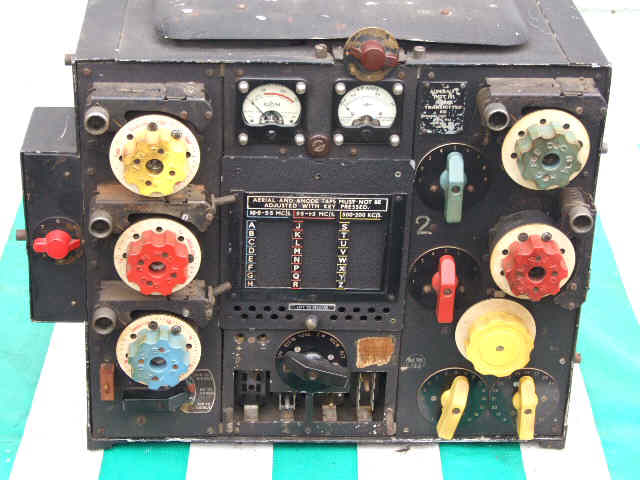
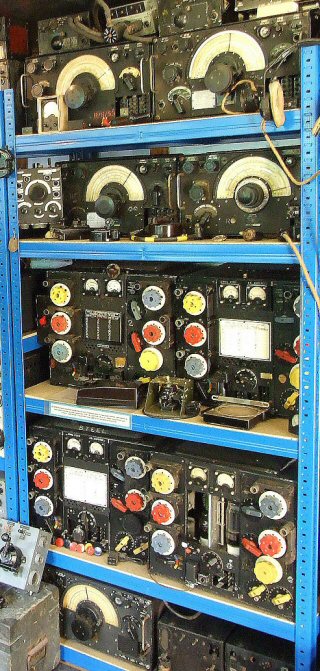
Right: Several R1155 and T1154 sets in the collection.
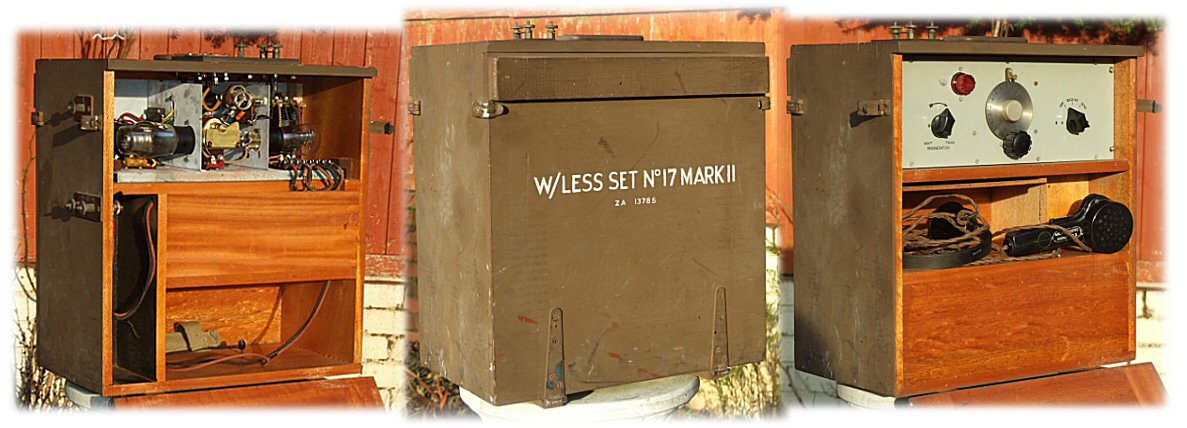
Wireless Set No 17. Low power, 0.3W at 50MHz. Used between Ack Ack batterys etc.
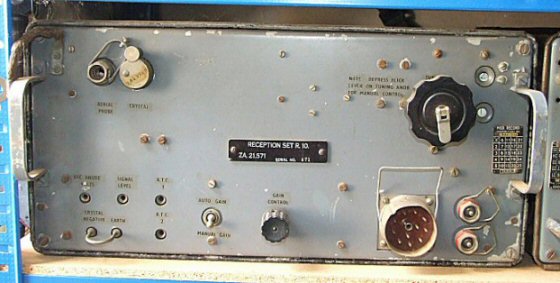
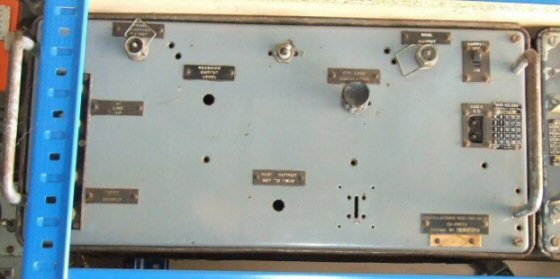
Wireless Set No 10. Microwave link, point to point comms, telephone use, used from Dover to France after D-Day..
two units out of many, receiver and test oscillator. If anyone has the dish's for this I would be interested.
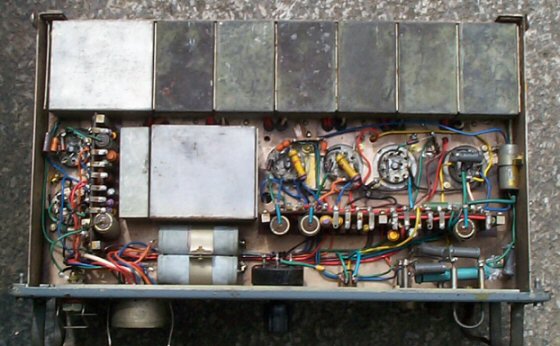
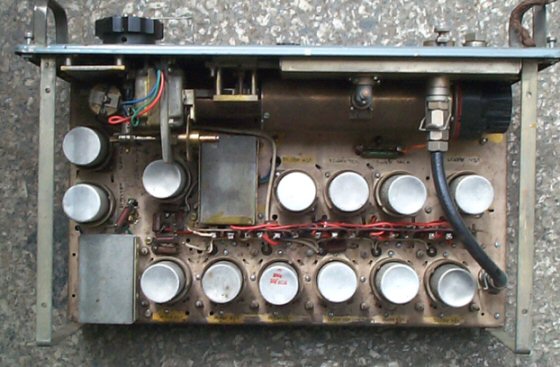
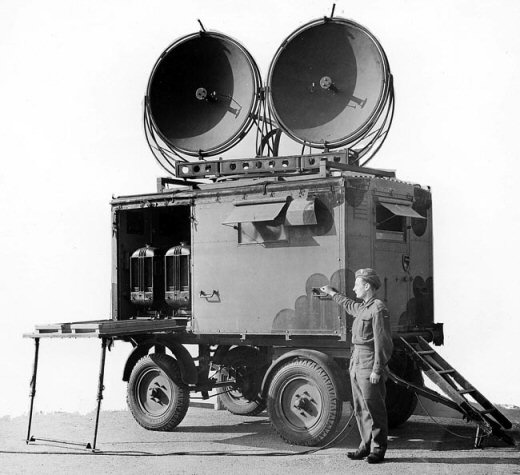
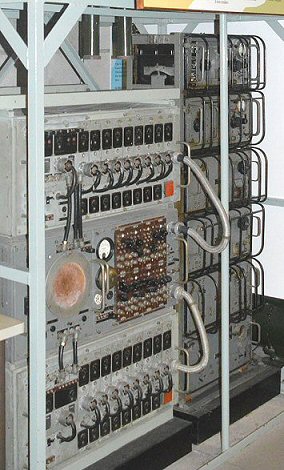
truck picture: Wiki ............ rack picture: RS Museum
This is a transmitter 5G, type was used at the Antarctic.
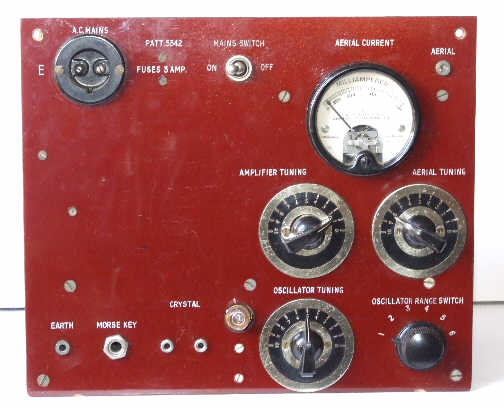

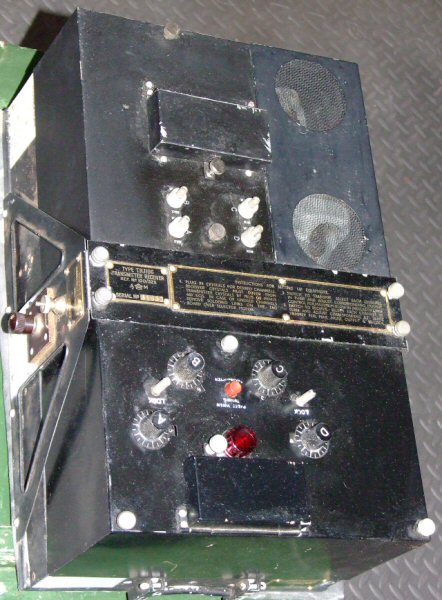
......................................................................................................................................TR-1196, prequal to the SCR522 fitted in Spit, Hurri etc. HF 4 Ch AM set.
Interesting find for the collection, WS21, nearing completion of restoration.Just the lettering to re-install.
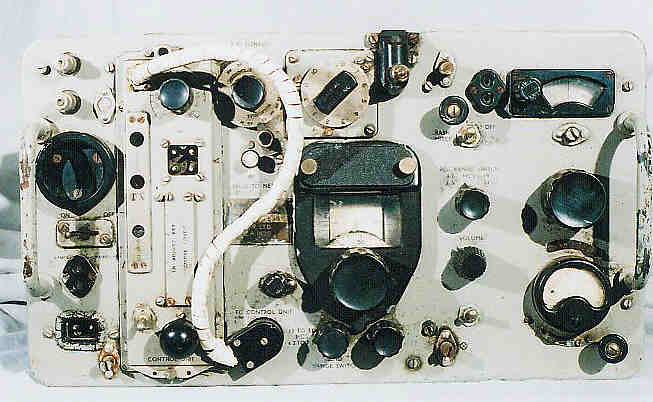
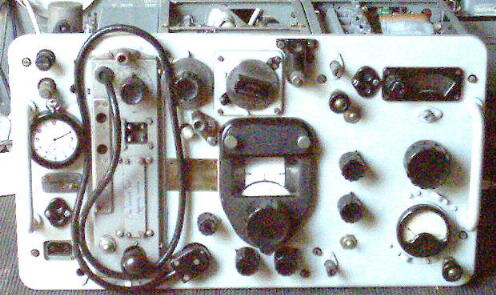
Another recent find for the collection, WS11, also nearing completion of restoration.
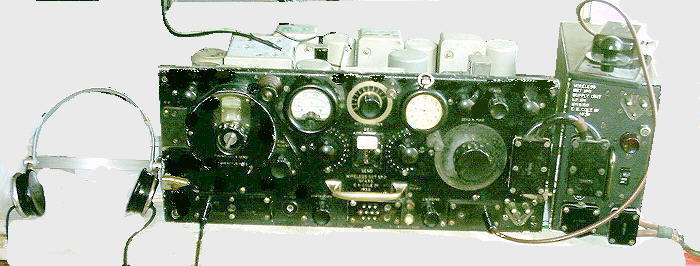
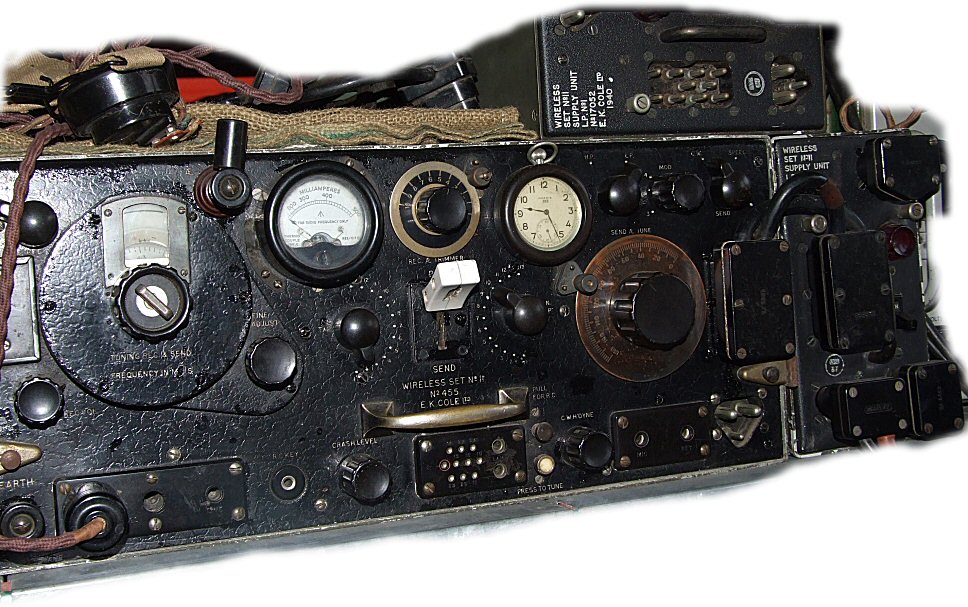
Left: Larkspur C13 now, recent addition. Its very strange though, this range of sets used the most
difficult set of plugs and sockets ever seen on radios. Anyway, hf, AM/CW, about 15w on CW if
lucky.
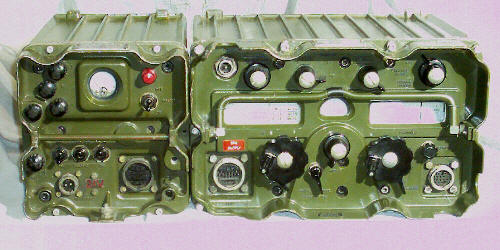
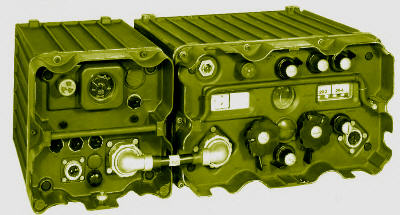
Right: Along the same lines, the C42 station, VHF this time.
The R210 receiver and C11 transmitter combination.
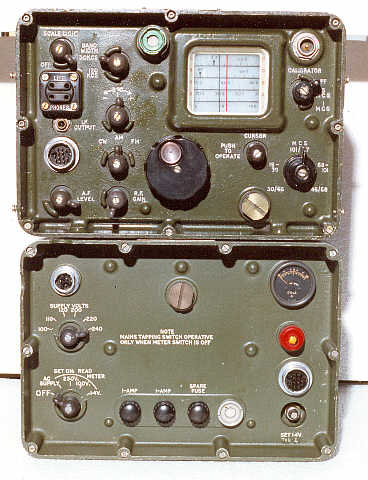
The R216 monitor receiver.

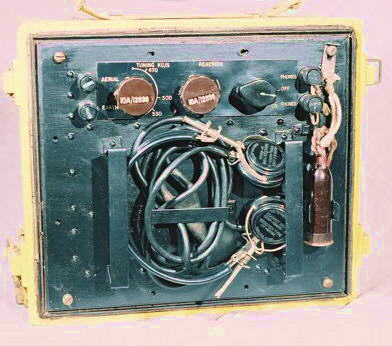
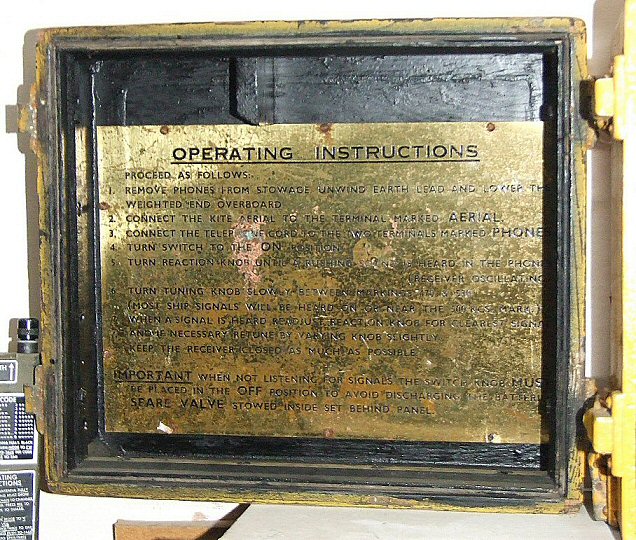
A real unusual find now, one I'm very pleased to have acquired. The Airborne life boat receiver, used in conjunction with the Gibson Girl transmitter, R-1545, 500 Khz
receiver, battery powered of course. Before and after restoration pictures along with original pics of its deployment.
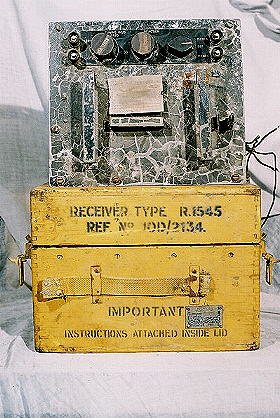

R-1545 before
restoration
R-1545 after
restoration
T-1333 S&R TX
British Gibson Girl

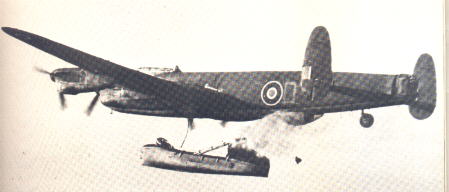

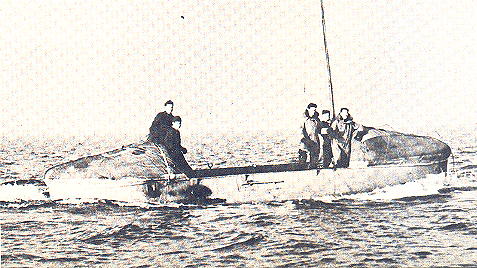
Airborne L.B.
during trials
another drop
from a Lanc
Life Boat
in use
A later SAR unit, the Burndept BE-301 SARBE Beacon transmitter, much smaller and compact.


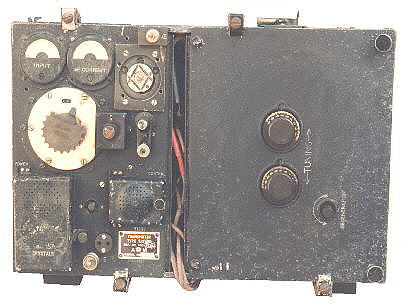
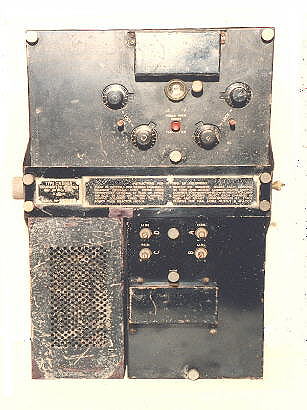
[Left] The TR9 fighter set, tx on left, rx on right, used in such as the Spit and Hurri. HF, AM.
[Right] The TR1196, another fighter set, HF, AM, both replaced by the SCR522 vhf set during the war.
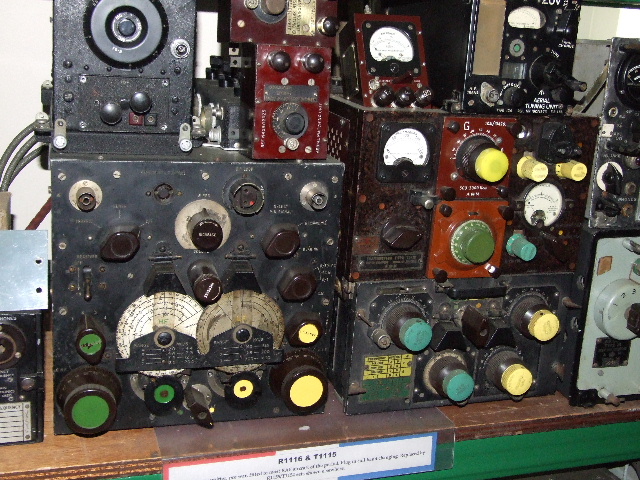
R1116A receiver and T1115 transmitter, early sets in WW2, as used in Swordfish aircraft etc.
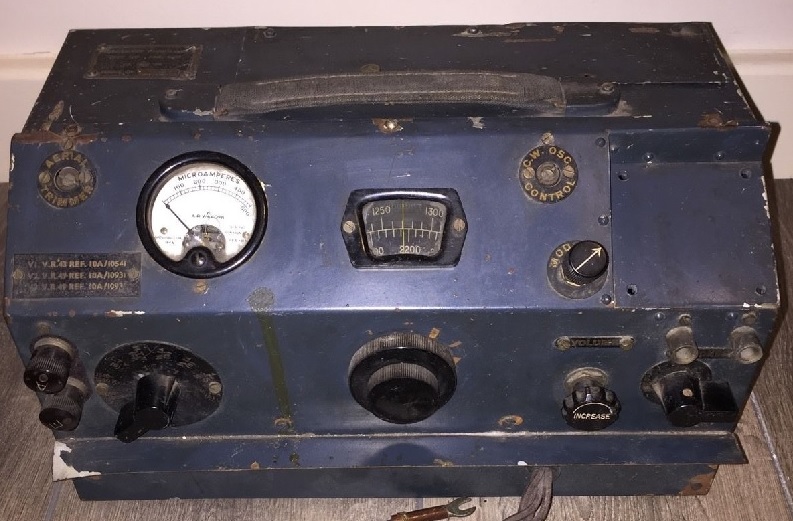
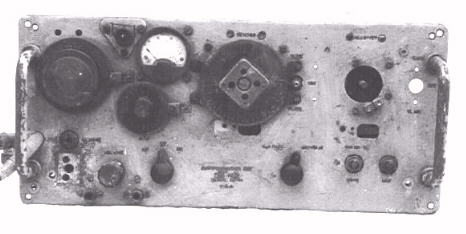
Another early set, the R1100, Army Liason set, from guns to spotter aircraft comms.
WS32 before
restoration
WS32 after
restoration
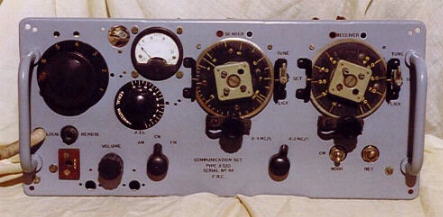
A rather rare little set, is it a 19, is it a 22, is it a 62, no, its a 32 set !!.
First picture is how it arrived here. Now as the set looks after restoration.
Old soldiers now, the Wireless Sets No 19 and No 22. Probably the best known sets of WWII.
The WS22 was a real workhorse during WW2, so much so, it was even used on a horse. The WS22 fitted to its carrier and mounted
on a mule pack saddle, as used in the jungle etc, Chindits and such.

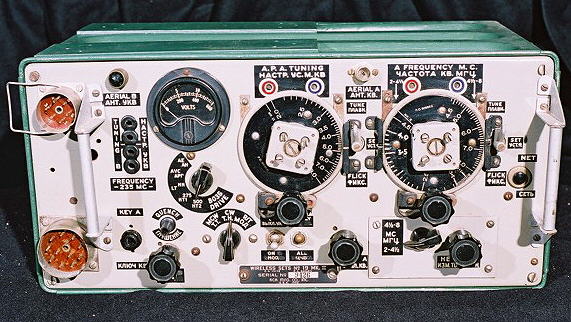
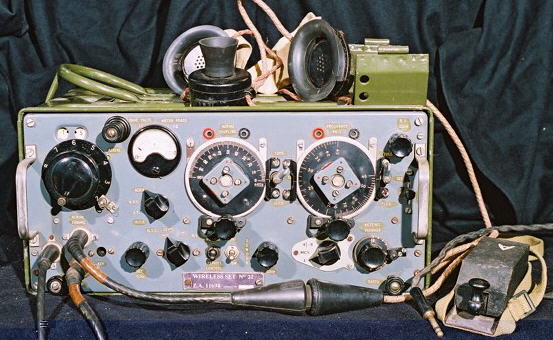

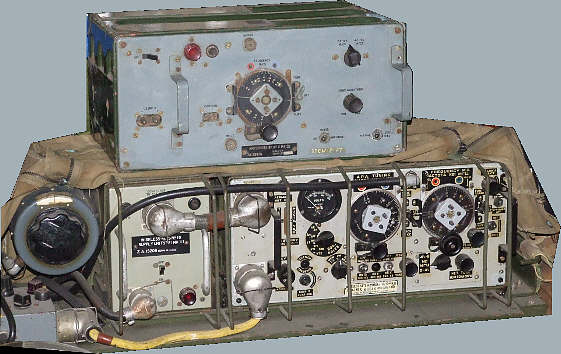
WS19 with High Power amplifier.
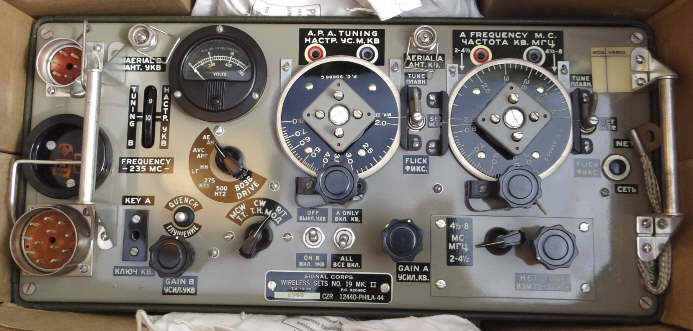
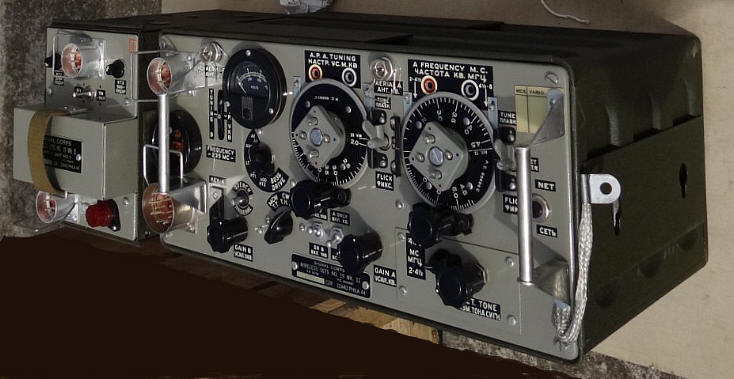
Now, how the WS-19 should really look like if un-opend since 1944 !.
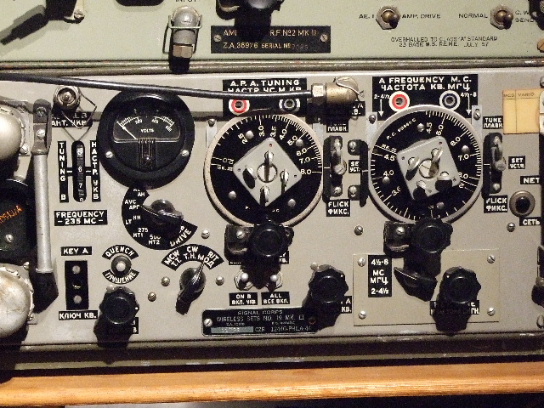
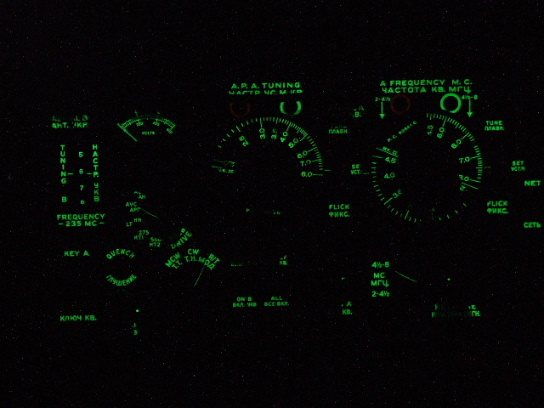
How about operating the WS19 at night?...... easy !!
Manpack portables, WS18, WS68, WS48, TECO, TBY AND 13-P


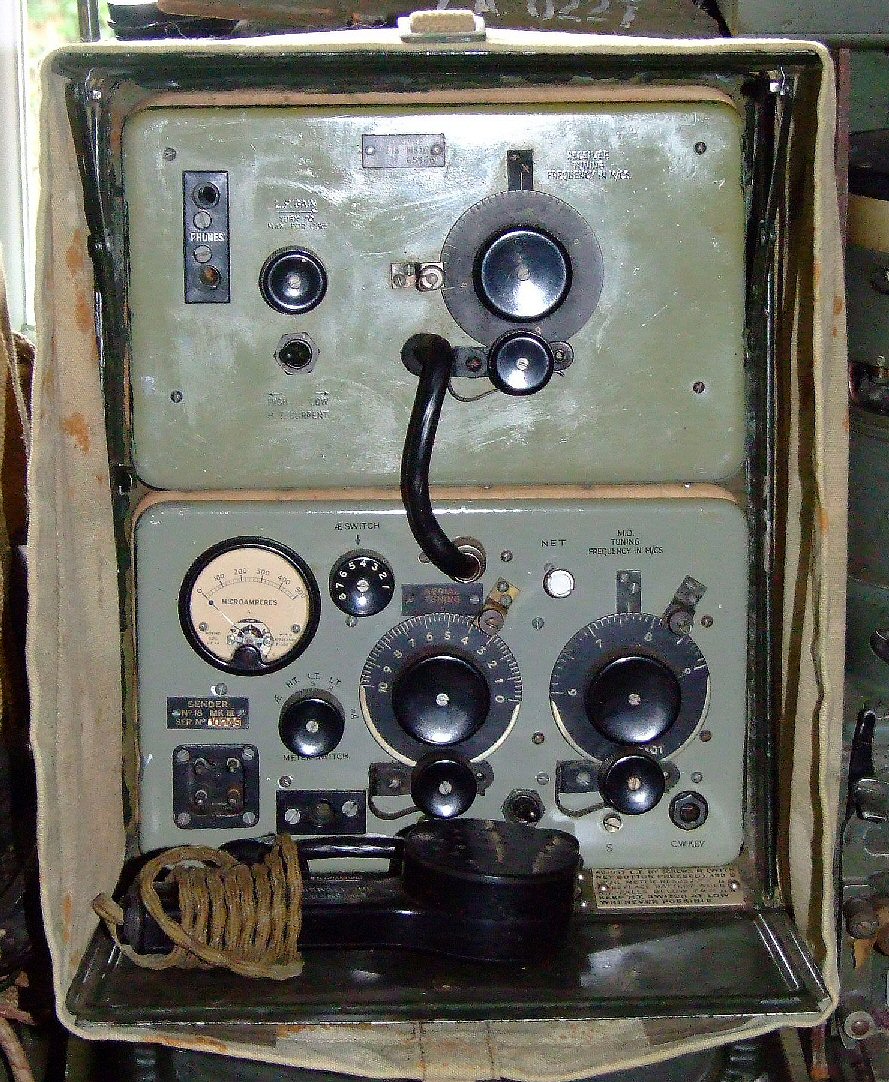
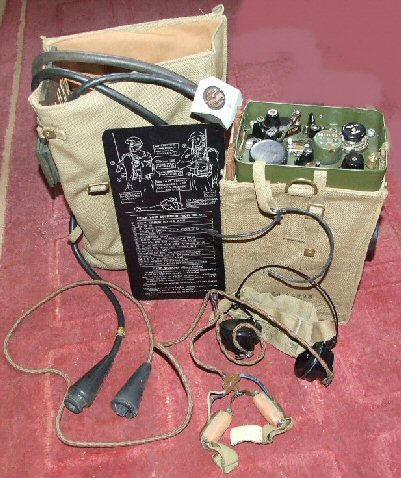
The Wireless Set No. 46 was an HF portable manpack transceiver. Designed by Ekco for use during beach landings, introduced in 1942. It was a 6 valve set,3 preset crystal controlled channels, housed in a water-resistant enclosure carried in a webbing pouch. The set was powered by a separate dry cell battery carried in the larger haversack. The frequency range was between 3.6 and 9.1 MHz depending on the coils and crystals fitted.



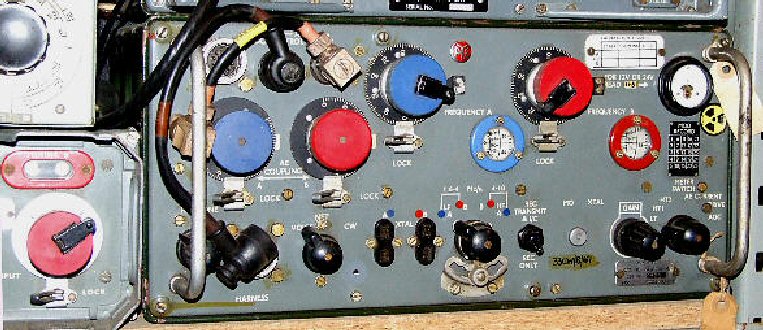
Wireless Set C12 was originally designed as the PTC202 between about 1948 and 1950 as a
private venture by Pye Ltd to replace the 'A' set and intercom functions of Wireless Sets No. 19.
Production life: 1955 - 1965. Standard frequency range: 1.6 - 4 MHz and 4 - 10 MHz. Transmitter RF output: 5 -7. 5 Watts at 95% modulation.
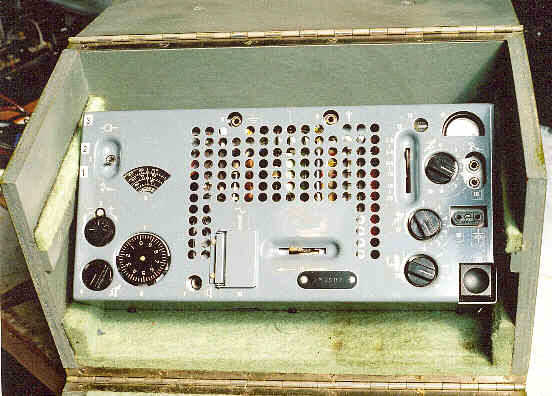
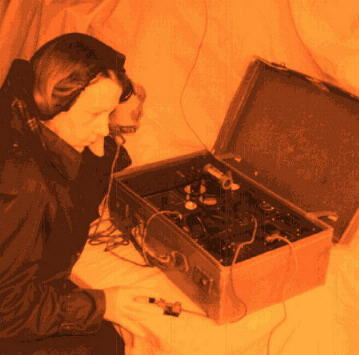
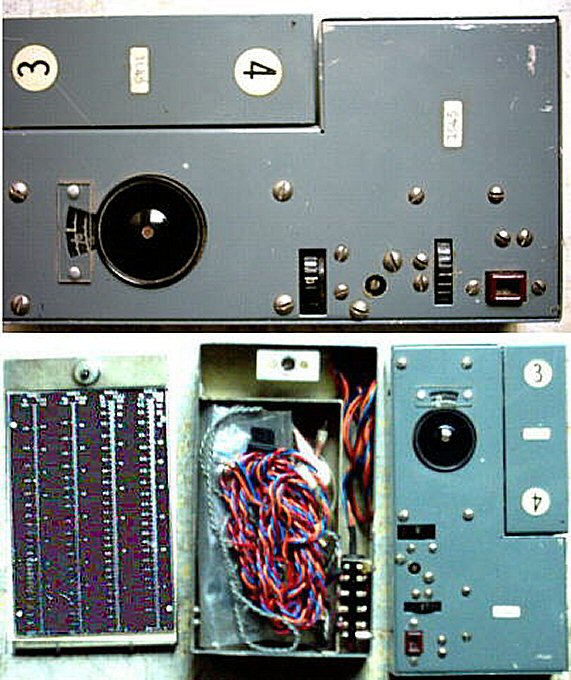
The British SAS receiver R301, small and compact. The band changing is done by unplugging the coil pack and rversing or rotating it. Set runs off 65v ht battery and 1.5v htr battery.
R-301
R103
Slight differences
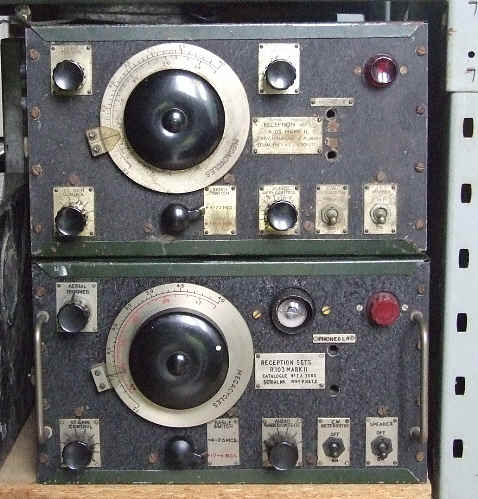
The British R103 receiver, used in staff cars and the like. I have 2, both seem original but one has a tuning eye fitted in place of BFO knob.
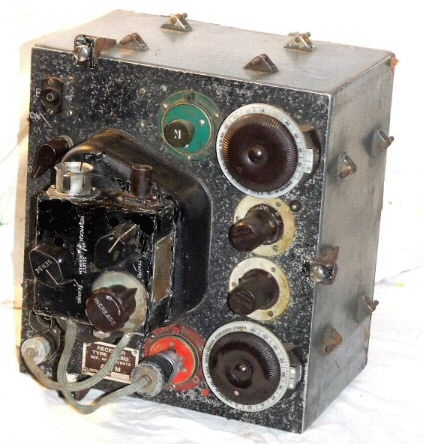
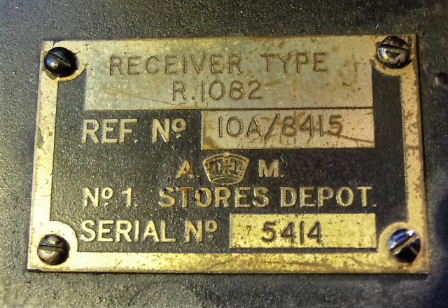
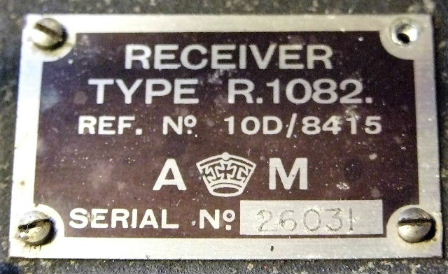
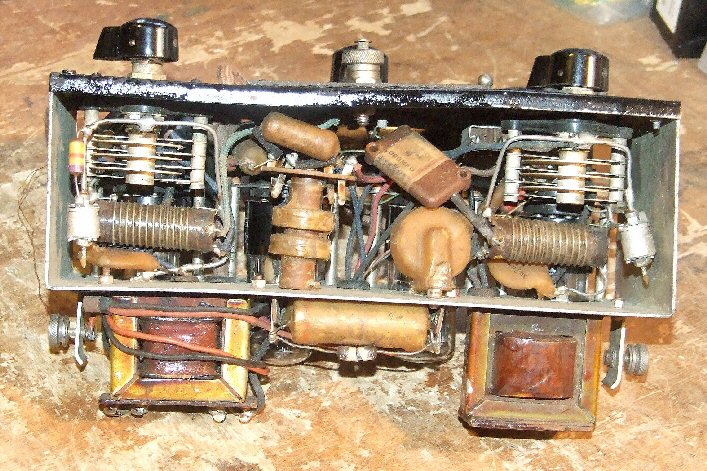
The pre WWII receiver, R1082 two sets, one with an unusual DF unit...
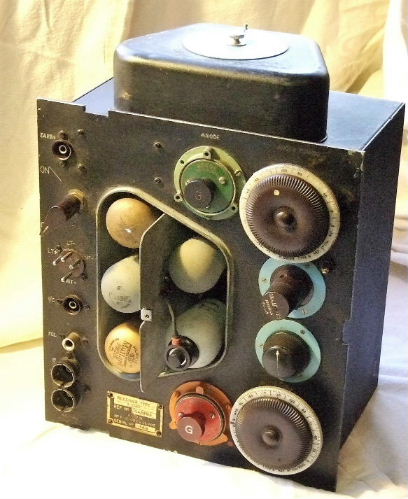

The Wireless Set No.27 is a short range shortwave transceiver with coarse markings for three frequencies (22,5 / 23,5 / 24,5 MHz) used for patrol communications. It's one of the earliest lightweight transceivers that can be carried in a kind of haversack on a strap over the shoulder. Built in very small quantities. Royal Navy portable transceiver from the 1940's WS67 (AP W3217)
22Mhz to 25 Mhz , it has seperate RX & TX , the receiver is a super-regenerative design with RX and TX having 3
channels 22.5 , 23.5 and 24.5 Mhz , approx. 0.25 watts output and a quoted range of some 8 miles.


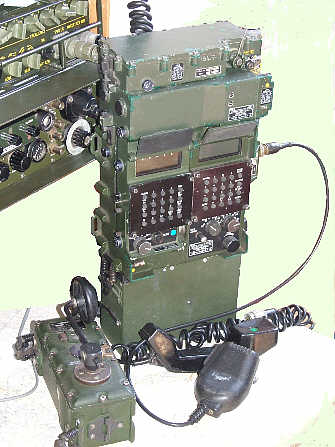
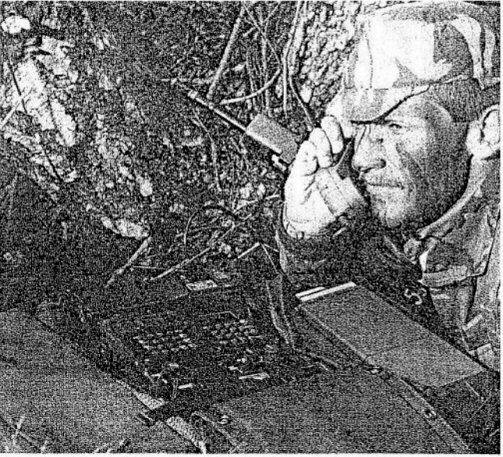
More modern, the PRC-319 set used by the likes of the SAS.
Left: A Marconi receiver, HR-110, believed to be an experimental model with a noval insides, two panels open out like a book to facilitate servicing. The set has a matching power unit.
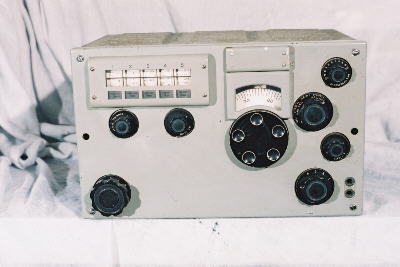
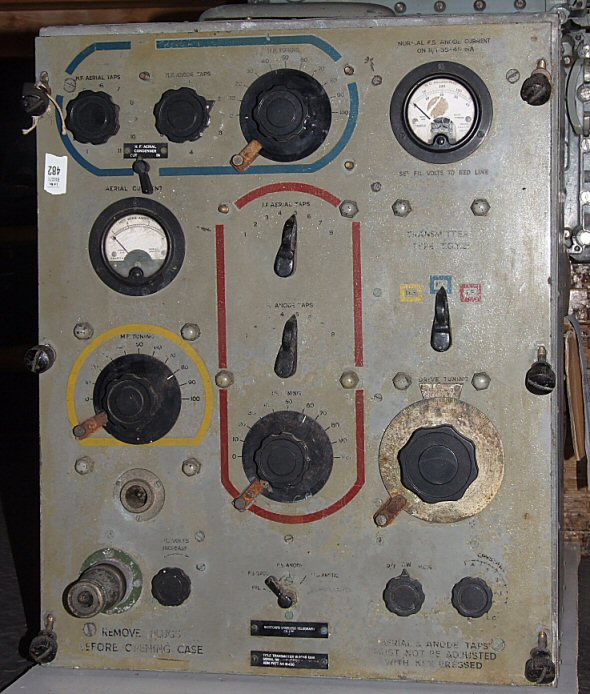
Marconi CR300 receiver, hf, in very nice condition. Mating TGY2 transmitter.
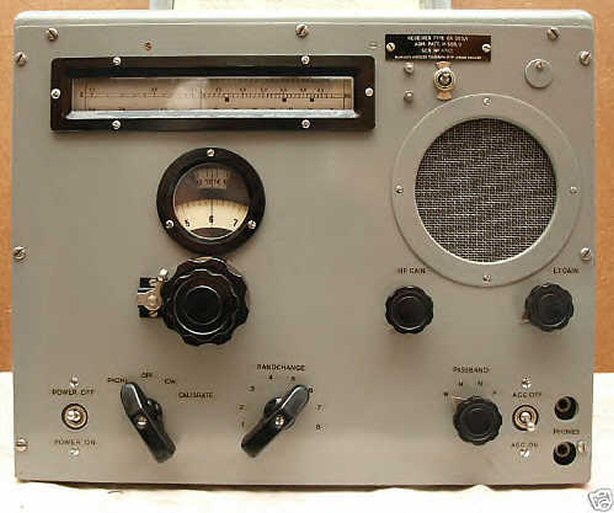

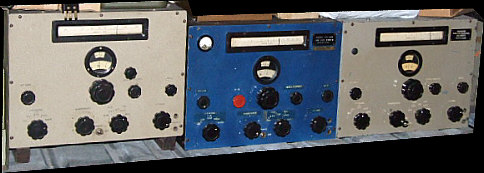
Three more Navy CR-100 sets.
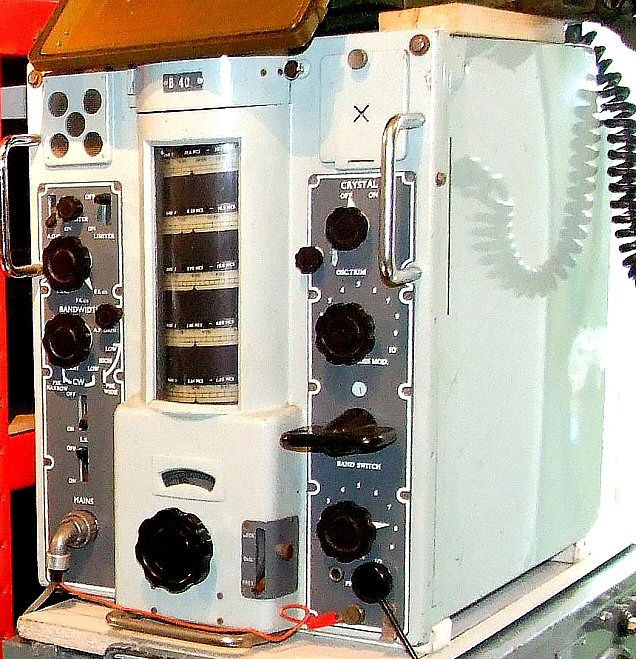
The WW2 B40 receiver, nice but bg and heavy.
More Navy sets............
Marconi B-19, used by Navy, 4 valve TRF. Before restoration on the left, after a bit of work on the right.
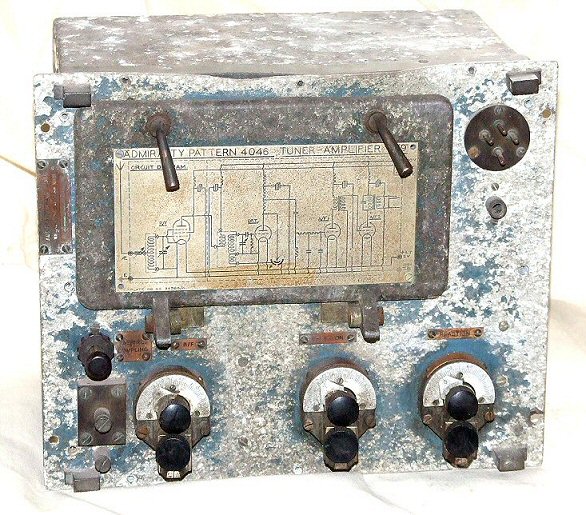
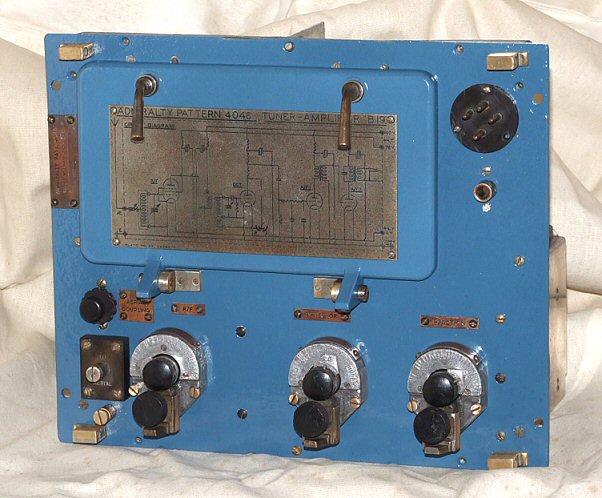
And another pre-war Royal Navy set, the B-50, awaiting restoration.
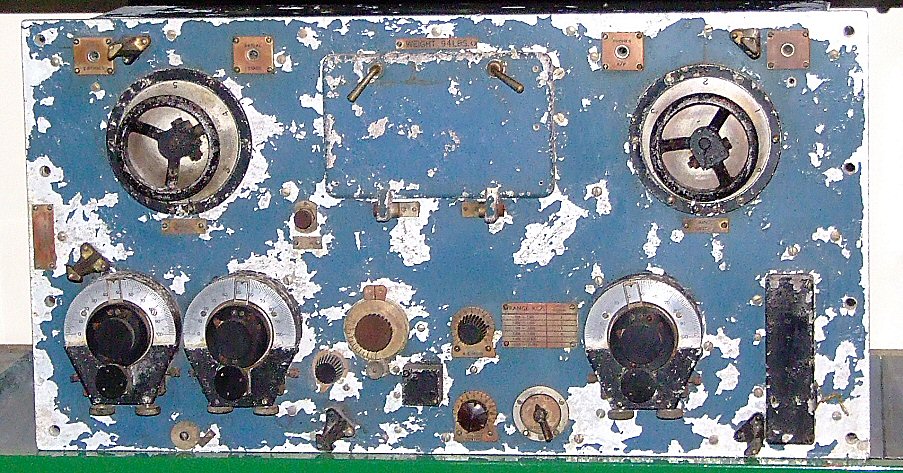

And another pre-war Royal Navy set, the B-13, awaiting restoration.

now restored and working...

And another pre-war Royal Navy set, the B-36, awaiting restoration.
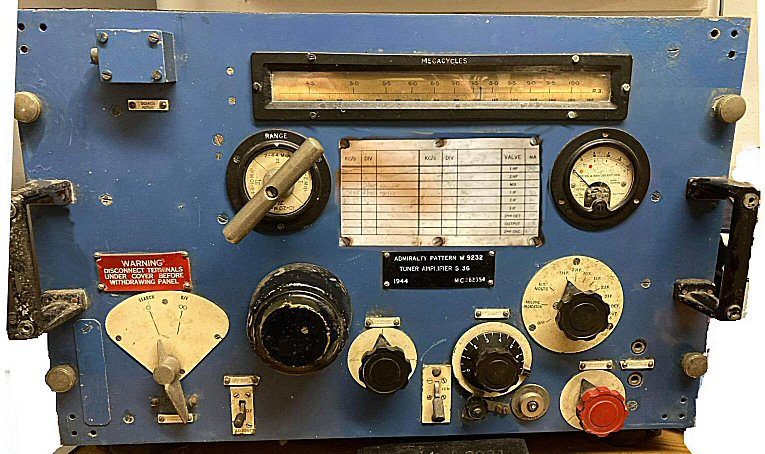
The B36 is the Tuner amp for the RH2 DF outfit and is a modified form of B21 reeiver
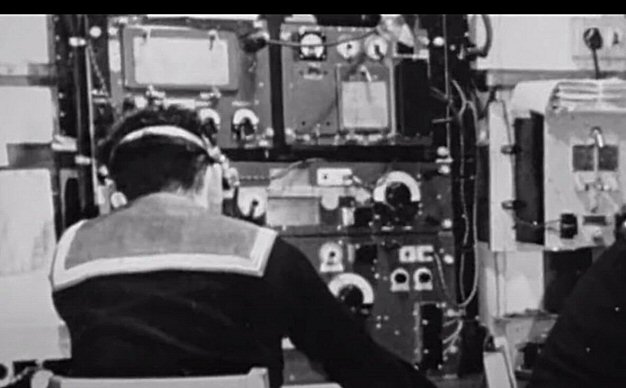
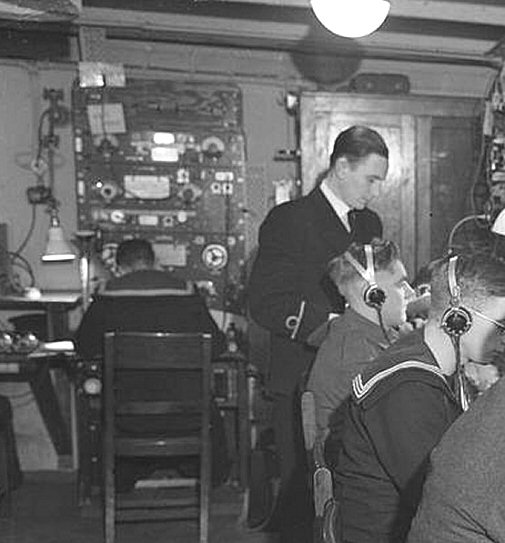
Another in use shot from the war time.
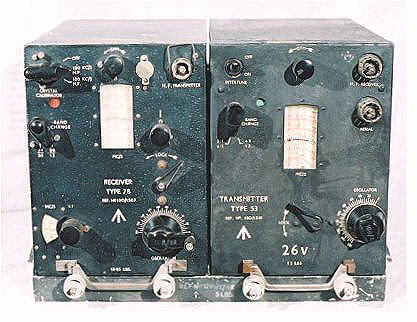
The Type 53 transmitter and Type 78 receiver in it's aircraft rack,
interesting little set, tx runs two 807 in the pa.
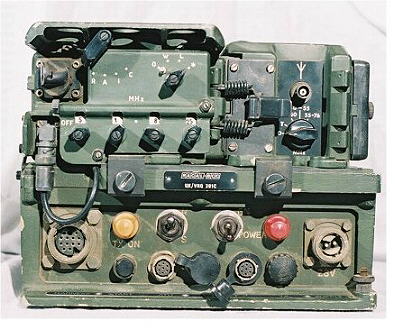
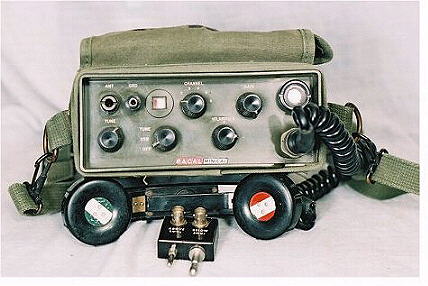
RT-351
transceiver
Mini Cal
by Racal
RT-351 VHF transceiver with vehicle mounted amplifier etc.
This has been here for some time, just got around to photographing it, hi.
The Racal Minical transceiver, 2 to 7 Mhz, 1 watt ssb.


TRA-967/3
3W VHF transceiver
Compak 8
8 ch hf set
TRA-967 36 to 76 MHz, /1 is 1Watt, this is /3 the 3W version.
The Compak 8, hf, 8 ch set, ssb,cw, manpak.
The BCC HF-156 hf manpack, 6 channel.
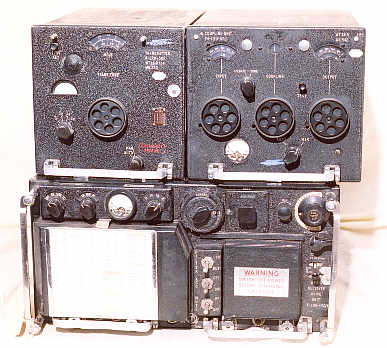
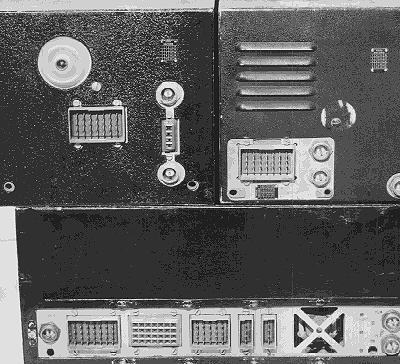
IFF Identification Friend or Foe equipment.
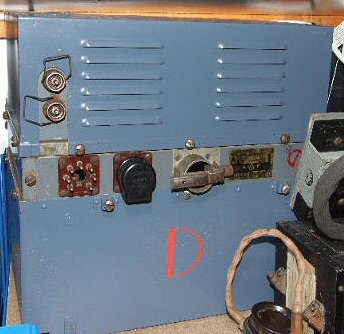
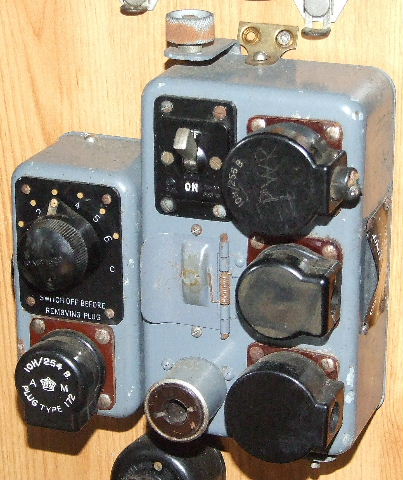
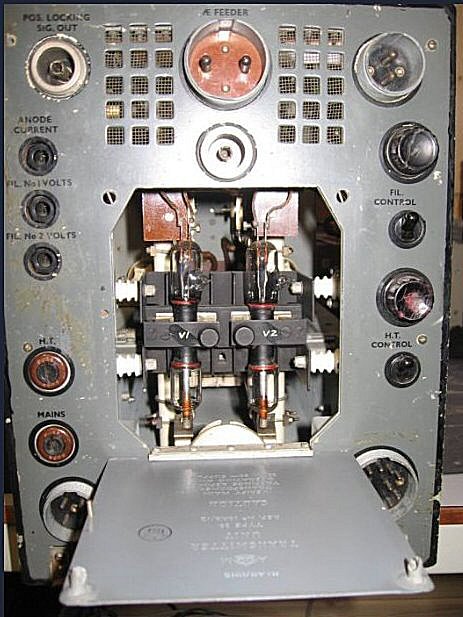
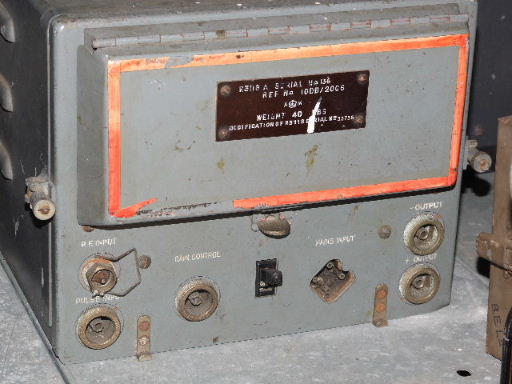
The airborne set as arrived, then as restored, the aircraft control unit. The IFF transmitter, type 39 and the ground receiver, R3118A.
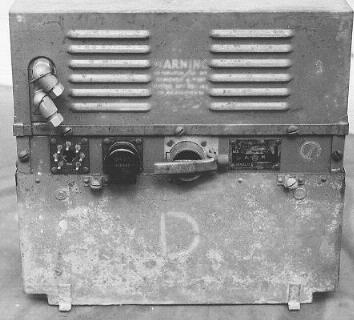
Left: The Receiver type 62H, this was a special R1392 with an i.f. of 9.72MHz instead of
the 4.86MHz in the 92. Xtal controlled, airband set, 100 to 156MHz.
Right: TR1936B, 10 channel xtal controlled transceiver with 50kHz channels. Also went under the ARI reference of 5489.
115 to 145MHz, 8 to 10W, fitted to Whirlwind SAR and Sea Prince a/c. 1950's era.
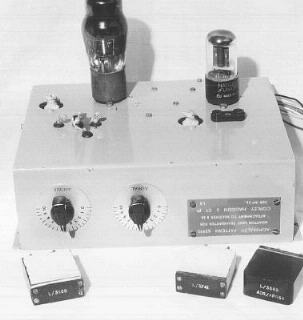
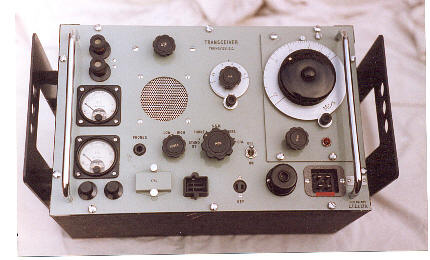
Now a small transmitter, used inside the CR100 or B28 Navy receiver. It was afixed to the lid, thats why the lettering on the plates is
upside down and was used for training the Navy Reserve Operators. Next to it, the TR11HS, belived to be used in the Oil Exploration field, by
the camps set up to search for new oil sites.
B-28 tx
TR11HS r/tx
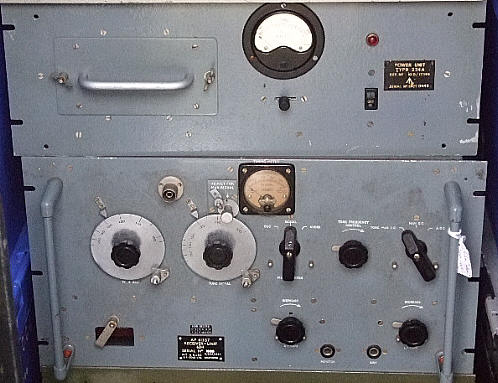
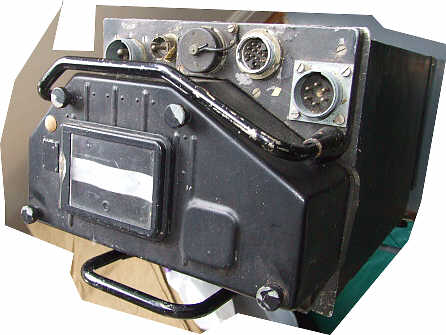
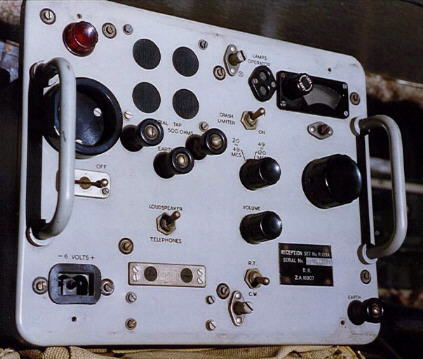
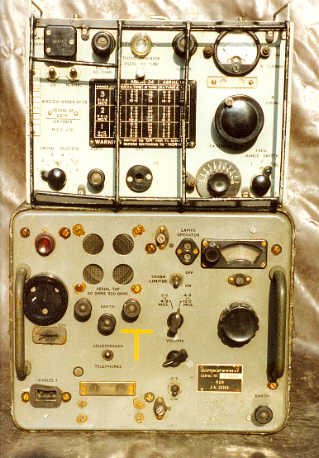
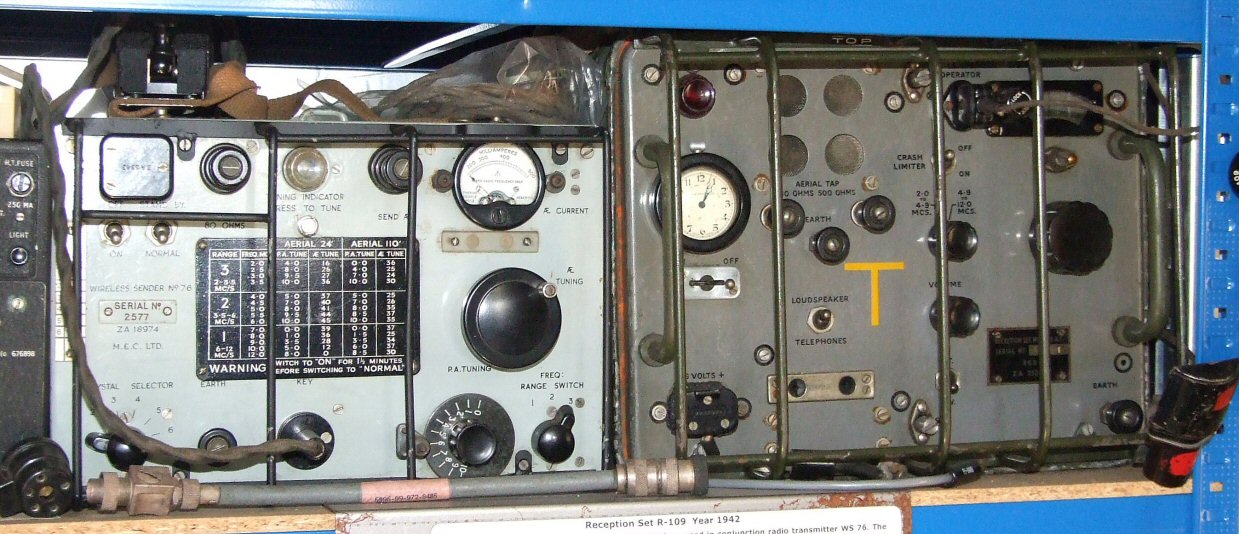
The British R-109 receiver, used with the WS 76 Sender, used by airborne forces, in Arnhem etc, very compact
but note, no rf control ? so reception of cw must have been hard. Some models do have army fitted rf gain pot in one of the case
securing holes, after the shaft is removed.
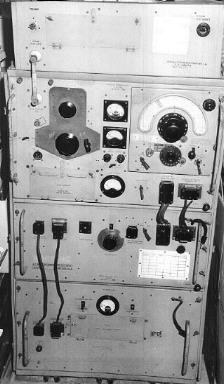
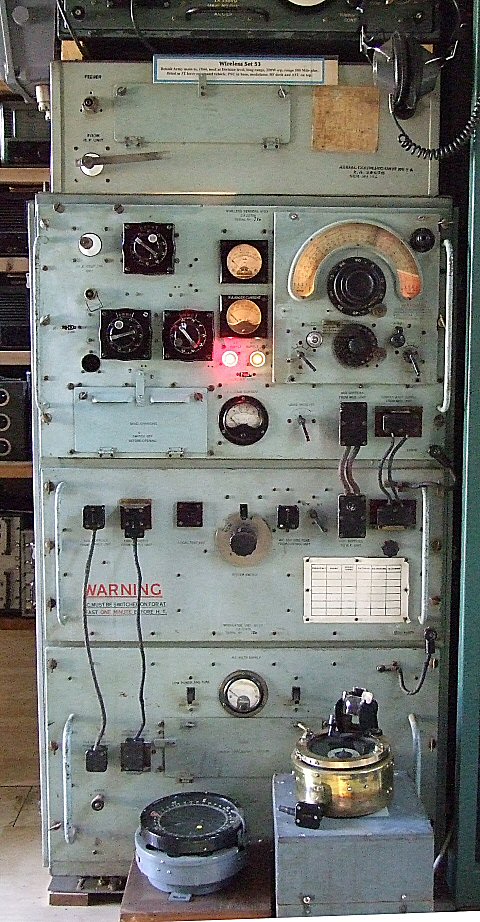
The mighty Wireless Set No 53. This monster of a transmitter was carried in the back of a three tonner, along with the R107
receiver. 500 Watt tx, and is over 600 lbs in weight ! top to bottom: ATU (feeds either 34 ft mast, long wire or dipole aerials),
High Power RF Amplifier (2 x 813 ), ( Driver & VFO unit plug into the RF deck ), Modulator, mains Power Supply Unit. (In the
field the 3 tonner towed a generator trailer behind to power this station).
This one had slight mods around the pa, the work of an amateur,
and the right hand picture after this amateur removed those mods are cleaned the set up. Guess there are amateurs and amateurs!
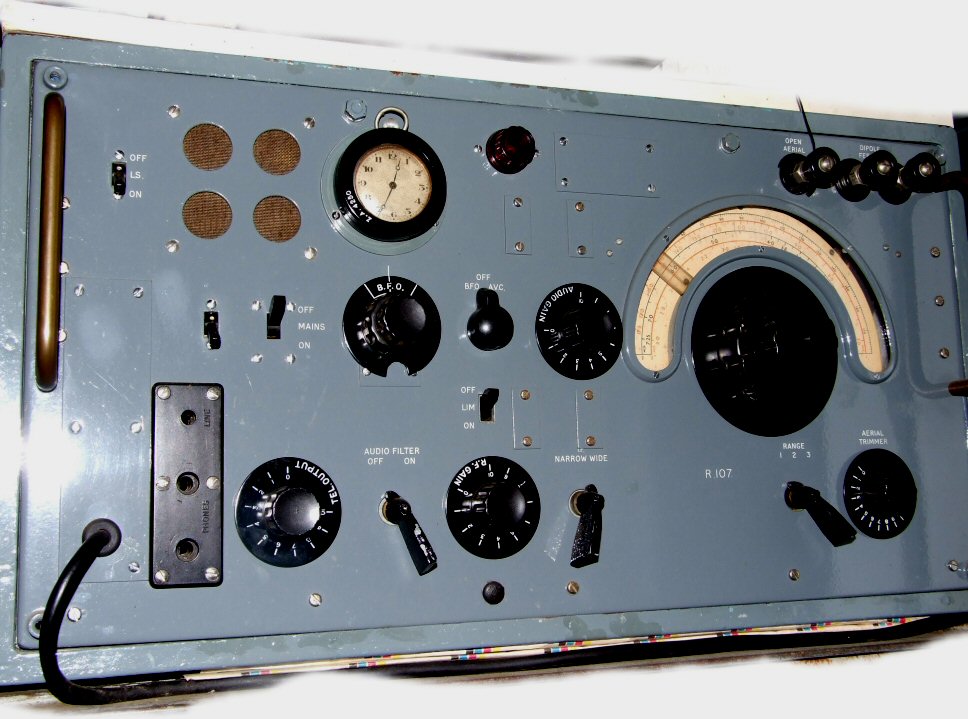
A restored R107, the rx to go with the WS53, looking nice but its lost that touch of originality I guess.
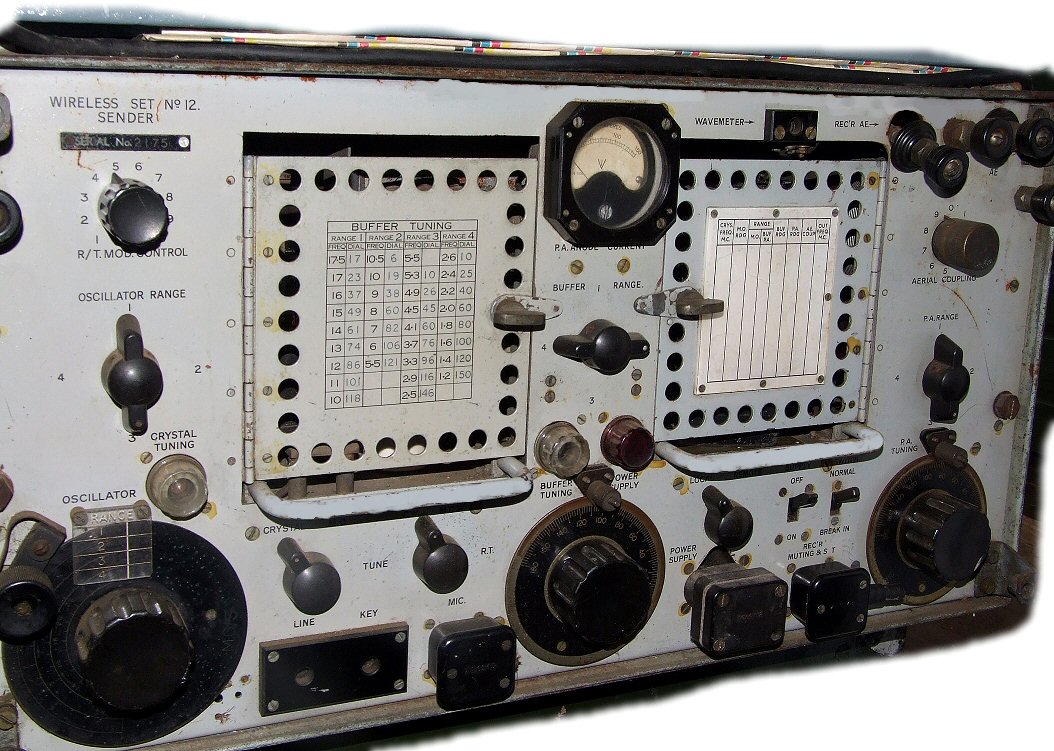
The WS-12, went with R-107 as well.

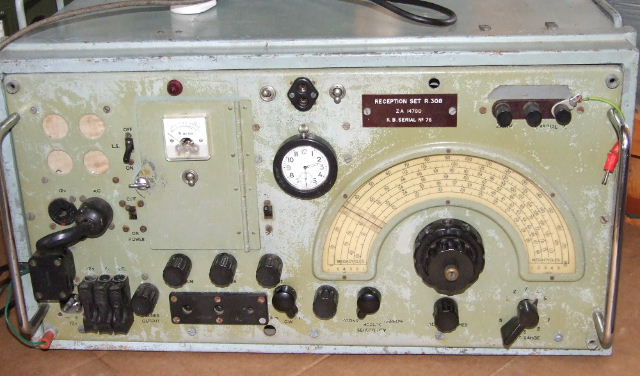
Same case but an R-308 receiver, VHF, big and heavy, awaitng restoration.
The follow on from the R-107, the R-206, another big lump but excellent in its day.

British R208 VHF receiver from Wireless Set Number 36 used by anti-aircraft batteries. R208 "Sputnik Special" so called because it was sold by government surplus dealers as the ideal set for listening to the first artificial satellite, Sputnik 1. Frequency coverage: 10-60MHz. AM R/T and CW. Powered from AC mains or 6V DC. The set pictured with its spares drawer containing phones, valves etc.


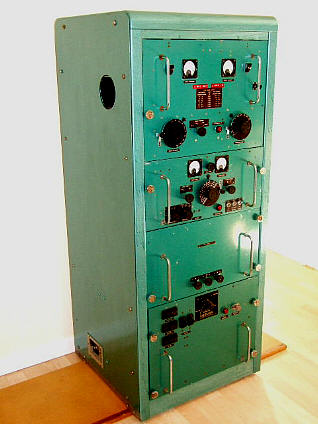
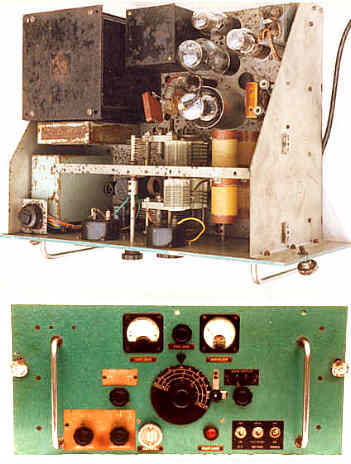
Another monster transmitter, the MK 214, used by the DWS and such. Pair of 813's in the output. Picture left is the first restore project
within the new museum location, right picture of the VFO unit, self powered, 807 in the o/p.
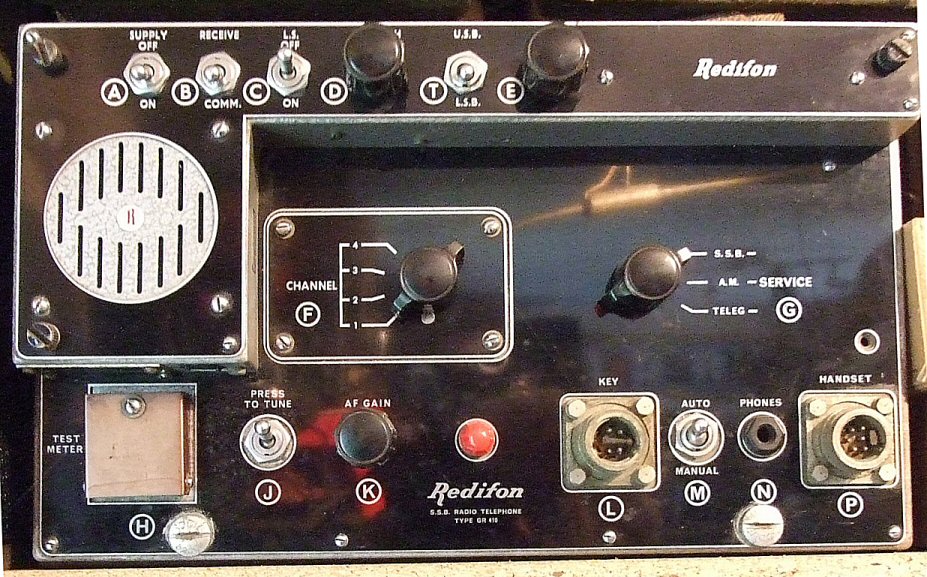
Redifon GR-410, or C14 in military use. 3rd method SSB, ie Phasing method. Large heavy unit, comes with its AC and DC power units.
LEFT: Something a little more modern now, the PRC-320 manpack set ( or UK/RT320), hf, 1.6 to
30 Mhz, CW (wide or narrow with a very good filter), AM, USB, [ the 320/1 version is CW
wide only and replaces the CW narrow position with LSB], 15/20W on high power, 24v
battery powered, whip or wire aerial.
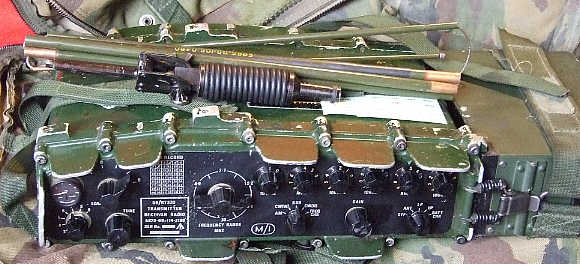
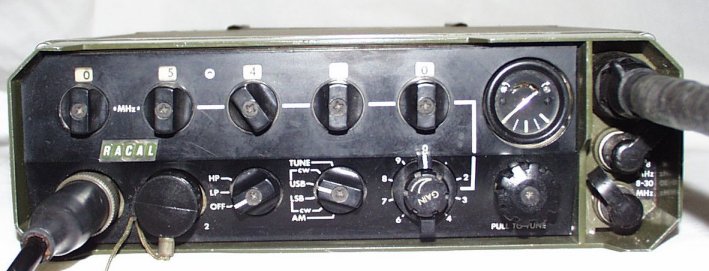
PRC-320
PRM-4031
RIGHT: Again, another modern'ish set. The Racal PRM4031 hf manpack. 1.6 to 30 Mhz in 100 Hz steps, 10W PEP SSB, CW or AM. 12v operation, 3kg in weight.
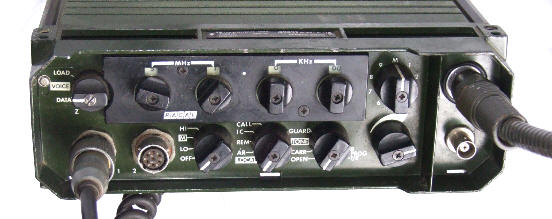
The PRM-4090 VHF transceiver, 20 to 80MHz with a host of clever features. I had to fit a new whip to this, the mount had been
removed, or not fitted in the first place.
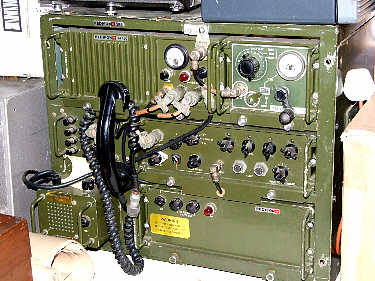
Redifon's base station and manpack. left the GR-479A station, the 100mW GR345D driver, 100W GR480 amplifier, ACU9 atu and power supply.
right: The GR345 manpack, 15W SSB/CW/AM, very similar to the PRC-74 USA set.
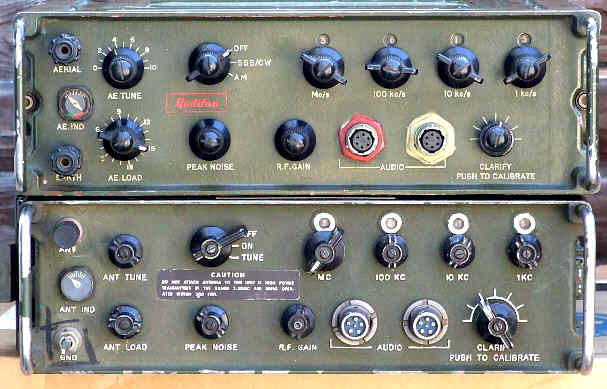
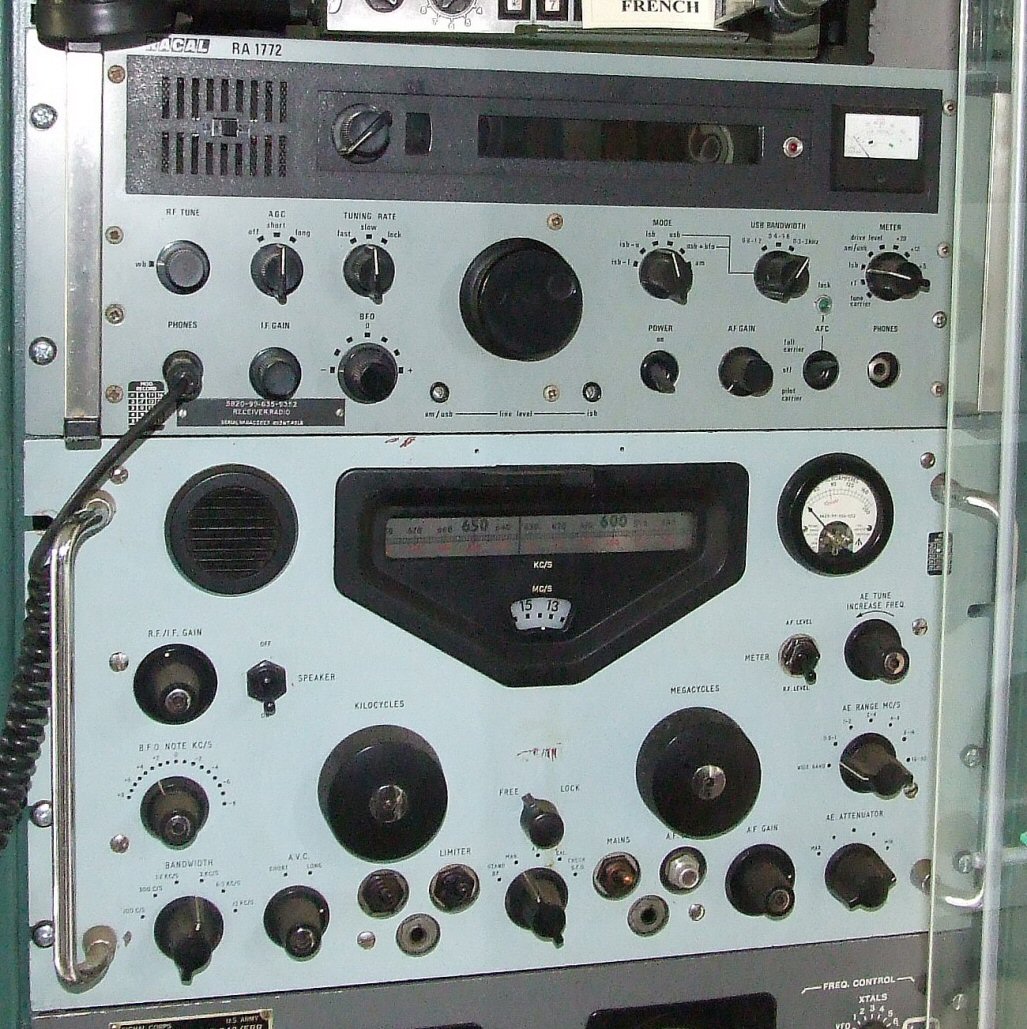
Left: Another Racal set, the receiver RA1772, very nice set, digital readout, various filters and a joy to use.
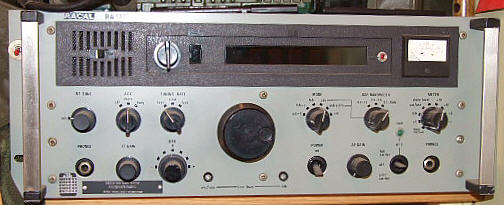
RA-1772
BRT-400
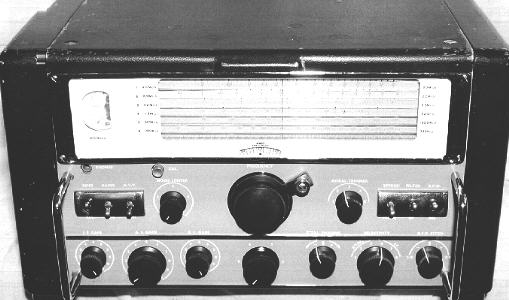
Right: This is the GEC made BRT-400 receiver, 150 Khz to 30 Mhz in 6 bands. A nice set, a bit heavy but a good performer.
This one has an A^M plate on the side, obviously used in some form of monitoring role by the military.
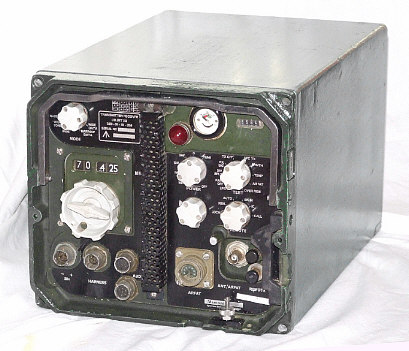
A pair of Clansman sets, the RT-321 HF transceiver and the RT-353 VHF transceiver. Chunky, heavy but nice sets to use.
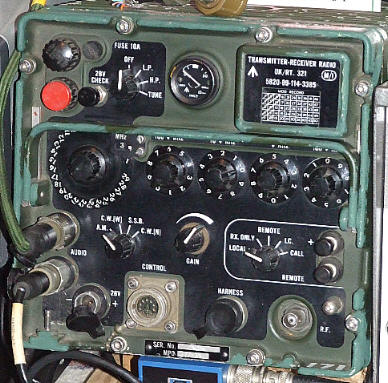
RT-321
RT-353
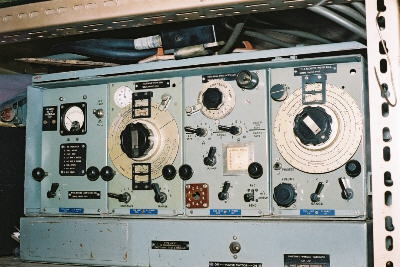
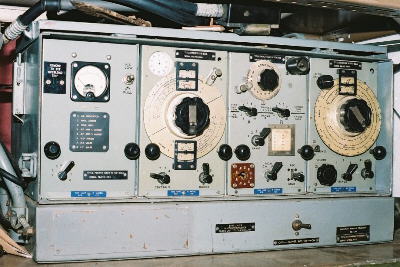
Two views of the Marconi CNY-2 naval set now, believed to have been used in
landing craft etc.
CNY-2
by Marconi
Left: A modern Naval Set, the R551N receiver. Synth, with second vfo, and tuner unit builtin.

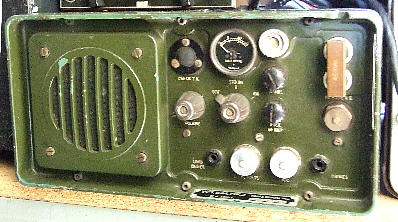 ...................................................................................................Right: Much older B44 vhf set.
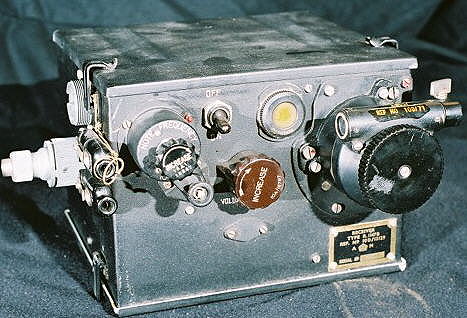
The R1147 (left) early Aircraft receiver, used in Swordfish, very compact indeed.
R-1147
PRC-361E
This is a PRC-361E, small military set, 12 channel, around the 50 Mhz range. It's 100mw or 1w output, single xtal for rx and tx, IF is 15.7Mhz so this is added to the desired freq to obtain the xtal freq.
The W.S.88 is a tropicalised portable man-pack transmitter-receiver using frequency-modulated R/T replacing the WS38 in that role, 1947 era.
There are two models of 88 set, both operating on four pre-set frequencies, one 40 - 43 Mc/s band (Type A) and the other in the 38 - 40 Mc/s band (Type B).
Controls are on/off and channel selector switch. Handset has rubber bulb unit with ptt switch enclosed inside.
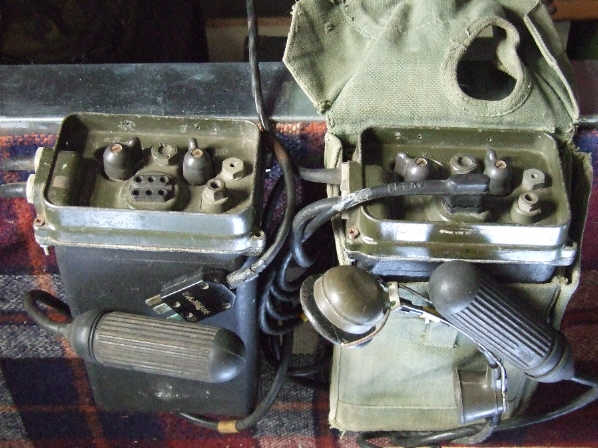
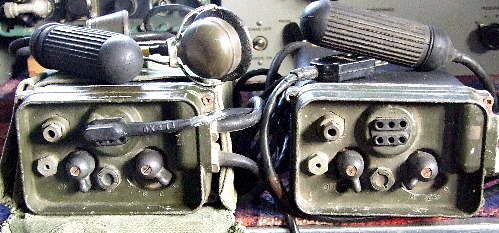
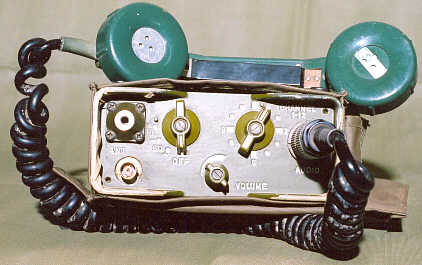
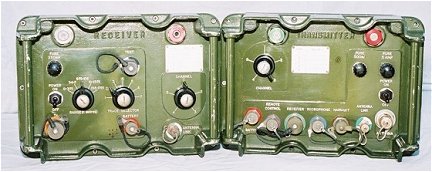
Transmitter TX SR and RX SR. The SR is Sound Ranging, used to plot
position of enemy guns by sound detection.
modern
old
The left SR set is the new one, the war time version is right, the SROS (Out Station) set
The Labgear LSP-30A SET, 4 CH HF MANPACK, 30W pep ssb/am set. Has a very nice tunable whip antenna.
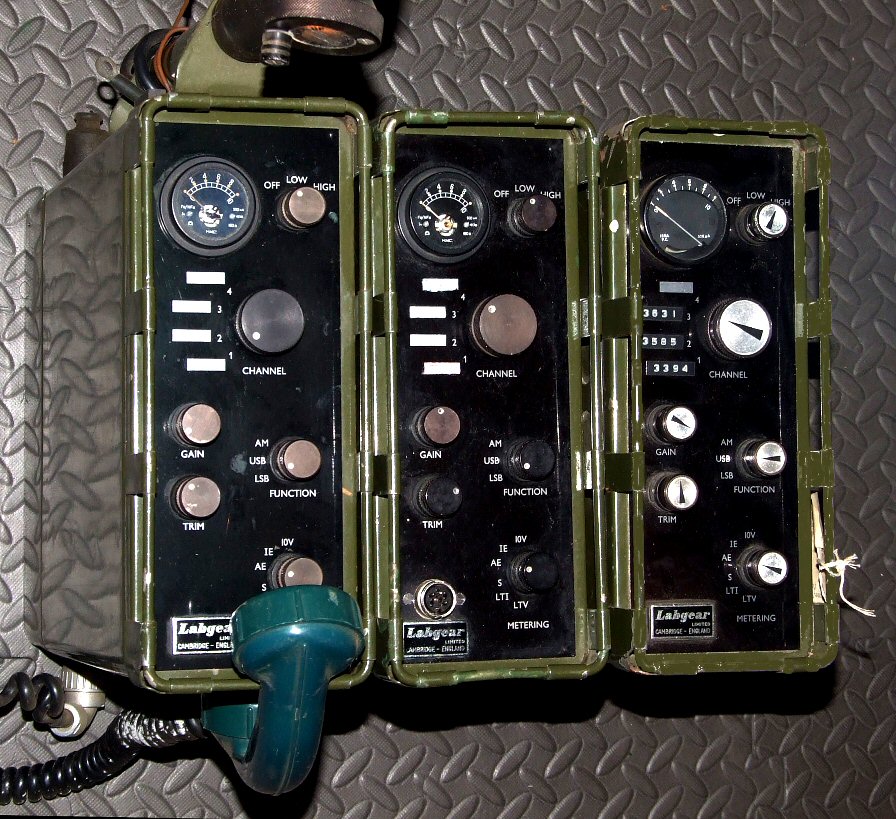
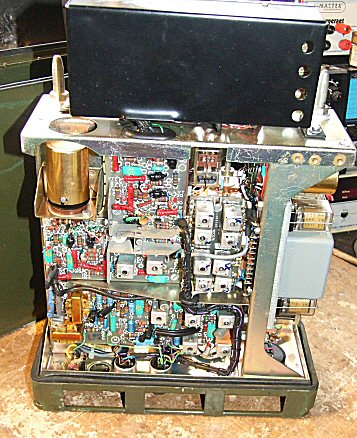
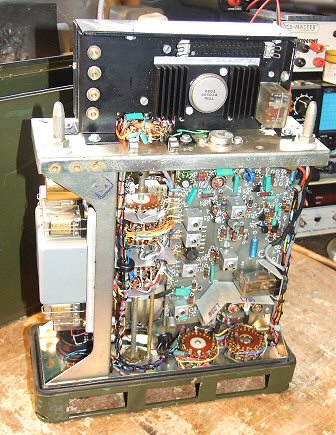
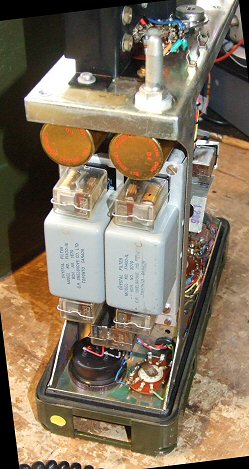
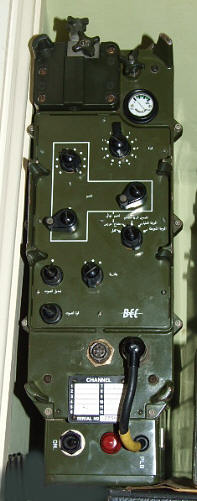
Wireless set No 68, the low frequency version of the 18 set. Right, the BCC32V, or SSB32, received not working, now going though still need to get some xtals for it
(see wanted page please)
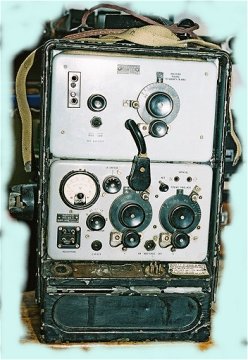
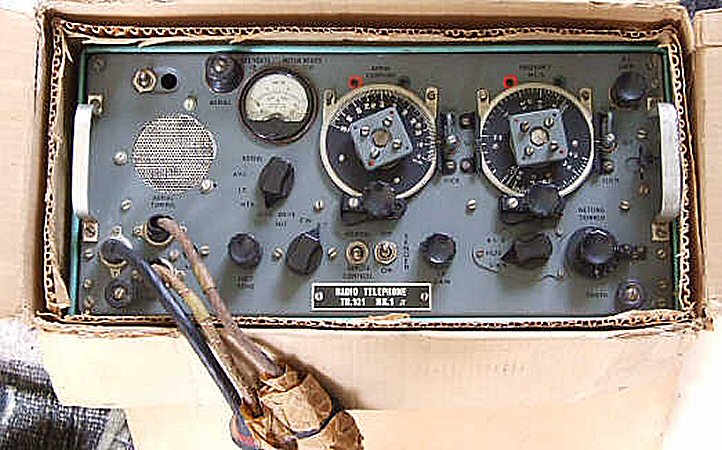
Interesting find, buried under stuff for ages. A TR101, or rather a WS22 modded with roller coaster removed aand speaker fitted, then rebadged
as Radio Telephone TR101. Will be restoring it as some time.
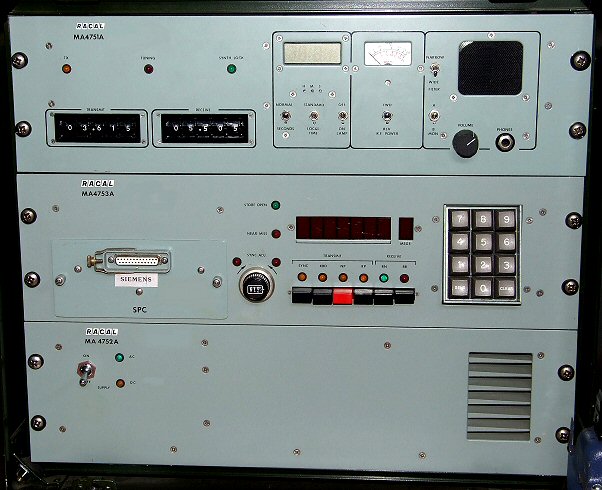
LEFT: Production model of Kaynard set, hf digital communication. By Racal, Driver is MA4571A, encoder is MA4573A and power unit/amplifier is MA4752A. 20W and set comes with auto ATU for field use.
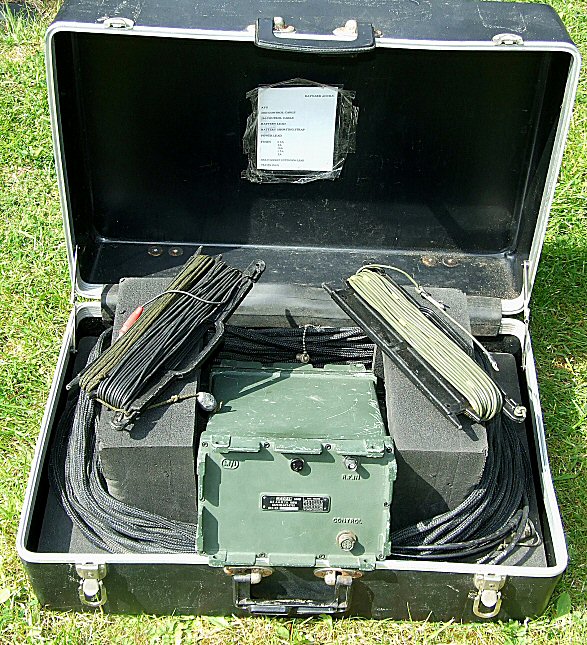
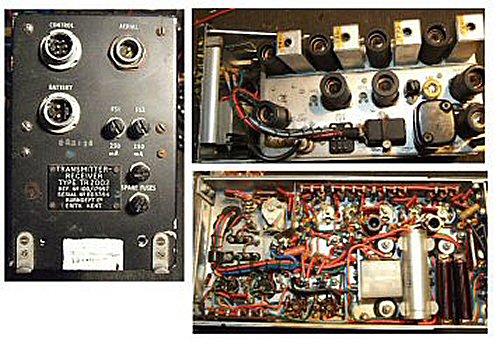
TR-2002 1950's VHF rx/tx, single channel, 121.5MHz, AM, 1W.
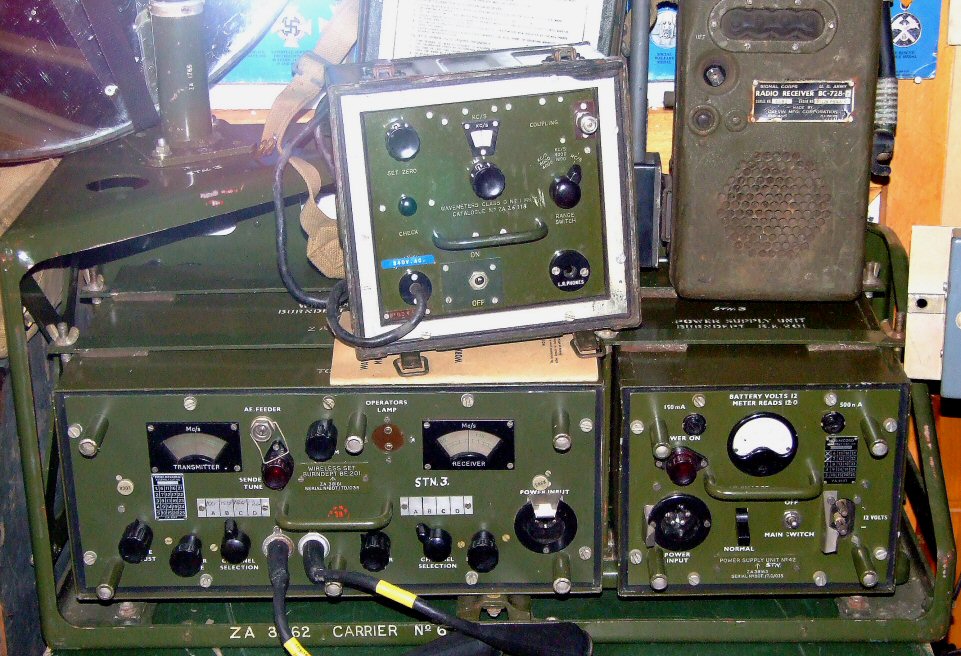
BE201 VHF set, with Class D No1 wavemeter and BC-728 (USA) receiver above.
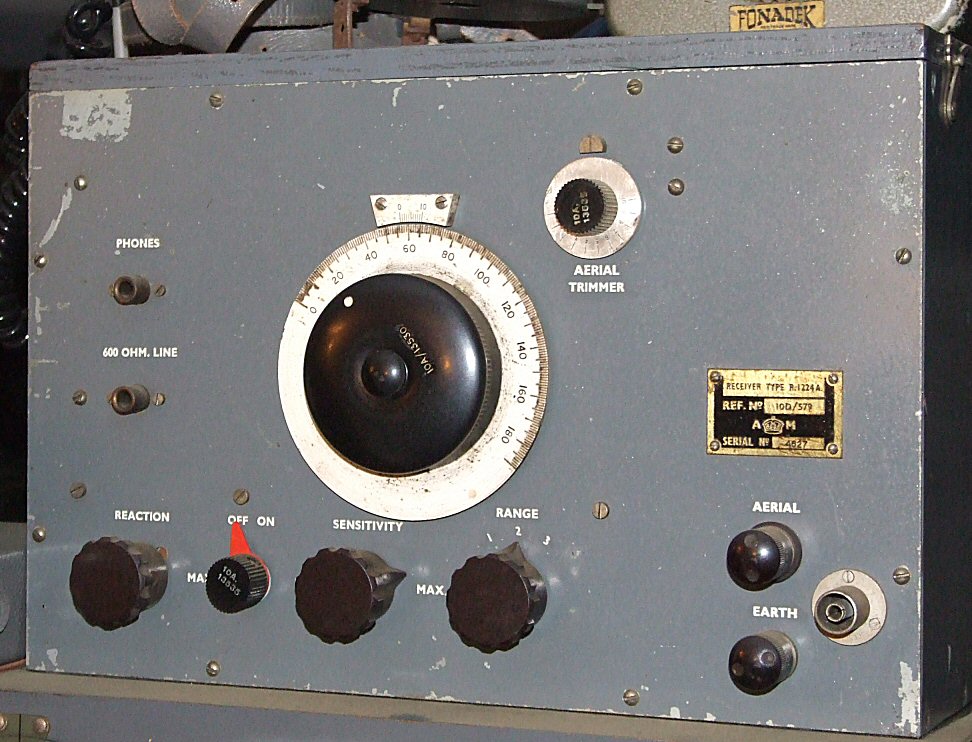
R1224A receiver, wooden box, RAF forward ops.
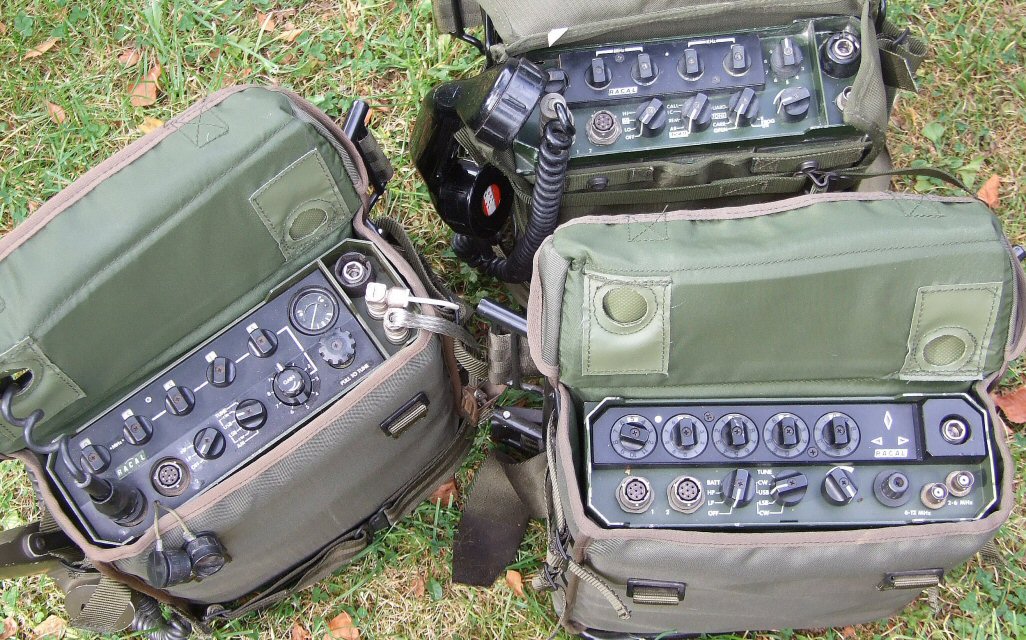
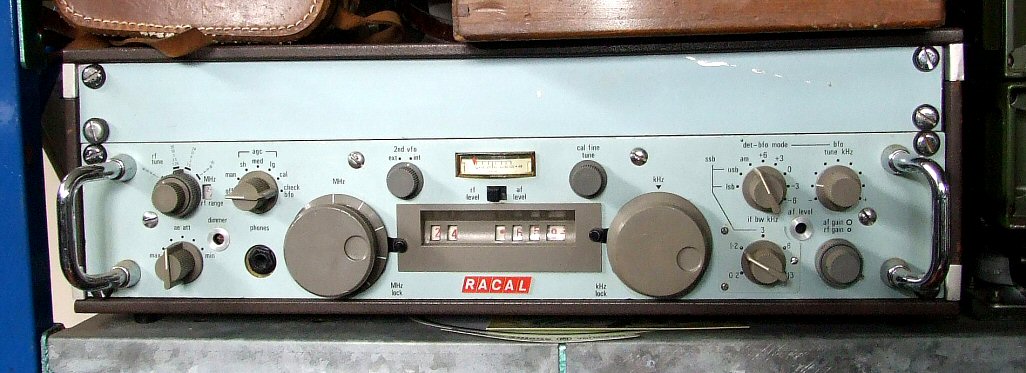
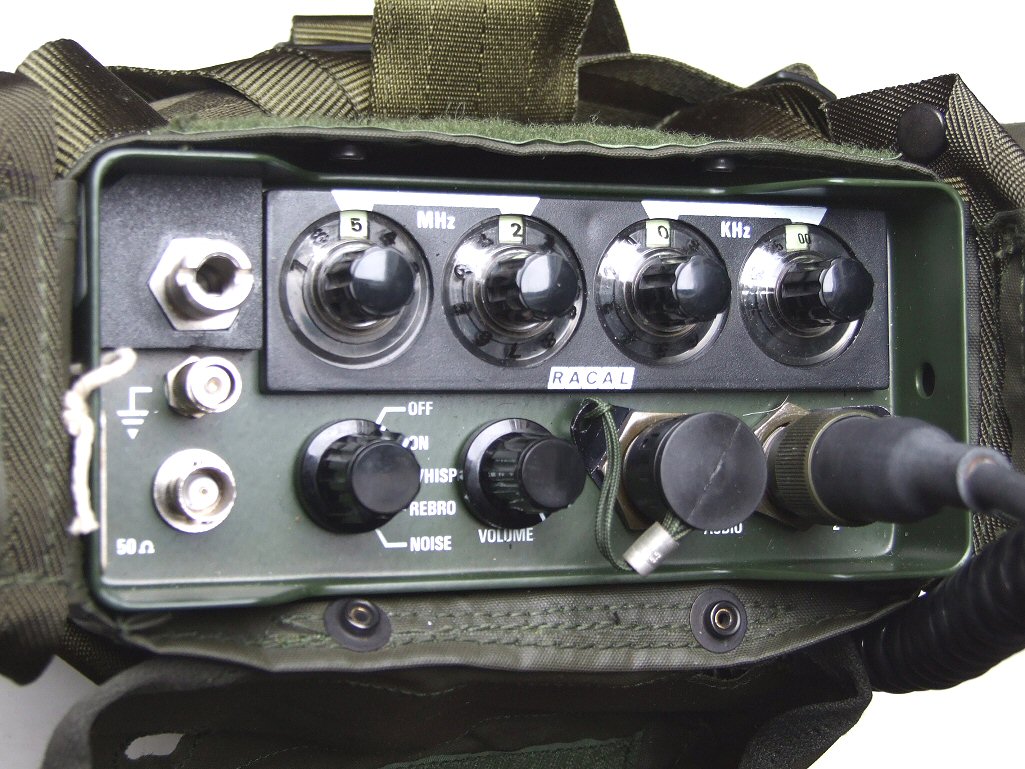
RACAL ROUND UP. The various Racal's here.
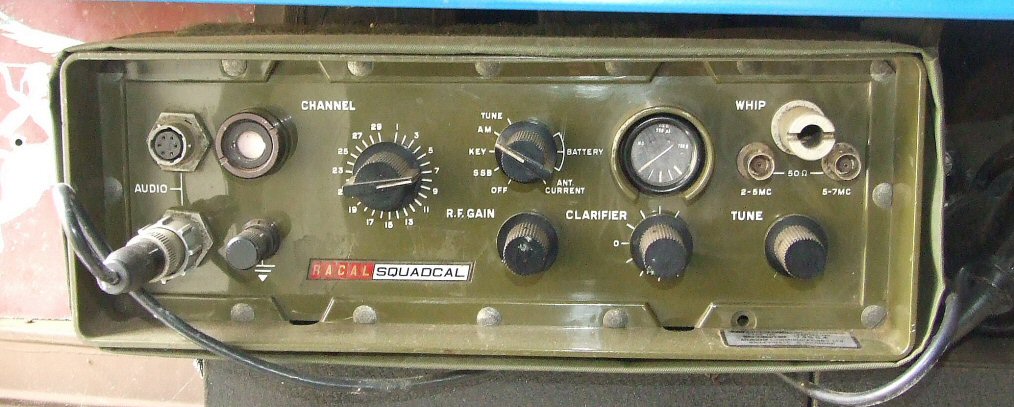
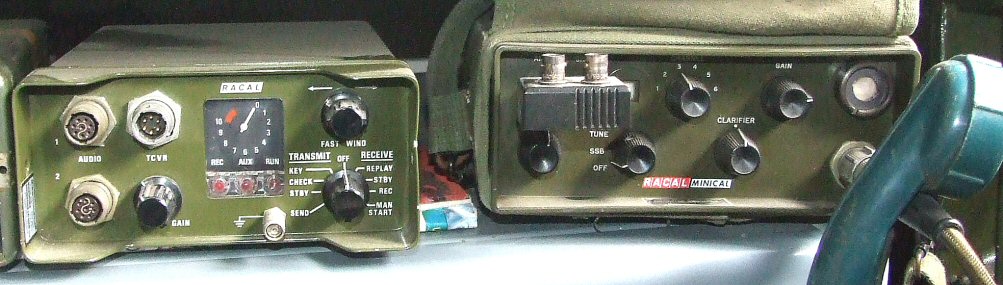
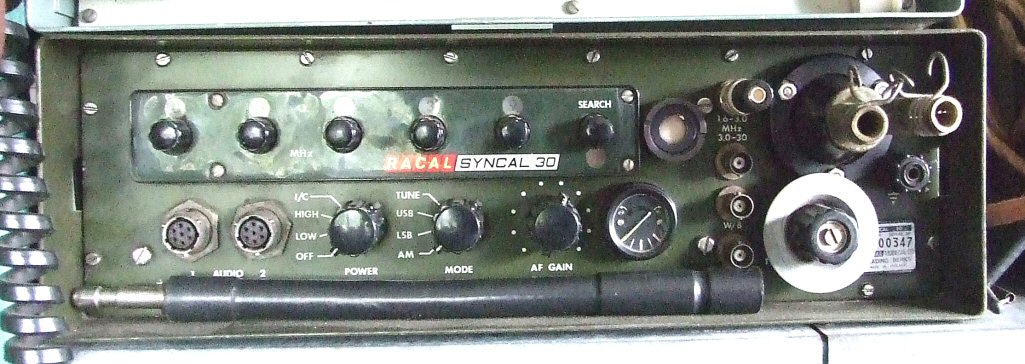
Telecal, as used by Bonnington on his 1975 Everest expedition apparently.
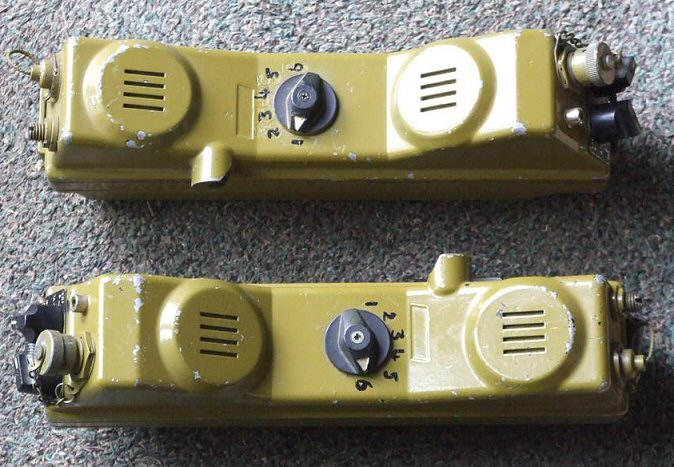
Model: Wavemeter W1649 - Salford Electrical Instruments. The W1649 is a VHF heterodyne wavemeter that can also be used as a signal generator. The IF is 15 MHz, tunable -2 MHz to +3 MHz. Wavemeter range 155-255 MHz. Accuracy +-0.2 MHz. Signal Generator range 140-240 MHz. Accuracy +-0.5 MHz below 220 MHz.
The harmonics of a 5 MHz +- 0.01% crystal oscillator provide check points throughout the range. The valve complement is: VR135 (selected) Main oscillator, VR91 Mixer, VR91 Crystal oscillator, VR91 Detector, VR91 Output. The unit also contains one spare selected VR135
Power supplies: LT 3x2v accumulators, HT 120v.
A special Type 633 power supply unit that fits in the place of the HT battery allows the wavemeter to be operated from mains supplies.


Monitor Type 28 ? British monitor Type 28 oscilloscope for H2S. Stores reference 10T/500. Also used as part of ASV (Aircraft-Surface Vessel)
Mark X radar. more info needed if anyone can help?

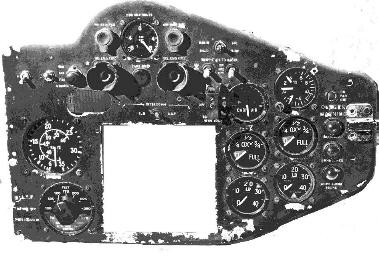
Now ! whats this ? This is an aircraft panel. Its from a twin engined plane, the two round things just above the central
comms cutout are Eng Fire No1 and No2 warning lights. On the extreme right there are three indicators bulbs, marked
top to bottom, Oxygen warning Navigator, Bomb Aimer and Bomb Aimer Prone. So, its a twin engined plane with a pilot,
navigator and Bomb Aimer, it has a glass nose (hence the Prone indicator). So, anyone any ideas ?
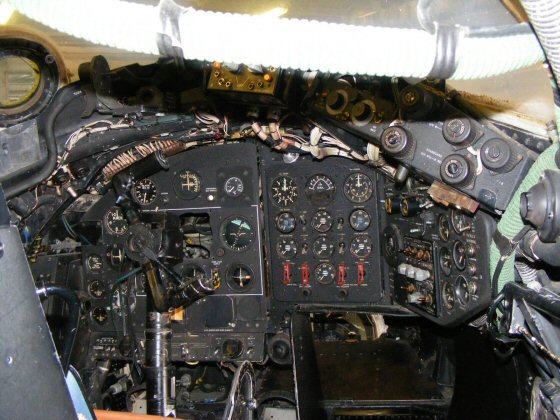
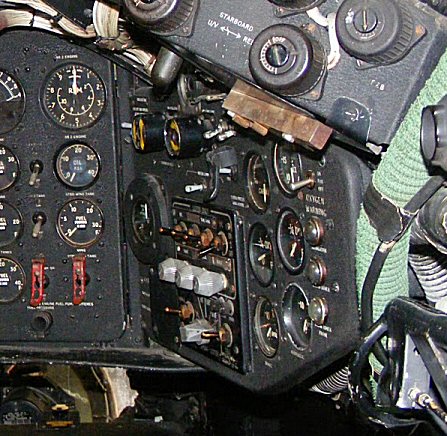
Recent suggestions are its out of a Canberra. And yes, found a cockpit pic of a Canberra and it has the same panel. Problem solved.
Send an e-mail to: Ben Nock, G4BXD
(If link does not work on your PC then send email to: [email protected] )
********* Pictures by G4BXD are G4BXD copyright ********
Many a SWL started life out on these, I did back in 67. Its getting harder to find good examples of this set, so many have been 'improved' by hams over the years. Check this recent example out....
THE A TEAM.....
The A13 man pack transceiver. 2 to 8 MHz, 0.8w AM, 1.5W CW/Pm. Received as not working and several hours later, and quite a few transistors, its back in operation. Picture shows the set, mounted on its side (?) on the carry frame, amplifer beneath raising output to 8W AM and 15w CW/Pm, and atu on the side, for matching to 8ft whip or wire antennas.
The A41/42 and A43 sets.
Left: Radio A41 and A42 being developed from the US AN/PRC-10 and PRC-9 respectivly. A41 replaced the WS31, FM, 38 to 55 MHz in 100kHz steps with an RF output power of 0.75 W. A42 is FM, 26.3 to 38 MHz
Right: The A43 radio with blade antenna for manpack use and mast and discone for ground use. Ground to air UHF transceiver. Frequency range 240-300MHz. 6-pre-set crystal controlled channels. RF output 2W. AM R/T and CW or MCW beacon service. Range depending on altitude aircraft varying from 4 to 100 miles
Pye or Reece Mace British Navy set Type 619 HF transmitter. Should prove quite good when I get around to sorting a power unit for it.
Left: A variation on the T1154, the Admiralty 8D transmitter. Little is know at the moment, more later as its discovered.
Right: Several R1155 and T1154 sets in the collection.
Wireless Set No 17. Low power, 0.3W at 50MHz. Used between Ack Ack batterys etc.
Wireless Set No 10. Microwave link, point to point comms, telephone use, used from Dover to France after D-Day..
two units out of many, receiver and test oscillator. If anyone has the dish's for this I would be interested.
truck picture: Wiki ............ rack picture: RS Museum
This is a transmitter 5G, type was used at the Antarctic.
......................................................................................................................................TR-1196, prequal to the SCR522 fitted in Spit, Hurri etc. HF 4 Ch AM set.
Interesting find for the collection, WS21, nearing completion of restoration.Just the lettering to re-install.
Another recent find for the collection, WS11, also nearing completion of restoration.
Left: Larkspur C13 now, recent addition. Its very strange though, this range of sets used the most
difficult set of plugs and sockets ever seen on radios. Anyway, hf, AM/CW, about 15w on CW if
lucky.
Right: Along the same lines, the C42 station, VHF this time.
The R210 receiver and C11 transmitter combination.
The R216 monitor receiver.
A real unusual find now, one I'm very pleased to have acquired. The Airborne life boat receiver, used in conjunction with the Gibson Girl transmitter, R-1545, 500 Khz
receiver, battery powered of course. Before and after restoration pictures along with original pics of its deployment.
R-1545 before
restoration
R-1545 after
restoration
T-1333 S&R TX
British Gibson Girl
Airborne L.B.
during trials
another drop
from a Lanc
Life Boat
in use
A later SAR unit, the Burndept BE-301 SARBE Beacon transmitter, much smaller and compact.
[Left] The TR9 fighter set, tx on left, rx on right, used in such as the Spit and Hurri. HF, AM.
[Right] The TR1196, another fighter set, HF, AM, both replaced by the SCR522 vhf set during the war.
R1116A receiver and T1115 transmitter, early sets in WW2, as used in Swordfish aircraft etc.
Another early set, the R1100, Army Liason set, from guns to spotter aircraft comms.
WS32 before
restoration
WS32 after
restoration
A rather rare little set, is it a 19, is it a 22, is it a 62, no, its a 32 set !!.
First picture is how it arrived here. Now as the set looks after restoration.
Old soldiers now, the Wireless Sets No 19 and No 22. Probably the best known sets of WWII.
The WS22 was a real workhorse during WW2, so much so, it was even used on a horse. The WS22 fitted to its carrier and mounted
on a mule pack saddle, as used in the jungle etc, Chindits and such.
WS19 with High Power amplifier.
Now, how the WS-19 should really look like if un-opend since 1944 !.
How about operating the WS19 at night?...... easy !!
Manpack portables, WS18, WS68, WS48, TECO, TBY AND 13-P
The Wireless Set No. 46 was an HF portable manpack transceiver. Designed by Ekco for use during beach landings, introduced in 1942. It was a 6 valve set,3 preset crystal controlled channels, housed in a water-resistant enclosure carried in a webbing pouch. The set was powered by a separate dry cell battery carried in the larger haversack. The frequency range was between 3.6 and 9.1 MHz depending on the coils and crystals fitted.
Wireless Set C12 was originally designed as the PTC202 between about 1948 and 1950 as a
private venture by Pye Ltd to replace the 'A' set and intercom functions of Wireless Sets No. 19.
Production life: 1955 - 1965. Standard frequency range: 1.6 - 4 MHz and 4 - 10 MHz. Transmitter RF output: 5 -7. 5 Watts at 95% modulation.
The British SAS receiver R301, small and compact. The band changing is done by unplugging the coil pack and rversing or rotating it. Set runs off 65v ht battery and 1.5v htr battery.
R-301
R103
Slight differences
The British R103 receiver, used in staff cars and the like. I have 2, both seem original but one has a tuning eye fitted in place of BFO knob.
The pre WWII receiver, R1082 two sets, one with an unusual DF unit...
The Wireless Set No.27 is a short range shortwave transceiver with coarse markings for three frequencies (22,5 / 23,5 / 24,5 MHz) used for patrol communications. It's one of the earliest lightweight transceivers that can be carried in a kind of haversack on a strap over the shoulder. Built in very small quantities. Royal Navy portable transceiver from the 1940's WS67 (AP W3217)
22Mhz to 25 Mhz , it has seperate RX & TX , the receiver is a super-regenerative design with RX and TX having 3
channels 22.5 , 23.5 and 24.5 Mhz , approx. 0.25 watts output and a quoted range of some 8 miles.
More modern, the PRC-319 set used by the likes of the SAS.
Left: A Marconi receiver, HR-110, believed to be an experimental model with a noval insides, two panels open out like a book to facilitate servicing. The set has a matching power unit.
Marconi CR300 receiver, hf, in very nice condition. Mating TGY2 transmitter.
Three more Navy CR-100 sets.
The WW2 B40 receiver, nice but bg and heavy.
More Navy sets............
Marconi B-19, used by Navy, 4 valve TRF. Before restoration on the left, after a bit of work on the right.
And another pre-war Royal Navy set, the B-50, awaiting restoration.
And another pre-war Royal Navy set, the B-13, awaiting restoration.
now restored and working...
And another pre-war Royal Navy set, the B-36, awaiting restoration.
The B36 is the Tuner amp for the RH2 DF outfit and is a modified form of B21 reeiver
Another in use shot from the war time.
The Type 53 transmitter and Type 78 receiver in it's aircraft rack,
interesting little set, tx runs two 807 in the pa.
RT-351
transceiver
Mini Cal
by Racal
RT-351 VHF transceiver with vehicle mounted amplifier etc.
This has been here for some time, just got around to photographing it, hi.
The Racal Minical transceiver, 2 to 7 Mhz, 1 watt ssb.
TRA-967/3
3W VHF transceiver
Compak 8
8 ch hf set
TRA-967 36 to 76 MHz, /1 is 1Watt, this is /3 the 3W version.
The Compak 8, hf, 8 ch set, ssb,cw, manpak.
The BCC HF-156 hf manpack, 6 channel.
IFF Identification Friend or Foe equipment.
The airborne set as arrived, then as restored, the aircraft control unit. The IFF transmitter, type 39 and the ground receiver, R3118A.
Left: The Receiver type 62H, this was a special R1392 with an i.f. of 9.72MHz instead of
the 4.86MHz in the 92. Xtal controlled, airband set, 100 to 156MHz.
Right: TR1936B, 10 channel xtal controlled transceiver with 50kHz channels. Also went under the ARI reference of 5489.
115 to 145MHz, 8 to 10W, fitted to Whirlwind SAR and Sea Prince a/c. 1950's era.
Now a small transmitter, used inside the CR100 or B28 Navy receiver. It was afixed to the lid, thats why the lettering on the plates is
upside down and was used for training the Navy Reserve Operators. Next to it, the TR11HS, belived to be used in the Oil Exploration field, by
the camps set up to search for new oil sites.
B-28 tx
TR11HS r/tx
The British R-109 receiver, used with the WS 76 Sender, used by airborne forces, in Arnhem etc, very compact
but note, no rf control ? so reception of cw must have been hard. Some models do have army fitted rf gain pot in one of the case
securing holes, after the shaft is removed.
The mighty Wireless Set No 53. This monster of a transmitter was carried in the back of a three tonner, along with the R107
receiver. 500 Watt tx, and is over 600 lbs in weight ! top to bottom: ATU (feeds either 34 ft mast, long wire or dipole aerials),
High Power RF Amplifier (2 x 813 ), ( Driver & VFO unit plug into the RF deck ), Modulator, mains Power Supply Unit. (In the
field the 3 tonner towed a generator trailer behind to power this station).
This one had slight mods around the pa, the work of an amateur,
and the right hand picture after this amateur removed those mods are cleaned the set up. Guess there are amateurs and amateurs!
A restored R107, the rx to go with the WS53, looking nice but its lost that touch of originality I guess.
The WS-12, went with R-107 as well.
Same case but an R-308 receiver, VHF, big and heavy, awaitng restoration.
The follow on from the R-107, the R-206, another big lump but excellent in its day.
British R208 VHF receiver from Wireless Set Number 36 used by anti-aircraft batteries. R208 "Sputnik Special" so called because it was sold by government surplus dealers as the ideal set for listening to the first artificial satellite, Sputnik 1. Frequency coverage: 10-60MHz. AM R/T and CW. Powered from AC mains or 6V DC. The set pictured with its spares drawer containing phones, valves etc.
Another monster transmitter, the MK 214, used by the DWS and such. Pair of 813's in the output. Picture left is the first restore project
within the new museum location, right picture of the VFO unit, self powered, 807 in the o/p.
Redifon GR-410, or C14 in military use. 3rd method SSB, ie Phasing method. Large heavy unit, comes with its AC and DC power units.
LEFT: Something a little more modern now, the PRC-320 manpack set ( or UK/RT320), hf, 1.6 to
30 Mhz, CW (wide or narrow with a very good filter), AM, USB, [ the 320/1 version is CW
wide only and replaces the CW narrow position with LSB], 15/20W on high power, 24v
battery powered, whip or wire aerial.
PRC-320
PRM-4031
RIGHT: Again, another modern'ish set. The Racal PRM4031 hf manpack. 1.6 to 30 Mhz in 100 Hz steps, 10W PEP SSB, CW or AM. 12v operation, 3kg in weight.
The PRM-4090 VHF transceiver, 20 to 80MHz with a host of clever features. I had to fit a new whip to this, the mount had been
removed, or not fitted in the first place.
Redifon's base station and manpack. left the GR-479A station, the 100mW GR345D driver, 100W GR480 amplifier, ACU9 atu and power supply.
right: The GR345 manpack, 15W SSB/CW/AM, very similar to the PRC-74 USA set.
Left: Another Racal set, the receiver RA1772, very nice set, digital readout, various filters and a joy to use.
RA-1772
BRT-400
Right: This is the GEC made BRT-400 receiver, 150 Khz to 30 Mhz in 6 bands. A nice set, a bit heavy but a good performer.
This one has an A^M plate on the side, obviously used in some form of monitoring role by the military.
A pair of Clansman sets, the RT-321 HF transceiver and the RT-353 VHF transceiver. Chunky, heavy but nice sets to use.
RT-321
RT-353
Two views of the Marconi CNY-2 naval set now, believed to have been used in
landing craft etc.
CNY-2
by Marconi
Left: A modern Naval Set, the R551N receiver. Synth, with second vfo, and tuner unit builtin.
...................................................................................................Right: Much older B44 vhf set.
The R1147 (left) early Aircraft receiver, used in Swordfish, very compact indeed.
R-1147
PRC-361E
This is a PRC-361E, small military set, 12 channel, around the 50 Mhz range. It's 100mw or 1w output, single xtal for rx and tx, IF is 15.7Mhz so this is added to the desired freq to obtain the xtal freq.
The W.S.88 is a tropicalised portable man-pack transmitter-receiver using frequency-modulated R/T replacing the WS38 in that role, 1947 era.
There are two models of 88 set, both operating on four pre-set frequencies, one 40 - 43 Mc/s band (Type A) and the other in the 38 - 40 Mc/s band (Type B).
Controls are on/off and channel selector switch. Handset has rubber bulb unit with ptt switch enclosed inside.
Transmitter TX SR and RX SR. The SR is Sound Ranging, used to plot
position of enemy guns by sound detection.
modern
old
The left SR set is the new one, the war time version is right, the SROS (Out Station) set
The Labgear LSP-30A SET, 4 CH HF MANPACK, 30W pep ssb/am set. Has a very nice tunable whip antenna.
Wireless set No 68, the low frequency version of the 18 set. Right, the BCC32V, or SSB32, received not working, now going though still need to get some xtals for it
(see wanted page please)
Interesting find, buried under stuff for ages. A TR101, or rather a WS22 modded with roller coaster removed aand speaker fitted, then rebadged
as Radio Telephone TR101. Will be restoring it as some time.
LEFT: Production model of Kaynard set, hf digital communication. By Racal, Driver is MA4571A, encoder is MA4573A and power unit/amplifier is MA4752A. 20W and set comes with auto ATU for field use.
TR-2002 1950's VHF rx/tx, single channel, 121.5MHz, AM, 1W.
BE201 VHF set, with Class D No1 wavemeter and BC-728 (USA) receiver above.
R1224A receiver, wooden box, RAF forward ops.
RACAL ROUND UP. The various Racal's here.
Telecal, as used by Bonnington on his 1975 Everest expedition apparently.
Model: Wavemeter W1649 - Salford Electrical Instruments. The W1649 is a VHF heterodyne wavemeter that can also be used as a signal generator. The IF is 15 MHz, tunable -2 MHz to +3 MHz. Wavemeter range 155-255 MHz. Accuracy +-0.2 MHz. Signal Generator range 140-240 MHz. Accuracy +-0.5 MHz below 220 MHz.
The harmonics of a 5 MHz +- 0.01% crystal oscillator provide check points throughout the range. The valve complement is: VR135 (selected) Main oscillator, VR91 Mixer, VR91 Crystal oscillator, VR91 Detector, VR91 Output. The unit also contains one spare selected VR135
Power supplies: LT 3x2v accumulators, HT 120v.
A special Type 633 power supply unit that fits in the place of the HT battery allows the wavemeter to be operated from mains supplies.
Monitor Type 28 ? British monitor Type 28 oscilloscope for H2S. Stores reference 10T/500. Also used as part of ASV (Aircraft-Surface Vessel)
Mark X radar. more info needed if anyone can help?
Now ! whats this ? This is an aircraft panel. Its from a twin engined plane, the two round things just above the central
comms cutout are Eng Fire No1 and No2 warning lights. On the extreme right there are three indicators bulbs, marked
top to bottom, Oxygen warning Navigator, Bomb Aimer and Bomb Aimer Prone. So, its a twin engined plane with a pilot,
navigator and Bomb Aimer, it has a glass nose (hence the Prone indicator). So, anyone any ideas ?
Recent suggestions are its out of a Canberra. And yes, found a cockpit pic of a Canberra and it has the same panel. Problem solved.
Send an e-mail to: Ben Nock, G4BXD
(If link does not work on your PC then send email to: [email protected] )
********* Pictures by G4BXD are G4BXD copyright ********
Interesting find for the collection, WS21, nearing completion of restoration.Just the lettering to re-install.
Another recent find for the collection, WS11, also nearing completion of restoration.
Left: Larkspur C13 now, recent addition. Its very strange though, this range of sets used the most difficult set of plugs and sockets ever seen on radios. Anyway, hf, AM/CW, about 15w on CW if lucky.
Right: Along the same lines, the C42 station, VHF this time.
The R210 receiver and C11 transmitter combination.
The R216 monitor receiver.
A real unusual find now, one I'm very pleased to have acquired. The Airborne life boat receiver, used in conjunction with the Gibson Girl transmitter, R-1545, 500 Khz
receiver, battery powered of course. Before and after restoration pictures along with original pics of its deployment.
R-1545 before
restoration
R-1545 after
restoration
T-1333 S&R TX
British Gibson Girl
Airborne L.B.
during trials
another drop
from a Lanc
Life Boat
in use
A later SAR unit, the Burndept BE-301 SARBE Beacon transmitter, much smaller and compact.
[Left] The TR9 fighter set, tx on left, rx on right, used in such as the Spit and Hurri. HF, AM.
[Right] The TR1196, another fighter set, HF, AM, both replaced by the SCR522 vhf set during the war.
R1116A receiver and T1115 transmitter, early sets in WW2, as used in Swordfish aircraft etc.
Another early set, the R1100, Army Liason set, from guns to spotter aircraft comms.
WS32 before
restoration
WS32 after
restoration
A rather rare little set, is it a 19, is it a 22, is it a 62, no, its a 32 set !!.
First picture is how it arrived here. Now as the set looks after restoration.
Old soldiers now, the Wireless Sets No 19 and No 22. Probably the best known sets of WWII.
The WS22 was a real workhorse during WW2, so much so, it was even used on a horse. The WS22 fitted to its carrier and mounted
on a mule pack saddle, as used in the jungle etc, Chindits and such.
WS19 with High Power amplifier.
Now, how the WS-19 should really look like if un-opend since 1944 !.
How about operating the WS19 at night?...... easy !!
Manpack portables, WS18, WS68, WS48, TECO, TBY AND 13-P
The Wireless Set No. 46 was an HF portable manpack transceiver. Designed by Ekco for use during beach landings, introduced in 1942. It was a 6 valve set,3 preset crystal controlled channels, housed in a water-resistant enclosure carried in a webbing pouch. The set was powered by a separate dry cell battery carried in the larger haversack. The frequency range was between 3.6 and 9.1 MHz depending on the coils and crystals fitted.
Wireless Set C12 was originally designed as the PTC202 between about 1948 and 1950 as a
private venture by Pye Ltd to replace the 'A' set and intercom functions of Wireless Sets No. 19.
Production life: 1955 - 1965. Standard frequency range: 1.6 - 4 MHz and 4 - 10 MHz. Transmitter RF output: 5 -7. 5 Watts at 95% modulation.
The British SAS receiver R301, small and compact. The band changing is done by unplugging the coil pack and rversing or rotating it. Set runs off 65v ht battery and 1.5v htr battery.
R-301
R103
Slight differences
The British R103 receiver, used in staff cars and the like. I have 2, both seem original but one has a tuning eye fitted in place of BFO knob.
The pre WWII receiver, R1082 two sets, one with an unusual DF unit...
The Wireless Set No.27 is a short range shortwave transceiver with coarse markings for three frequencies (22,5 / 23,5 / 24,5 MHz) used for patrol communications. It's one of the earliest lightweight transceivers that can be carried in a kind of haversack on a strap over the shoulder. Built in very small quantities. Royal Navy portable transceiver from the 1940's WS67 (AP W3217)
22Mhz to 25 Mhz , it has seperate RX & TX , the receiver is a super-regenerative design with RX and TX having 3
channels 22.5 , 23.5 and 24.5 Mhz , approx. 0.25 watts output and a quoted range of some 8 miles.
More modern, the PRC-319 set used by the likes of the SAS.
Left: A Marconi receiver, HR-110, believed to be an experimental model with a noval insides, two panels open out like a book to facilitate servicing. The set has a matching power unit.
Marconi CR300 receiver, hf, in very nice condition. Mating TGY2 transmitter.
Three more Navy CR-100 sets.
The WW2 B40 receiver, nice but bg and heavy.
More Navy sets............
Marconi B-19, used by Navy, 4 valve TRF. Before restoration on the left, after a bit of work on the right.
And another pre-war Royal Navy set, the B-50, awaiting restoration.
And another pre-war Royal Navy set, the B-13, awaiting restoration.
now restored and working...
And another pre-war Royal Navy set, the B-36, awaiting restoration.
The B36 is the Tuner amp for the RH2 DF outfit and is a modified form of B21 reeiver
Another in use shot from the war time.
The Type 53 transmitter and Type 78 receiver in it's aircraft rack,
interesting little set, tx runs two 807 in the pa.
RT-351
transceiver
Mini Cal
by Racal
RT-351 VHF transceiver with vehicle mounted amplifier etc.
This has been here for some time, just got around to photographing it, hi.
The Racal Minical transceiver, 2 to 7 Mhz, 1 watt ssb.
TRA-967/3
3W VHF transceiver
Compak 8
8 ch hf set
TRA-967 36 to 76 MHz, /1 is 1Watt, this is /3 the 3W version.
The Compak 8, hf, 8 ch set, ssb,cw, manpak.
The BCC HF-156 hf manpack, 6 channel.
IFF Identification Friend or Foe equipment.
The airborne set as arrived, then as restored, the aircraft control unit. The IFF transmitter, type 39 and the ground receiver, R3118A.
Left: The Receiver type 62H, this was a special R1392 with an i.f. of 9.72MHz instead of
the 4.86MHz in the 92. Xtal controlled, airband set, 100 to 156MHz.
Right: TR1936B, 10 channel xtal controlled transceiver with 50kHz channels. Also went under the ARI reference of 5489.
115 to 145MHz, 8 to 10W, fitted to Whirlwind SAR and Sea Prince a/c. 1950's era.
Now a small transmitter, used inside the CR100 or B28 Navy receiver. It was afixed to the lid, thats why the lettering on the plates is
upside down and was used for training the Navy Reserve Operators. Next to it, the TR11HS, belived to be used in the Oil Exploration field, by
the camps set up to search for new oil sites.
B-28 tx
TR11HS r/tx
The British R-109 receiver, used with the WS 76 Sender, used by airborne forces, in Arnhem etc, very compact
but note, no rf control ? so reception of cw must have been hard. Some models do have army fitted rf gain pot in one of the case
securing holes, after the shaft is removed.
The mighty Wireless Set No 53. This monster of a transmitter was carried in the back of a three tonner, along with the R107
receiver. 500 Watt tx, and is over 600 lbs in weight ! top to bottom: ATU (feeds either 34 ft mast, long wire or dipole aerials),
High Power RF Amplifier (2 x 813 ), ( Driver & VFO unit plug into the RF deck ), Modulator, mains Power Supply Unit. (In the
field the 3 tonner towed a generator trailer behind to power this station).
This one had slight mods around the pa, the work of an amateur,
and the right hand picture after this amateur removed those mods are cleaned the set up. Guess there are amateurs and amateurs!
A restored R107, the rx to go with the WS53, looking nice but its lost that touch of originality I guess.
The WS-12, went with R-107 as well.
Same case but an R-308 receiver, VHF, big and heavy, awaitng restoration.
The follow on from the R-107, the R-206, another big lump but excellent in its day.
British R208 VHF receiver from Wireless Set Number 36 used by anti-aircraft batteries. R208 "Sputnik Special" so called because it was sold by government surplus dealers as the ideal set for listening to the first artificial satellite, Sputnik 1. Frequency coverage: 10-60MHz. AM R/T and CW. Powered from AC mains or 6V DC. The set pictured with its spares drawer containing phones, valves etc.
Another monster transmitter, the MK 214, used by the DWS and such. Pair of 813's in the output. Picture left is the first restore project
within the new museum location, right picture of the VFO unit, self powered, 807 in the o/p.
Redifon GR-410, or C14 in military use. 3rd method SSB, ie Phasing method. Large heavy unit, comes with its AC and DC power units.
LEFT: Something a little more modern now, the PRC-320 manpack set ( or UK/RT320), hf, 1.6 to
30 Mhz, CW (wide or narrow with a very good filter), AM, USB, [ the 320/1 version is CW
wide only and replaces the CW narrow position with LSB], 15/20W on high power, 24v
battery powered, whip or wire aerial.
PRC-320
PRM-4031
RIGHT: Again, another modern'ish set. The Racal PRM4031 hf manpack. 1.6 to 30 Mhz in 100 Hz steps, 10W PEP SSB, CW or AM. 12v operation, 3kg in weight.
The PRM-4090 VHF transceiver, 20 to 80MHz with a host of clever features. I had to fit a new whip to this, the mount had been
removed, or not fitted in the first place.
Redifon's base station and manpack. left the GR-479A station, the 100mW GR345D driver, 100W GR480 amplifier, ACU9 atu and power supply.
right: The GR345 manpack, 15W SSB/CW/AM, very similar to the PRC-74 USA set.
Left: Another Racal set, the receiver RA1772, very nice set, digital readout, various filters and a joy to use.
RA-1772
BRT-400
Right: This is the GEC made BRT-400 receiver, 150 Khz to 30 Mhz in 6 bands. A nice set, a bit heavy but a good performer.
This one has an A^M plate on the side, obviously used in some form of monitoring role by the military.
A pair of Clansman sets, the RT-321 HF transceiver and the RT-353 VHF transceiver. Chunky, heavy but nice sets to use.
RT-321
RT-353
Two views of the Marconi CNY-2 naval set now, believed to have been used in
landing craft etc.
CNY-2
by Marconi
Left: A modern Naval Set, the R551N receiver. Synth, with second vfo, and tuner unit builtin.
...................................................................................................Right: Much older B44 vhf set.
The R1147 (left) early Aircraft receiver, used in Swordfish, very compact indeed.
R-1147
PRC-361E
This is a PRC-361E, small military set, 12 channel, around the 50 Mhz range. It's 100mw or 1w output, single xtal for rx and tx, IF is 15.7Mhz so this is added to the desired freq to obtain the xtal freq.
The W.S.88 is a tropicalised portable man-pack transmitter-receiver using frequency-modulated R/T replacing the WS38 in that role, 1947 era.
There are two models of 88 set, both operating on four pre-set frequencies, one 40 - 43 Mc/s band (Type A) and the other in the 38 - 40 Mc/s band (Type B).
Controls are on/off and channel selector switch. Handset has rubber bulb unit with ptt switch enclosed inside.
Transmitter TX SR and RX SR. The SR is Sound Ranging, used to plot
position of enemy guns by sound detection.
modern
old
The left SR set is the new one, the war time version is right, the SROS (Out Station) set
The Labgear LSP-30A SET, 4 CH HF MANPACK, 30W pep ssb/am set. Has a very nice tunable whip antenna.
Wireless set No 68, the low frequency version of the 18 set. Right, the BCC32V, or SSB32, received not working, now going though still need to get some xtals for it
(see wanted page please)
Interesting find, buried under stuff for ages. A TR101, or rather a WS22 modded with roller coaster removed aand speaker fitted, then rebadged
as Radio Telephone TR101. Will be restoring it as some time.
LEFT: Production model of Kaynard set, hf digital communication. By Racal, Driver is MA4571A, encoder is MA4573A and power unit/amplifier is MA4752A. 20W and set comes with auto ATU for field use.
TR-2002 1950's VHF rx/tx, single channel, 121.5MHz, AM, 1W.
BE201 VHF set, with Class D No1 wavemeter and BC-728 (USA) receiver above.
R1224A receiver, wooden box, RAF forward ops.
RACAL ROUND UP. The various Racal's here.
Telecal, as used by Bonnington on his 1975 Everest expedition apparently.
Model: Wavemeter W1649 - Salford Electrical Instruments. The W1649 is a VHF heterodyne wavemeter that can also be used as a signal generator. The IF is 15 MHz, tunable -2 MHz to +3 MHz. Wavemeter range 155-255 MHz. Accuracy +-0.2 MHz. Signal Generator range 140-240 MHz. Accuracy +-0.5 MHz below 220 MHz.
The harmonics of a 5 MHz +- 0.01% crystal oscillator provide check points throughout the range. The valve complement is: VR135 (selected) Main oscillator, VR91 Mixer, VR91 Crystal oscillator, VR91 Detector, VR91 Output. The unit also contains one spare selected VR135
Power supplies: LT 3x2v accumulators, HT 120v.
A special Type 633 power supply unit that fits in the place of the HT battery allows the wavemeter to be operated from mains supplies.
Monitor Type 28 ? British monitor Type 28 oscilloscope for H2S. Stores reference 10T/500. Also used as part of ASV (Aircraft-Surface Vessel)
Mark X radar. more info needed if anyone can help?
Now ! whats this ? This is an aircraft panel. Its from a twin engined plane, the two round things just above the central
comms cutout are Eng Fire No1 and No2 warning lights. On the extreme right there are three indicators bulbs, marked
top to bottom, Oxygen warning Navigator, Bomb Aimer and Bomb Aimer Prone. So, its a twin engined plane with a pilot,
navigator and Bomb Aimer, it has a glass nose (hence the Prone indicator). So, anyone any ideas ?
Recent suggestions are its out of a Canberra. And yes, found a cockpit pic of a Canberra and it has the same panel. Problem solved.
Send an e-mail to: Ben Nock, G4BXD
(If link does not work on your PC then send email to: [email protected] )
********* Pictures by G4BXD are G4BXD copyright ********
|
|
|
|
|
restoration |
restoration |
British Gibson Girl |
|
|
|
|
|
during trials |
from a Lanc |
in use |
A later SAR unit, the Burndept BE-301 SARBE Beacon transmitter, much smaller and compact.
[Left] The TR9 fighter set, tx on left, rx on right, used in such as the Spit and Hurri. HF, AM. [Right] The TR1196, another fighter set, HF, AM, both replaced by the SCR522 vhf set during the war.
R1116A receiver and T1115 transmitter, early sets in WW2, as used in Swordfish aircraft etc.
Another early set, the R1100, Army Liason set, from guns to spotter aircraft comms.
|
|
|
|
restoration |
restoration |
A rather rare little set, is it a 19, is it a 22, is it a 62, no, its a 32 set !!.
First picture is how it arrived here. Now as the set looks after restoration.
Old soldiers now, the Wireless Sets No 19 and No 22. Probably the best known sets of WWII.
The WS22 was a real workhorse during WW2, so much so, it was even used on a horse. The WS22 fitted to its carrier and mounted on a mule pack saddle, as used in the jungle etc, Chindits and such.
|
|
|
WS19 with High Power amplifier.
Now, how the WS-19 should really look like if un-opend since 1944 !.
How about operating the WS19 at night?...... easy !!
Manpack portables, WS18, WS68, WS48, TECO, TBY AND 13-P
The Wireless Set No. 46 was an HF portable manpack transceiver. Designed by Ekco for use during beach landings, introduced in 1942. It was a 6 valve set,3 preset crystal controlled channels, housed in a water-resistant enclosure carried in a webbing pouch. The set was powered by a separate dry cell battery carried in the larger haversack. The frequency range was between 3.6 and 9.1 MHz depending on the coils and crystals fitted.
Wireless Set C12 was originally designed as the PTC202 between about 1948 and 1950 as a private venture by Pye Ltd to replace the 'A' set and intercom functions of Wireless Sets No. 19. Production life: 1955 - 1965. Standard frequency range: 1.6 - 4 MHz and 4 - 10 MHz. Transmitter RF output: 5 -7. 5 Watts at 95% modulation.
|
|
|
The British SAS receiver R301, small and compact. The band changing is done by unplugging the coil pack and rversing or rotating it. Set runs off 65v ht battery and 1.5v htr battery.
|
|
|
|
|
Slight differences |
The British R103 receiver, used in staff cars and the like. I have 2, both seem original but one has a tuning eye fitted in place of BFO knob.
The pre WWII receiver, R1082 two sets, one with an unusual DF unit...
|
|
|
|
|
|
The Wireless Set No.27 is a short range shortwave transceiver with coarse markings for three frequencies (22,5 / 23,5 / 24,5 MHz) used for patrol communications. It's one of the earliest lightweight transceivers that can be carried in a kind of haversack on a strap over the shoulder. Built in very small quantities. Royal Navy portable transceiver from the 1940's WS67 (AP W3217) 22Mhz to 25 Mhz , it has seperate RX & TX , the receiver is a super-regenerative design with RX and TX having 3 channels 22.5 , 23.5 and 24.5 Mhz , approx. 0.25 watts output and a quoted range of some 8 miles.
More modern, the PRC-319 set used by the likes of the SAS.
Left: A Marconi receiver, HR-110, believed to be an experimental model with a noval insides, two panels open out like a book to facilitate servicing. The set has a matching power unit.
Marconi CR300 receiver, hf, in very nice condition. Mating TGY2 transmitter.
Three more Navy CR-100 sets.
The WW2 B40 receiver, nice but bg and heavy.
More Navy sets............
Marconi B-19, used by Navy, 4 valve TRF. Before restoration on the left, after a bit of work on the right.
And another pre-war Royal Navy set, the B-50, awaiting restoration.
And another pre-war Royal Navy set, the B-13, awaiting restoration.
now restored and working...
And another pre-war Royal Navy set, the B-36, awaiting restoration.
The B36 is the Tuner amp for the RH2 DF outfit and is a modified form of B21 reeiver
Another in use shot from the war time.
The Type 53 transmitter and Type 78 receiver in it's aircraft rack, interesting little set, tx runs two 807 in the pa.
|
|
|
|
transceiver |
by Racal |
RT-351 VHF transceiver with vehicle mounted amplifier etc.
This has been here for some time, just got around to photographing it, hi.
The Racal Minical transceiver, 2 to 7 Mhz, 1 watt ssb.
|
|
|
|
3W VHF transceiver |
8 ch hf set |
TRA-967 36 to 76 MHz, /1 is 1Watt, this is /3 the 3W version. The Compak 8, hf, 8 ch set, ssb,cw, manpak.
The BCC HF-156 hf manpack, 6 channel.
|
|
|
IFF Identification Friend or Foe equipment.
The airborne set as arrived, then as restored, the aircraft control unit. The IFF transmitter, type 39 and the ground receiver, R3118A.
Left: The Receiver type 62H, this was a special R1392 with an i.f. of 9.72MHz instead of the 4.86MHz in the 92. Xtal controlled, airband set, 100 to 156MHz.
Right: TR1936B, 10 channel xtal controlled transceiver with 50kHz channels. Also went under the ARI reference of 5489.
115 to 145MHz, 8 to 10W, fitted to Whirlwind SAR and Sea Prince a/c. 1950's era.
Now a small transmitter, used inside the CR100 or B28 Navy receiver. It was afixed to the lid, thats why the lettering on the plates is upside down and was used for training the Navy Reserve Operators. Next to it, the TR11HS, belived to be used in the Oil Exploration field, by the camps set up to search for new oil sites.
|
|
|
|
|
|
The British R-109 receiver, used with the WS 76 Sender, used by airborne forces, in Arnhem etc, very compact but note, no rf control ? so reception of cw must have been hard. Some models do have army fitted rf gain pot in one of the case securing holes, after the shaft is removed.
The mighty Wireless Set No 53. This monster of a transmitter was carried in the back of a three tonner, along with the R107 receiver. 500 Watt tx, and is over 600 lbs in weight ! top to bottom: ATU (feeds either 34 ft mast, long wire or dipole aerials), High Power RF Amplifier (2 x 813 ), ( Driver & VFO unit plug into the RF deck ), Modulator, mains Power Supply Unit. (In the field the 3 tonner towed a generator trailer behind to power this station).
This one had slight mods around the pa, the work of an amateur, and the right hand picture after this amateur removed those mods are cleaned the set up. Guess there are amateurs and amateurs!
A restored R107, the rx to go with the WS53, looking nice but its lost that touch of originality I guess.
The WS-12, went with R-107 as well.
Same case but an R-308 receiver, VHF, big and heavy, awaitng restoration.
The follow on from the R-107, the R-206, another big lump but excellent in its day.
British R208 VHF receiver from Wireless Set Number 36 used by anti-aircraft batteries. R208 "Sputnik Special" so called because it was sold by government surplus dealers as the ideal set for listening to the first artificial satellite, Sputnik 1. Frequency coverage: 10-60MHz. AM R/T and CW. Powered from AC mains or 6V DC. The set pictured with its spares drawer containing phones, valves etc.
Another monster transmitter, the MK 214, used by the DWS and such. Pair of 813's in the output. Picture left is the first restore project within the new museum location, right picture of the VFO unit, self powered, 807 in the o/p.
Redifon GR-410, or C14 in military use. 3rd method SSB, ie Phasing method. Large heavy unit, comes with its AC and DC power units.
LEFT: Something a little more modern now, the PRC-320 manpack set ( or UK/RT320), hf, 1.6 to 30 Mhz, CW (wide or narrow with a very good filter), AM, USB, [ the 320/1 version is CW wide only and replaces the CW narrow position with LSB], 15/20W on high power, 24v battery powered, whip or wire aerial.
|
|
|
|
|
|
RIGHT: Again, another modern'ish set. The Racal PRM4031 hf manpack. 1.6 to 30 Mhz in 100 Hz steps, 10W PEP SSB, CW or AM. 12v operation, 3kg in weight.
The PRM-4090 VHF transceiver, 20 to 80MHz with a host of clever features. I had to fit a new whip to this, the mount had been removed, or not fitted in the first place.
Redifon's base station and manpack. left the GR-479A station, the 100mW GR345D driver, 100W GR480 amplifier, ACU9 atu and power supply.
right: The GR345 manpack, 15W SSB/CW/AM, very similar to the PRC-74 USA set.
Left: Another Racal set, the receiver RA1772, very nice set, digital readout, various filters and a joy to use.
|
|
|
|
|
|
Right: This is the GEC made BRT-400 receiver, 150 Khz to 30 Mhz in 6 bands. A nice set, a bit heavy but a good performer. This one has an A^M plate on the side, obviously used in some form of monitoring role by the military.
A pair of Clansman sets, the RT-321 HF transceiver and the RT-353 VHF transceiver. Chunky, heavy but nice sets to use.
|
|
|
|
|
|
Two views of the Marconi CNY-2 naval set now, believed to have been used in landing craft etc.
|
|
|
|
|
|
Left: A modern Naval Set, the R551N receiver. Synth, with second vfo, and tuner unit builtin.
...................................................................................................Right: Much older B44 vhf set.
The R1147 (left) early Aircraft receiver, used in Swordfish, very compact indeed.
|
|
|
|
|
|
This is a PRC-361E, small military set, 12 channel, around the 50 Mhz range. It's 100mw or 1w output, single xtal for rx and tx, IF is 15.7Mhz so this is added to the desired freq to obtain the xtal freq.
The W.S.88 is a tropicalised portable man-pack transmitter-receiver using frequency-modulated R/T replacing the WS38 in that role, 1947 era. There are two models of 88 set, both operating on four pre-set frequencies, one 40 - 43 Mc/s band (Type A) and the other in the 38 - 40 Mc/s band (Type B). Controls are on/off and channel selector switch. Handset has rubber bulb unit with ptt switch enclosed inside.
Transmitter TX SR and RX SR. The SR is Sound Ranging, used to plot position of enemy guns by sound detection.
|
|
|
|
|
|
The left SR set is the new one, the war time version is right, the SROS (Out Station) set
The Labgear LSP-30A SET, 4 CH HF MANPACK, 30W pep ssb/am set. Has a very nice tunable whip antenna.
Wireless set No 68, the low frequency version of the 18 set. Right, the BCC32V, or SSB32, received not working, now going though still need to get some xtals for it (see wanted page please)
Interesting find, buried under stuff for ages. A TR101, or rather a WS22 modded with roller coaster removed aand speaker fitted, then rebadged as Radio Telephone TR101. Will be restoring it as some time.
LEFT: Production model of Kaynard set, hf digital communication. By Racal, Driver is MA4571A, encoder is MA4573A and power unit/amplifier is MA4752A. 20W and set comes with auto ATU for field use.
TR-2002 1950's VHF rx/tx, single channel, 121.5MHz, AM, 1W.
BE201 VHF set, with Class D No1 wavemeter and BC-728 (USA) receiver above.
R1224A receiver, wooden box, RAF forward ops.
RACAL ROUND UP. The various Racal's here.
Telecal, as used by Bonnington on his 1975 Everest expedition apparently.
Model: Wavemeter W1649 - Salford Electrical Instruments. The W1649 is a VHF heterodyne wavemeter that can also be used as a signal generator. The IF is 15 MHz, tunable -2 MHz to +3 MHz. Wavemeter range 155-255 MHz. Accuracy +-0.2 MHz. Signal Generator range 140-240 MHz. Accuracy +-0.5 MHz below 220 MHz. The harmonics of a 5 MHz +- 0.01% crystal oscillator provide check points throughout the range. The valve complement is: VR135 (selected) Main oscillator, VR91 Mixer, VR91 Crystal oscillator, VR91 Detector, VR91 Output. The unit also contains one spare selected VR135 Power supplies: LT 3x2v accumulators, HT 120v. A special Type 633 power supply unit that fits in the place of the HT battery allows the wavemeter to be operated from mains supplies.
Monitor Type 28 ? British monitor Type 28 oscilloscope for H2S. Stores reference 10T/500. Also used as part of ASV (Aircraft-Surface Vessel) Mark X radar. more info needed if anyone can help?
Now ! whats this ? This is an aircraft panel. Its from a twin engined plane, the two round things just above the central comms cutout are Eng Fire No1 and No2 warning lights. On the extreme right there are three indicators bulbs, marked top to bottom, Oxygen warning Navigator, Bomb Aimer and Bomb Aimer Prone. So, its a twin engined plane with a pilot, navigator and Bomb Aimer, it has a glass nose (hence the Prone indicator). So, anyone any ideas ?
Recent suggestions are its out of a Canberra. And yes, found a cockpit pic of a Canberra and it has the same panel. Problem solved.
Send an e-mail to: Ben Nock, G4BXD
(If link does not work on your PC then send email to: [email protected] )
********* Pictures by G4BXD are G4BXD copyright ********