
KG5ZSU
My Shack
Update: I’ve been trying out a few rigs lately, so you might not hear what you read about here. This was my old setup, and things have been torn down, rebuilt, left in pieces, and junked over time. I’ve since happened upon an old (like really old) 2m Icom HT—the kind with the VFO wheels on top, and a nice dual-band Alinco HT. I also added an auto-tuner and a battery for portable setups.
To see what other projects I’ve been working on, click here.

My primary transceiver is a Kenwood TS-2000. For HF and 6M, the TS-2000 feeds an 80M Loop Sky Wire, full wave loop. I also have a modified CB whip antenna mounted at about 20 feet with a radial cut for 30m hanging from it. That gets used mostly for 6 and 10m FM, and not very often.
If I worked you on 2M prior to November 2018, I was using a homemade 1/4 wave ground plane at about 15 feet. Now I primarily use a Comet GP-6 dual-bander at 30 feet. On some occasions I will use a yagi for DX, but this is rare. The Kenwood TS-2000 is my main rig for VHF and UHF as well.
I only have one line of LMR400 for 2m and 70cm. I would like to add a 2M beam, halos, etc., but I would have to install a diplexer and a switch or more coax, which wouldn’t be cheap. One of these days it would be nice though. Still, the extra height I gained with the tower over where I had my first 2m antenna mounted has made a big improvement on VHF and UHF. And the tower sure beats the 30’ of PVC that was holding my HF antennas in the beginning. The HF and 6m antennas are fed with another line of RG-8 type cable and a remote switch which hardly gets used anymore.

My
OCFD was damaged in August 2020, so I took it down. (One of the few
times I haven’t had one up for over two years.) Now, my multi-band
whip and my 80M full-wave are my only HF antennas. That OCF was my
primary HF antenna for a long time, but the full-wave does better in
every way I can see.
On digital modes, I have used a home made interface which I made for well under the cost of a Signalink. It had its quirks, and although it lasted for well over a year, I couldn’t stand it any longer and its now lies in pieces.
I used FT-8 a lot, and just started getting into FT-4 before my interface broke. I prefer phone though. Part of this is because FT-8 is not all that fast, and it is more of a weak signal mode than anything. If I work a 6M opening with signals coming in S9+20db that only lasts for 15 seconds, SSB leaves FT-8 in the dust. And I can’t have a nice conversation with FT-8 either. The other reason is that the waterfall can get to be a nightmare of mashed-up signals when the band is really going.
If the signals are coming in strong, move up and start calling CQ on SSB—or dare I say FM.
I have not done much digital mode operating in some time now, but I did get an interface rebuilt in April. Maybe I’ll get back on the air sometime soon—I have several folks who would like me to check in on their digital nets. I did enjoy using some of the lesser-used modes, such as THOR, Olivia, and Feld Hell. I have also used PSK, WINMOR, Packet, APRS, RTTY, HF packet, VARA, and FreeDV.
Okay, the home-brew digi interface has been scrapped. Its in the heap. One of the radios I’ve tried has a soundcard built in so I didn’t need it anyway, but even that hasn’t gotten much use. I have an MFJ radio interface to try out, but I haven’t yet. (By the way, they solder a USB soundcard dongle to the inside—its a rather cheap trick IMHO.)
I’ve got a ½ wave flower-pot antenna (see “Resources” for the plans) that I use indoors sometimes, or outside if I go portable. Its a great little antenna.
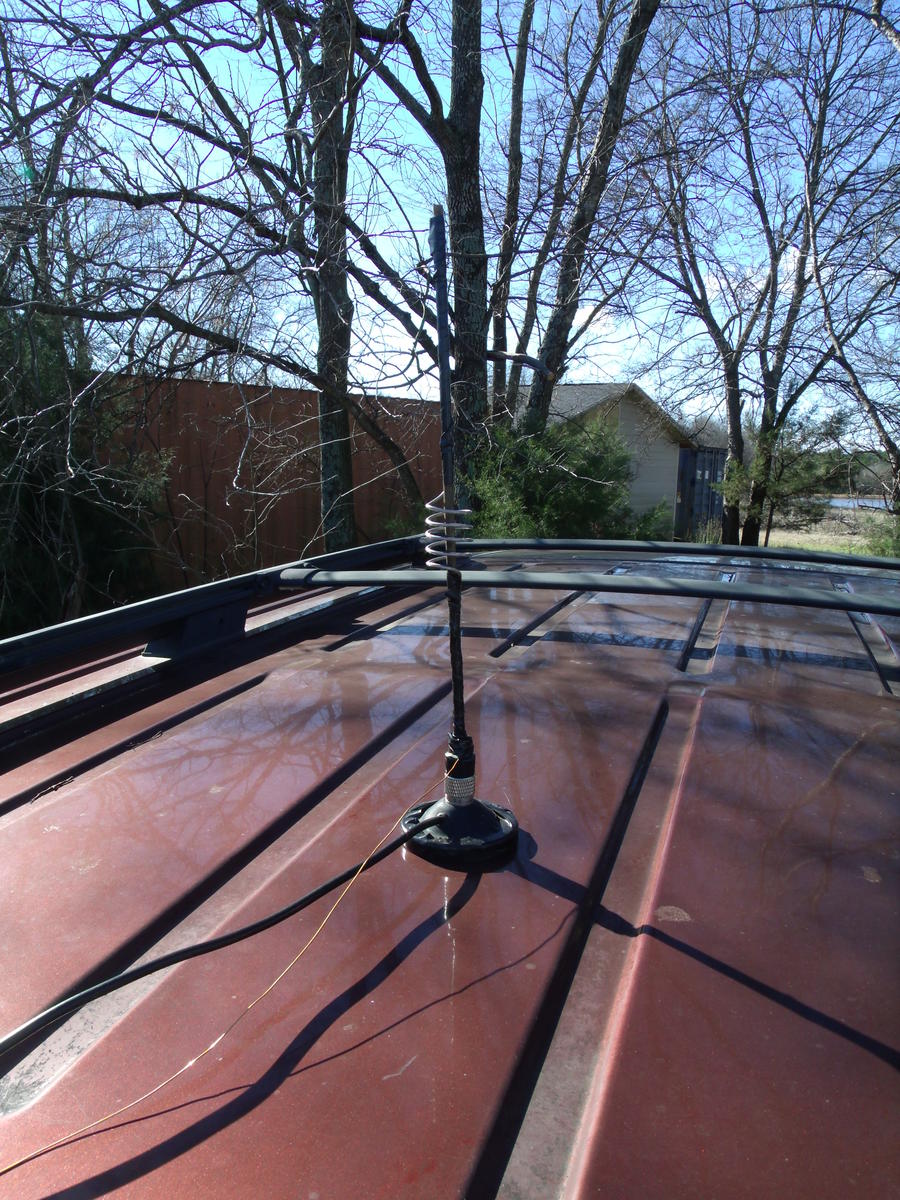
My mobile setup has improved over the years from the homemade vertical and an HT to something with a bit more punch. In January 2020, I setup my Kenwood TS-2000 in the mobile. It needed a separate battery to get enough power, but worked. My VHF/UHF antenna was been upgraded to a 1/4 wave mag mount, then a ½ wave mag mount.
I’ve tried running APRS in the mobile setup now and then, and its been fun. I haven’t gotten an APRS enabled radio yet, but I did try out a few different mobile radios. Nothing worked too well in my setup, so I hardly ever use one now. If I take a radio with me, its usually a cheap HT, and I usually don’t even stick an antenna on the roof.

Aside from the radios, I have some other test gear I like to use. The NanoVNA is one of my favorites for antenna and coax testing. I also have a few function generators that I use for testing AF circuits, and two scopes. One is a Tektronics 7904 mainframe (bought for about $25), the other is a 2465BCT (I got this for free). The former works, but sadly, the later is in need of some help. (That’s a long story for another page.) The VOM is my favorite tool now days.
Two things I would really love to have: a watt meter and a FieldFox microwave analyzer.
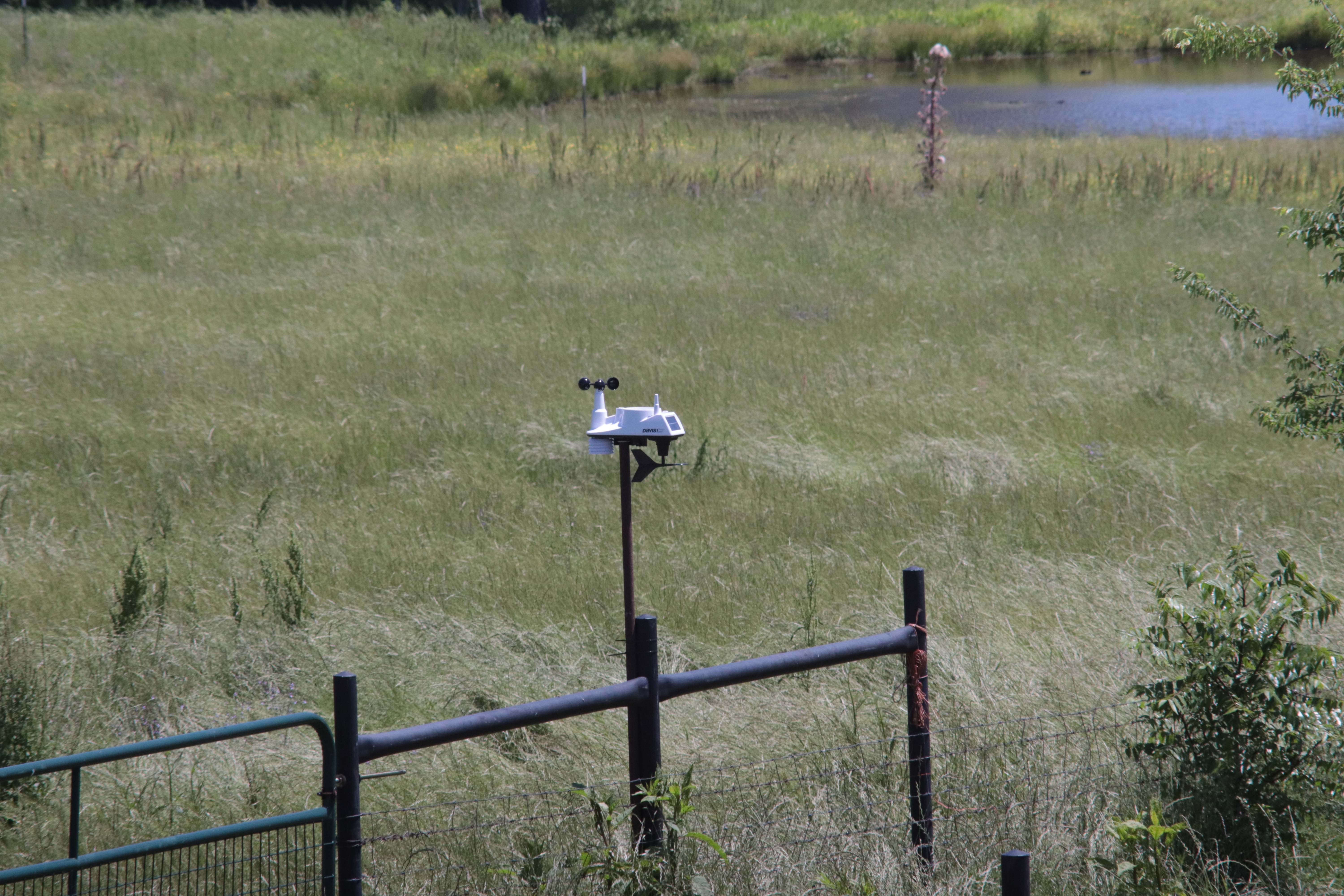
We also have a Davis Vantage Vue weather station here at the QTH and a TornadoAlert severe weather alarm. (I got both from Scientific Sales) I hope to add a WeatherLink Live Internet gateway for the Davis sensor suite, but that might take some time to get implemented.
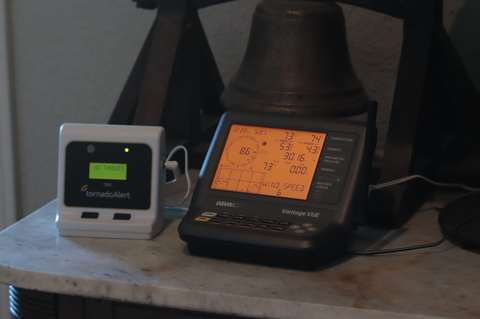
Both the TornadoAlert and the Davis console are pretty close to my operating position, so I should be able to use them as storm spotting aids. The sensor suite and the console seem well built, and I like the interface on the console. I think the system will last for a good while. I have not had the TornadoAlert go off yet, and I’m kind of hoping I don’t. (Just a comment: the screen backlight on the Davis console can be turned off, but it stays on constantly for the TornadoAlert. I guess it makes sure you can glance at it and see everything is fine.)
I consider my APRS setup to be part of my ham shack even though its really in the “ham closet.” This system can be seen here.
Updated April 2022.