Ham Radio & Homeschool
Hi There, I'm Chris (K3DCR)- a homeschooling dad. We use the curriculum from Kolbe Academy. My son Walker (KC3RAP) and I are also both licensed Amateur Radio Operators. I believe that Amateur Radio fits the homeschooling environment quite well. It is both a fun hobby and a valuable service and something the whole family can do together. I like to make contact with forigen countries, listen to shortwave radio brodcasts, and check into the local repeaters. KC3RAP likes sending and recieving Slow Scan Television pictures and playing with digital modes.
One of the fastest growing segments of amateur radio is youth, and many (if not most) of these kids are homeschooled. I hope this website can get you and your children excited about taking the first steps into this wonderful hobby!Anyone can listen to Amateur (or "ham") radio for free without a license from the FCC. If you want to transmit, however, you do need to pass a simple 35 question exam. The materials provided in both the American Radio Relay League and Gordon West license manuals are in themselves the exact kind of science education a homeschooling child and family can learn together. You can take free practice exams at Ham Study.org or from the ARRL. Once you feel ready- take the test! Many local clubs provide testing sessions or you can take it online via Ham Study. YouTube has plent of good informational videos as well. I reccomend the Ham Radio Crash Course Tech prep videos.
An FCC issued Amateur Radio license is that "extra little thing" to put on a resume or college application that will set your child apart from the pack. It is proof that he or she can independently follow a course of study and pass an exam. It could lead to a career in electronics, engineering, broadcasting, or just be a fun lifelong passtime. Best of all, it can be done on your time, at your family's pace.
A while ago, I did an interview with Kolbe Academy about how ham radio can complement a home education. We also discussed Saint Maximilian Kolbe, who is the only known canonized saint to also have a amateur radio license. Maximillian Kolbe used radio to spread the Gospels during the dark days before World War Two and later gave up his life in a concentration camp so that another man might live.
#1--Amateur Radio is the perfect compliment to a science education. Radio makes abstract concepts like wavelengths, currents, resistance or phase concrete. Solving practical problems like improving an antenna’s output or reducing audio noise involves an understanding of physics, electronics, and math. To get the best performance from a dipole antenna, for example, you need to understand the relationship between wavelength and the length of your antenna. Understanding how, when, and why radio waves propagate means the difference between contacting far-away places and “barely being heard”. Even younger students can learn basic concepts and develop them as they progress in the hobby.
#2--Amateur radio builds confidence Homeschool students can work at their own pace and feel a real sense of pride and accomplishment as they progress up the three levels of FCC License (Technician, General, and Amateur Extra). There is no lower age limit (and Morse code is no longer a requirement- but it is still worth learning!).
#3--Amateur radio is a great way to learn basic electronics. Many of the questions on the three levels of radio exams focus of electronic safety, electronic components, and theory. Building antennas or simple radio kits teaches how electronic parts work together and how to safely solder.

#4--Amateur radio is history. How did we go from noisy, inefficient spark-gap transmitters to tiny software-defined radios that fit on a USB thumb drive? How did innovations created by ham radio operators lead to modern technologies like the cell phone? What was the role of shortwave radio during the Cold War? Finding answers to these questions through radio is history brought to life.
#5--Amateur Radio is a fun way to learn geography and world cultures. Having a world map on the wall with pushpins for each contacted state or country brings distant places closer. Most Americans cannot distinguish between Slovenia and Slovakia, but your child can. If you are learning a forigen language, international shortwave radio can be great practice.

#6--Amateur radio teaches listening and speaking skills. Have you ever been to a fast food drive-through and strained to decipher the mumbling about your burger order? Radio teaches young people to speak clearly and to make sure they are understood. It teaches them to patiently listen, even through static or noise. Listening with intent is the antidote to our high distraction electronic devices.
#7--Amateur radio is both a fun hobby and a valuable service. When cell phones and the internet are down, or disaster strikes, amateur radio operators are there to help. If your student wants a career in the military or as a first responder, knowing how mission-critical radio communications work and how to troubleshoot can be a real advantage. Ham radio helped both in disaster recovery and in getting local residents help during Hurricane Helene, for example.
Here are some news articles about radio and Hurricane Helene.If the grid goes down, amateur (ham) radio works when all else fails
Forget cell phones -- amateur radio shines in the wake of Helene
#8--Amateur radio means innovation. Many forms of amateur radio communication involve digital signals and computers. There is still plenty of over the air chatter, but the hobby now includes plenty of computer-to-computer links via the airwaves. Did you know you can send email messages via ham radio? Youth have the advantage of being fluent in computers and technology and many newer radios can intregrate with your computer. Ham radio is a great way to learn Linux and work with mini computers, like the Raspberry Pi.
#9--Amateur radio is inter-generational. Young people are the lifeblood of the hobby and very welcome to participate. Special youth-oriented actives and clubs, like Youth On the Air (YOTA) , Scouts on the Air and the The Young Amateurs Communication Ham Team (YACHT) provide opportunities for kids to chat with kids. Most adults, I find, are delighted to see interested youth interested and will be happy to provide support.

#10--Amateur radio is no longer a purely indoor hobby. Many people enjoy Parks on the Air (POTA) and Summits on the Air (SOTA), combining radio with outdoor activities like hiking or climbing. Using portable radios and battery power, Parks on The Air participants transmit from our state and national parks and try to make as many contacts as possible. Additionally, many hams use handheld antennas to make satellite contacts around the world and with the International Space Station.
How to get Started
#1-- Get a shortwave radio. Having a good shortwave radio is a fun and easy way to get started. True, the Cold Wars days of Radio Moscow are gone, but there are still plenty of interesting stations to listen to, especially in the evening. I reccomend a shortwave reciver that can tune SSB (single side band) so you can listen in on the ham radio bands, like the Tecsun Pl-330 You can find some cheaper shortwave radios online,but be aware that lower cost radios may lack features or have less acces to the wider radio spectrum.
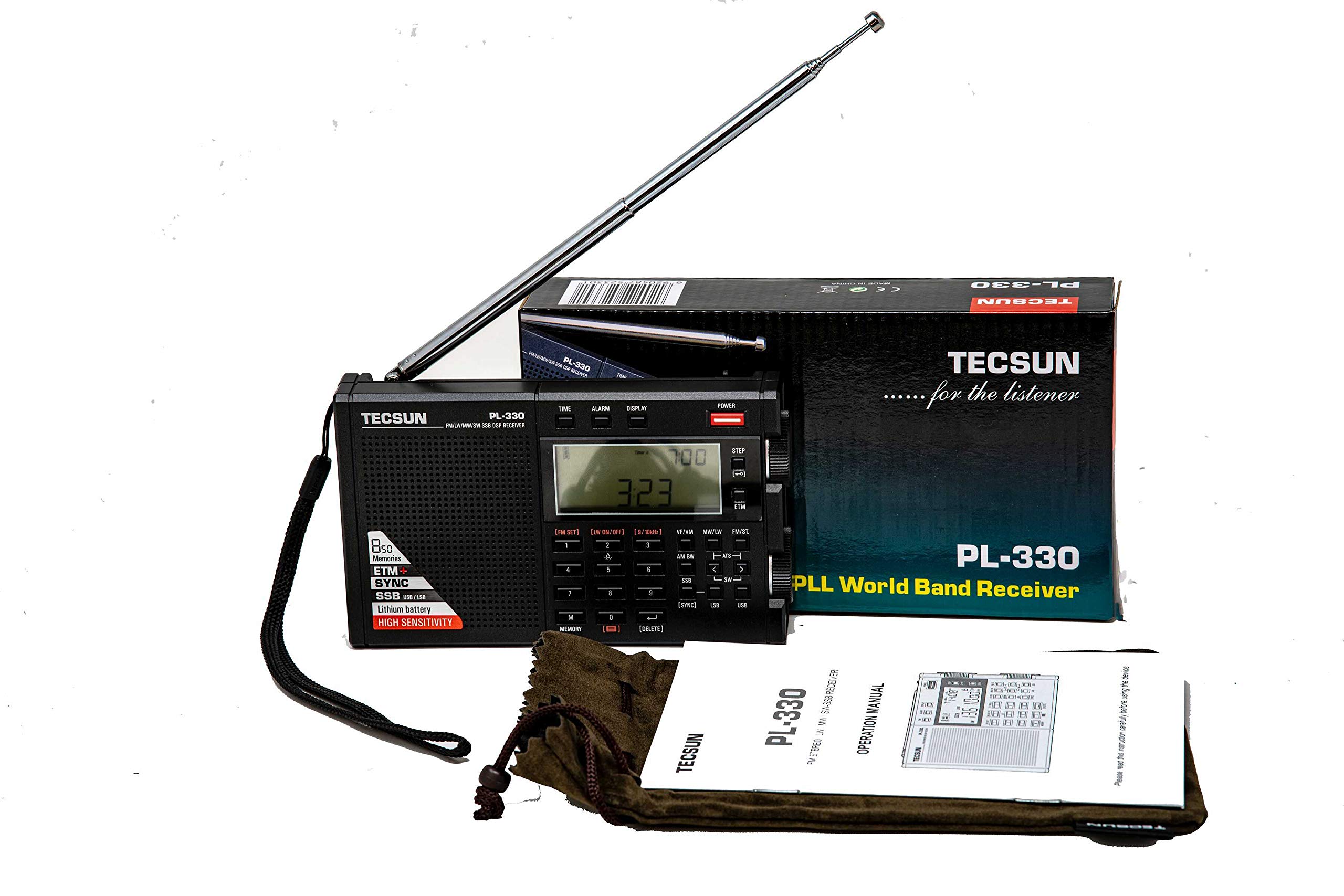
#2-- Listen to radio around the world online FOR FREE! If you are just curious and want to dip your toes into radio without spending any money, check out the many online streaming radio options. Want to listen to a radio based in Austraila or Poland or nearly anywhere else in the world? Go to Recieverbook and listen to one from your web browser. Here is another website with some online radio links.
#3-- Get a SDR dongle. Believe it or not, you can get a kind of cheap radio that fits on USB sized stick called a Software Defined Radio. If your young one is interested in radio, chances are he or she is already pretty handy with computers. A SDR allows you to listen to local FM stations as well as VFH flight stations, local repeaters, and more. The setup can be a bit tricky, but part of the fun of this hobby is figuring things out! The RTL SDR comes with a few fun accessories.
#4-- Visit the ARRL website. The American Radio Relay League is one of the best ways to learn more about what Amateur Radio is and what we do. You can also find a club or testing site near you.
#5-- Consider GMRS. Many people are overwhelmed by ham radio or just not interested in taking a test. There is a good alternative, the General Mobile Radio Service. GMRS radios are less powerful and can transmit on fewer frequencies than amateur radios, but they can be very handy. A GMRS license, issued by the FCC, covers roughly everyone in your household and lasts 10 years. Imagine your family or scout group hiking in the woods, with poor or nonexistent cell phone service. Half of the group is falling behind and keeps getting out of sight of the other half. With GMRS radios, you can still stay in contact even when roughly a mile apart. Or imagine you're on a canoe trip with two parties, and you want to keep your cell phones high and dry, away from the waterline. Even if you drop the radio in a lake or river, it is much better to be out $35 than to lose your cell phone and all the valuable personal data on it. As a bonus, if you have a GMRS license, you will have fewer hoops to jump through when you do decide to get that Technician Class license.