|
|
|
|
|
|
|
Shallow Versus Deep Copying |
|
|
|
|
|
|
|
|
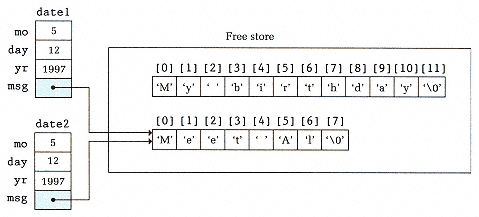
Next, let's look at the CopyFrom function of the Date class (Figure 17-10). This function is designed to copy one class object to another, including the dynamic message array. With the built-in assignment operator(=), assignment of one class object to another copies only the class members; it does not copy any data pointed to by the class members. For example, given the date1 and date2 objects of Figure 17-9, the effect of the assignment statement |
|
|
|
|
|
|
|
|
is shown in Figure 17-11. The result is called a shallow copy operation. The pointer is copied, but the pointed-to data are not. |
|
|
|
|
|
|
|
|
Shallow copying is perfectly fine if none of the class members are pointers. But if one or more members are pointers, then shallow copying may be erroneous. In Figure 17-11, the dynamic array originally pointed to by the datel object has been left inaccessible. |
|
|
|
|
|
|
|
|
What we want is a deep copy operationone that duplicates not only the class members but also the pointed-to data. The CopyFrom function of the Date class performs a deep copy. Here is the function implementation: |
|
|
|
|
|
|
|
|
void Date::CopyFrom( /* in */ Date otherDate )
// Postcondition:
// mo == otherDate.mo
// && day == otherDate.day
// && yr == otherDate.yr
// && msg points to a duplicate of otherDate's message string
// on the free store |
|
|
|
|
|
|
|
|
Figure 17-11
A Shallow Copy Caused by the Assignment date1 = date2 |
|
|
|
|
|