4S6DRJ

Trio JR-310 & TX-310
Restoration Project

Trio Corporation (now Kenwood) Vacuum tube / transistor hybrid Manufactured c.1960s

I recently acquired a Trio (now Kenwood) JR-310 and TX-310 SSB receiver and transmitter pair. Both units arrived in very poor condition - chassis and PCBs were covered in dust, and several components were badly damaged. After examining both, I decided to restore them for their vintage value and the experience of operating a tube-based SSB transceiver pair.

I started with the JR-310 receiver, then moved to the TX-310 transmitter. Restoration steps are documented below.

⚠ High Voltage Warning: This project involves high-voltage power sources. It is intended for readers experienced with dangerously high voltages. If you are not proficient in high-voltage work, do not attempt this restoration without expert supervision. The author accepts no responsibility for death, injury, or property damage resulting from these procedures.

JR-310 Receiver Restoration

01
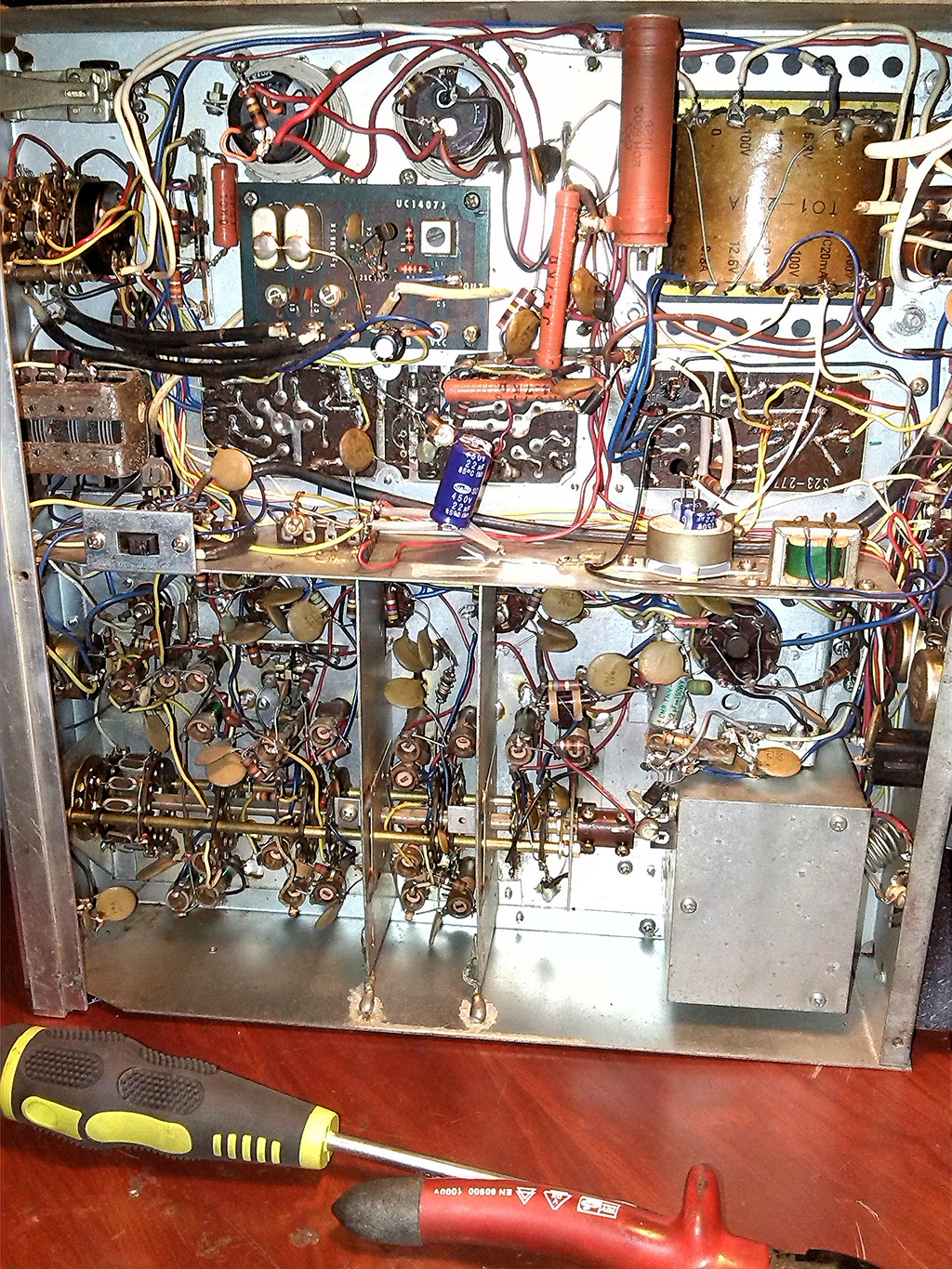
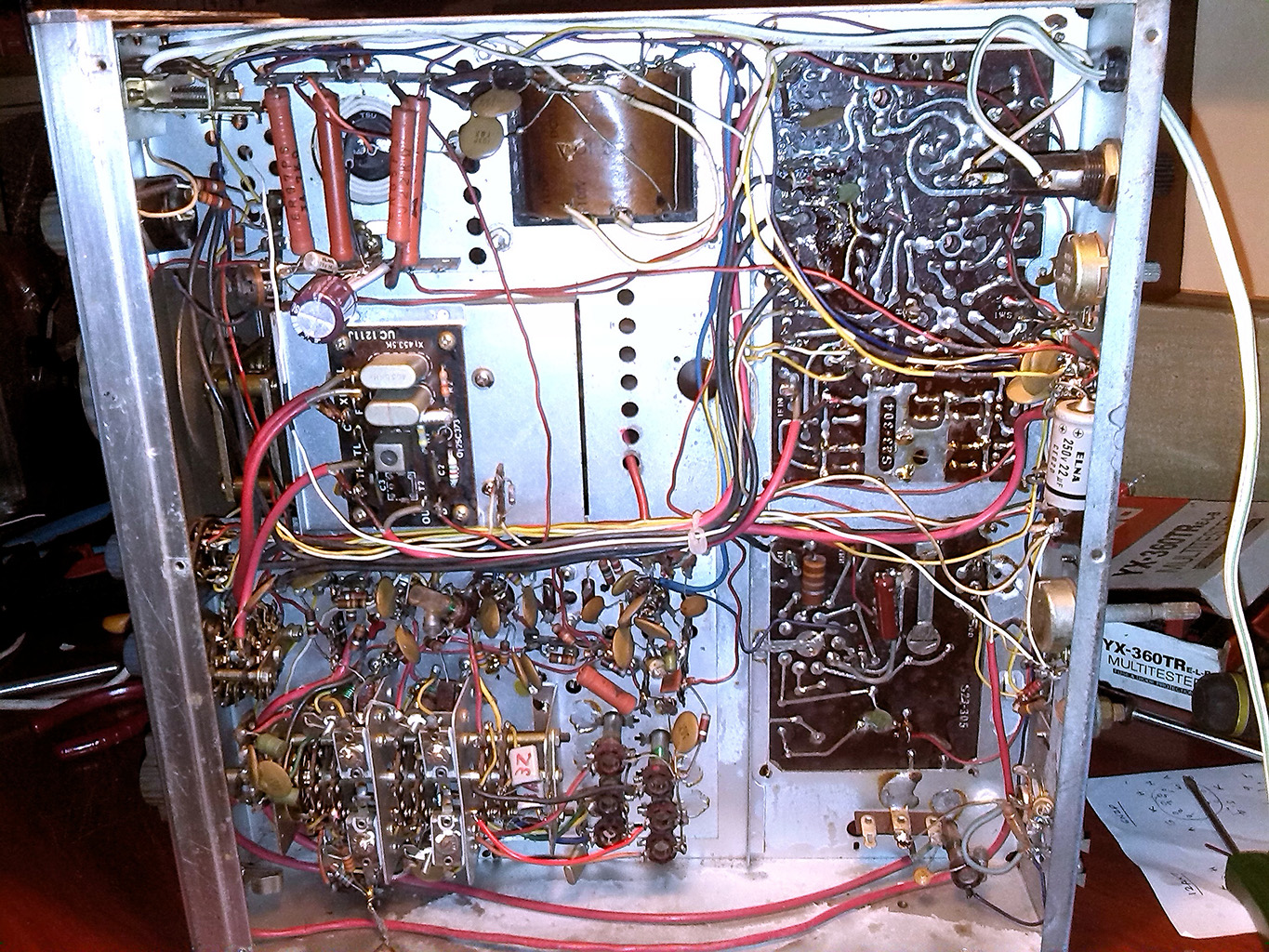
Visual inspection revealed most electrolytic capacitors and wires were damaged. Replaced all electrolytic capacitors with new ones and rewired most sections with new 20 SWG cable.
02
The previous owner had already installed an MF-455-10AZ mechanical filter - left it in place as fitted.
Bottom view of restored JR-310 receiver
03
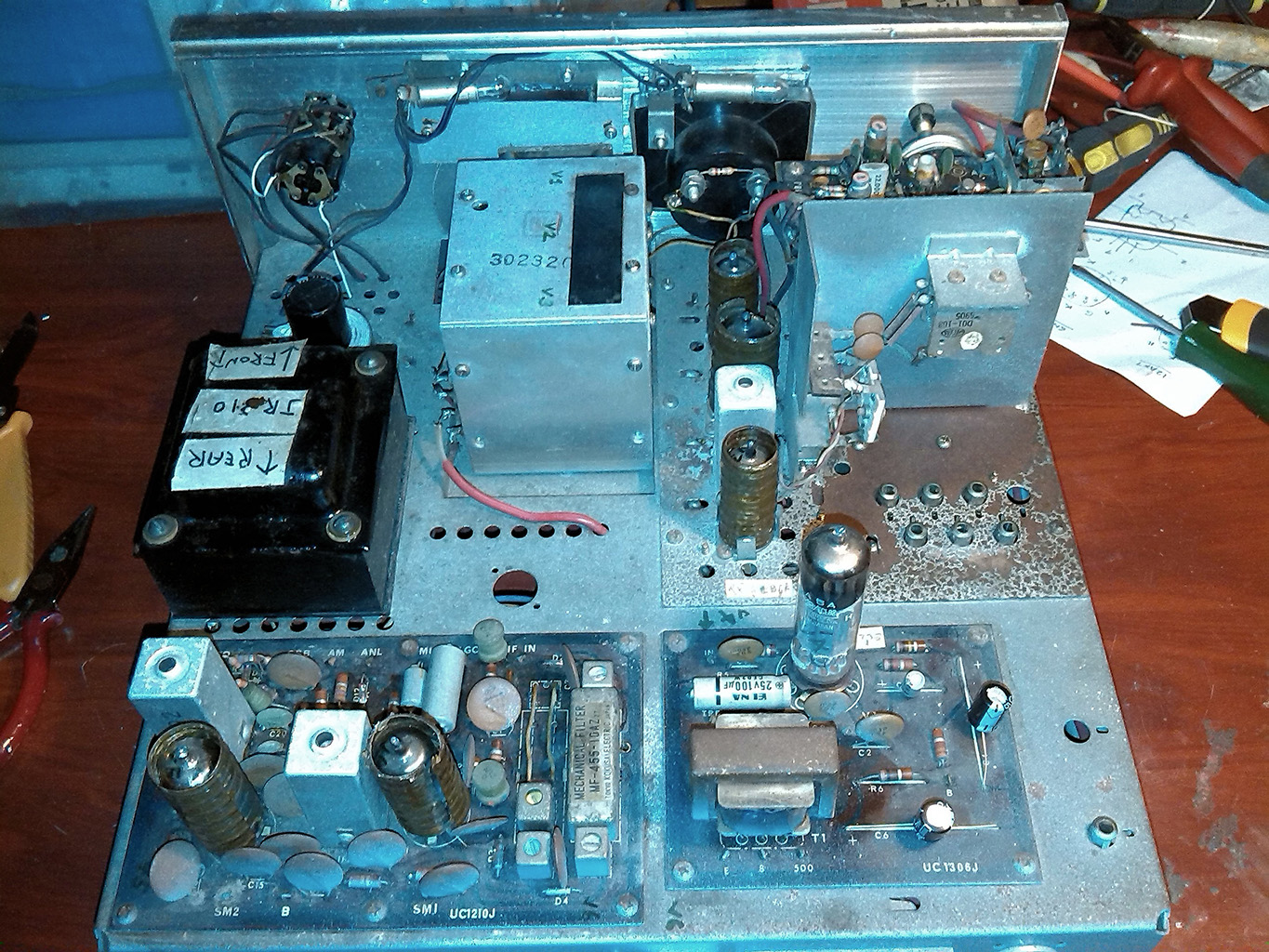
V3 (6CB6) IF stage pentode was missing - replaced with a new RCA 6CB6.
04
UC1306J AF amplifier module was badly damaged. Replaced most components in the module. Output transformer was in usable condition - cleaned and reinstalled.
Top view of restored JR-310 receiver
05
During initial testing there was no audio output. The fault was traced to the V2 6BA6 tube. Replacing it restored normal operation.
06
S-meter showed no deflection. Traced to incorrect wiring of VR4 (500Ω S-ADJ potentiometer). After rewiring, also cleaned VR4 with isopropyl alcohol to resolve intermittent readings.
-
After the above steps the receiver returned to full operation, supporting AM, SSB, and CW modes. Operating bands: 3.5, 7, 14, 21, 25, and 50 MHz. Sensitivity approximately 1 µV.

TX-310 Transmitter Restoration

07
The TX-310 was in worse condition than the receiver. Replaced most electrolytic capacitors. Found two NE-2 neon lamp terminals corroded and disconnected - replaced both. Large quantities of wire, resistors, and disc capacitors were also replaced.
Bottom view of restored TX-310 transmitter
08
UC1004J board was completely stripped - removed from the chassis, cleaned, and rebuilt with all new components.
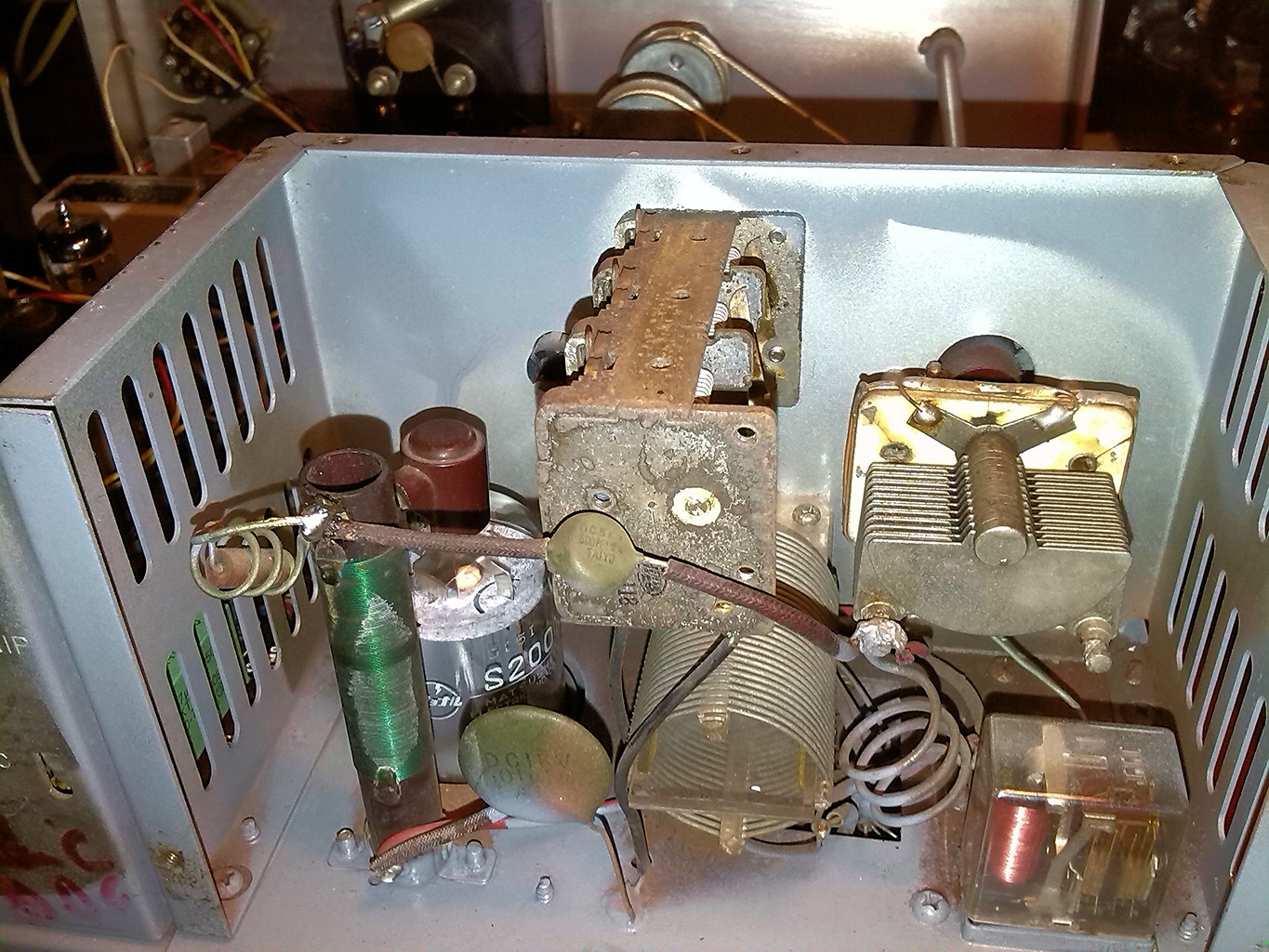
S2001 final stage tube and HV area of TX-310
S2001 final stage vacuum tube and high-voltage area of TX-310
09
Checked S-2001 final stage connections and plate choke wiring. The HV area was undamaged, protected by the original grill cover.
10
During initial test runs, smoke appeared from the rear - R7 (4.7 kΩ) was found burned due to a short-circuit between anode and grid of the V1 6AQ8 tube. Replaced R7 with a 4.7 kΩ 2W resistor and V1 with a compatible ECC85.
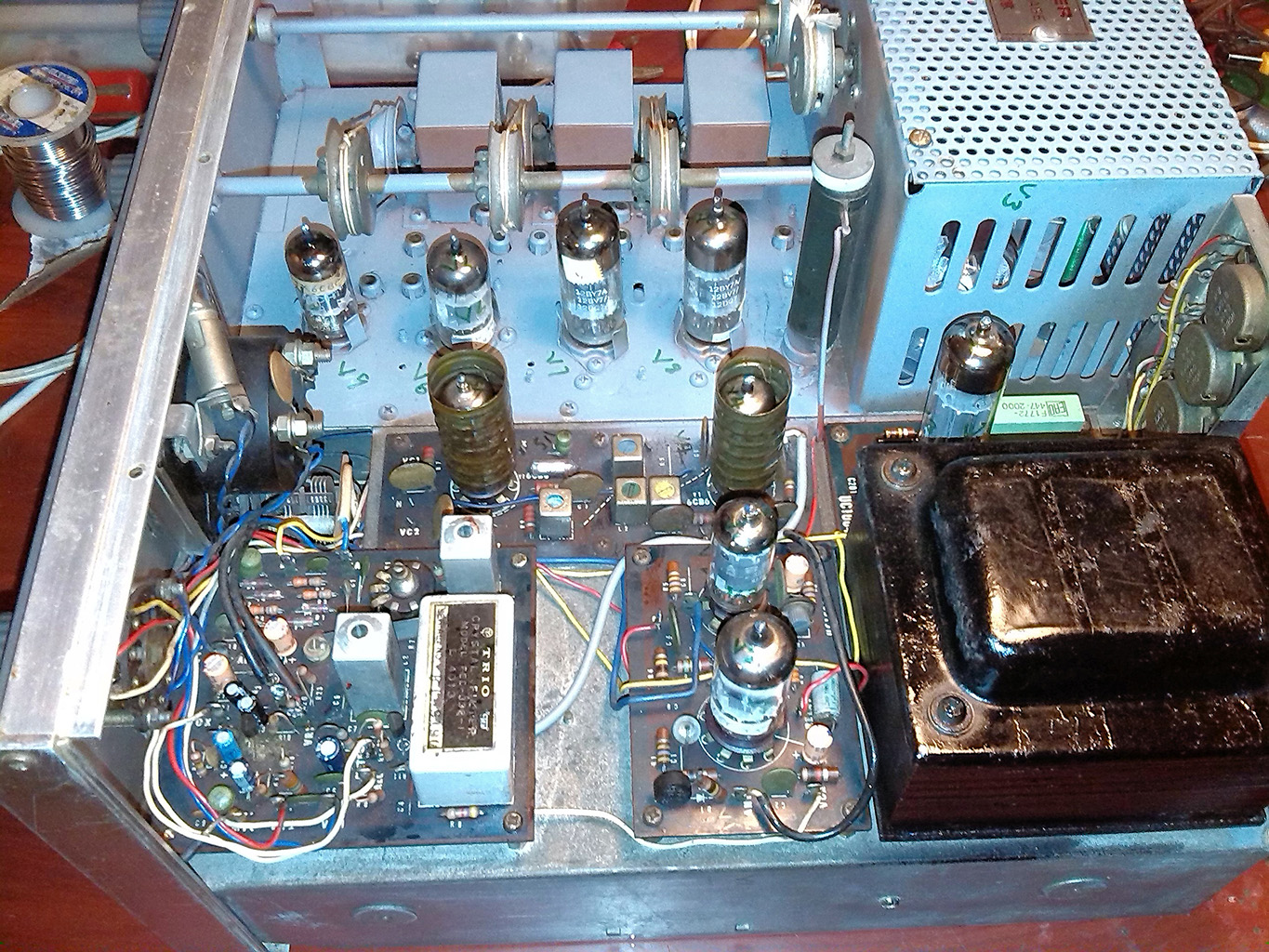
Top view of restored TX-310 transmitter
11
No RF meter indication after the previous fixes. Fault found in the final 12BY7A tubes - replaced both. Unit then operated correctly on both CW and SSB.

Combined Transceiver Operation

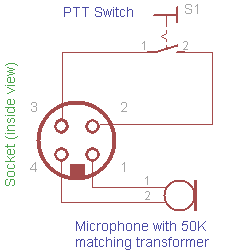
To test the transmitter, VFO drive must be supplied from the JR-310. The connectivity and microphone wiring diagrams are shown below.
TX-310 and JR-310 connectivity diagram
TX-310 / JR-310 connectivity for combined transceiver operation
TX-310 microphone connector wiring
Wiring diagram for TX-310 microphone connector
Output Power
20W
Modes
CW, SSB, AM
Bands
3.5 · 7 · 14 · 21 · 25 · 50 MHz
Crystal Operation
FT-243 type (for standalone use without JR-310 VFO)

Schematics for the TX-310 and JR-310 are available at radiomanual.info.