Translate this page:
Kassel, Rothwesten, and Waldau Germany

Snack Bar

The Great Old Army Bunks

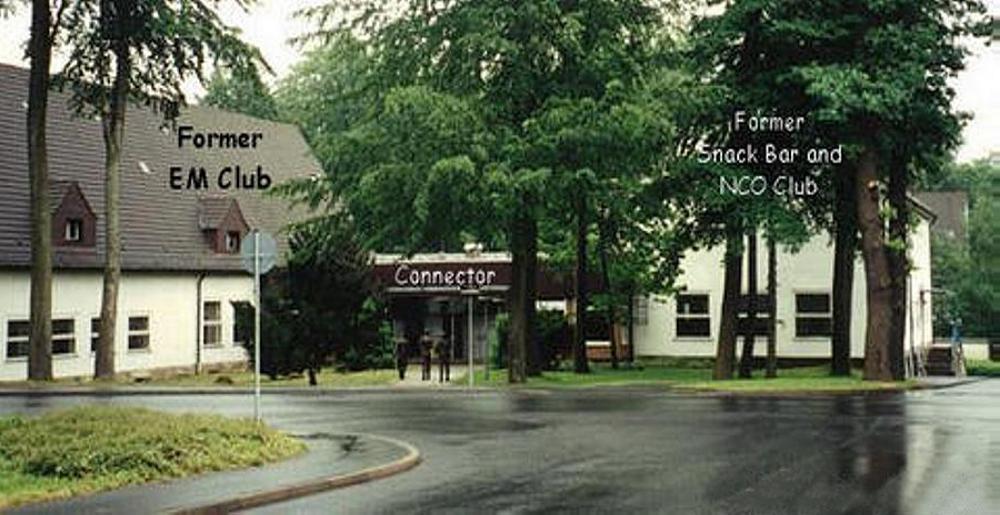

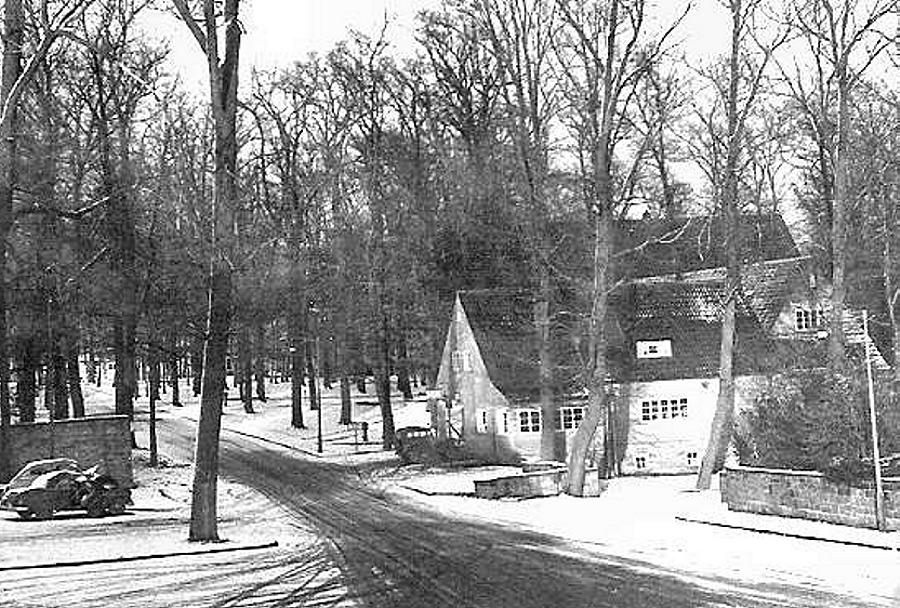
The above 2 pictures show the area just inside the Gate
The 77th was located directly behind this building


The BOQ

Behind Rothwesten, looking down on the Fulda

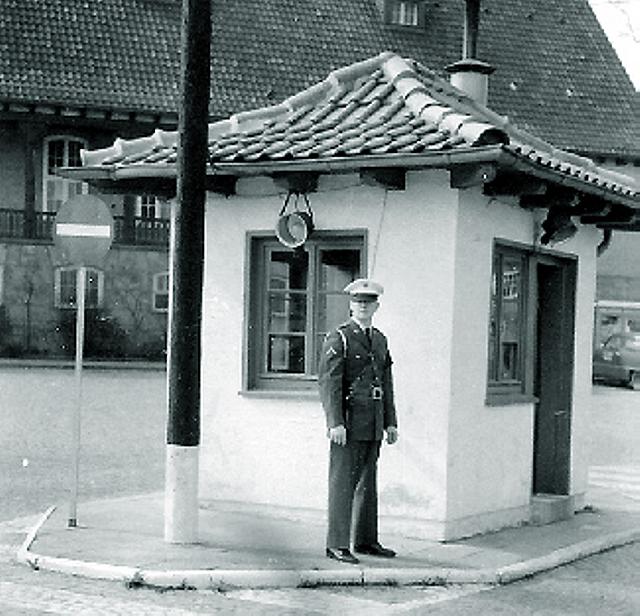
Rothwesten Gate
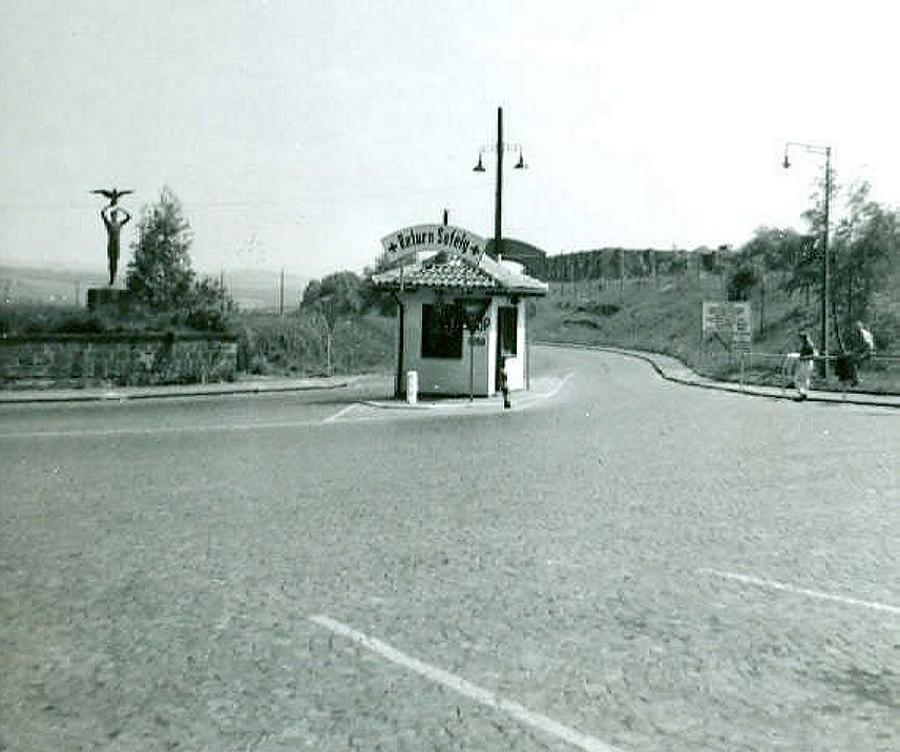
Going out Rothwesten Gate


----------------- Below Pictures from William Hanson ----------------
http://www.601st-615th-acw.org/rothwesten.htm

Back of 598th Barracks, seen from road near the Gate


Rothwesten Housing Area

The Theater just inside the Gate
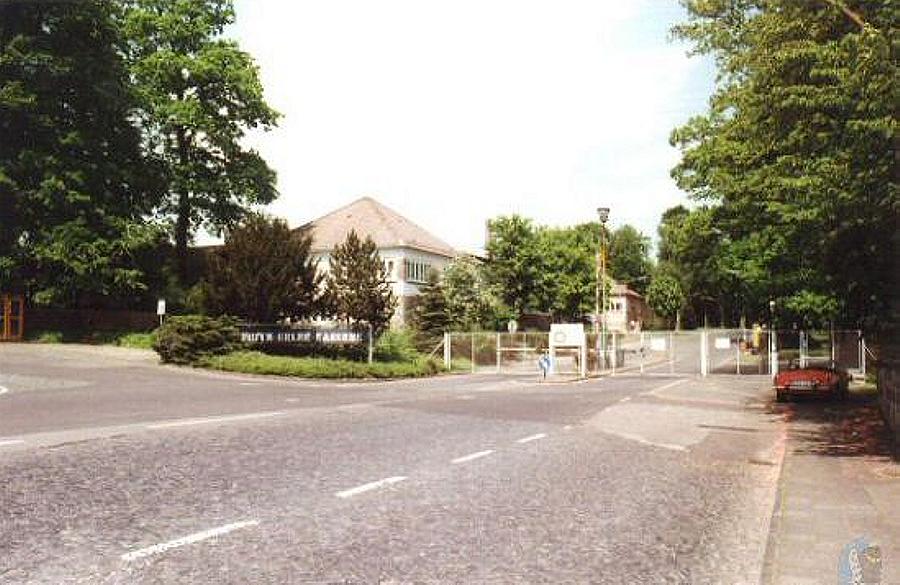
The Gate was recently moved just
past where the MP/SP building was
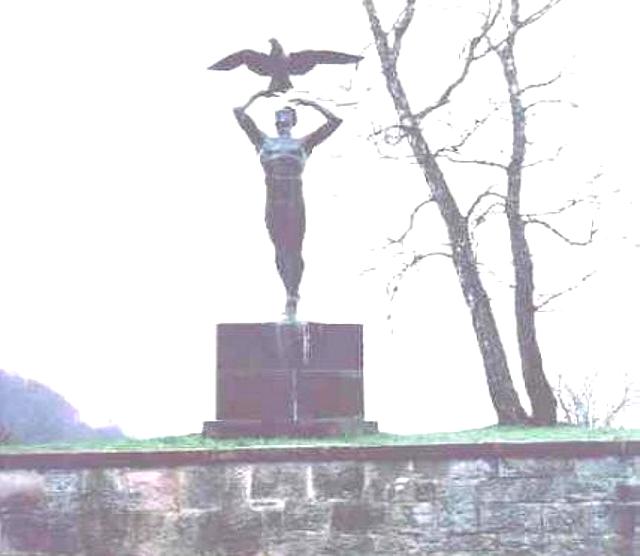
---------- Above Pictures from William Hanson -----------
Below Pictures provided by Ralph Myers

Front Gate 2009

Former Officers Club
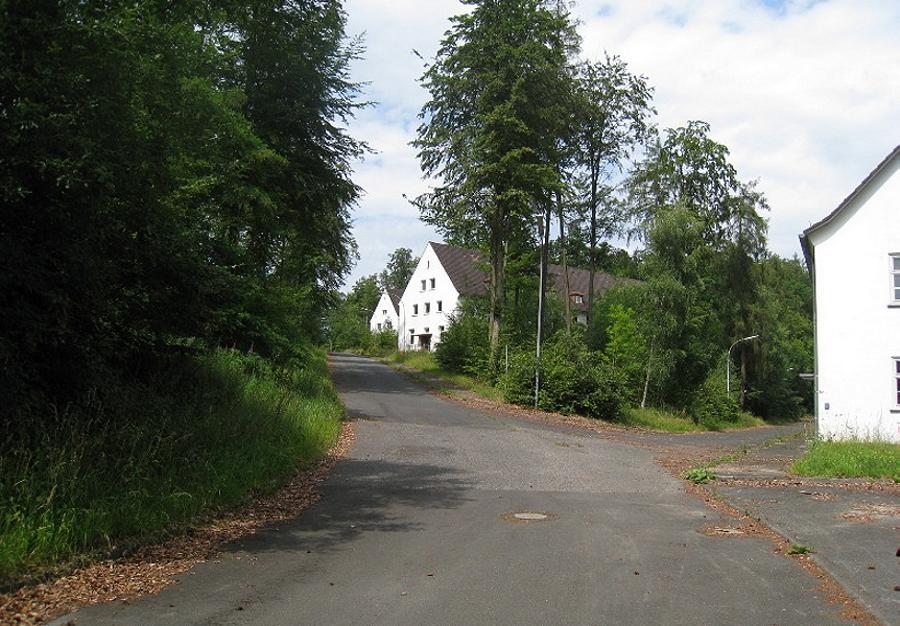
184th ASA Buildings

Kassel Sub Post Building
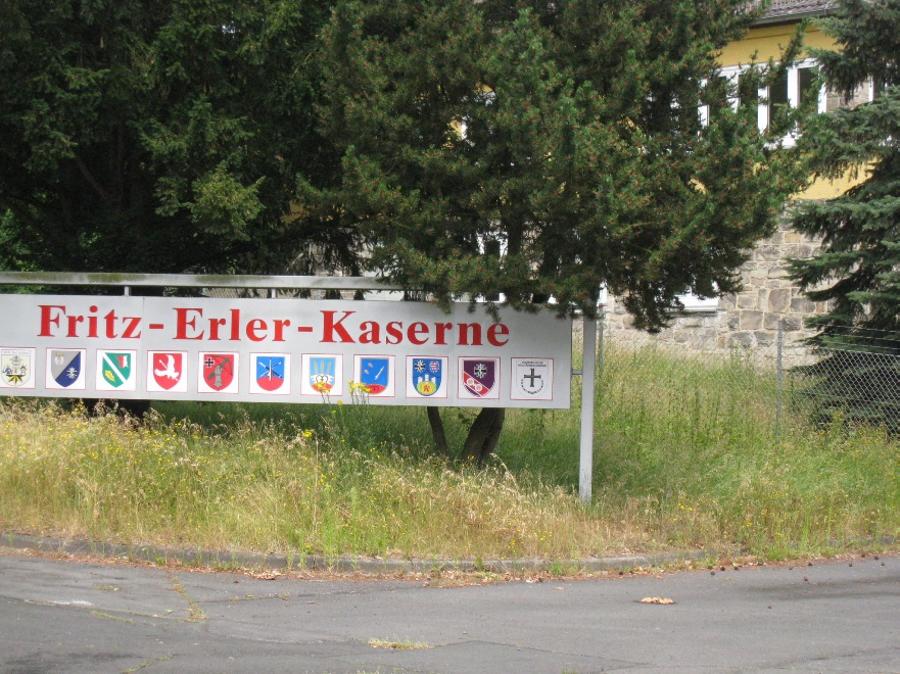
Front Gate Sign

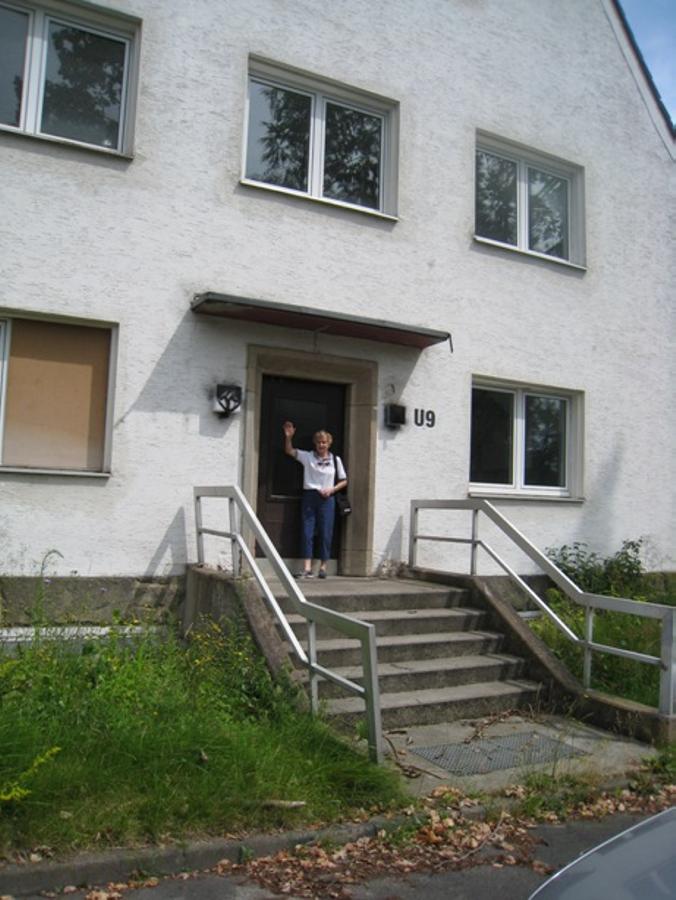
Former BOQ
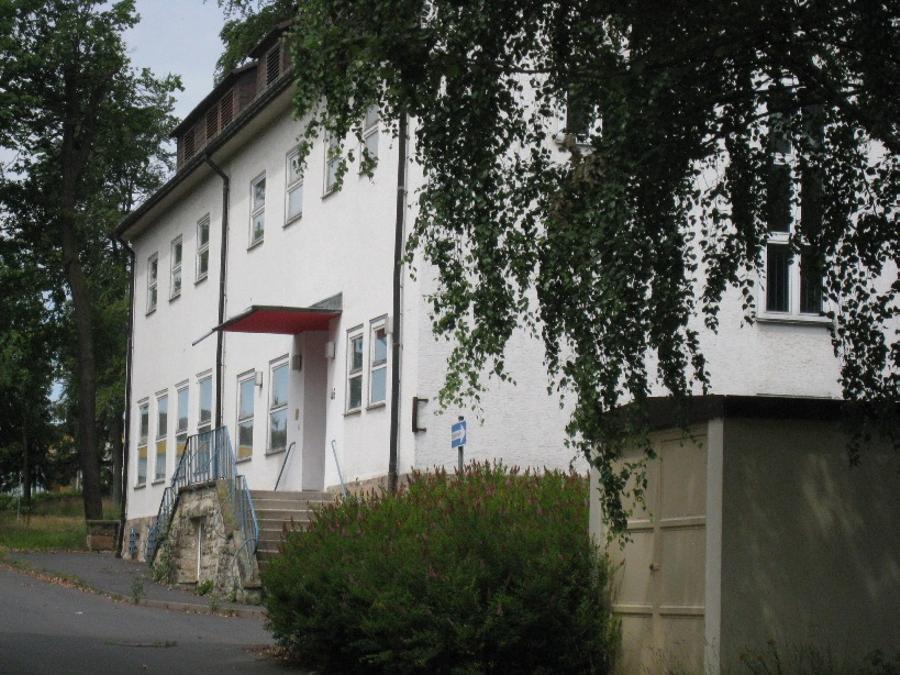
Service Club
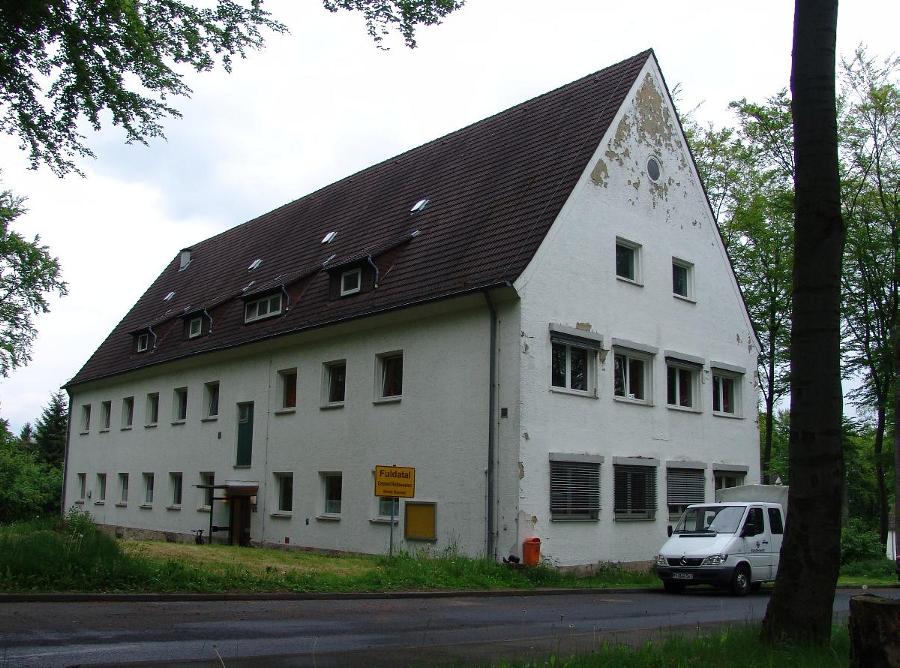
Old Snack Bar


Below is taken in front of the MP Building, just inside the gate
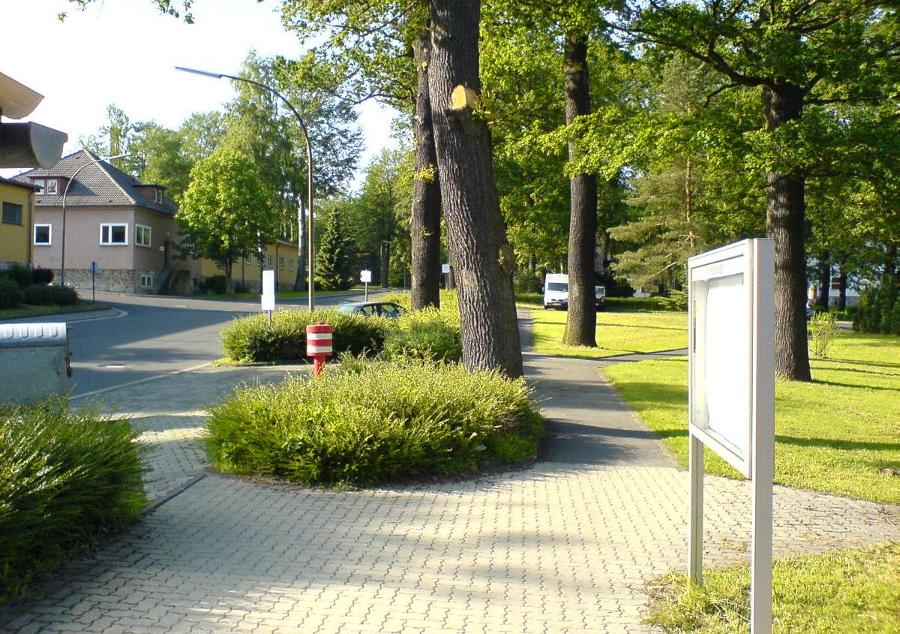
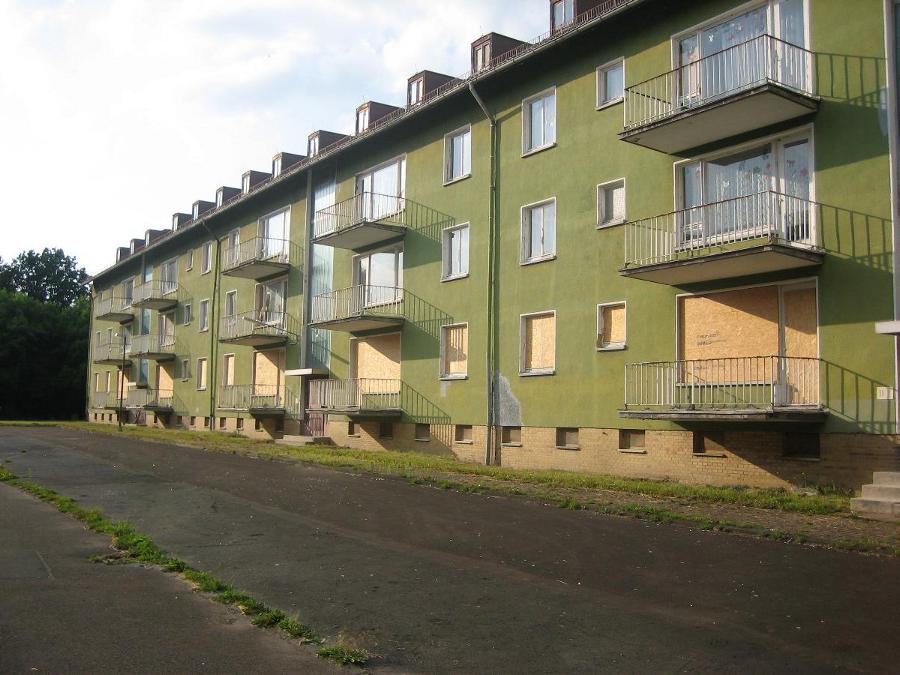
The next 2 are the Rothwesten Housing Area


US Army in the City of Kassel

The 115th Gen Hospital in Kassel
Latter became the 386th Station Hospital
This had been General Karl Rudolf Gerd von Rundstedt's
[German Army] headquarters during the War

Same Building 2009
Located on Wilhelmshoher Allee, at Dag Hammar Skjold Strabe
This is a Germam Federal Court Building now.

The above building viewed from Dag Hammar Skjold Strabe.

This was the Kassel MP Station in the 50s and 60s.
It is located on Wilhelmsh�her Allee, near Rathenauplatz.
It has been refurbished with another floor added,
and is now the Kassel Finanz Amt.
After the War, it was the Hesse District HQ of the US Constabulary, and called
(High Commission for Occupied Germany) Hicog building in the early years.

This is the same building in 1930, when it was being built.
Note it had 1 less floor then.
The city of Kassel in Germany was severely bombed during World War II. Kassel is in the northern part of the federal state of Hesse, between Frankfurt (190 km south), and Hanover (160 km north).
In the early 1940s it was the capital of the Prussian province of Kurhessen , seat of a Regional Supreme Court (Oberlandesgericht), and headquarters of the authorities responsible for highway and railway construction for Central Germany
Kassel was home to the Henschel locomotive, engine and vehicle plants, the Fieseler aircraft plant, and several other important industries. The Henschel railway works were considered the biggest in continental Europe. The city was the important transportation and communications centre for Central Germany, with north/south traffic (Hanover-Frankfurt), and east/west traffic, ( Ruhr- Thuringia, Saxony), intersecting there.
Kassel was considered a strategic target for Arthur Harris� Bomber Command. Both the RAFThe Royal Air Force (often abbreviated to RAF is the air force of the United Kingdom. History Formation and Early History The Royal Flying Corps was formed by Royal Warrant on May 13, 1912 superseding the Air Battalion of the Royal Engineers. The Royal Na and the USAAF had flown several light raids on the city�s industrial areas during 1942Events January January 1 World War II: The word " United Nations" is first officially used to describe the Allied pact. January 2 World War II: Manila is captured by Japanese forces. January 5 Amy Johnson disappears in flight over River Thames estuary ass and early 19431943 is the common year starting on Friday. Events January January 4 End of term for Culbert Olson, 29th Governor of California. He is succeeded by Earl Warren. January 11 The United States and United Kingdom give up territorial rights in China. January 1. Kassel became the target for a major airstrike on the night of October 2October 2nd is the 275th day (276th in leap years) of the year in the Gregorian Calendar, with 90 days remaining. Events 1187 Saladin captures Jerusalem after 88 years of Crusader rule. 1535 Jacques Cartier discovers Montreal, Quebec. 1780 American Revolu, 1943. Fortunately for the city the pathfindersFor other meanings see Pathfinder. The Pathfinder squadrons of the Royal Air Force were elite squadrons of RAF Bomber Command during World War II. During World War II the RAF Bomber Command practiced mainly night bombing. This reduced losses, but made hit responsible for marking the target were not able to find the center of the city, so most of the bombing fell into the eastern suburbs of Ihringshausen and BettenhausenThere are commune names that have the name Bettenhausen in Germany Bettenhausen, Thuringia, in the Schmalkalden-Meiningen district, Hesse Bettenhausen, Hesse, in the Lich district, Hesse Bettenhausen, Baden-Wurttemberg, in the Rottweil district, Baden-Wur, causing considerable damage. An ammunition store was also hit but, in general, the attack by the 444 bomber force was a failure.
Bomber Command returned on October 22October 22 is the 295th day of the year (296th in leap years) in the Gregorian Calendar, with 70 days remaining. Events 362 The temple of Apollo at Daphne, outside of Antioch is destroyed in a mysterious fire. 1383 The 1383-1385 Crisis in Portugal: A peri with a force of 569 bombers, with zero hour being set at 8.45 pm. The main-force attack was covered by a feint attack on Frankfurt am Main which began five minutes before the main raid. German air defence concluded that Frankfurt would be the target so all the defensive night fighters diverted there just as the main raid on Kassel began.
The pathfinders clearly marked the target ( Martinsplatz in central Kassel) so well that within five minutes the whole ancient town was illuminated. Within the next 80 minutes the waves of bombers dropped at least 1,800 tons of high explosives and incendiaries. The high explosive bombs demolished or extensively damaged buildings, but the incendiaries did the worst damage. Ton for ton, they had been found to be four to five times as destructive as high explosive 1.
The heart of Kassel consisted almost completely of wooden houses. The bombing was so intense that incendiary bombs fell with a density of up to two per square meter. Each building in the city center was hit by at least two liquid incendiary bombs and several of the 460,000 fire-sticks rained on the city.
After 15 minutes of attack the whole inner city was ablaze in a firestorm like the one at Hamburg, creating temperatures of 1500�C and above. It was consuming nearly all oxygen and sucking fresh air into the fire. People desperately trying to escape the fire zone were caught by the 100 mph wind, stripped of their clothes, and sucked back into the fire. Most residents who fled into the cellars died from asphyxiation.
Only a few minutes after the attack begun, the main telephone exchange was hit and disabled, so fire brigades could not be directed to the places where they were needed. The firestorm was well underway before police could provide communications for the fire brigades, but even then destruction of the city�s water pipes made it impossible to extinguish the inferno.
Kassel, which had a pre-raid population of 236,000 (1939), burned for seven days. It is believed that at least 10,000 people died and 150,000 inhabitants were bombed-out that night, and the city center was 95 per cent destroyed. It took weeks to collect all the corpses from the streets and out of the ruined cellars.
Many more raids were flown on Kassel before the end of the war, but no one was anywhere near as devastating as the raid of October 22, 1943. When the Americans captured the city in March 1945, only 50,000 people were still residing there.
After the War, Kassel was one of the last major cities in West Germany to be rebuilt. It has never regained either its pre-war population or its importance. Due to the inner-German border, which only ran 30 km east of the city, most of its former hinterland then lay behind the Iron Curtain. Many of the city�s industries moved away, the former Regional Supreme Court moved to Frankfurt, as did the railway authorities.
To stop the decline, the Federal Government decided in 1955 to make Kassel the seat of two federal courts, the Federal Labor Court (Bundesarbeitsgericht), and the Federal Social Court (Bundessozialgericht).
After reunification, Kassel became the "boomtown" of central Germany for a few years, with population rising to 207,500. But in recent years Kassel has again fallen back, since the nearby Erfurt in Thuringia is much more attractive to investors.
History of Rothwesten Kaserne
Rothwesten Air Base was built in 1934 by the German Government, and called Fliegerhorst Rothwesten. During its existence as a German Luftwaffe base, it was occupied successively by a Photo Reconnaissance Squadron and a Fighter Squadron, a Pilot Training Center, Gerhard Fieseler built V1 (Buzz Bomb) Rockets, and a couple types of planes there, and lastly was used by the Germans as a Russian Prisoner of War camp.
During the war, Rothwesten was of less strategic importance. The new planes could not use it. The runway was too short, and it was not concrete. Nevertheless, parts of the maintenance crew stayed behind to serve the flying school which still had its facilities there. The most important task for the base was as a service center for night fighters. Aircraft that had to refuel during battle could land there, and minor repairs could be made. It was not a real night fighter base, and played a minor role during the war.
From 1944 until April 1945, the remaining larger buildings of Rothwesten were used by Fieseler aircraft industries as a small production line for planes, and V1 flying bomb (Buzz Bomb). According to eyewitness reports, most were Me-109 fighters of the later types (probably G versions and perhaps a few Ks). Another unconfirmed source says that during the winter of 1943/1944, there was a very small production line for the Ju-87D.
In April of 1945, most of the existing operations buildings were destroyed or badly damaged by the retreating German Army.

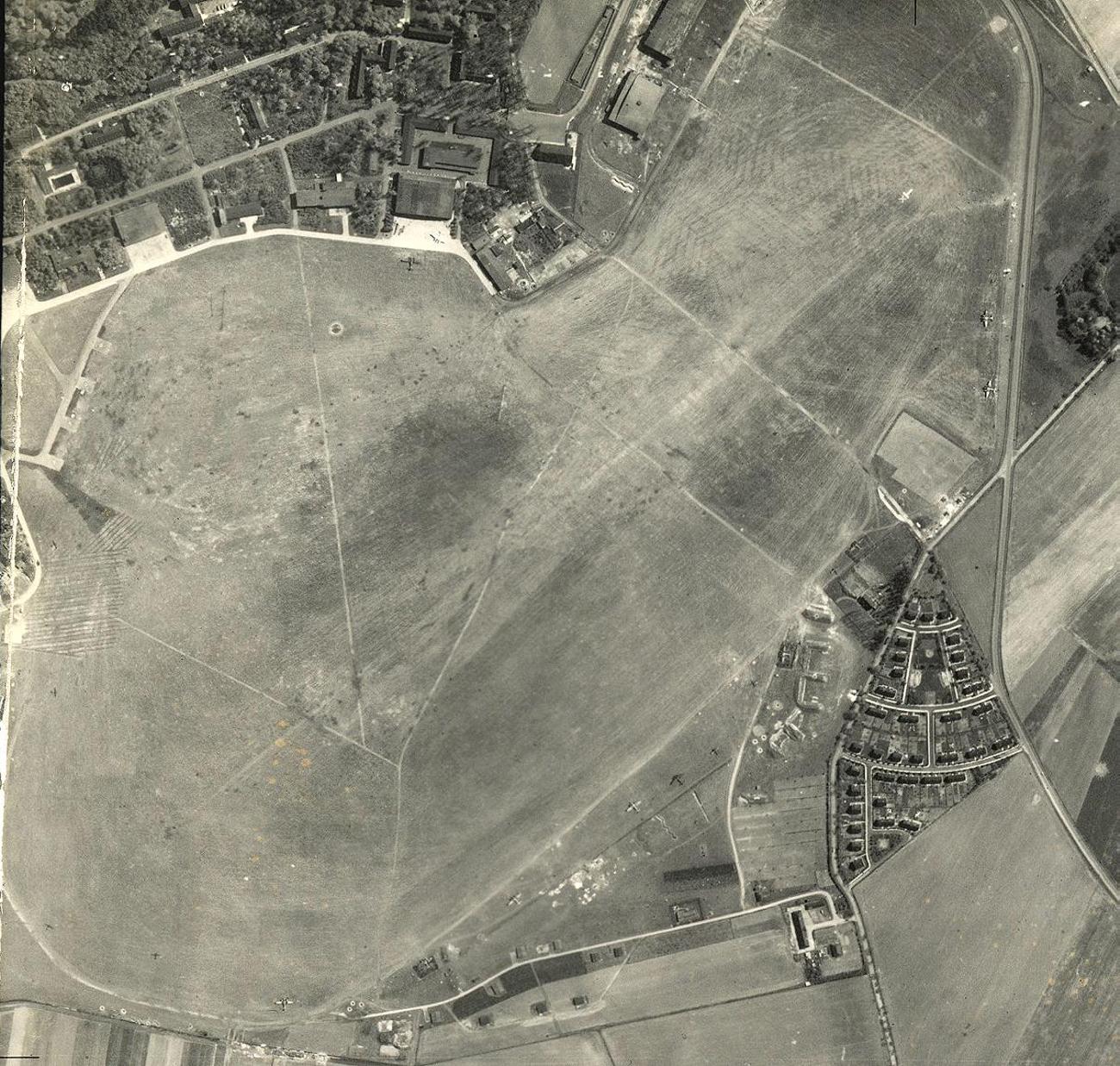
Recon Picture of Rothwesten taken Dec 24, 1944
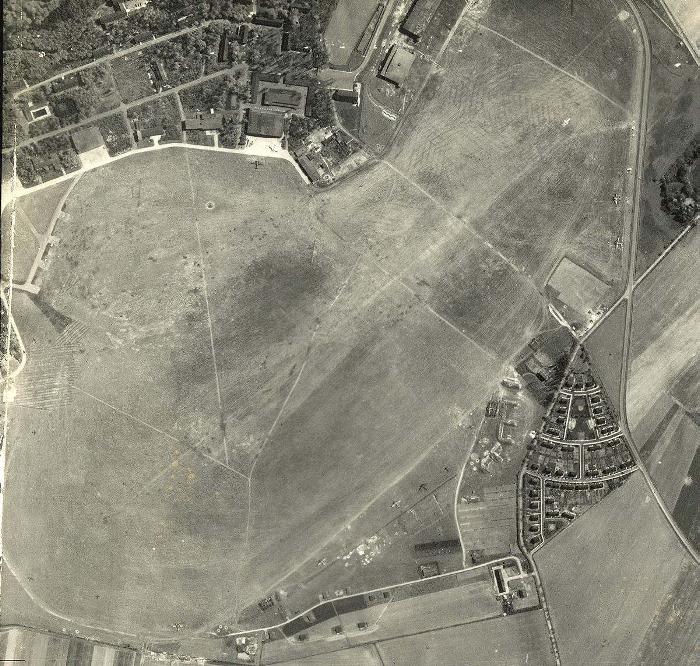
May 9 1944 Photo Recon Picture. Click for a Large view
Pilot was Lt John S Blyth, flying a Spitfire MK XI at about 30,000ft.

Click for a large view
Below Pictures sent by Werner.Kossin
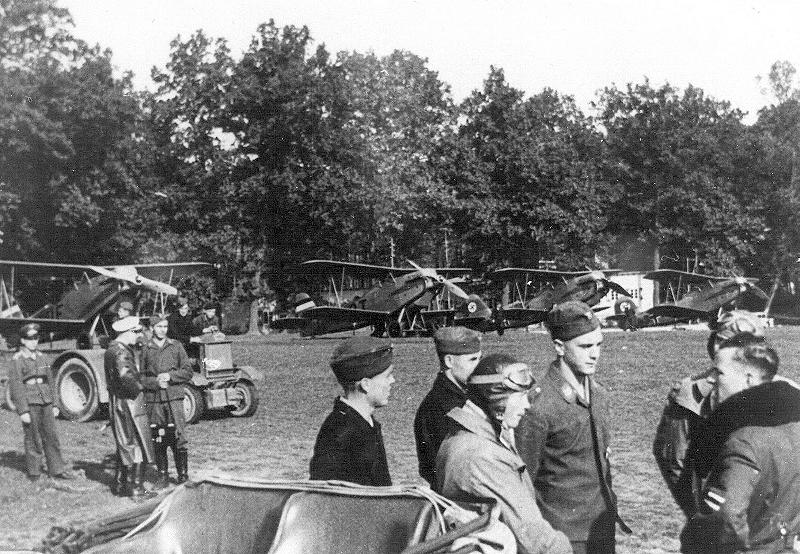
Pictures taken on Rothwesten between 1934-1939

Inside Rothwesten Hanger in 1934


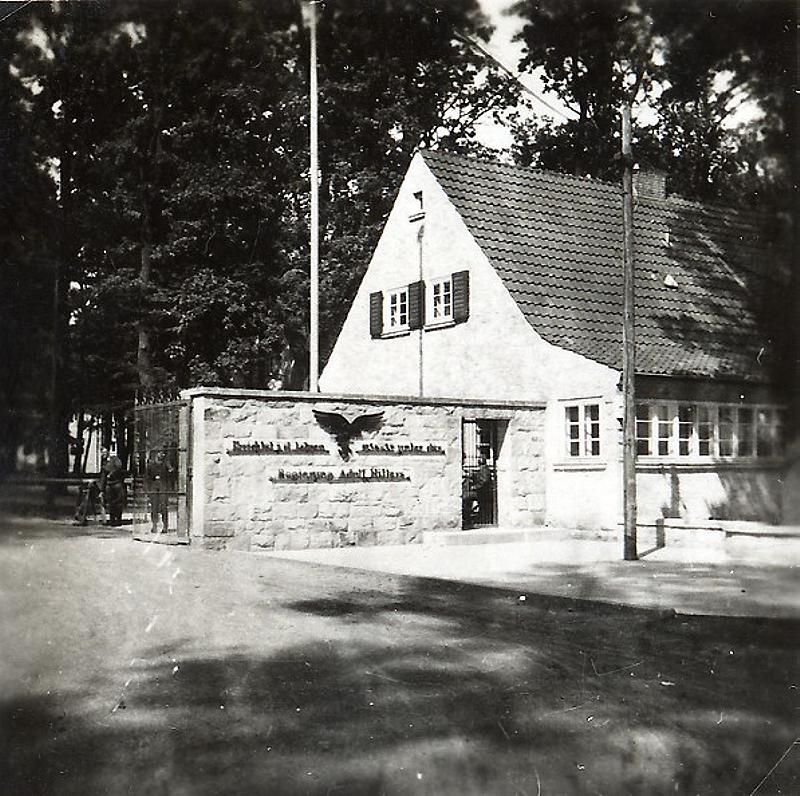


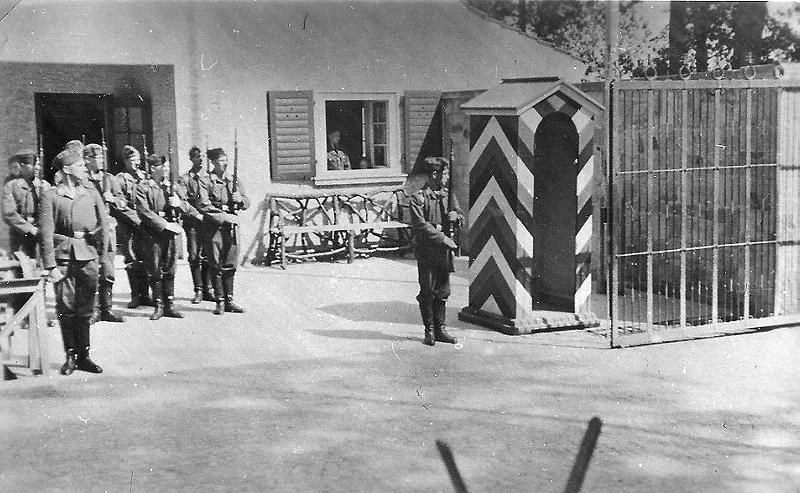
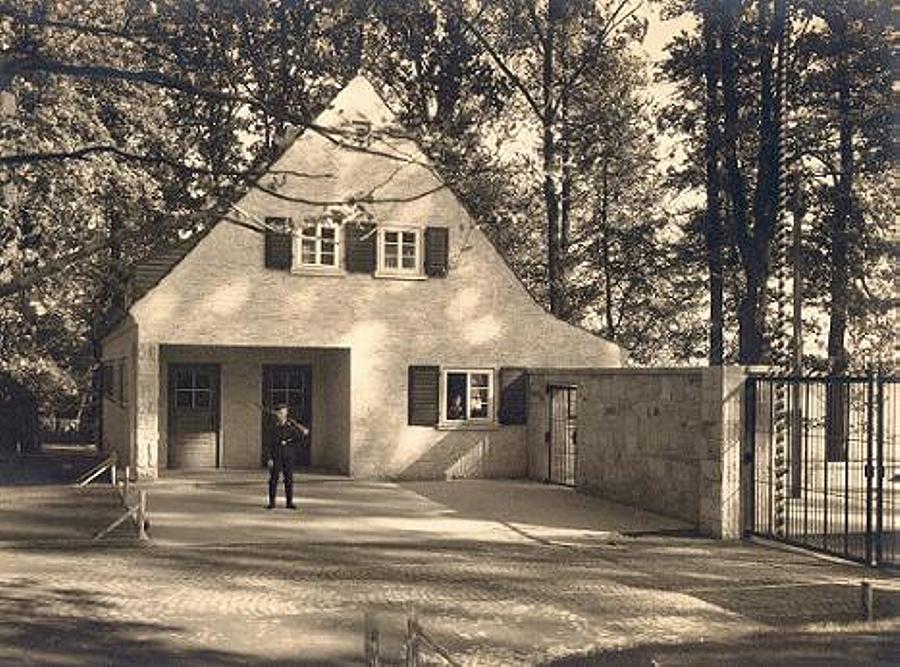
SP/MP Building
Taken in 1937
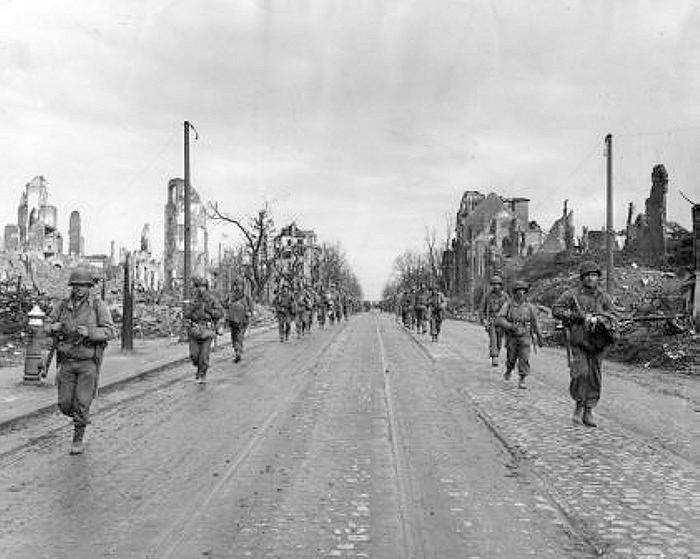
Troops moving into Kassel
The American units involved in the fighting around Kassel were the 702nd Tank Batallion, the �Red Devils�, supported by the 80th Infantry Division.
According to the 702nd Tank Batallion Reports: � Besides some Volkssturm units, enemy resistance was mainly comprised of elements and remnants of a few veteran divisions and innumerable miscellaneous units, slapped together in one last defensive effort before capitulation. Key terrain features were defended with suicidal resistance to the last. It is noteworthy that German artillery was almost non-existent. Several moderately heavy concentrations were received during the attack of Kassel but elsewhere only light and scattered artillery was received. Considerable tank activity was experienced during the first half of the month. Enemy air activity was a daily occurrence. Major use was made of demolitions, road cratering, blown bridges, defended road blocks and mines in a effort to prolong the coming of the inevitable hangman's noose.�
Platoon Leader of the 702nd, Lt. �Slim� Rives testimony goes as follows. �My best recollection of Kassel was that my platoon captured a wine cellar. We loaded our tanks with all we could carry. Later we heard that higher headquarters took it over, and inventoried forty-thousand bottles of high quality French wine. We also feared the attack on Kassel because it was either the factory for the Tiger Tanks or was a big mobilizing depot for the Tigers. As the Germans were out of fuel they could not mobilize the tanks, so the attack on Kassel was pretty much a "fizzle". �
The 702nd Tank Battalion Intelligence Officer, Carl Nordstrom also remembered the Tiger Tank factory near Kassel. The air corps had tried many times to level the factory, in order to halt German tank production. The entire area surrounding the factory had been levelled in the carpet bombing, but the factory remained virtually unscathed and continued production right up to it�s capture by the Americans. Nordstrom thought it remarkable that in spite of the destruction surrounding it, this one factory still stood.
Let�s get to the actual fighting around Kassel now. April 1st found the 80th Division south of Kassel on the Third U.S. Army and XX corps left flank. Opposing their forces were elements of the 166th and 356th Infantry Divisions, plus many miscellaneous units including replacement, anti-aircraft and Volkssturm battalions. Fierce resistance from enemy small arms, automatic weapons, mortar and direct fire weapons met the attacking Allied forces north of the Eder River.
The Infantry assaulted the city from the south and west. Bitter resistance was met at the outskirts of the city, from dug-in infantry supported by high velocity direct-fire weapons and heavy tanks. The tanks which were used in the defence of Kassel, were the first that the 702nd Tank Batallion had met in any number since leaving the area of Losheim a few weeks earlier. The unit involved was the Panzer N.C.O. School, Eisenach, and originally had thirty-two tanks, divided into four companies of eight tanks each. Companies 1, 2, and 3 had Mk. IV tanks while 4 was equipped with Mk. V's. At first Tigers were reported in the vicinity, but they were found to be dead tanks having been destroyed by their own crews.
One heroic soldier�s story aptly characterizes these bitter skirmishes around Kassel: On the evening of April 3rd, 1945 John Dolan of the 80th Infantry stopped two Tiger tanks alone with a bazooka. Fellow veteran Bob Costley said: �For the sceptic wondering how a single G.I. could stop these Tiger tanks with a bazooka, it did happen. Knocking the track off of the lead tank, the second bazooka firing--how effective, I don't know. The road was narrowed by a bridge, possibly they couldn't move around and also they could of lacked the will to fight and abandoned them.�
Early in the morning, at 12:30am, General Major Erxleben, Commanding General of the garrison at Kassel, surrendered himself and an estimated four hundred men to American forces. This ended the battle for Kassel, and the city was cleared.
- - - - - - - - - - - - - - - - - - - - - - - - - - - - - - - - - - - - - - - - - - - - - - - - - - - -
The below photos were taken by Gilbert Jenkins while stationed in Kassel in 1945-46 with the 514 Ord Heavy Maint. Co. 1st ARMY. They moved into the old Henschel Tank Factory, which was used to build trains before the War. When the US army occupied Kassel in 1945, 80 percent of the plant lay in ruins. There were still Tiger Tanks in the factory when they moved in.
Photos around Kassel in 1945

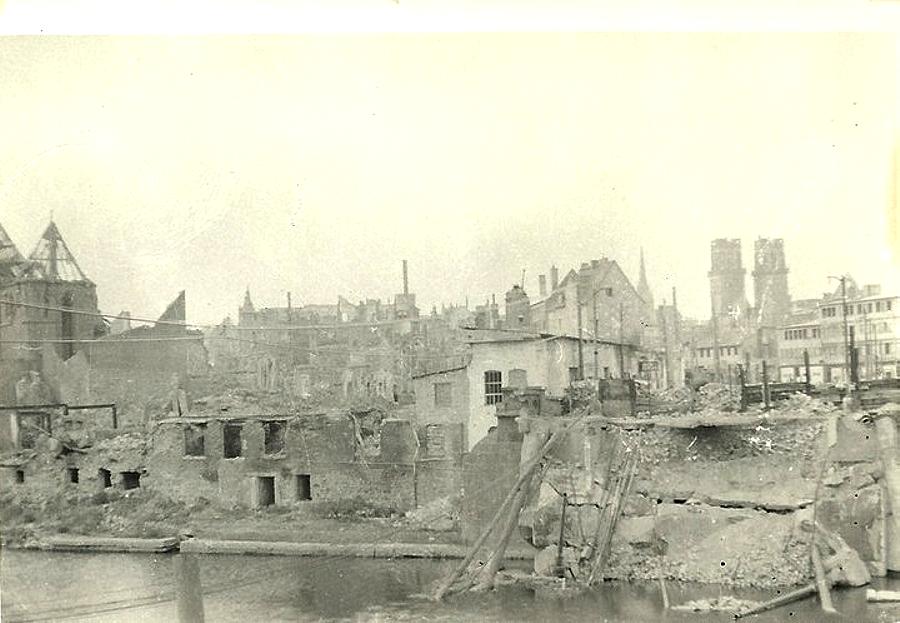

Below is the Henschel Factor and barracks for
most of the 15,000 workers that worked there.
It was eventually bought out by Volkswagen
AG, and is now one of there many factories

- - - - - - - - - - - - - - - - - - - - - - - - - - - - - - - - - - - - - - - - - - - - - - - - - - - -
Rothwesten
During the period from 1945 through 1947, the base was used by the US Army as a German POW camp. The Army Air Force took over the base on 7 April 1945 and engineers from the IX Engineering Command inspected every corner above and underground. Every door was carefully examined; there was still a chance that some booby-traps might be found. After inspection, they sealed (welded) all doors of cellars that were not going to be used. Generally those doors were found in the few sub-basements. Once confirmed suitable for operational use, the airfield was designated as Advanced Landing Ground "R12" Kassel/Rothwesten. In the last months of the War, it was also home of the 48th, then the 36th Group, 53rd Squadron, which used Rothwesten to fly there P-47 Thunderbolt fighter-bombers in support of the ground troups as they moved toward Berlin.
A 5000' Pierced Steel Planing runway was laid down for combat aircraft and on 17 April, the Ninth Air Force 48th Fighter Group moved in with P-47 Thunderbolts and commenced combat operations. The 48th moved out in a few days, and was replaced by the 36th Fighter Group on 21 April and continued operations from the airfield until the German Capitulation on 7 May.
After V-E Day, the airfield was redesignated as Army Air Force Station Kassel/Rothwesten and was used as an occupation garrison by the Air Force. In addition, the Air Technical Service Command arrived and established "Kassel Air Depot" whose mission was to maintain and service the combat aircraft remaining operational in Germany. The 36th Fighter Group remained until November 1945, and ATSC became the main organization at the facility. In September 1946, the Air Force was consolidating its forces in the Munich Area, and the facility was turned over to United States Army personnel of the 1st Constabulary Regiment.
In 1948, an American Constabulary unit used the post as a base, relinquishing it to the 615th Aircraft Control and Warning Squadron (USAFE).
The 615th used Rothwesten alone as their headquarters until 1955 when the first elements of the 307th CR Bn moved to Rothwesten and shared the post with them. The US Army started stationing some ASA units at Rothwesten in 1955.
During the summer of 1957, the motor pool moved to its present location in Hangar No. 4. Also, during the summer of 1957, the three eighteen unit apartments in the Rothwesten community were completed. This was an event celebrated by the married men of the battalion as two, three and four bedroom apartments, which were hard to find on the economy, were now available for their families.
In 1963, 3 Transportation Companies moved into Rothwesten. They were part of the units moving from France. They had there barracks at Rothwesten, but there Motor Pool was at Waldau Kaserne. They remained at Rothwesten till the 1966-1967 time frame.
In 1973, Rothwesten Kaserne was returned to the German Army, and became the "Fritz-Erler-Kaserne in October 1972. There were a few buildings that the US Army still used after this, and the Hawk Site that remained for a while, but the area was under control and responsibility of the German Army.
--> Find Army Buddies Free <--