Ham operators use radio frequencies throughout the spectrum. These give each us different advantages depending the desired mode of communication and distance desired. When the sunspots are high it is quite easy for those of us with small stations and low gain antennas to make global contacts particularly on the 10 and 15 meter bands. These are located at 28 and 21 MHz. Other lower frequencies bands are best for closer-in contacts. VHF and higher frequency bands except when aided by satellites are most used for local communication. Ham radio is a varied hobby offering more opportunities than most of us have time for even if we had the money to acquire all the equipment. This page will focus on "low impact" ham radio that can be enjoyed with moderate expenditures of time and money.
First let me note that one's rig reflects what one can obtain in country where they live and the resources they have to buy or build it. In some nations hams have no other choice but to build their own rigs and many of these work extremely well. I enjoy ham radio using a variety of rigs. It is always fun to QSO with a different rig when visiting with other hams.
My original gear used vacuum tubes and I still operate some old rigs once in a while. My Vintage Gear Page.
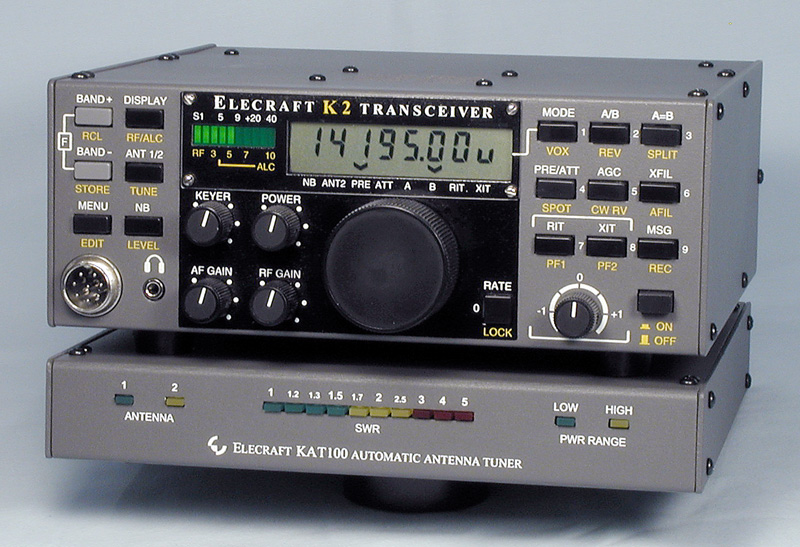
My primary rig is an Elecraft K2. I literally obtained this rig for the adventure in building (from a kit) this high performance full function rig. It was operated for many years in its base 10 watt configuration. At that time its only options were the SSB and 160 meter modules. This fine rig includes a built-in keyer and adjustable CW filter. My K2 is serial number 2117.
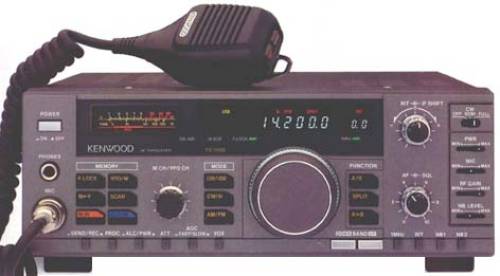
My backup rig has been in use since 1989 - a Kenwood TS-140 operates up to 100 watts. This basic rig covers all the bands from 160 thru 10 meters, and has been used across CW, SSB, FM on 29 MHz and digital modes. It is used with a manual antenna tuner and a home constructed TICK 2B electronic keyer. I literally worked the world with this simple low-end rig.
A few years ago I got more interested in chasing DX and I wanted a better 100 watt rig. At first I considered the cost to upgrade my K2 to 100 watts to be excessive. But as I considered the cost of high end used rigs like the Omni VI or FT-1000 it became evident that upgrading the K2 was the way to go for me. It did mean lots of modifications involving cutting traces and jumper wires, introducing 'fear' given the large investment in time and money. But the extra power upgrades the K2 to be a very competitive everyday rig. The amplifier upgrade also adds a RS-232 control interface. When I saw the 100 watt autotuner I just had to have one of those.
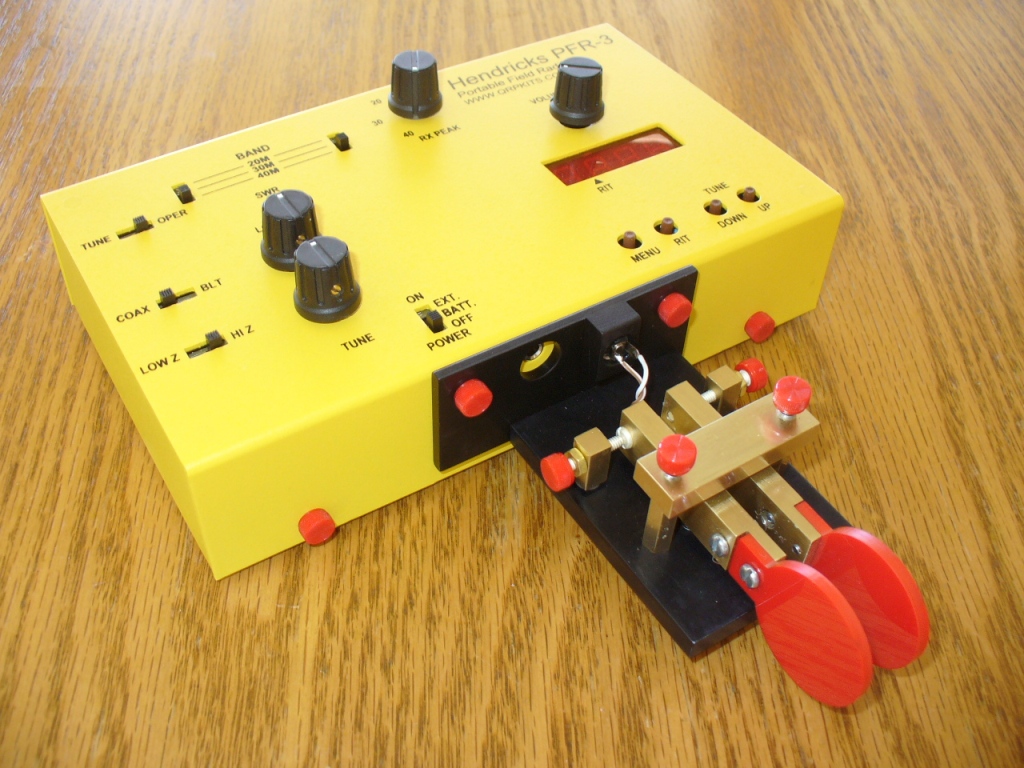
I also operate several simpler QRP transceivers (PFR-3, NC2030, HW-8, 38S, TT1340 and a 40m homebrew rig). I have used these rigs to make DX contacts using less power than a nite light bulb!
I also have an HTX-10 transceiver that operates SSB/FM on 10 meters with about 25 watts output. A few years ago when sunspots were high this rig was operated mobile with a small whip antenna. Many stations were worked in Europe and South America, along with contacts to Hawaii, Japan and Papua-New Guinea! As I estimate this antenna to have about 5 dB or so less gain than a full size vertical, that makes these QSO's roughly equivalent to QRP!
I also used low power transverters from Ten Tec to operate on 6 and 2 meters. Contacts have been made using ducting, sporadic E, aurora, and meteor scatter. Sporadic E-skip propogation is a less predictable, dynamic occurance. It is literally working with a moving target - in this case the E-layer of the ionosphere. Normally signals from approximately 500 to 1500 kilometers don't return to earth from the F-layer at these frequencies - but they do quite well with sporadic E. This mode of propagation often wakes up six and ten meters to exciting contacts. Because it is a moving target at any given time propagation will only be open to a small region at a time, often moving with time to another region.
The current antennas at WB8YYY are as follows:
 80/40m vertical Cushcraft MA8040 top-loaded ~ 8m tall
160m vertical Cushcraft MA160 top-loaded ~ 12m tall
20/17/15/12/10m vertical Cushcraft R5 trapped ~ 4m tall
off-center fed dipole ~ 80m long
This is more than enough equipment to keep me busy in many types of ham radio activities.
Contacting distant (DX) stations. Probably the most fascinating aspect of ham radio is making impromptu (or even scheduled) contacts with individuals in distant lands. Ability to work DX is strongly influenced by the sunspot cycle and seasonable variations. With my low impact station it is rather easy to work Europe every morning and the Far East every evening at the sunspot maximum. Even when sunspots are low, DX can regularly be working on 40 and 30 meters using CW when the higher bands are unavailable due to no propagation.
 The most important tip for low impact stations is to work CW. Be alert on all bands since low power is less of a handicap on the higher bands. Also note 30 meters where power limits enable the low impact ham station to be more competitive in this more friendly band where there isn't as much congestion.
Building Equipment A real highlight of this hobby is the experience of building your own equipment and putting it to communication use. See my QRP and Home Construction Page.