CLUBLOG is NOW
a LOTW Trusted partner.
It was announced on April 3rd, by the ARRL and ClubLog that "ClubLog
has become the first logging service to achieve Trusted Partner
status for Logbook of the World® (LoTW). Radio amateurs holding
LoTW "callsign certificates" who have uploaded logs to
ClubLog now can readily cross-post them to the highly secure LoTW
? world's largest repository for confirming Amateur Radio contacts."
Read the complete details/news at: http://www.arrl.org/news/view/club-log-is-now-a-logbook-of-the-world-trusted-partner Greenland, OX. New OX6M beacon. Bo OZ2M reports that
the new OX6M beacon is now operating on 50.047 MHz and OZ7IGY has
had an overhaul OX6M Monday, October 17 saw a new 6 m beacon
on the air. Bo, OZ1DJJ/OX3LX, installed the new beacon in HQ90AL
running PI4 + CW + carrier in a one minute cycle on 50.047 MHz.
The power is 25 W and the antenna is a dipole radiating North/South. WSJT. Joe Taylor, K1JT, will be named Amateur
of the Year at this year's Hamvention at Dayton. Joe received the
Nobel Prize for Physics in 1993 for the discovery of PSR 1913+16,
a pulsar. Taylor obtained his first ham license in 1954 with the
call KN2ITP. Following his retirement, he developed weak signal
encoding software and transmission modes such as JT65, WSJT, and
WSPR. Montenegro, 4O. The Alliance of Amateur Radio Montenegro
actived the beacon 4O6MNE on QRG 50,019.70 KHz, 20W power, mode
A1A / 24 h. The antenna is 4.5 dB on the vertical polarization.
Location is JN92pk. Contest. The ARI Florence organizes the marathon
dedicated to the 50 MHz band, which is open to all amateurs. To
participate simply request the user ID and password by sending an
e-mail to [email protected] containing the following information: CALL, operator
name, and WWLocator the category of participation. The Regulation
and all the details on www.arifirenze.it/maratona I hope you can publish in your newsletter
the details relating to our initiative. 102 AND STILL ACTIVE!!
Maurice, F5NQL, informs
us that on April 7th [edited]: "Today, our good friend Turks and Caicos
Isl., VP5. Resident. John,
NW4JG, informs OPDX that he is a resident of the Turks and Caicos
Island of Providenciales and has just received the callsign VP5VJG
(about a week ago). He mentions, It is very difficult to get a VP5
callsign. About 5 years working with a tourist temporary permit
on island." His also states [edited], "I operate with
an Icom 7200 with PW-1 amp. Antennas are Force 12 (40-10m), M2 (6
meters), and a Alpha Delta dipole (160-10 meters). We live on a
hill and the antennas are about 150' above the Southern Atlantic
Ocean. I also work all Digital modes. Have finally received on the
island all the gear for satellite and EME with Yaesu FT736R, 5500
antenna control... etc. Reunion Isl., FR. Yvon, FR1GZ, is running a temporary beacon
using the call FR1GZ/B. It is on air from 07 to 17 UTC on 50038.5
transmitting with 10W in a 5/8 vertical antenna. Mauritania, 5T. Ahmad, 9K2AI, will be active from Mauritania
for the coming two to three years with the call 5T2AI. So far he
uses an IC-7000, dipoles, and soon a yagi. QSL via NI5DX. Albania, ZA. IW2JOP is QRV as ZA/IW2JOP from Saranda
and is generally active on 80 to 2 meters using SSB and various
digital modes. QSL direct to IW2HAJ. Palmyra, KH5. The K5P team is now QRT, with a sad record
they equaled the old VP6DX record of 0, with absolutely
NIL 6 meter QSO´s. See the statistics here https://secure.clublog.org/charts/?c=K5P#r Contest EME. QSP de OZ1ADL, Radek OK2VBZ writes; MOON
contest has new conditions in 2016. Big new is category Magic Band
- 50 MHz. Here are more info: http://ok2vbz.waypoint.cz/mc/en/ Please forward this information to your
members, we will be glad when they join the MOON contest. Thank
you. Kosovo, Z6. New IARU mamber. Wayne, N7NG, sent out
the following press release on December 10th: "The Kosovo amateur
radio Association joins the IARU". "The secretariat of
the International Amateur Radio Union (IARU) released a note to
their member societies today announcing that The Kosovo Amateur
Radio Association, SHRAK has been voted into IARU membership. SHRAK
represents the Amateur Radio community of the Republic of Kosovo.
With a long history dating back to the days of the former Yugoslavia,
SHRAK was reconstituted on September 12, 2012, when an Amateur Radio
service was launched by the Kosovo government. You may send
your congratulatory note to SHRAK President Vjollca Caka (YL), Z61VB,
and welcome her new IARU member society to our ranks". Andorra, C3. Beacon. Info from Jose EA7KW. Just to
inform a new beacon from Andorra. C30SIX Frq: 50.413 MHz. Ant: Vertical
Cushcraft AR6, Power 10 Watts, locator: JN02SK, Sant Julià
de Loria (Naturlandia Echo Park) 1600 metre ASL, text: "VVV
C30SIX C30SIX JN02SK 10 W VERT", beacon text sent every 10
seconds, owner and keeper: URA 73 Jose, EA7KW Zimbabwe, Z2. "The Daily DX" reports that
Massimo, IZ0EGB (ex-Z81B), is now working in Harare and has been
issued the callsign Z21MH. Currently he is not active, but plans
to have a station on the air within the next few months. Activity
will be on 40-6 meters using SSB. QSL via IZ0EGA. Madagascar, 5R8. Beacon. Since October 18th the beacon
5R8UI/b is running on 50.410 MHz using 10W into a dipole beamed
to Europe, grid locator is LH46CQ. Reception reports are welcomed
to 5R8UI. Benin, TY. Update. Nicolas, F8FQX (ex-TJ3SN, TN5SN,
5T5SN), who recently went QRT from Cameroon in July, will be or
has moved to Benin and will be active as TY2AC for the next three
years. Activity will be on 160-6 meters using CW and SSB. QSL via
IZ1BZV direct or LoTW. Wallis and Fortuna
Isl., FW. Jean-Jacques,
TK5JJ, will leave Corsica for 2 years and travel to Wallis Island
where he will be active as FW5JJ. He hopes to be active very soon
after his arrival with an Icom 756PRO and G5RV antenna. The rest
of his equipement will arrive later. He will be active on SSB, CW
and the Digital modes on all HF bands, 6m and 2m EME. QSL via F5RXL. Japan, JA. Beacon. Shirow JF6DEA/KE1EO writes; JA6YBR
returned to Service One of JA 50MHz beacons; JA6YBR on 50.017MHz,
which has been suspended by lightning, returned to service at 0015z
on October 12, 2015. Repairing and logistics of the equipment were
greatly supported by JH6VZS Kai, JH6AVS Take and JR6GKT Kou. We
are thankful for their devoting contribution. And we have to say
special thanks to our local community KSSG (Kyushu Six Meter SSB
Group) for their verious support. Japan, JA. Beacon. One of JA 50MHz beacons; JA6YBR
on 50.017MHz has been stopped since 12:00z on Monday, Aug.31, 2015. The
equipment damaged by lightning strike. Now we are investigating
the situation of damage. There is a possibility that the suspension
period is prolonged depend on the situation. England G. G3WOS's
anniversary 6M BBQ - August
8th 2015. More; 10th anniversary
of G3WOS's 2015 50MHz BBQ See
the photos from the 2004
BBQ, 2005
BBQ
and 2011
BBQs On
the tenth anniversary of my first 6M BBQ, I am holding another on Saturday 8th August 2015 in
Farnborough, Hampshire UK - so please make a note in your diary! Cambodia, XU. Jarrad, VK3HXT, has recently received
his XU7AGA callsign and has moved to Sihanoukville on Koh Rong Island
to be with his brother. He has two HF radio - Icom IC-7200 HF/6M
Transceiver and Yaesu FT-817ND QRP Transceiver (which he is currently
using). At some stage in the future, he hopes to be able to offer
visiting hams the chance to rent his Sihanoukville Shack, and provide
advice (and equipment). QSL via VK3HXT. For more details and possible
updates, see QRZ.com (under XU7AGA). ClubLog's OQRS is available
and LoTW will be available soon. Madagascar, 5R. Michele, 5R8UI is now active from Nosy
Bee Is using a 5 el Yagi. Sri Lanka, 4S. The 6m beacon from Sri Lanka is back on
air as 4S7B/B 50.009 MHz 25W using a ground plane antenna. Locator:
MJ96XV This is a RSSL Radio Socity of Sri Lanka and 6 Meter Beacon
Project, Inc., Special thanks goes to David N3DB Your signal reports
are most welcome. (4S7JL VIA VK6KXW). Kenya, 5Z. Six meters available ! Hams fron Kenya
have, now, access to 6m band! We are waiting for firsts signal from
this country! Contest. UKSMG
Summer Marathon. One major
change to last year's Marathon is that we have replaced DXCC entities
with Major Grid Squares as the item to count. The Marathon runs
for the same three months, roughly early May to early August, and
logs can be uploaded at any time during the event. The revised webpages
can be viewed at http://www.uksmg.org/summer-marathon.php http://www.uksmg.org/summer-marathon-contest-rules.php Hopefully this is OK for CQ Six, but please
let me know if you have any questions. Contest. Ari section of Florence Summer Marathon. May 1, 2015 will begin the 2015 edition of the marathon
50/70 MHz Ari organized by the Section of Florence. You can find the Regulation with all the
info is on the official website of the ARI www.ari.it that on the site of the Section of
Florence www.arifirenze.it/maratona.
Pending receipt of your numerous inscriptions wish all good dx in
the magic band. Greece, SV. Beacon. SV1SIX beacon (50.040,00) is temporary
out of service. Ivory Coast, TU.
WWL mistake. After some e-mail exchange
with Silvano I2YSB, (part of TU2T team and QSL manager), he realize
and confirming that there�s a mistake about TU2T 2011 locator. QRZ.com page (already
fixed) reported: IJ76 The QSL card for a typing error report: JJ85. The right one, confirmed
by the shack location QTH, Grand-Bassam it�s: IJ85. So, everybody please
check your worked locator data-base and fix TU2T as: IJ85. Wallis and Fortuna,
FW. Jean-Jacques, FW5JJ,
is back on Wallis Island after a few months holiday on Corsica as
TK5JJ. He is expected to be on Wallis for 2 years (possibly longer).
Activity is on the HF bands and 6 meters. Also, FW5JJ is now operating
on 144 MHz EME and has made his first FW-F (Wallis to France) QSO
with F6BKI in Bordeaux, France. Jean-Jacques will also be installing
160 ad 80 meters antennas soon. QSL direct only via F5RXL (OQRS).
Check out the pictures on QRZ.com. Hungary, HA. Beacon. One year ago we announced HG5BTV
beacon from a TV broadcast station that was in operation for half
year only because its antenna was removed in March 2014. HA1YA could
find a new location inside another TV broadcast station and installed with a new call sign HG1BTV on October 30. The exceptional antenna together with
a QRP transmit power generate over 500W ERP in every direction with
very flat radiation pattern. We expect the new Hungarian beacon
will help to discover intercontinental openings. We optimized its
identification CW message to be easily and quickly recognized by
CW Skimmers. Because of its vertically polarized antenna system
we do not expect long distance tropo observations. We do not expect
meteor scatter reflection indication either because of its extremely
narrow radiation pattern. Our Budapest WebSDR provides
still solid
observation from almost
200km distance. Qatar, A7. Jan OZ1ADL reports from a recent stay
in Doha that the 6 meter beacon A71A at 50.006 MHz in LL55SH have
undergone maintenance a.o. an overhaul of the antennas. Italy, I. A new beacon is active from Italy. It
si IQ4FE/b on 50.420,0. its grid is KN54AS. Reception reports are
welcome to: [email protected] Bahamas, C6. Tim, AF1G, now active as C6ATH, lives/works
on Andros Island, and will be there for several years. Look for
him on the weekends, U.S. holidays ad some contests. Activity will
be on 80-6 meters using SSB and the Digital modes. QSL LoTW and
direct w/SASE (see QRZ.com). No Bureau. Guatemala, TG. Juan TG9AJR sends Greetings from Guatemala.
I hope soon we will have some nice openings between Guatemala and
Europe, I am QRV and look forward. Best 73 and good DX de Juan TG9AJR
EK44SL Western Sahara,
S0. Naama, S01A, has delayed
his activity until early May because he did not receive the new
equipment and antennas in time. Operators S01A, S01WS (club station
"Amateur Radio Union Sahrawi") and S01AH are expected
to receive their equipment at the end of April. Having overcome
the technical and installation of multiple antennas problems, the
maximum expected operating bands will be on 80-6 meters. They will
be using three bazooka antennas, one for 60 meters. Naama apologizes
for the short activity on March 9th. An equipment failure prevented
him from continuing his activity. It is important to note that this
DXpedition from the "Radio Club Amateur Radio Union of
Sahrawi" (URS) is to help the Sahrawi operators develop their
hobby on minimum technical conditions. Operators Naama/S01A, Man/S01AH
and the URS/S01WS will operate on 60 meters, on 5366.5, 5371.5,
5380.5, 5398.5 and 5403.5 kHz USB. Naama and Man have a license
to operate CW on this band on 5.368, 5.373, 5.382 and 5.405 kHz.
It is suggested to watch the following for updates and news: https://twitter.com/SaharaDxTeam and http://saharadx.jimdo.com
Italy, I. Beacon. IT9X/B is again on the air (temporary
in test) on 50057 but it will be moved on 50440 soon (according
with new region 1 IARU Bandplan). The grid will be JM78LB at around
923m asl. more info on http://www.qrz.com/db/IT9X?ref=445690881 Paraguay, ZP. A new beacon on 6m is testing frm Paraguay;
Manu, ZP9MCE, is working ZP9MCE/B on 50065 CW Actually operational
with 20w, provided by an ft950 yaesu, in a vertical antenna. Reports
on cluster are welcome. Italy, I. Beacon. After some weeks of QRT due some
technical problems I0JX/b is again operative in the usual qrg of
50004. Bemin, TY. Update. Wim, ON6DX (ex-ON4CIT), who was
active as 5V7TH recently from Togo, announced this past week he
finally received his Benin callsign TY1TT from the telecom authorities.
He states, "Was not easy, took me the longest time and most
expensive ever to get a callsign. Now I can plan flights and lodging
beginning 2014 in Benin." No specific dates were mentioned
yet. Activity will be from Grand PoPo and operations will be on
20/17/15/12/10/6 meters using CW, SSB and RTTY. Wim did mention,
"Clublog is a fine tool, but this year: OQRS QSL: Yes, but...
But no more clublog leaderboards." Read his reason and look
for updates at: http://www.dxpedition.be/Benin.html Mozambique, C9. Karel, ZS6ALB, informs OPDX that he is
now permanently based in Mozambique and is active as C91KHN (C91C
during contest) from Matola, Mozambiue (Grid locater KG64fa). He
has been busy upgrading his station, changing the current Hygain
tri-bander for a Mosley 67B 6-bander. However, Karel informed OPDX
on Christmas Eve that he "will be away for the festive season
and will be back in C9 country on 13 January 2014." After the
upgrades, he states that he will be active on the following bands
and modes: Sri Lanka, 4S. A new beacon is now operative on 6m is
4S7B/b 50.009MHZ using a moxon antenna beamed to JA land. D.R. Congo, 9Q. Henk, ON4AHF, reports that after 3 years
of negotiations the Congolese government has finally permitted the
operation of the national club station 9Q0AR and its special call
9Q0HQ. It is believed that this permit will also allow DXCC credit
in the near future. South Africa, ZS. Hal, ZS6WB, wrote: "ZS6WB/B on 50.450
FM will be in operation for the next few days on a test basis.
ID (callsign & grid) are transmitted briefly approximately every
70 seconds.
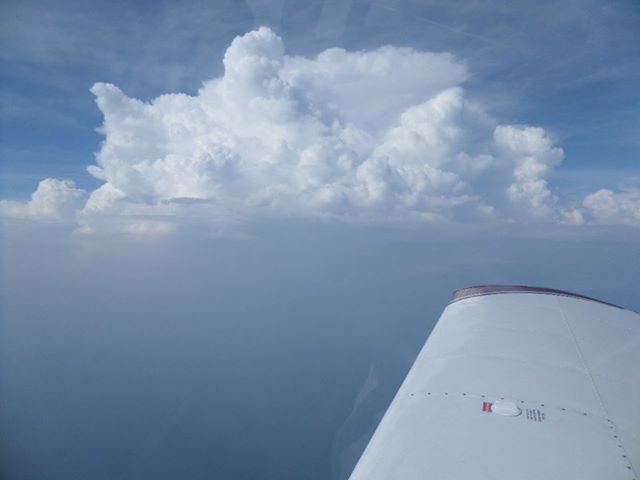
The Adventures
flight London - Sydney. G-ATYS have reached Sydney YSBK.
Analoge TV transmitters
off! Kosovo, Z6. ITU
Administration. Amateur
radio in the former Serbian province Kosovo has made progress on
its way back into the regular ham community. A first class of new
hams (students at the Technical University of Pristina) will complete
their ham radio course within short time. The course has been held
with support of the IARU Region 1. Kosovo's national ham radio organisation
SHRAK has set up a station on the university's premises. Furthermore,
Kosovo might be one step closer to DXCC recognition. Under current
DXCC rules it needs either an official prefix assigned by ITU or
join the UN as a member state. Serbia has finally lifted its objection
against Kosovo receiving its own international country code for
telephone numbers from the ITU. An assignation of such a code is
usually followed by an assignation of an official ITU prefix. Wallis and Fortuna
Isl., FW. Jean-Jacques,
TK5JJ, will leave Corsica for 2 years and travel to Wallis Island
where he will be active as FW5JJ. He hopes to be active very soon
after his arrival with an Icom 756PRO and G5RV antenna. The rest
of his equipement will arrive later. He will be active on SSB, CW
and the Digital modes on all HF bands, 6m and 2m EME. QSL via F5RXL. Philippines, DU. Al, DU1KA, (DU1WGA, DU1/W7XA, W7XA), has
relocated to a place about 50km south of Manila on Luzon. QRV mainly
in CW on 20-6m. with a K3, amplifier, and a hex beam, mostly between
22z-02z and 08z-12z. Antennas for 30, 40, and 80m will be added
until about mid-October. QSL via NR6M. Namibia, V5. Beacon. V51YJ is running a personal beacon
on 50028 with call V51YJ/b. South Africa, ZS. Beacon. ZS6TWB/b QRV again from KG46rc
on 50.044 30 w into 5/8 vertical antenna. 73 de Paul ZS6NK. Somalia, 6O. Roger, LA4GHA is now active from Somalia
on 6m as 6O0LA. QSL via LA4GHA. Greenland, OX. Mia , OZ5MD and Bjorn OZ5BD will be active
from Sisimiut, Greenland for at least the next two years as OX5M
and OX5T. QRV mainly on 40-6m CW, SSB. QSL via OZ0J. New IRCs. The Universal Postal Union has unveiled
the new "Doha" IRC model, valid from the 1st of July until
2017. The current "Nairobi" model remains valid until
the end of 2013. http://www.arrl.org/news/new-international-reply-coupon-introduced Korea S., HL. A QSP from Kei, HL2UVH says, 6m Beacon HL1LUA,
PM37MO band for test 6m propagation QRA : HL1LUA/B Loc: PM37MO
(Seoul , South Korea) Mode : CW (A1/A1A) QRG: 50066 KHz ANT: 3ELE
CQ (Beam to EU & NA) Transmimitting message : VVV VVV DE
HL1LUA/B HL1LUA/B HL1LUA/B PM37MO SEOUL AR. Marshall Islands, V7. Beacon. Neil, V73NS,
reports that members of the "Roi-Namur Amateur Radio Club"
have set up a 6m beacon (V73SIX/B) on Roi-Namur (WW Loc. RJ3rj).
QRG is 50.014 http://www.qsl.net/v73ns/v73six.htm Martinique, FM. A new beacon is now operational from Martinique: FM1ZAC; QRG: 50.069 MHz, loc. FK94NL in a Turnstile antenna. Info on www.qrz.com/db/FM1ZAC (Sixitalia Weekly) 22 Apr. 2013 Band conduct. In the past days we have seen some scheduled
dxpedition in Europe (thus we can't consider them really dxpedition
because they won't be in uninhabited areas) that intend to use some
"beacons" to promote their activities. That is not a bad
thing but, until now, some of those dxspeditions declared to be
in beacon mode in the INTER-CONTINENTAL window. Probably the operators
never read a 6m BP or never understood the importance to keep the
window 50100-50130 free for real DX (or better as IARU says for
INTER-CONTINENTAL use). Diamond DXCC. (Did anyone make one at Six? e.d.) ARRL will continue to accept applications for this award until the end of the year. The objective of the award was to work, during 2012, as many DXCC entities as possible according to the first DXCC country list dating from 1937. No QSLs are needed for the application process, which can also be done completely online. Furthermore, the ARRL webpage offers various hints and helps to match up current prefixes and entities with their 1937 counterparts. http://www.arrl.org/diamond-dxcc (DXNL 1826) 7 Apr. 2013 Honduras, HR. Hiro, JA6WFM, a well knowed 6m fellows, is again active from San Pedro Sula ad he will be here until January 2014 so, probably, he will be on 6m band vy soon. QSL via EA5GL or LoTW. (Sixitalia Weekly) 7 Apr. 2013 Sudan, ST. From UKSMG website, posted by Dave G8FXM. Dennis PA7FM will be active again in Sudan for QRL and he will be soon active with his previous call ST2DX. 7 Apr. 2013 France, F. Robin F/M5AEF, writes; Hi all, As far
as I can tell the previous geographic and power restrictions on
the use of 50 Mhz have been lifted. I have looked at the band
plan and it would seem that maximum pep would now be 120W,
with no Departmental restrictions. Previously some departments
had been limited to 5W and a handful to 100W. Rwanda, 9X. A QSP from Arne SM7AED based on info from Jose EA7KW says, Kiyo, JR1IZM, has just got license in Rwanda, 9X0ZM. Yesterday (March 16 th. e.d.) on his first night he managed to work some stations on Six in southern Europe and Venezuela. His set up was a m.m. long wire loop through an ATU from the porch of the second floor of his apartment. Maybe the UKSMG could offer help for a proper 6m aerial if he's interested? He plans to stay there for one whole year. 28 Mar. 2013 Pacific ConDX, Jon N0JK reports Wake beacon, he writes; I am in Maui, HI through March 23. I heard the Wake Is. 6 meter beacon KH9/WA2YUN/b March 19. 23 Mar. 2013 Antarctica, VK0. Craig is on the air as VK0JJJ from the "Australian Antarctic Division" (AAD) station Mawson and recently put a 6m beacon into operation, using the call VK0RTM on 50.300 MHz. http://www.southgatearc.org/news/february2013/vk0rtm_6m_beacon_on_air.htm (DXNL 1822) 11 Mar. 2013 South Sudan, Z8. Massimo, IZ0EGB (ex-9L1MS, EL2GB), informs OPDX that he is now living in Juba, South Sudan, and plans to be on the air as Z81B soon. He will be using 600 watts into wire antennas for 40-6 meters, and operate on SSB and the Digital modes. Massimo adds that the equipment is installed already and was expected to be on the air this past week. Occasionally, Massimo will operate from other locations using only 100 watts into a T2FD (a terminated, tilted and folded dipole) operating SSB only. QSL via IZ0EGB: Alessandro Colasanti, Via Pia Nalli 30, 00134 Rome, Italy. Massimo states, "Colleagues should please avoid sending IRC coupons. Alessandro will periodically upload my log onto LoTW and ClubLog." (Ohio/Penn DX Bulletin #1098) 14 Feb. 2013 Rotuma, 3D2. Antoine, 3D2AG, will once again be active as 3D2AG/p from Rotuma between late March/April. He states, "Now looking for spare parts for my 14-years-old ICOM 706-MKII, which is faulty (no TX). If anyone can help please contact me, so that I can be operational on 6m from Rotuma. Thanks in advance." His E-amil address is on QRZ.com. He also mentions, "QSL direct only to Fiji address. Please include at least two green stamps or one IRC with AIRMAIL SAE for first class return postage. After intense lobbying by 3D2AG, IRCs are now exchangeable at the normal UPU rate in Fiji. Please don't forget to put an airmail label on your return envelope, and write your country name clearly." (Ohio/Penn DX Bulletin #1098) 14 Feb. 2013 Cuba, CO. QSP de Maurice, F5NQL. CO8DM on LOTW member CO8DM is now on LOTW have confirmed many past QSO, on 6M too. If you await LOTW credit or need info, send a message to Doug or to Steven, KU9C, Doug's QSL Manager. 14 Feb. 2013 South Africa, ZS.
Beacon. ZS6SJV/B is a new
beacon from South Africa. It Is running on 50070 MHz, 24/24h, with
10w. It is located in KG54NI (90km form C91 and 40 km form 3DA).
(Sixitalia Weekly Info)
30 Jan. 2013 Laos, XW. Larry is now QRV as XW1A. Activity
is on 160 to 2 meters using CW and SSB. This will eventually
include RTTY. QSL via E21EIC. (Sixitalia Weekly) 11 Jan. 2013 Djibouti, J2. Christian, F5MBF is arrived Djibouti in July and will be staying there for at least two years. He received the call J28NC. He was worked this week on 6m in CW. QSL via F5RQQ. (Sixitalia Weekly) 29 Oct. 2012 South Sudan, Z8. It�s official, the first two amateur radio operators in The Republic of South Sudan are: James Pratt (K7QI) and now (Z81A) � QSL via K7GSE. & Diya Al Sadi (YI1DZ) and now (Z81D) � QSL via OM3JW. These are permanent callsigns given by the Ministry of Telecommunications and Postal Services. At present time, Diya is all setup and ready to go, and thanks to Diya�s kindness, both Z81A and Z81D will be using his station located at Nyakuron South, Juba. Diya (Z81D) has just started his activity also on 6m using a wire antenna and his ic7000. (Sixitalia Weekly) 29 Oct. 2012 Kosovo, Z6. Excerpts from the IARU Region 1 Web page
reports: "Monday, September 10, 2012 marked the end of supervised
independence of the Republic of Kosovo, a European country with
a population of 2 million, and the beginning of its status as a
fully sovereign state." It also states, "Kosovo is now
an independent country, which must be honored as such. As of today,
a total of 91 countries, including most of the industrialized world,
such as USA, Japan, Germany, the United Kingdom and France along
with the Benelux and Nordic countries, have recognized the Republic
of Kosovo. These powers have endorsed the final settlement, the
fulfilment of which is now celebrated in Kosovo's capital Prishtina.
An Amateur Radio working group headed by IARU Region 1 President
Hans Blondeel Timmerman, PB2T, and including IARU Region 1 Executive
Committee Member Nikola Percin, 9A5W and Mission Goodwill Kosovo
Coordinator Martti Laine, OH2BH, together with their associates
are in the final stages of assisting Kosovo's Telecom Authorities
in drafting regulations governing Amateur Radio in Kosovo, to bring
the original Kosovar operators and their re-vitalized Amateur Radio
Association back to the international community. http://www.voanews.com/content/supervised-independence-ends-in-kosovo/1505339.html Silent Key. Bryn G4DEZ. We have just recieved the
sad news that, Bryn G4DEZ
passed away Friday 17th
August 2012. Bryn was very well known and respected VHF/UHF Operator
and very active on 6 Metres, he will be missed by many. Should anyone
wish to send a condolence card to his family please post to Andy,
M1IFT QTHR. (UKSMG) 29 Aug. 2012 Niue, E6. New Prefix. On August 3rd, the ITU updated its "Table of International Callsign Series" to reflect a callsign change for Niue. The island will now have the entire E6 prefix block (E6A-E6Z). Niue is an island approximately 1700 miles northeast of New Zealand, and is a self-governing island nation that has been in free association with New Zealand since 1974. Prior to the change, the island used ZK2. (Ohio/Penn DX Bulletin #1074) 29 Aug. 2012 Silent Key. Gene Zimmerman, W3ZZ, passed away at the age of 71 on June 3. He was responsible for the QST column "The World Above 50 MHz" from 2002 to 2011. He was a member of the "ARRL Contest Advisory Committee", editor of the "VHF Contesting Column" in CQ Contest magazine, Director of the CQ VHF Contestes from 2000-02 and an early adopter and advocate of aggressive contestlog checking. (DXNL 1784) 18 Jun. 2012 DX´er Arrested
in Greece. Amateur Radio
NewslineT reported an update this week, and that well-known DXer/World-Traveller
Baldur Drobnika, DJ6SI, stated that "I wasn't charged with
espionage. As a reason of my arrest it was stated that: St. Helena, ZD7. Bruce, ZD7VC, is usually working on 20m/17m/15m/6m
from 1700-2200 UTC. QSLs unfortunately only direct. (DXNL 1783)
18 Jun. 2012 Portugal, CT. QSP de Chris Deacon, G4IFX. 50 to 52 MHz
full extended band in Portugal from next April 26th 2012. The National
Communications Authority of Portugal (ICP-ANACOM) welcomes the proposal
of 2 amateur radio colleagues, José Carlos (CT1DHM) and João
Costa (CT1FBF), in order to amend the upper range limit of 50.5
MHz on the 6 metres band, from next April 26th 2012; the date of
the complete switch-off of the analogue TV broadcasting transmissions
to digital terrestrial television. South Sudan, Z8. Prefix Allocation � South Sudan � Z8 As per the Table of International Call Sign Series, the prefix block Z8A-Z8Z has been allocated to the Republic of South Sudan. (Sixitalia Weekly) 6 Mar. 2012 Senegal, 6W. 6m allocation to Senegal. email from François, 6W7RT says; ADRASEC Senegal is proud to announce that following its application to the Regulatory Agency for Telecommunications and Posts (ARTP), the band 50-51 MHz has just been officially allocated at WRC-12 to the amateur service on a primary basis in Senegal. ADRASEC Senegal takes this opportunity to thank ARTP for their unconditional support. This allocation will only be effective when the new ITU Radio Regulations come into force and therefore all contacts made on 6m before that date have to be considered as unauthorized. François Normant, 6W7RT - President of ADRASEC Senegal IARU R1 National EmComm Coordinator for Senegal 73 de Francois, 6W7RT. 6 Mar. 2012 Malyj Vysotskij, R1/MV. By Jari OH2BU: "The day of deletion has now been confirmed: Finnish and Russian ambassadors met January 17th and exchanged the documents signed by the presidents of both countries. The new agreement of the lease of Saimaa Channel will be in force one month from today � February 17th. As the new agreement does not include Malyj Vysotskij, the island will be deleted from the DXCC-list the day before, February 16th 2012. This is, of course, subject to the decision of ARRL DXCC Committee. It�s unlikely that any DXpedition will come on from the island before the deletion, although our Russian friends would have a possibility to do it." (Sixitalia Weekly) 30 Jan. 2012 "Green Station"
Special achievement. Spiros,
SV8CS. Today 5 July 2011 at 20:03 I had a EME qso on 50.190 with
Lance W7GJ. This was NOT my first but I made this qso from my remote
site with my Ecological - Green powered station. I am using a Kenwwod
TS-480 (without external preamplifier), Linear amplifier by TE-Systems
at 150W and 7 elements LFA-1 WOS antenna, without elevation. This
set-up is powered by solar and wind energy (ECO station) using 4
bateries 12v 200A/h each (total 800A/h).Thai is my first EME qso
with Green power station. Tnx to Lance and 73 to all de Spiros SV8CS. Silent Key. Peter, HB9PL, informs OPDX that Pierre
Pasteur, HB9QQ, became a "Silent Key" (SK) on Saturday,
June 11th, after a short but ferocious illness at the age of 80.
Peter states, "Pierre was a multi-faceted Ham who was not only
a seasoned DX'er but a highly regarded expert in VHF/UHF work and
the 'magic band'. He was author of numerous technical papers and
a book about VHF/UHF 'Operating Modes and Techniques'. Unforgettable
were his VHF and EME expeditions to HB0, 8Q7, V51 and lectures of
these adventures at many conventions and other Ham gatherings. Pierre
achieved the WAC on 144 mc EME in 1984 and the DXCC on 50 MHz in
2002. An ex-Maritime Radio Operator, he was an Honorary Member of
USKA (Union of Swiss Short Wave Amateurs) and a number of other
distinguished societies Peru, OA. A QSP from Per LA7DFA says; OA4TT 8 May 2011 on ON4KST chat: I am QRT for a month...my beacon is running on 50077 pointed at EU 50 W 8 el while I am gone. 16 May 2011 Angola, C9. I have recently started working in Mozambique
- grid KG64fb - and am slowly getting a 6m station together - every
piece of equipment has to be smuggled in over many trips :) . In
the coming week starting 1/5/2011 I will be transmitting low power
PSK31 during the evenings and during weekends when not at work.
50w into dipole. At this stage there is no allocation for 50Mhz
in Mozambique so will United Kingdom, G. Ian G6GTO writes; Hi, GB3BUX Beacon which could be found on 50.000 and 70.000 Mhz is off the air, and has been since late March 2011. I have not been able to find the reason so far for this but I do have an idea! When I find out anymore information or the Beacon becomes active I will announce it via Email and online. 73 de Ian. G6TGO IO83. 5 May 2011 Spain, EA. Beacon. A new beacon is now active from Spain. The call is EA7URC/b and is located in IM78ie. (Sixitalia Weekly) 5 May 2011 Mauritius, 3B8. Mart, DL6UAA, is again active as 3B8MM and is trying to do some 6m qso. Look for him on HF band (mostly on CW) and on 6m. Time to time he'll be on beacon mode around 50110. (IK0FTA Sixitalia) 7 Apr. 2011 QSL info. SU1SK QSL. Hawk, SM5AQD, informs OPDX reader, "I am Said's QSL Manager. I only COLLECT his QSL cards and further the QSL information to Said via the InterNet. I have NO LOGS and NO QSL cards. Said himself is sending out QSL cards from Cairo, Egypt, after receiving my information. I do this service only because Said is a very old and nice friend, on the other hand it gives you a chance to get a QSL card from SU land. I am very sorry but a QSL card via bureau is impossible to arrange for me and him. Please follow my information on QRZ.com ... GD DX 73 / Hawk SM5AQD" (Ohio/Penn DX Bulletin #1005) 7 Apr. 2011 Southern Sudan,
ST0. Antonio, EA5RM reports
that "after a long way, a lot of hard work and several successful
meetings with Southern Sudan Government officials of various Ministries",
the first amateur radio license was issued by the new government
on 18 March. "Our DXpedition will start on July 9th from
Juba so please stay tuned". Bookmark www.dxfriends.com/SouthernSudan2011/ for updates. (Sixitalia Weekly) 30 Mar. 2011 Sked tool. ON4KST has created additional logger pages now on his excellent ON4KST chat site for us in Region 3: www.on4kst.org/chat/index.php look for 50 MHz Region 3 and 144/432 Region 3 logger pages. Plenty of ZL and VK's already registered and uing the site. All welcome on this excellent site thats been running successfully for many years. 73 (MMMonVHF Newsletter 2011-02-24) 8 Mar. 2011 Malawi, 7Q. Harry, 7Q7HB is back in Malawi for at
least a couple of months. He is QRV in his spare time, mostly on
digital modes and CW, plus some SSB "if asked". QSL via
G0IAS, direct only. [G0IAS via 425dxn #1034] Mauritius Isl.,
3B8. 3B8DB will be soon
also on 6m. Tnx to a wide support of Sixitalia Group that have provided
to him an ICOM 706 and some other individual italian hams as IZ5EME
and IK5MEJ, that have provided a beam and pay the costs of spedition,
Taher, 3B8DB, will be active, as resident ham on the island, on
6m from Mauritius Is we hope during this week. (3B8DB via Sixitalia.org)
8 Mar. 2011 Angola, D2. QSL Manager Mike, CT1IUA, informs OPDX that Paulo, D2CQ (aka CT1ITZ), will be back on the air very soon from Porto Amboim. He was off the air for almost 1 year after some equipment was stolen from his QTH (power supply, coax, PL's, windom). Paulo will be on the air with a G3TXQ Hexbeam and for now he will only be active on 20-6 meters SSB. He plans to put a dipole up for 40m and 80m soon. Mike mentions that sometimes the electricity goes down for 2 or 3 hours, so it is normal that Paulo suddenly disappears once in a while! (Ohio/Penn DX Bulletin #996) 12 Feb. 2011 Band report from Australia, VK. VK3OT Steve writes;
On Tuesday NOV 11th had the pelasure of partipating in my first
2 way 6M QSOs with USA. The opening commenced for me with the chance
observation on the vklogger that Norm VK3DUT has hearing the K6FV
6M beacon weakly and Zl1RS was working N5JEH. I tuned over Eds CW
call on 50.105 at 0041 utc and was unable to break him so tunign
up the band I heard a CQ call on 50.125 and was able to exchange
a two way report with W0OGH at 00:41 in DM43ii AZ, then proceeded
to work and log ( due to a very high qrm and confusion on 125 with
the sudden appearance of VK amongst mid winter US Es). K7TNT W7KNT
in MT, WA7JTM AZ, N7CW for sure in DM34 and K9HMB an incredible
link over 2/3 of USA in En52 (5,500km) and finally AA7A at 0123.
it was 20 years since last workign K9HMB in Illinois. United Arab Emirates, A6. By the time you read this Don, N1DG, is expected to leave Qatar (where he was active as A71A) to arrive in U.A.E on December 5th, for three days because of his job. However, his activity will be limited due to his work; he is expected to operate from the A61AD station once again, possibly on 12 and 17 meters using CW, SSB and RTTY. The A61AD station does have a 4 element SteppIR for 20-6 meters, so Don's activity will be limited to those bands. Logs will be uploaded to LoTW upon conclusion of his trip. (Ohio/Penn DX Bulletin #988) 6 Dec. 2010 Guadeloupe, FG. Jules,ex-FR1AN, is now staying on Guadeloupe, the home of his XYL. His new callsign is FG4NN. He started building antennas a few days ago so you can expect activity soon, also on 6m. The QSL manager of Jules is Buzz, NI5DX. (DXNL 1703) 30 Nov. 2010 Cameroon, TJ. Henri, F6EAY, who is in Cameroon for professional
reasons and the duration of his stay is uncertain, just received
his license to operate as TJ3AY. Activity will be on 40-6 meters
using RTTY and SSB. Equipment at the moment is a R6000 vertical
antenna and a dipole for 40 meters. He was heard this past week
on 20/15/12/10 meters at various times. QSL is via F5LGE. It is
suggested to be patient on the QSLs. QSL printing is not yet done;
not until February 2011. (Ohio/Penn DX Bulletin #984) 13 Nov. St Kitts, V4. A QSP from Andy N8OFS says; We just returned from Calypso Bay, St Kitts, after purchasing our vacation/retirement home. Our applications for St. Kitts residency have been submitted and will soon be approved. The antennas will be going up in Feb. when we return for an extended stay. 73, John W5JON - V47JA 13 Nov. - 2011. The Netherlands
Antilles. New entities. Bill
Moore, NC1L, ARRL Awards Branch Manager, reports: "ARRL Awards
Committee Statement on Dissolution of the Netherlands Antillies:
To clarify the administrative process by which the anticipated changes
to the two existing Netherlands Antilles DXCC entities will be made,
the ARRL Awards Committee has determined that at 0400Z (12:00 AM
local time in the islands) on 10 October 2010, the two Netherland
Antilles DXCC entities will be deleted. Commencing at 0400Z (12:00
AM local time) on 10 October, 2010, operation from the islands of
Curacao, Bonaire, Sint Maarten, Saba, and St Eustatius will count
for a yet-to-be-determined number of new entities under the DXCC
List Criteria, and Political Entities, Rule 1 and/or Rule 2 Geographic
Separation Entities. When the Awards Committee determines what Rule
1 or Rule 2 actions apply, it will announce the final disposition
of the entities on the DXCC list. The
DXCC desk will not accept confirmations for these new entities until
after 1 January, 2011." (QSP from Arne SM7AED, cut from OPDX 978) 29 Sep. 2010 Nigeria, 5N. Ivan, OM3CGN/5N7M, from Abuja, will be
active during the CQWW DX RTTY Contest (September 25-26th) as a
Single-Op/All-Band entry. Ivan informs OPDX that he will probably
be here for another 2-3 years. He also mentions that he hopes to
fix his 160/80 meters vertical soon because in the winter season
he prefers the lower bands. He is active on all HF bands, 160-6
meters using CW, SSB and RTTY. However, currently he has a problem
with his Ham II rotor, the windings are bad, so he has his antenna
fixed to the north. Ivan states that he is active almost everyday
between 0600-0700z before he goes to work, during lunch time around
1100-1200z and after 1500z (possibly till 2300z) when he is at home.
QSL via OM3CGN. His log is available at: http://www.clublog.org/charts/?c=5N7M#r India, VU. Amateur Radio operators from India have once again been allocated use on 6 meters. The new allocation on 50-54 MHz includes activity on the following modes: F1B, F2B, F3E and F3C. "We will be trying to get clarifications on why A1A and J3E are missing but more importantly J2B for AFSK modes", says VU2PTT, Prasad. VU operators with General Class license can now operate with 400 watts on HF, which is up from the previous 150 watt limit. (The Daily DX via anonymous source) 19 Aug. 2010 Kuwait, 9K. 9K2YM (Kuwait) is installaing a 5el LFA Yagi after the fantastic results of his good friend A92GR. Yasser will be QRV on 6 within the next few days and said he will mail me to tell me he is now active. I will post here to let you all know to listen out for him. (Justin G0KSC via UKSMG ann.) 27 Jun. 2010 Oman on 6 meters. Abdalla Darwish Al Qasmi (A41KB), IARU Liaison Officer for the Royal Omani Amateur Radio Society, reports that "the Omani Telecommunications Regulatory Authority has allocated the band 50-52 MHz to the amateur service on a secondary basis". (425 DX News #999) 26 Jun. 2010 Annobón Isl., 3C0. Sadly http://www.3c0c-annobon.com/logs/3c0c.php show that the expedition did not succeed with QSO´s at 6 meters. 18 Jun. 2010 DXCC news. The recent E4X operation from Palestine has been approved for DXCC credit. (425 DX News #998) 18 Jun. 2010 Malyj Vysotskij
Isl., R1MV. A press release
from Jarmo, OH2BN, dated June 5th, states: On May 27, 2010, an agreement
on the lease of the Russian part of the Saimaa Canal zone to Finland
was signed in Lappeenranta, Finland, by the Prime Ministers of the
Republic of Finland and the Russian Federation. The new 50 year
agreement supersedes the initial lease of 1963 which is due to expire
in 2013. The new lease
no longer includes Malyj Vysotskij Island, the present R1MV DXCC
entity. The coming
into effect of the agreement is subject to ratification by the parliament
of Finland and the Russian duma later this year. (Ohio/Penn DX Bulletin
#962) 11 Jun. 2010 Mauritius, 3B. 3B8CF, Jacky, tells The Daily DX that 6 meters is now authorized for Mauritius and he has purchased a new FT897. He's running 50 watts into a 3 element yagi and plans to build a bigger yagi in the near future. Listen for him to CQ on 50.110 in beacon mode. He listens for 10 seconds after each CQ. (Peter G3ZSS) 3 Jun. 2010 Bahrain, A9. A92GR Mohamed and A92IO Dave keep using
every opportunity to make Bahrian available to the Six meter DX´ers.
Latest A92GR Mohamad was heard working Scandinavia, Scotland and
Faroes Thursday evening (27th.) - Well done guys! Sudan, ST. Arne SM7AED has found the following report
from ST2AR -and added the comment, What an operator! (Well is hard not to agree e.d. OZ6OM) UFT DX mail list
now QRT. OPDX is sad to
report that Maurice, F5NQL, Editor/Manager of the Union Francaise
des Telegraphistes (UFT) DX Mailing List for the last ten year,
has announced that he can no longer maintain the list "due
to some personal reasons". The UFT Mailing List ended effective
on May 4th. OPDX and its readers would like to thank Maurice for
all his years of devotion and info to the DX community. Sudan, ST. Arne SM7AED has found this report from ST2AR, after his was audibele for more than an hour in SM7 (JO65) May 12 th. Finally some action on 50Mhz! Had a solid opening from 15:50 � 17:15Z yesterday and made over 150 QSOs on CW. It only worked in one rather narrow direction though. Looking at the contacts, I can see that the opening �window� was between 335 and 350 degrees which yielded many LZ, YO, YU, S5, 9A, DL, some SV and a few Scandinavian (SM&OH) contacts. Everything else further West or East was basically non-existent! I�ll be checking the band daily from now on. More information can be found at http://www.qrz.com/db/ST2AR 13 May 2010 UKSMG Presentation. The link shown below has been available since late March. The presentation has been produced by David Dix, G8LZE (G4JZS) http://www.youtube.com/watch?v=LcLUp1RgM1Q It seam that this presentation have caught some viewers attention, Andy N8OFS for one have spread the link to this one. 1 May 2010 England.
G.
2010 Report Norbreck Exhibition, Blackpool U.K.
The highlight of the day was a visit by RSGB President Dave Wilson M0OBW, himself a frequent user of 50MHz. The UKSMG would like to thank the RSGB President and the NARSA team for putting on a great show and making the group very welcome. This was a Team event and extra thanks to UKSMG Secretary Chris G4IFX for his assistance, and Committee member Robin M1DUD for his assistance in sending the Banners and also to David G8LZE for the work with the UKSMG Presentation DVD and all the Members who visited the stand and signed the guest book also a special welcome to those who joined the UKSMG on the day. 73 From all the Team. (Ian, G6TGO via UKSMG ann.) 25 Apr. 2010 Lebanon, OD. QSP From Lance W7GJ: I just heard from OD5KU that effective immediately they are no longer allowed to operate any 6m from Lebanon. It is now totally allocated to the military. Very sad news. (Nick 5B4FL via UKSMG ann.) 17 Apr. 2010 QSL business. Uzbekistan, UK8. OPDX received a report that Mike, UK8OM, states "DO NOT" send greens stamps to Uzbekistan because envelopes will be opened and they will be taken. Also, don't send envelopes. Just send an address label if you have one. Since January, only envelopes produced in Uzbekistan can be used there. (Ohio/Penn DX Bulletin #950) 6 Mar. 2010 Reverse Beacon Net / CW-Skimmer: Testing a 6m SDR receiver (50.010 MHz to 50.202 MHz) with CW-Skimmer. All identified/verified callsigns received here are pushed to www.reversebeacon.net. There is also a telnet server running: dk1max.dyndns.org 7300. I wonder what you think? Is this useful to get an activity overview or as a monitoring tool for band openings? It runs unattended at my 6m yagi when my station is not in use. Max DK1MAX (UKSMG ann.) 4 Mar. 2010 England, G. "Review".
�Bawdsey Research Station� GB75BRS Special Event Station, have been quite
active over the weekend (Feb. 27th. & 28th.), at Six meters
and HF. If You live within Flat ConDX, Tropo or Meteor Scatter distance,
You have had a fair chance to work them. Here a couple of "shots"
of the operators at Six #1 M1DUD and 2E0IAF #2 2E0IAF (relaxed) and #3 M1DUD & 2E0IAF (in dual mode). Silent Key.Trev, G3ZYY writes at the UKSMG website; I have the sad duty to report that YV4DDK became SK 'some days ago'. He was a prolific operator on 6m and will be sadly missed. Source YV5TX. Trev, G3ZYY (UKSMG ann.) 15 Dec. 2009 Bahrain, A9. Breaking News...Bahrain (A9) Give privilege
on 6 meter ! Good day to all hams.. Finland, OH. 50 & 70 MHz News All Finnish coastal areas are now free for 50 MHz operations (there were forbidden areas due to former Swedish CH2-TV activity) The big news is that as of today 70 MHz is released as legal for transmitting. The Finnish Communications Regulatory Authority (FICORA) [http://www.ficora.fi/en/index.html] will release the new regulatory document 6H/2009M on the Finnish/Swedish web pages tomorrow (11-05) 73, "Zaba" OH1ZAA/OHoMZA (MMMonVHF Newsletter 2009-11-06) 6 Nov. 2009 Tragic accident. QSP from G3ZYY, M1DUD, F5NQL a.o. says;
Unique Logsystem. UcxLog - Freeware Log and Contest Program. As well as the own UcxLog DATABASE the new issue of UcxLog (from up 6.41 - download at: http://www.ucxlog.org/ ) which was mostly based on contest entries, Ben, DL7UCX, decide to include also the MMMonVHF VHF-DATABASE for a total of now 75000 call/locator entries at UcxLog. The UcxLog from up issue 6.41 include the VHF-DATABASE 2.20 and can be easily updated by the USER himself. Find details about the latest issue at: www.mmmonvhf.de/dbaseexport.php (Guido DL8EBW, on behalf of the MMMonVHF Team) 3 Jul. 2009 Portugal, CT. CEPT valid in Portugal for 50mhz and 70mhz. From today on 1/6/2009 any Class 1 CEPT licence holder is alowd to operate 50mhz and 70mhz in any Portuguese territory. However conditions still the same has before. 50mhz - 25W ERP 70mhz - 100W ERP the callsing must be: ex: CT7/G0KSC or CT7/EA7KW CT1 prefix no longer the primary. Band plan still the same. best 73's all have nice vacations in CT. Tony, CT1FFU (UKSMG ann.) 2 Jun. 2009 United Nations, 4U. HB9BOU is now the single, official, coordinated source for 4U1UN QSL. He has ALL available log books, both the old manual and more recent computer logs. He (and his team) provide a very conscientious QSL service. 73, Henry, KT1J (Andy N8OFS GOT6???) 10 May 2009 Portugal, CT. As far as I understand the new CT law that will be effective from April 29th 2009 6m operation will be permitted for all CEPT class 1 licence holders. QRG range 50.0 to 50.5 MHz.! chat 73 and GD DX to and from CT Joe, CT1HZE/DL8HCZ (UKSMG ann.) 3 Apr. 2009 Sweden, SM. A mail from Arne SM7AED translates into
English as; New amateur radio band in Sweden from today (29 January
2009). Singapore, 9V. Hi everyone, I just wanted to let all
of you know that today, after a lengthy process, I was able to obtain
6M privileges for Singapore. This will mean that there are 2 operators
in Singapore currently, the other being Selva 9V1UV. Some of you
may have worked me under my old call of VK8AH from Darwin. Hoping
to apply the little knowledge I have obtained to a slightly different
latitude! I will be very limited in capacity due to the regulations
applied (6M is not normally allowed in Singapore) and as such I
only have 50-50.2 at low power. However, its a start! Whilst the
rig etc is all ready to go (IC-7800) the antenna will go up on the
weekend. First stage will be AR-6, but when I have approval (rented
accomodation etc) M2 6M3. So.... very modest station I am sorry
and a far cry from 9EL and 400W in Darwin, but I hope I can give
you guys 9V when the propogation returns! Swiss, HB9. The Swiss authorities will allocate the 50 MHz band to amateur radio on a secondary basis by Jan 1, 2009. All Swiss and foreign CEPT class licensees may send with 100 watts PEP on 50-52 MHz without any antenna restrictions. Primary users may not be disturbed which includes the Ticino since there are still some TV stations active in the VHF band I in Northern Italy. (DXNL 1601) 16 Dec. 2008 - Angola, D2. Father Gabriele, D2EB is back to Angola
after five years. He will be active on the HF bands and
6 metres, SSB and CW. QSL via IZ3ETU (direct only) or LoTW.
(425 DX News #905) 11 Sep.
2008
Bosnia-Herzegovina, E7A-E7Z. Back in August 2007 the ITU allocated the new prefix block E7A-E7Z to Bosnia and Herzegovina (BiH), replacing T9A-T9Z. Amateur radio operators will begin using their new callsigns (E7#xx or E7#xxx, for the time being) on 22 March at 23 UTC. (Arne SM7AED´s notebook) 21 Mar. 2008 Spain EA. The spanish government has given authorisation to use the full 50 to 52 Mhz band to ham radio stations beginning on Nov 24th. It's the end of the 50 to 51 Mhz limit. Also, now it's possible to operate from the previously forbidden zone, but with a 10W power limitation and maximum antenna gain of 6db, and at a maximum height of 35 m a.g.l. Restrictitions will be automatically removed when no more TV repeaters remain in service. Xavier, EB3CZS (UKSMG ann.) 28 Nov. 2007 Saudi Arabia, HZ. No go area. Currently there are around 100 Amateur Radio operators in Saudi Arabia after the mid 2004 opening of the hobby in this country. First Class licensees (HF/VHF/UHF) are using the 7Z1 and HZ1 prefixes. Class 2 licensees (VHF/UHF) are assigned 7Z2 and HZ2 prefixes. As of this time operations on 6, 30 and 80 meters are prohibited in Saudi Arabia. QSOs prior to the changes in 2004 on these bands do count for DXCC. Currently there is no Amateur Radio society or QSL bureau. (The Daily DX Vol. 11 No. 127) 2 Jul. 2007 Definition of valid
QSO. IARU Region 1: The
definition for a valid QSO. Excerpt from Region 1 VHF -UHF -MW Newsletter,
Edition 45 / 06. March 2007 Michael Kastelic, OE1MCU, Sub Working
Group, Vienna 24/25 February 2007 (http://www.iaru-r1.org/Newsletter_45.pdf)
Alaska. KL7. Trans-northern pole opening. Last week, on June 21st, NL7Z, Kevin, made six-meter history by working Europe from Alaska. Kevin says, "Working Europe on 6M from [Wasilla] Alaska was a real thrill. I have been watching several indicators since the beginning of June, and this time it paid off. Starting at about 1130Z (3:30 in the morning local time) I first heard a very weak beacon, but I couldn't get the call. Come to find out it was OZ7IGY running 30 watts! Also, being 3:30 AM and I wasn't quite awake yet, I had to fumble for a few seconds before I realized that what I was hearing was the "other side" of the FSK keying on it. Shortly thereafter I called CQ and about fell out of my chair when I heard PA4PA (Netherlands) coming up out of the noise. After working Ray, I worked the following stations over a 35-minute period: DL9USA, OZ1DJJ, OZ1LO, OZ8RW, DL3DXX, DL2DXA, SM6CMU and DL7CM. After the opening, and after the adrenaline was out of my system, it reminded me of a 160M opening.which by the way is still exciting. I did not hear any polar flutter, no aurora, just QSB at a fairly steady rate. I was battling some noise at the time, and I know I missed several stations. I made some MP3 recordings of some of the stations, which can be found on my website, http://www.mtaonline.net/~nl7z. (The Daily DX Vol. 10 No. 119) 26 Jun. 2006 Alaska. KL7. Trans-northern pole opening. Yesterday an historic 6 meter opening took place between Alaska (KL7) and Europe. The band opened up between 1130 and 1230Z with seven EU QSOs in NL7Z's, Kevin, log. "PA4PA was first to work Kevin, other contacts followed with SM, OZ & DL", reports 6 meter enthusiast G0LCS, Kerry. All of the QSOs were on CW. You can hear OZ1DJJ's, Bo, QSO at http://oz1djj.geronne.dk/oz1djj%20to%20NL7.mp3. (The Daily DX Vol. 10 No. 117) 26 Jun. 2006 Greece, SV. Some good news: since 12th May 2006 6m (50-52Mhz) and 4m (70.20-70.25Mhz) bands are open for ALL SV's, as well for CEPT licensees, for experimental (mainly) purposes. Max O/P 100W PEP and narrowband modes only allowed (No FM), for all HAREC level A licensees. 73 Costas, SV1DH (UKSMG ann.) 16 Jun. 2006 Monaco, 3A. Effective January 26, 2006 Amateur Radio
operators from the Principality of Monaco have the following new
frequency allocations reports 3A2LF, Claude Passet, Secretary of
the Association des Radioamateurs de Monaco (ARM). The Contest´s of winter 2016/17. UKSMG Winter Marathon
Event
UKSMG Summer Contest
|


 Ivan Pastre, F3AT,
turns 102 years young.
Ivan Pastre, F3AT,
turns 102 years young. 



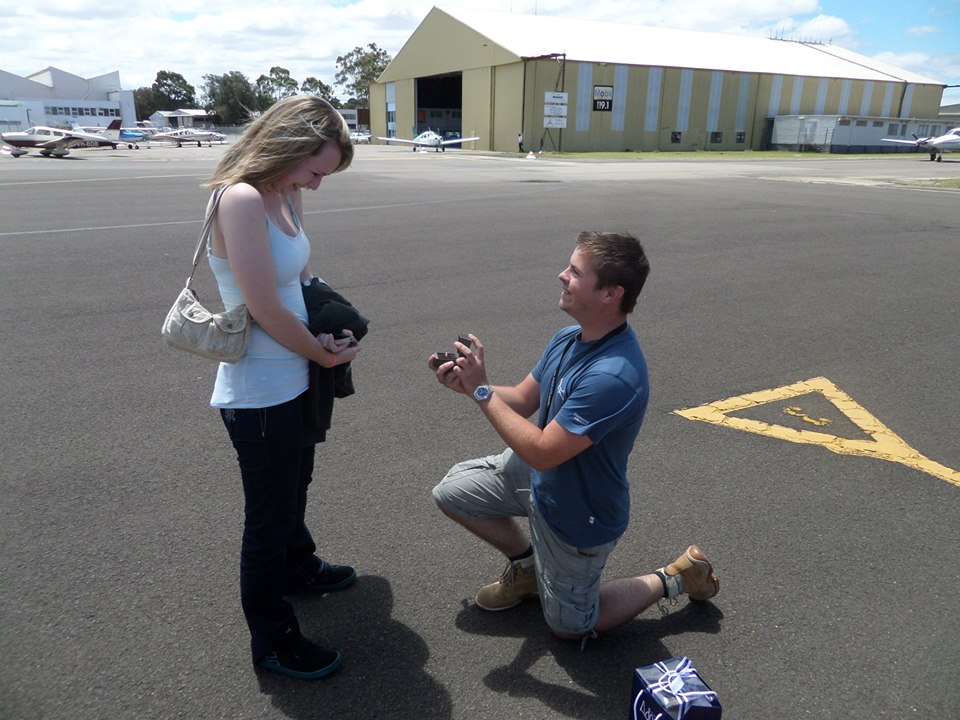 and on ground
- Congratulations
Sam
and on ground
- Congratulations
Sam

 AA5XE, Dale Newton Richardson,
Jr. of Kerrville,
Texas passed away in a local hospital on Thursday July
10th. He was 61. Dale served in the United
States Navy from 1964 to 1988. He had 335/352 (current/deleted)
countries confirmed at the ARRL DXCC Desk. Dale
also participated in the DXCC Challenge Award and had
2579 countries confirmed, including 120 on 6 meters
and 155 on 160 meters, says W5OZI, Pat Rose. Dale
operated with Pat a few years back in Guantanamo Bay
as KG4XE and also was one of the CY9SS ops in 1997. He
also served as the Secretary/Treasurer of SMIRK. AA5XE
was a long time subscriber and supporter of The Daily
DX. It was a pleasure to have met and know Dale
over the years. Our condolences to his wife Maiko
and the Richardson family. (The Daily DX Vol. 12 No.
139)
AA5XE, Dale Newton Richardson,
Jr. of Kerrville,
Texas passed away in a local hospital on Thursday July
10th. He was 61. Dale served in the United
States Navy from 1964 to 1988. He had 335/352 (current/deleted)
countries confirmed at the ARRL DXCC Desk. Dale
also participated in the DXCC Challenge Award and had
2579 countries confirmed, including 120 on 6 meters
and 155 on 160 meters, says W5OZI, Pat Rose. Dale
operated with Pat a few years back in Guantanamo Bay
as KG4XE and also was one of the CY9SS ops in 1997. He
also served as the Secretary/Treasurer of SMIRK. AA5XE
was a long time subscriber and supporter of The Daily
DX. It was a pleasure to have met and know Dale
over the years. Our condolences to his wife Maiko
and the Richardson family. (The Daily DX Vol. 12 No.
139) Denmark, OZ.
Odense JO55EI. Amateur Meeting
Fyn (ATF) 2016. November the 6 th.
Denmark, OZ.
Odense JO55EI. Amateur Meeting
Fyn (ATF) 2016. November the 6 th.