 Vintage Radio Gear
  Vintage Radio Gear
  My Boatanchor Radios
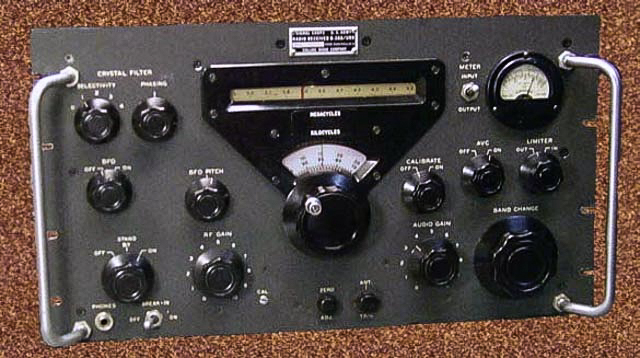
Collins R388 |
Hammarlund SP600-JX17 |
 |
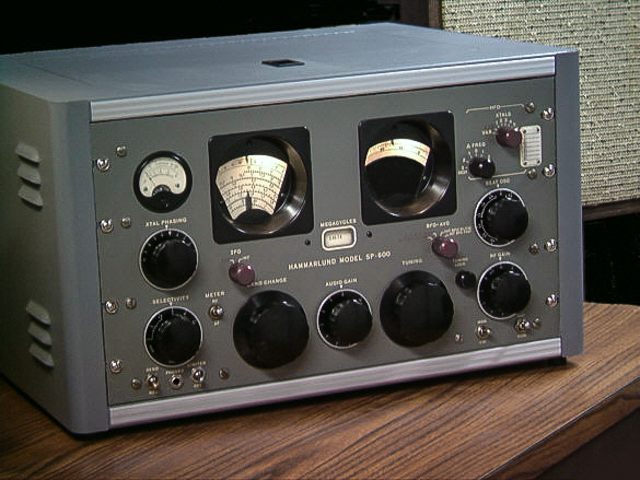 |
| One of the finest communications receivers ever used by the US Army. | Used by the US Navy. A real "boatanchor" |
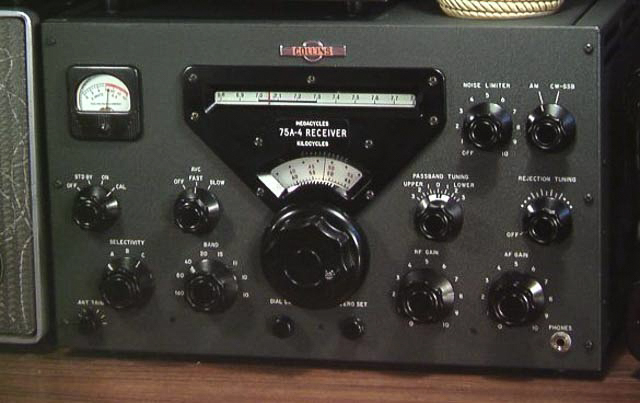
Colllins 75A-4 |
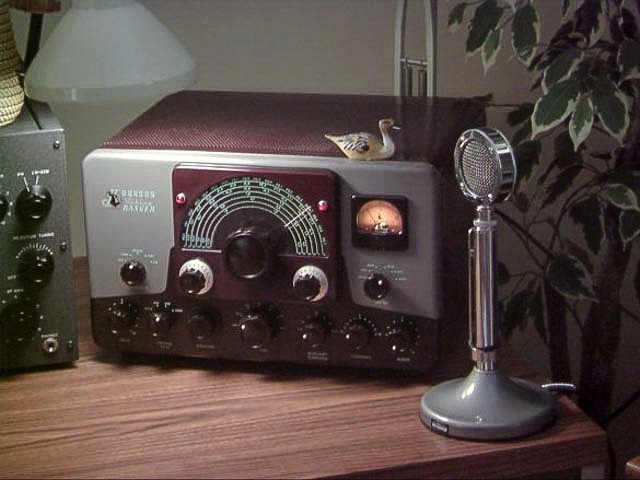
E.F. Johnson Viking Ranger |
 |
 |
The Collins model 75A-4, introduced in the mid-1950’s, was the first Amateur Radio receiver designed for SSB service. It was very expensive and only about five thousand were ever produced. It was generally considered to be the most advanced communications receiver of it’s day. Earlier versions of the 75A series, first introduced in late 1940’s, had advanced the state of the art by using a new technique developed by the Collins Radio Company. The new scheme used a tunable IF with a crystal controlled HF local oscillator. The benefit was low drift, consistent tuning rate, and consistent dial calibration on every frequency covered by the receiver. The tuneable IF system, proven in the 75A series, was quickly adopted to gear sold to the military and remained the best design choice for serious radio builders until the advent of the “upconverting” front end mixer introduced in the late 70’s. The 75A-4 distinguished itself from the other 75A series receivers by incorporating features needed for the reception of SSB signals. It offered a product detector, which permitted the BFO and AVC to be used simultanously. The venerable ‘A4 incorporated the world’s first passband tuner, which allowed the IF filter’s response curve to be positioned around the desired signal so interference from a nearby frequency can be positioned down the filter's skirt. Another Collins innovation introduced with the 75A series receivers is the mechanical IF filter. This type of filter has a response curve approaching the ideal “rectangle” response. |
Sold fully assembled or as a kit, the Viking Ranger was E. F. Johnson’s most popular transmitter....and with good reason. It’s well engineered, ruggedly built, and full featured. The transmitted signal quality is excellent, particularly on AM. The modest input power level of 75 watts on CW and 65 watts on AM made this rig popular with Novices as well as veteran hams wanting to put out a quality signal.
Here's a rear view of the Ranger's 6146 class C RF power amplifier...To the best of my knowledge, my transmitter was manufactured in 1956 or 1957 because it had the 6AL5 fixed bias circuit but was missing the PTT feature. I eventually added the PTT upgrade.  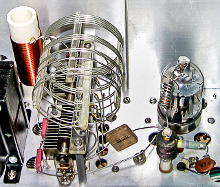 |
Hammarlund HQ180 |
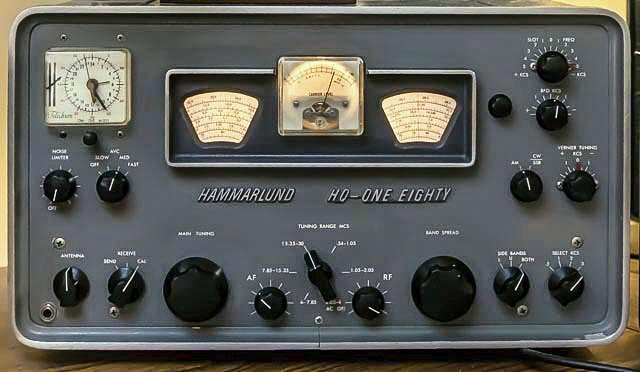
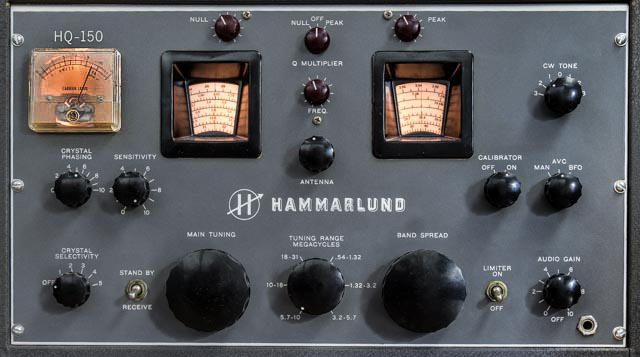
Hammarlund HQ150 |
 |
 |
My favorite AM BA receiver. Ever! Why? This sensitive triple conversion receiver features both great image rejection on the higher bands and excellent selectivity with a wide choice of bandwidths to effectively deal with QRM.
The dial calibration, while not as precise as the Collins gear listed above, is good enough to accurately preset the receiver to any desired frequency. |
The most sophisticated single conversion BA receiver I ever used! The HQ-150 uses 13 tubes and is equipped with both a crystal phasing filter and a Q-multiplier. Sensitivity is excellent to 30MHz.
It's weak spot is inadequate image rejection above 25MHz, easily correctable with additional outboard front-end filtering. As shipped, it still outperforms similar single conversion Hallicrafters receivers. |
Links To Other Vintage Radio Web Sites (opens in new browser window)
 November 19, 2016
Return to Ham Radio Page
Return to George's Place
 March 7, 2017
⇦ Visits since January 14, 2016
 ☚
Let's talk about Boatanchors!
☚
Let's talk about Boatanchors!